

P0746 on 2013-2018 Nissan Sentra: CVT Pressure Control Solenoid 'A' Guide
On a 2013-2018 Sentra, P0746 almost always indicates a problem with the Continuously Variable Transmission (CVT), specifically the pressure control solenoid 'A'. This is a very common issue for the Jatco RE0F11A CVT used in these cars, often requiring the replacement of the CVT valve body or the entire transmission assembly, which can be costly. Nissan has acknowledged this widespread problem through multiple service bulletins and a warranty extension.
- P0746 on a 2013-2018 Sentra is a serious code indicating a likely failure in the CVT, a known weak point for this car.
- This is not a DIY-friendly repair. Accurate diagnosis and repair require professional tools and expertise.
- The most common fix is replacing the CVT valve body, but a full transmission replacement is often necessary if metal debris is found.
- Always use genuine Nissan NS-3 CVT fluid; using incorrect fluid can cause severe damage.
- Before paying for repairs, check with a Nissan dealer about potential warranty extensions or goodwill assistance, given the widespread nature of this issue.
What's Unique About the 2013-2018 Nissan SENTRA

The 2013-2018 Nissan Sentra uses a Jatco-supplied RE0F11A (also known as JF015E or CVT7) transmission that is widely known for performance and durability issues. Code P0746 is a hallmark symptom of these well-documented problems. Nissan has issued multiple Technical Service Bulletins (TSBs), most notably NTB17-034i, acknowledging that this code, often accompanied by a juddering sensation, is a common complaint. Due to the transmission's design and sensitivity to contamination, a failure of a single solenoid often necessitates replacing the entire control valve body. Furthermore, Nissan extended the original powertrain warranty to 84 months or 84,000 miles for these CVTs and has faced class-action lawsuits over their high failure rates.
Diagnostic Flowchart

Tap your situation to follow the diagnostic path that matches what you're seeing on this vehicle.
Symptoms You May Notice

- Transmission judder (shaking, shuddering, or bumping), especially on acceleration.
- Hesitation or lack of power on acceleration.
- Vehicle enters 'limp mode' with reduced power and high RPMs.
- Engine RPMs flare or rise without a corresponding increase in speed.
- Inability to accelerate from a stop.
- Illuminated Check Engine Light.
- Replacing only the transmission fluid when the valve body has already failed.
- Replacing an individual solenoid when the entire valve body is contaminated or faulty, often leading to a quick return of the code.
- Replacing the engine's throttle body for hesitation issues when the root cause is the CVT.
- Assuming a remanufactured transmission will not fail again; some owners report repeat failures.
Most Likely Causes

- Faulty CVT Valve Body / Pressure Control Solenoid 🔴 High Probability This is the most common failure point in the Jatco RE0F11A CVT, as acknowledged by Nissan's TSBs. The solenoids can fail electrically or, more commonly, become stuck due to metallic debris and degraded fluid contaminating the valve body.
How to confirm: A technician will follow the diagnostic procedure in Nissan TSB NTB17-034i. This involves using a professional scan tool to monitor solenoid commands versus actual line pressure and inspecting the transmission pan for debris. If debris is minimal, the valve body is the likely culprit.
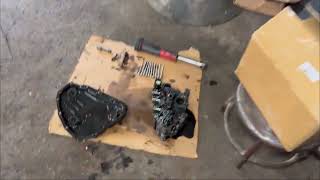
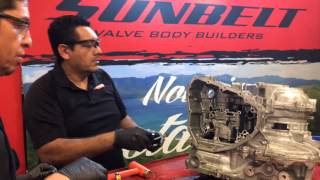
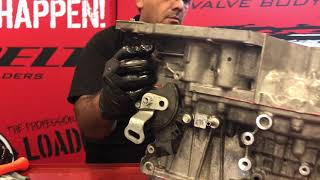
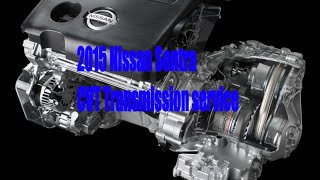
Typical fix: Replacement of the entire CVT control valve body assembly, which houses the solenoids, followed by a fluid fill and potentially TCM reprogramming. 🎬 Watch: Step-by-step guide to replacing the CVT valve body.
Est. part cost: $165-$450 for a remanufactured unit, $800-$1200 for OEM. - Internal CVT Mechanical Failure 🟡 Medium Probability The P0746 code is often a symptom of a larger mechanical failure. The same debris that clogs the solenoid may come from a failing push belt, pulleys, or bearings, which are common failure modes for this transmission.
How to confirm: A technician will drop the transmission pan and inspect the magnets. According to Nissan's TSB, finding 'broken parts...pieces of bearing cages, bearings, clutch material, belt elements, etc.' indicates a severe mechanical failure, whereas a fine metallic sludge is considered acceptable for a valve body replacement.
Typical fix: Complete replacement of the CVT assembly with a new or remanufactured unit. This is the only remedy if significant debris is found.
Est. part cost: $2500-$4500 for a remanufactured unit. - Low or Degraded CVT Fluid ⚪ Low Probability While rarely the sole cause once code P0746 is set, old, contaminated, or incorrect fluid is a primary contributor to solenoid and valve body failure over time. The fluid loses its lubricating properties, leading to wear and debris.
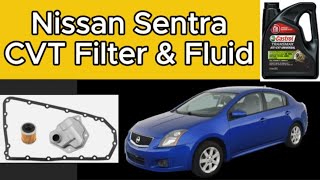
How to confirm: Check the fluid level and condition. The fluid should be a light green color (for NS-3) and not smell burnt or appear dark brown/black. Note: These transmissions do not have a traditional dipstick, requiring a specific service procedure to check. 🎬 Watch: How to check your Nissan CVT fluid level and condition.
Typical fix: Perform a CVT fluid drain and fill using only genuine Nissan NS-3 CVT fluid. This is often attempted as a first step but rarely solves the problem if the code and symptoms are already present. It is a required step during valve body or transmission replacement.
Est. part cost: $100-$200 for fluid.
Rare But Worth Checking
- Faulty Transmission Control Module (TCM): While possible, a faulty TCM is much less common than mechanical or hydraulic failures within the CVT itself. It should only be considered after all other possibilities, including wiring, have been exhausted. In some cases, a used TCM may not communicate properly with the vehicle.
- Wiring Harness Damage: Damage to the wiring or connectors leading to the transmission can interrupt signals to the solenoid, mimicking a component failure. This is uncommon but worth inspecting, especially for corrosion or physical damage to the harness.
Diagnosis Steps
- Verify the presence of P0746 and any other codes (like P0965, P17F0) using an OBD-II scanner.
- Consult Nissan Technical Service Bulletin NTB17-034i for the official diagnostic flow chart, which is the definitive guide.
- Check the CVT fluid level and condition. Note any burnt smell or dark discoloration, which indicates severe degradation.
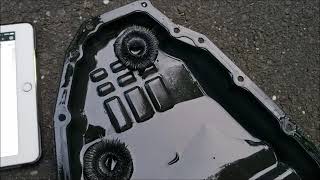
- Raise the vehicle and drop the transmission oil pan. Inspect the fluid and magnets for debris. 🎬 See how to properly remove the pan and inspect for metal. Per TSB NTB17-034i, a fine metallic sludge is normal, but chunks of metal, bearing cage pieces, or large flakes indicate a catastrophic internal failure.
- If excessive debris is found, the entire CVT unit requires replacement. Do not proceed with a valve body replacement.
- If no significant debris is found, the likely cause is the valve body. Proceed with valve body replacement.
- Inspect the transmission wiring harness and connectors for any visible damage, corrosion, or loose connections.
- After repair, perform a full CVT fluid exchange with Nissan NS-3 fluid and perform the 'Erase Learning Value' or 'erase CVT fluid degradation' procedure with a compatible scan tool as outlined in the TSB.
Parts You'll Likely Need
- CVT Control Valve Body
(OEM #31705-28X2B (supersedes 31705-28X0D), 31705-28X2A)— This assembly contains the pressure control solenoids that are the most common point of failure for code P0746 when no major mechanical debris is found.
Trusted brands: Nissan (OEM), Aftermarket (Remanufactured)
OEM price range: $800-$1200
Aftermarket price range: $165-$450 - Continuously Variable Transmission (CVT) Assembly — Required if diagnosis reveals excessive metal debris in the pan, indicating widespread internal mechanical failure that a new valve body cannot fix.
Trusted brands: Nissan (OEM Remanufactured)
OEM price range: $3500-$4500
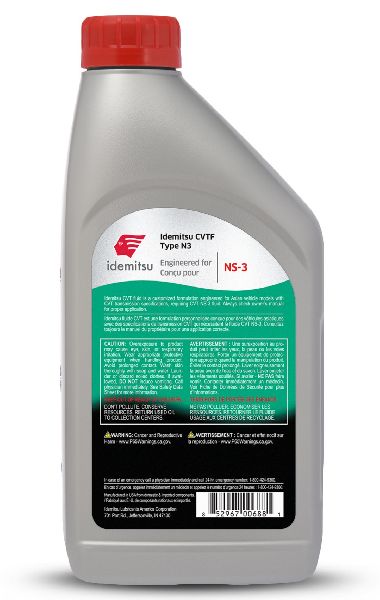
Aftermarket price range: $2500-$3500 - Nissan NS-3 CVT Fluid
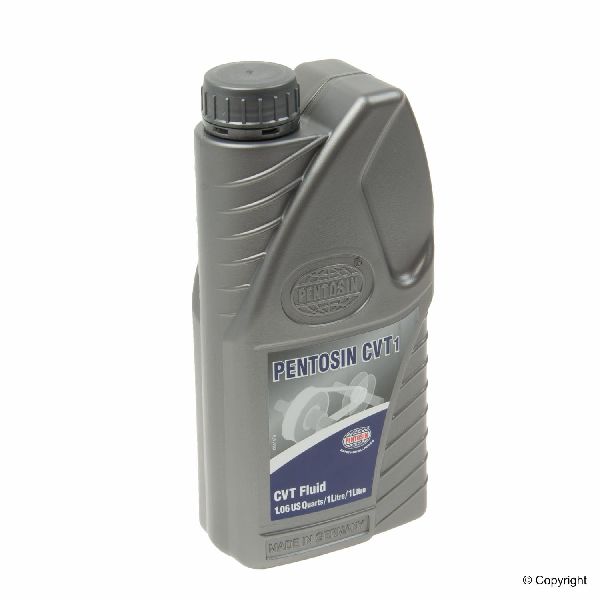
(OEM #999MP-NS300P)— This is the only approved fluid for this transmission. Using any other fluid can cause damage and will void any warranty. It is required for any valve body or transmission replacement.
Trusted brands: Nissan (OEM)
OEM price range: $20-$25 per quart
Related Codes That Often Appear With This One
- P0965 — This code for Pressure Control Solenoid 'B' is often stored with P0746, as they are part of the same control system and are mentioned together in Nissan's primary TSB, NTB17-034i.
- P17F0 — This is a manufacturer-specific code for 'CVT Judder' and directly relates to the primary symptom associated with P0746. It is also listed in TSB NTB17-034i.
- P0846 — This code relates to the Transmission Fluid Pressure Sensor 'B' and can be triggered by the same hydraulic control issues that cause P0746, as noted in TSB NTB17-034i.
Technical Service Bulletins (TSBs) & Recalls
- NTB17-034i
- NTB17-034e
- NTB17-034d
- NTB17-034g
- NTB18-077
- NTB14-118c
- NTB17-034b
- NTB17-034a
Platform-Specific Known Issues
- The Jatco RE0F11A CVT in this Sentra is subject to multiple Nissan TSBs, a warranty extension program, and class-action lawsuits due to high failure rates.
- Nissan extended the original 5-year/60,000-mile powertrain warranty on these CVTs to 7 years/84,000 miles, whichever comes first. This may cover the repair if the vehicle is still within the extended period.
- Symptoms of judder and hesitation are extremely common and are directly addressed by TSB NTB17-034i, which specifically lists P0746 as a related diagnostic code.
- Class-action lawsuits (e.g., *Leyva v. Nissan North America, Inc.*) alleged that the CVTs were prone to overheating and premature failure.
Mechanic-Grade Diagnostic Values
- Pressure Control Solenoid 'A' (Line Pressure Solenoid) resistance — expected: 5.3 Ω at 20°C (68°F), 6.0 Ω at 50°C (122°F), 6.7 Ω at 80°C (176°F). Failure: Resistance significantly outside of these ranges indicates a faulty solenoid coil.
- Line Pressure at Idle in Drive/Reverse — expected: 5-13 Bars (72.5-200 psi). Failure: Pressure significantly lower than expected, or pressure that doesn't match the commanded pressure on a scan tool, indicates a hydraulic control issue.
Hidden / Shadow Codes Worth Checking
- P17F0: Manufacturer-specific code for 'CVT Judder (T/M Inspection)'. Its presence is a key indicator in Nissan's TSBs. (see via A professional scan tool like Nissan CONSULT or an advanced aftermarket scanner. Its presence alongside P0746 confirms the judder complaint and directs the technician to follow TSB NTB17-034i.)
- P2857 / P2858 / P2859 / P285A: Codes related to the auxiliary gearbox ratio. If these codes are present, TSB NTB17-034i explicitly states that its procedure does not apply and to refer to other diagnostics. (see via A professional scan tool. Their presence rules out the common P0746 repair path and points to a different internal CVT issue.)
Scan Tool Commands That Help
- Nissan CONSULT or equivalent professional scanner: Erase CVT Fluid Degradation Level Data / Reset Learning Value — This is a mandatory step after replacing the CVT valve body or the entire transmission assembly. It resets the fluid life counter and adaptive learning values in the TCM, preventing harsh shifting or damage with the new components.
- Nissan CONSULT or equivalent professional scanner: Active Test / Work Support for Solenoids — Allows a technician to command the pressure control solenoid 'A' on and off or to specific duty cycles to check its response, helping to confirm if the solenoid is electrically responsive before removing the oil pan.
Wiring & Ground Locations
- Transmission Case Ground — A bolt on the transmission housing connected via a wire to the chassis or negative battery terminal.. A poor ground connection for the transmission can cause erratic behavior in all of its electronic components, including the solenoids and sensors within the valve body, potentially leading to false codes.
- Main Engine Ground — Typically runs from the intake manifold or cylinder head to the firewall or chassis near the strut tower.. The TCM and its sensors rely on a stable system ground. A faulty main engine ground can introduce electrical noise and voltage drops that may affect TCM operation and solenoid control.
- Internal Ground (B16 Sentra) — Located behind the glove box, requiring significant dashboard disassembly to access.. A video for the B16 Sentra (a previous generation) shows a critical internal grounding point behind the dash. While the B17 may differ, it highlights the possibility of hidden grounds that can affect the TCM and cause difficult-to-diagnose electronic issues.
Real Owner Repair Stories
- NHTSA Owner Complaint ODI #11631802 (2015 Nissan Sentra) — Vehicle stalling, diagnostic codes P2859 and P0746.
❌ Tried (didn't work) Not specified, but the owner's search led them to information about the widespread CVT judder issue.
✅ What actually fixed it The diagnosis pointed towards the known CVT issues covered by Nissan's TSBs. The resolution path per TSB NTB17-034i would be to inspect the transmission pan for debris. If minimal debris is found, the fix is to replace the valve body. If significant metallic debris is found, the entire CVT assembly must be replaced.
OEM Part Supersession History
31705-28X0D→31705-28X2B— Updated part revision from the manufacturer, likely to address performance or reliability issues.31705-X428B→31705-X428C— Part number evolution for the RE0F11A/JF015E valve body.
Heads up: These part numbers are associated with the RE0F11A/JF015E but cross-compatibility must be verified by VIN.
Model Year Variations Within This Range
- 2013-2015 vs 2016-2018: The design of the JF015E valve body reportedly changed around the 2016 model year. The early (2011-2016) and late (2016+) versions are noted as not being interchangeable. When ordering a replacement, it is critical to verify the correct version for the specific vehicle, possibly by providing pictures of the original valve body.
Helpful Videos
We Have This Part in Stock

The information in this article is provided for general reference and educational purposes only. Vehicle specifications, procedures, and part compatibility can vary by production date, trim level, and region. Always consult your vehicle's factory service manual and verify part numbers before purchasing or performing repairs. Safety-critical components such as airbags, seat belts, and braking systems should be installed by a qualified professional.
- Nissan SENTRA:
- 🎬 Helpful Videos
- 🛍️ Shop This Part
- What's Unique About the 2013-2018 Nissan SENTRA
- Diagnostic Flowchart
- Symptoms You May Notice
- Most Likely Causes
- Rare But Worth Checking
- Diagnosis Steps
- Parts You'll Likely Need
- Related Codes That Often Appear With This One
- Technical Service Bulletins (TSBs) & Recalls
- Platform-Specific Known Issues
- Mechanic-Grade Diagnostic Values
- Hidden / Shadow Codes Worth Checking
- Scan Tool Commands That Help
- Wiring & Ground Locations
- Real Owner Repair Stories
- OEM Part Supersession History
- Model Year Variations Within This Range
- 🎟️ Get 5% Off