

OBD-II Code P0744: Torque Converter Clutch Circuit Intermittent
The Ultimate Guide to P0744: What It Means, Why It Triggers, and How to Fix It for Good
- P0744 designates an intermittent electrical fault, meaning diagnosis must prioritize finding a loose wire, corroded connector, or failing solenoid coil before assuming mechanical failure.
- Always check the transmission fluid condition first; dark, burnt fluid indicates severe internal damage, while clean fluid points directly to an isolated electrical issue.
- Replacing the TCC solenoid resolves P0744 in the majority of cases, costing between $250 and $600 if the component is accessible via the transmission pan.
- Driving with an active P0744 code generates excessive internal heat that can destroy a $3,000 transmission and melt a $1,000 catalytic converter within a few months.
- Nissan CVT owners must check Technical Service Bulletin NTB19-040c, as P0744 often requires a $1,500 valve body replacement or a $4,000 complete transmission swap.
What Does P0744 Mean?

P0744 signifies your vehicle's computer detected an unstable electrical signal in the torque converter clutch (TCC) circuit. The TCC creates a 1:1 mechanical lock between the engine and transmission at cruising speeds to improve fuel efficiency and reduce heat. When this signal drops out or fluctuates, the clutch engages and disengages unpredictably, causing shuddering, erratic RPMs, and dangerous internal heat buildup.
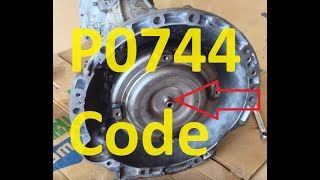
Technical definition: The SAE/ISO definition is "Torque Converter Clutch Circuit Intermittent." 🎬 Watch: A breakdown of the causes and fixes for P0744. The Powertrain Control Module (PCM) or Transmission Control Module (TCM) continuously monitors the TCC solenoid circuit for a steady voltage or resistance signature. When the module expects a steady Pulse Width Modulated (PWM) signal but sees fluctuations, dropouts, or inconsistent electrical loads, it triggers P0744. The fault typically lies in the wiring harness, the solenoid coil, or contaminated fluid.
Can I Drive With P0744?
Yes, But With Caution. You can drive short distances to a repair shop, but daily commuting is strongly discouraged. Constant torque converter slipping generates excessive heat that destroys transmission fluid, warps clutch plates, and melts internal seals. Ignoring P0744 turns a $300 solenoid repair into a $2,500-$5,000 full transmission rebuild. In severe cases, this heat destroys the catalytic converter, adding $800-$2,500 to the final bill.
Common Causes

- Faulty Torque Converter Clutch (TCC) Solenoid (Very Common) — This is the primary culprit. The solenoid is an electro-hydraulic valve that directs fluid to engage the clutch. Its internal coil develops an intermittent short or open, or it becomes clogged with metallic debris, causing erratic operation.
- Damaged Wiring Harness or Corroded Connectors (Common) — The transmission wiring harness lives in a harsh environment. Heat and vibration cause wires to fray, insulation to crack, and connector pins to corrode. This creates intermittent opens or shorts that are highly temperature-dependent.
- Low, Contaminated, or Incorrect Transmission Fluid (Common) — Dirty or burnt fluid is abrasive and clogs the tiny passages in the valve body and TCC solenoid. Low fluid levels drop hydraulic pressure, preventing clutch engagement. Using non-OEM fluid causes improper friction characteristics, triggering this code.
- Worn Valve Body or Internal Transmission Leaks (Less Common) — Worn bores or sticking valves inside the valve body restrict hydraulic fluid flow to the TCC circuit. A failing transmission pump also causes inconsistent hydraulic pressure, preventing the TCC solenoid from operating reliably.
- Failing Torque Converter (Less Common) — While P0744 is an electrical code, a failing internal clutch inside the torque converter creates mechanical slip symptoms that the computer interprets as an intermittent circuit issue, especially if accompanied by severe shuddering.
- Faulty Transmission Control Module (TCM) (Very Rare) — A failing driver circuit or software glitch within the module causes P0744, but this is the absolute last resort. The problem almost always exists in the wiring, solenoid, or fluid.
Symptoms

- Check Engine Light On or Flashing — The Check Engine Light illuminates to alert you of the stored trouble code. Because the fault is intermittent, the light sometimes turns on and off with each drive cycle.
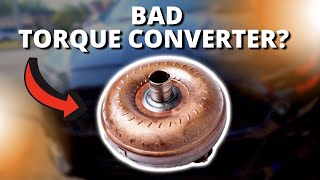
- Shuddering or Vibration at Highway Speeds — The vehicle shudders, vibrates, or drones as the TCC attempts to engage and disengage. It feels exactly like driving over rumble strips and is most noticeable under light acceleration at cruising speed. 🎬 See this video to identify common bad torque converter symptoms.
- Erratic Engine RPM at Cruising Speed — The tachometer needle fluctuates or 'hunts' by 100-300 RPM at a steady highway speed as the TCC unpredictably locks and unlocks. This directly reduces fuel economy.
- Engine Stalling When Coming to a Stop — If the TCC fails to disengage as you slow down, the engine stalls because it remains mechanically locked to the wheels.
- Harsh or Delayed Shifting — The transmission shifts abruptly or feels like it is slipping between gears. The computer alters the shift strategy to protect the transmission when it detects the TCC fault.
- Transmission Overheating Warning Light — Constant torque converter slipping generates massive heat, degrading the fluid and triggering the dashboard transmission temperature warning.
- TCC Slip Speed Fluctuation (scan-tool only — no driver-felt sign) — When monitoring live data, the TCC Slip RPM fluctuates erratically instead of dropping to near-zero when lock-up is commanded.
Diagnostic Flowchart
Tap your situation to follow the diagnostic path that matches what you're seeing on this code.
Common Fixes & Costs
- Replace Torque Converter Clutch (TCC) Solenoid
— Parts: $25-$120, Labor: $200-$550 (if accessible via pan drop), ~3.5 hr book time
(Intermediate)
: OEM 31941-1XJ0A (Alt: Transtar D814425)
: OEM AL3Z-7G276-A (Solenoid body assembly) (Alt: Rostra, Dorman) - Transmission Fluid and Filter Change — Parts: $50-$150, Labor: $100-$300, ~1.5 hr book time (DIY)
- Repair Wiring Harness or Connectors — Parts: $10-$50, Labor: $150-$500, ~2.5 hr book time (Intermediate)
- Replace Transmission Valve Body
— Parts: $300-$1,200, Labor: $350-$1,100 (may include programming), ~4.5 hr book time
(Professional)
: OEM 31705-50X5B (Alt: Hitachi) - Replace Torque Converter
— Parts: $200-$600, Labor: $600-$1,800 (depending on vehicle), ~8 hr book time
(Professional)
: OEM JL3Z-7902-D (Alt: Dacco 97515ZWFT)
DIY vs Professional
- Transmission Fluid and Filter Change — Beginner:
Tools: Socket set, drain pan, funnel, torque wrench - Repair Wiring Harness or Connectors — Beginner:
Tools: Multimeter, wire strippers, crimpers, heat shrink tubing, soldering iron (optional), flashlight - Replace TCC Solenoid (Pan Accessible) — Beginner:
Tools: Socket set, torque wrench, drain pan, funnel, rags, small pick set - Replace Valve Body — Beginner:
Tools: Extensive socket/wrench set, torque wrench (in-lbs), service manual, transmission-specific holding fixtures - Replace Torque Converter — Beginner:
Tools: Vehicle lift, transmission jack, engine support brace, extensive tool set
Used vs. New Parts: Buying Guide
When a used part is worth it: For a TCC solenoid, a used part from a low-mileage vehicle (under 80k miles) wrecked due to collision is a cost-effective option, especially for older vehicles where new OEM parts are scarce.
Donor-vehicle mileage cap: roughly under 80000 miles for the part to have meaningful remaining life.
Donor quality checklist:
- Verify the donor vehicle's reason for being scrapped; avoid parts from vehicles with known transmission issues.
- Match the part number exactly. Even slight variations lead to incompatibility.
- Inspect the electrical connector for any signs of corrosion, bent pins, or fluid intrusion.
Decision logic:
- If The vehicle is less than 8 years old or has under 100k miles → Buy a new OEM or high-quality aftermarket solenoid. The cost difference is minimal compared to the risk of repeat failure.
- If The vehicle is over 15 years old and the budget is extremely tight → A used solenoid is a reasonable gamble, but understand it has a significantly shorter lifespan.
- If The part is part of a larger solenoid pack or valve body assembly → Favor a new or professionally remanufactured assembly. One used component compromises the entire complex unit.
Warranty tradeoff: Used parts typically come with a 30-90 day warranty covering only the part, not labor. New aftermarket parts offer a 1-year to limited lifetime warranty. New OEM parts carry a 1-year warranty.
Worst-case if a used part fails: $400-800 if a used solenoid fails after installation, primarily due to the repeated labor cost to drop the transmission pan.
What Happens If You Wait — Timeline
- 0-1 Month: Check Engine Light appears for P0744. You notice a slight flutter in the RPMs at highway speed, but no other obvious symptoms. TCC slippage is minor and infrequent. (MPG impact: 0-5%% · Added cost: $0-$50 in wasted fuel.)
- 1-4 Months: Symptoms become noticeable. A distinct shudder, like driving over rumble strips, occurs at cruising speeds. Fuel economy loss is measurable. Intermittent slippage generates excess heat, accelerating fluid breakdown. (MPG impact: 5-10%% · Added cost: $50-$200 in wasted fuel. Fluid life is compromised.)
- 4-8 Months: Shuddering and harsh shifting become frequent and severe. Transmission fluid is dark and smells burnt, indicating permanent heat damage. Internal seals harden, and the risk of torque converter damage increases significantly. (MPG impact: 10-15%% · Added cost: $800 - $2,200 (Torque converter replacement is now required in addition to fixing the original electrical fault).)
- 8+ Months: Catastrophic failure is imminent. The transmission overheats regularly, shifts erratically, and enters 'limp mode'. Burnt fluid and debris destroy the valve body, clutch packs, and torque converter. The vehicle stops moving. (MPG impact: 15-25%+% · Added cost: $2,500 - $5,000+ (A complete transmission rebuild or replacement is the only option).)
Cost of Not Fixing It
- 0-1 Month: Noticeable drop in fuel economy (5-15%) and intermittent shuddering at highway speeds. Transmission fluid begins to overheat during prolonged drives. (Added cost: Negligible, but symptoms will worsen.)
- 1-6 Months: Severe transmission overheating becomes common, permanently burning the fluid and causing internal seals to harden. Shuddering and shifting problems become severe. This leads to catalytic converter damage from excess heat. (Added cost: $800 - $2,800 (if catalytic converter fails).)
- 6+ Months: Catastrophic transmission failure. Burnt fluid and constant clutch slipping destroy the torque converter, clutch plates, and valve body. The vehicle stops moving entirely. (Added cost: $2,500 - $5,000+ (for a complete transmission rebuild or replacement).)
Diagnosis Steps

- Scan Codes & Analyze Freeze Frame Data
Use an OBD-II scanner to confirm P0744 and note any other codes (e.g., P0740, P0741, P1777). Critically, analyze the freeze-frame data. This snapshot of vehicle conditions (speed, RPM, temp) when the code set is your single most important clue for replicating the intermittent fault.
Tools: OBD-II Scanner (Beginner) - Check Transmission Fluid Level and Condition
Inspect the transmission fluid. It must be at the correct level, bright red (or OEM color), and smell clean. Dark brown/black fluid, a burnt smell, or metallic particles indicate severe internal damage that requires immediate professional attention.
Tools: Rag, Dipstick (if equipped), Gloves (Beginner) - Inspect Transmission Wiring and Perform a Wiggle Test
Visually inspect the transmission wiring harness, especially near hot exhaust components or sharp bends. Look for chafed wires, melted insulation, and corrosion. Unplug the main connector and check for bent pins. Perform a 'wiggle test' on the harness while monitoring live scanner data to trigger the fault.
Tools: Flashlight, OBD-II Scanner, Work Gloves (Intermediate) - Monitor TCC Slip Speed via Live Data
While driving under the conditions noted in the freeze frame data, monitor 'TCC Slip Speed' or 'Converter Slip RPM'. When the TCC is commanded to lock, this value must drop to near zero (under 40 RPM). If it fluctuates or remains high, the clutch is slipping.
Tools: Advanced Scan Tool (Advanced) - Command the TCC Solenoid Bi-Directionally
Use an advanced scan tool to command the TCC solenoid on and off while the engine is running. Listen for the solenoid's 'click' and watch live data to see if the component responds consistently. If it works intermittently or makes no sound, the solenoid or circuit is compromised.
Tools: Advanced Bi-Directional Scan Tool (Advanced) - Test TCC Solenoid Resistance at the Harness
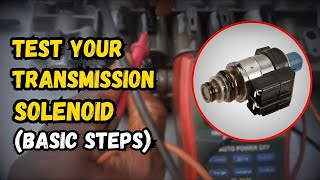
Identify the TCC solenoid wires at the transmission connector using a wiring diagram. With the key off, measure the solenoid's resistance. A typical TCC solenoid reads between 10 and 40 ohms (e.g., GM 4L60E is 10-11.5 ohms; Ford/Toyota is 10-20 ohms). An infinite reading (OL) means an open circuit; 0 ohms indicates a short.
Tools: Multimeter, Vehicle-specific wiring diagram (Advanced) - Analyze TCC Solenoid Waveform
Connect a lab scope to the TCC solenoid's control wire. When commanded on, you must see a clean square wave. An intermittent fault shows up as 'hash,' noise, or sudden dropouts in the pattern. This definitively separates a wiring problem from a faulty solenoid or TCM driver.
Tools: Automotive Oscilloscope (Lab Scope) (Professional) - Perform a Hydraulic Line Pressure Test
If all electrical tests pass, the issue is hydraulic. Connect gauges to specific transmission ports to measure line pressure and TCC apply pressure. Low or erratic pressure when the TCC is commanded on indicates an internal leak, a failing pump, or a valve body blockage.
Tools: Transmission Pressure Gauge Set, Repair Manual (Professional)
When This Code Triggers (Freeze-Frame Conditions)
- Engine/Transmission Temp: 175-220°F (80-104°C) (Fully warmed up; TCC lock-up is often inhibited when cold.)
- Vehicle Speed: 45-65 mph (72-105 kph) (Steady state highway or arterial road cruising speed.)
- Engine RPM: 1500-2500 RPM (Light throttle application, just enough to maintain speed.)
- Engine Load: 20-50% (Not under heavy acceleration or climbing a steep grade.)
Related Codes
- P0740 — P0740 indicates a 'hard' electrical fault (a constant open or short) in the TCC circuit. P0744 specifies the fault is intermittent. A loose wire triggering P0744 eventually breaks completely, causing P0740.
- P0741 — P0741 means 'TCC Circuit Performance or Stuck Off.' This is a mechanical/hydraulic fault. The computer commanded lock-up, the electrical circuit is fine, but the RPMs didn't drop. P0744 points to the electrical signal itself being unstable.
- P0743 — Similar to P0740, this is a general electrical failure code (e.g., short to ground). It is a common precursor to P0744 if an electrical problem is inconsistent before becoming a permanent fault.
- P1777 — On Nissan vehicles, this 'Stepper Motor' code is a major red flag alongside P0744. This combination strongly indicates a problem within the CVT assembly, requiring valve body or full transmission replacement per TSBs.
Climate & Environmental Factors
- High Heat: Increases electrical resistance in wires, exposing or worsening an intermittent open circuit. Extreme heat causes wiring insulation to become brittle and crack, or causes harnesses to sag and contact hot components, leading to shorts.
- High Humidity: Promotes moisture intrusion into electrical connectors and fuse boxes. This leads to corrosion on pins and contacts, creating intermittent signals and high resistance faults.
- Extreme Cold: Makes wiring insulation and plastic connectors brittle and susceptible to cracking when disturbed. Control modules also inhibit TCC lock-up based on a cold signal from the Engine Coolant Temperature (ECT) sensor.
- Road Salt (Corrosive Environments): Accelerates the degradation of wiring harnesses, ground straps, and the pins inside exposed connectors on the vehicle's undercarriage.
How to Talk to a Mechanic About This Code
Say this: "I have an OBD-II code P0744 for an intermittent torque converter clutch circuit. I'd like to schedule a diagnostic to test the TCC solenoid, wiring harness, and fluid condition before assuming it's a major internal problem."
This signals you understand P0744 is an electrical fault, not necessarily a catastrophic failure. It directs the technician to perform a logical, cost-effective diagnosis instead of immediately quoting a new transmission.
Avoid saying:
- My transmission is slipping.
- My check engine light is on, can you look at it?
- Just fix whatever is wrong with the transmission.
Questions to ask before authorizing the repair:
- What were the results of the TCC solenoid resistance and voltage tests?
- Did you perform a 'wiggle test' on the wiring harness to check for intermittent connections?
- Can you show me the condition of the transmission fluid?
- What is the warranty on this specific repair, including both parts and labor?
Where to Take It: Dealer vs Independent vs Chain
- Dealer:
Recommended for specific, complex cases like Nissan CVTs or if the vehicle is under warranty. Otherwise, a qualified independent shop is more cost-effective.
Best for: Vehicles still under powertrain warranty, Nissan CVTs where specific TSBs (like NTB19-040c) must be followed, Complex European vehicles with integrated Mechatronic units
Downsides: Highest labor rates (1.5-2x independent shops), Defaults to replacing larger, more expensive assemblies (e.g., entire valve body instead of a single solenoid) (Typical cost: +50% vs. baseline) - Independent Shop:
Best fit for most P0744 scenarios. An experienced independent transmission specialist has the right tools to diagnose the circuit correctly without defaulting to the most expensive repair.
Best for: Out-of-warranty vehicles, Diagnosing and repairing common failures like solenoids and wiring issues, Vehicles from domestic and common import brands (Honda, Ford, GM, Toyota)
Downsides: Quality and diagnostic capabilities vary greatly; look for ASE certification and positive reviews specifically mentioning transmission work. (Typical cost: +0% vs. baseline) - Chain Shop:
AVOID for P0744 diagnosis. They are generally not equipped for the detailed electrical circuit testing required to accurately find an intermittent fault.
Best for: Simple fluid and filter changes ONLY.
Downsides: Technicians lack specialized training for in-depth transmission electrical diagnosis., High pressure to upsell leads to misdiagnosis and unnecessary, expensive repairs. (Typical cost: -10% vs. baseline)
When to Walk Away From the Repair
If the estimated repair cost for P0744 exceeds 50% of your car's current private-party value, it is time to seriously consider selling or trading it in.
- Car worth $4500, fix is $2500: Walk away. A $2,500 repair on a $4,500 car is a poor investment, especially with the risk of other age-related failures.
- Car worth $15000, fix is $1800: Fix it. The repair cost is well under the 50% threshold and preserves the value of the vehicle.
- Car worth $3000, fix is $800: Borderline. If the rest of the car is in excellent condition, an $800 fix is worthwhile. Get a second opinion before proceeding.
What Scan Tool You Need for This Code

Minimum: A scanner that reads manufacturer-specific transmission codes and views live data PIDs for the transmission, such as TCC Slip Speed and TCC Solenoid command status.
A basic $20 code reader only confirms the P0744 code. It cannot show you the live data needed to see the intermittent fault as it happens (e.g., watching voltage drop during a wiggle test), which is essential for accurate diagnosis.
Budget: BlueDriver Pro Scan Tool (~$100) — Reads manufacturer-specific transmission codes and graphs live data PIDs on your smartphone, allowing you to monitor TCC slip and solenoid commands to catch intermittent failures.
Mid-range: Foxwell NT510 Elite (~$180) — Provides OE-level diagnostics for a specific car brand. It reads and clears transmission codes, views live sensor data, and performs bi-directional controls like commanding the TCC solenoid on and off.
Professional: Autel MaxiCOM MK808S (~$450-550) — Offers full bi-directional control to actively test the TCC solenoid and circuit. It provides comprehensive live data, accesses all vehicle modules, and definitively diagnoses if the issue is the solenoid, wiring, or TCM.
Rent vs buy: For a one-time diagnosis, auto parts stores scan codes for free. However, to diagnose an intermittent P0744 effectively, you must view live data during a test drive, making a purchase of at least a budget-level scanner worthwhile.
How to Clear the Code After You Fix It
- Use an OBD-II scan tool to clear the P0744 code.
- Perform a complete transmission drive cycle to allow the TCM to relearn and verify the fix.
- Check for pending codes after the drive cycle to ensure the fault has not returned.
Drive cycle (~30 minutes): A typical transmission drive cycle involves: a cold start (sit for 6-8 hours), 2-3 minutes of idling, mixed city driving (stop-and-go), followed by 15 minutes of steady highway driving between 50-60 mph. This allows the computer to run its diagnostic tests.
Readiness monitors affected: Comprehensive Component Monitor, Catalyst Monitor, Oxygen Sensor Monitor
Before emissions retest: drive at least 100 miles to fully set monitors.
Watch out for:
- Disconnecting the battery clears the code but resets all OBD-II readiness monitors, guaranteeing an emissions test failure.
- The code returns immediately if the underlying intermittent electrical or mechanical issue is not fully resolved.
- Failure to perform a complete drive cycle leaves readiness monitors 'incomplete', preventing a passing emissions test.
Will This Fail Emissions / State Inspection?
Yes — this code typically fails an OBD-II emissions inspection.
- California: An active P0744 code is an automatic failure for a smog check. After repairs, a complete drive cycle must be performed to set all readiness monitors before a re-test.
- New York: The NYS DMV inspection includes an OBD-II scan. The presence of a Check Engine Light and the P0744 code results in an immediate emissions failure.
- Texas: In the 17 Texas counties requiring emissions testing, a vehicle with an illuminated Check Engine Light for P0744 fails the OBD portion of the inspection.
Most Commonly Affected Vehicles
- Nissan Altima, Rogue, Sentra, Maxima, Pathfinder (2007-2022) — Extremely common on CVT models. TSB NTB19-040c outlines a procedure where P0744 leads to replacing the valve body ($1,500+) or the entire CVT assembly ($4,000+) depending on belt slippage inspection.
- Honda Accord, Civic, CR-V, Odyssey, Pilot (2003-2015) — Frequently affected due to a failing TCC solenoid or the use of non-genuine Honda ATF, which causes premature solenoid and clutch wear. Solenoid replacement costs $300-$600.
- Ford F-150, Focus, Escape, Explorer (2005-2017) — On F-150s with the 6R80 transmission, P0744 is accompanied by a shudder and traces to a faulty TCC solenoid or worn valve body bores. Focus issues are often related to the internal wiring harness.
- Chevrolet / GMC Silverado, Sierra, Malibu, Equinox, Traverse (2007-2018) — On trucks with the 6L80 transmission, P0744 is caused by a faulty TCC solenoid or a worn stator support shaft in the torque converter, which causes a loss of hydraulic pressure.
- Hyundai Elantra, Sonata, Santa Fe, Tucson (2010-2020) — Often stems from a faulty TCC solenoid or a brittle internal transmission wiring harness that cracks from heat and age, causing an intermittent connection.
- Kia Optima, Sorento, Sportage, Forte (2011-2020) — Sharing platforms with Hyundai, these models experience P0744 for identical reasons, typically pointing to the TCC solenoid or its circuit.
- Volkswagen / Audi Jetta, Passat, Golf, A4 (with Tiptronic) (2006-2016) — On models with a traditional automatic, P0744 points to issues within the Mechatronic unit (combined valve body and TCM) or the TCC solenoid itself. Fluid condition is extremely critical.
- Toyota Camry, Corolla, RAV4, Sienna, Highlander (2004-2015) — Typically due to simple wear-and-tear on the TCC solenoid or contaminated transmission fluid from a lack of servicing on high-mileage vehicles.
Manufacturer-Specific Notes
- Nissan: On CVT models, P0744 is a severe code. TSB NTB19-040c dictates inspecting the CVT belt for slippage. If slippage is found, the entire CVT must be replaced. If not, only the valve body is replaced.
- Ford: On F-150s with the 6R80 transmission, a TCC shudder associated with P0744 doesn't always mean a bad torque converter. A complete fluid exchange with updated Mercon LV fluid and a PCM reflash often resolves the issue.
- Honda: Hondas are notoriously sensitive to transmission fluid. Using anything other than genuine Honda ATF alters fluid chemistry, causing the solenoid to operate sluggishly or the clutch material to slip, triggering P0744.
- General Motors (GM): In GM trucks with 6-speed transmissions (6L80, 6L90), P0744 is an early indicator of a worn torque converter stator support shaft or bushing. Mechanics check for excessive end play in the input shaft during diagnosis.
Real Owner Stories
2015 Nissan Rogue S with CVT
While driving for over 1.5 hours at highway speeds, the vehicle lost the ability to accelerate, with the RPM needle jumping erratically. The issue temporarily resolved after pulling over and letting the car sit. The problem worsened over several months.
Outcome: The diagnosis pointed towards an internal CVT issue related to the TCC solenoid or valve body. The owner was advised to seek a transmission specialist, as the repair involves replacing the valve body or the entire CVT unit.
Lesson: On Nissan CVTs, intermittent power loss at highway speeds is a classic symptom of P0744. A simple fluid service rarely fixes the underlying issue, which is a known problem covered by Nissan TSBs.
2012 Ford Fusion at ~100K miles
The check engine light came on with code P0744. The owner was advised by a shop to replace the transmission immediately.
Outcome: The actual problem was a faulty TCC solenoid, accessible after dropping the transmission pan. The solenoid was replaced for $400, saving the owner from a $3,000 transmission replacement.
Lesson: P0744 is an electrical circuit code. Always exhaust the diagnosis of the solenoid, wiring, and connectors before condemning the entire transmission.
2008 Honda Odyssey with 150K miles
Vehicle exhibited a noticeable shudder at highway speeds, feeling like driving over rumble strips. The check engine light was on for P0744, accompanied by a P0741 code.
Outcome: The owner replaced the TCC solenoid and related gaskets. Total cost for OEM parts was under $150. After the repair, the shudder was eliminated and codes did not return.
Lesson: On Hondas, fluid condition is critical, but a fluid change won't fix a failed electrical component. The combination of P0744 (electrical) and P0741 (mechanical) points directly to a failing TCC solenoid assembly.
How to Prevent This Code From Triggering
- Perform regular transmission fluid and filter changes (Every 30,000-60,000 miles, or per manufacturer's 'severe' schedule) — Clean fluid maintains correct hydraulic pressure, provides lubrication, and prevents abrasive debris from clogging the TCC solenoid and valve body passages.
- Use only OEM or certified equivalent transmission fluid (Every fluid change) — Modern transmissions are highly sensitive to fluid chemistry. The wrong fluid causes improper clutch friction, solenoid sticking, and seal degradation, leading to codes like P0744.
- Install an auxiliary transmission cooler (Once, especially if you tow, live in a hot climate, or drive in mountains) — Heat is the #1 killer of transmissions. An auxiliary cooler reduces operating temperatures by 20-50°F, dramatically extending the life of the fluid, TCC solenoid, and clutch.
- Periodically clean main engine and transmission ground points (Every 60,000 miles or during major service) — The transmission control system relies on clean electrical grounds. A corroded ground strap causes intermittent voltage drops and electrical 'noise,' confusing the TCM and triggering phantom codes.
Frequently Asked Questions
What is the most common misdiagnosis for P0744?
The most expensive mistake is immediately replacing the transmission without exhaustively testing the wiring harness, connectors, and grounds. An intermittent electrical fault is frequently caused by a simple frayed wire or corroded pin, which is a much cheaper fix.
What is 'freeze frame' data and why is it critical for P0744?
Freeze frame data is a snapshot of the vehicle's operating conditions (RPM, speed, engine temp) at the exact moment the intermittent P0744 code was stored. This data is invaluable for replicating the fault, showing whether the issue occurs hot, cold, under load, or at a specific speed.
Can using the wrong transmission fluid really cause P0744?
Yes, absolutely. Modern transmissions require fluid with a precise viscosity and additive package. The wrong fluid alters hydraulic pressures, causes clutch material to slip, and makes solenoids stick, directly triggering P0744.
Can I fix P0744 myself?
A DIYer can confidently handle initial checks: scanning codes, inspecting fluid, and visually checking external wiring. Replacing an externally accessible TCC solenoid is possible for those comfortable dropping the transmission pan. However, advanced electrical testing or any repair requiring transmission removal should be left to a professional.
Will just changing the transmission fluid fix a P0744 code?
It is possible, but only if the problem stems from dirty, low, or incorrect fluid. A fluid and filter change is a good first step in that scenario. However, fresh fluid cannot fix a broken solenoid coil or a damaged wiring harness.
Is a transmission 'flush' a good idea for this code?
A fluid exchange using a professional machine is often beneficial. However, a high-pressure flush on a high-mileage, poorly maintained transmission dislodges sludge and creates new blockages. A simple drain-and-fill or a low-pressure exchange is a safer bet.
How long does it take to replace a torque converter?
Replacing a torque converter is a major job requiring the removal of the entire transmission. A professional repair shop typically quotes between 5 and 10 hours of labor. The exact time depends heavily on whether the vehicle is FWD, RWD, or AWD.
My Nissan has a P0744 and a P1777 code. What does that mean?
Seeing P0744 and P1777 together on a Nissan CVT strongly indicates a significant internal transmission failure. According to Nissan TSBs, this combination points to a failed valve body or CVT belt slippage. It requires professional diagnosis and likely replacement of one of those major components.
Key Takeaways
- P0744 designates an intermittent electrical fault, meaning diagnosis must prioritize finding a loose wire, corroded connector, or failing solenoid coil before assuming mechanical failure.
- Always check the transmission fluid condition first; dark, burnt fluid indicates severe internal damage, while clean fluid points directly to an isolated electrical issue.
- Replacing the TCC solenoid resolves P0744 in the majority of cases, costing between $250 and $600 if the component is accessible via the transmission pan.
- Driving with an active P0744 code generates excessive internal heat that can destroy a $3,000 transmission and melt a $1,000 catalytic converter within a few months.
- Nissan CVT owners must check Technical Service Bulletin NTB19-040c, as P0744 often requires a $1,500 valve body replacement or a $4,000 complete transmission swap.
Helpful Videos

The information in this article is provided for general reference and educational purposes only. Vehicle specifications, procedures, and part compatibility can vary by production date, trim level, and region. Always consult your vehicle's factory service manual and verify part numbers before purchasing or performing repairs. Safety-critical components such as airbags, seat belts, and braking systems should be installed by a qualified professional.
- 🎬 Helpful Videos
- What Does P0744 Mean?
- Can I Drive With P0744?
- Common Causes
- Symptoms
- Diagnostic Flowchart
- Common Fixes & Costs
- DIY vs Professional
- Used vs. New Parts: Buying Guide
- What Happens If You Wait — Timeline
- Cost of Not Fixing It
- Diagnosis Steps
- When This Code Triggers (Freeze-Frame Conditions)
- Related Codes
- Climate & Environmental Factors
- How to Talk to a Mechanic About This Code
- Where to Take It: Dealer vs Independent vs Chain
- When to Walk Away From the Repair
- What Scan Tool You Need for This Code
- How to Clear the Code After You Fix It
- Will This Fail Emissions / State Inspection?
- Most Commonly Affected Vehicles
- Manufacturer-Specific Notes
- Real Owner Stories
- 2015 Nissan Rogue S with CVT
- 2012 Ford Fusion at ~100K miles
- 2008 Honda Odyssey with 150K miles
- How to Prevent This Code From Triggering
- Frequently Asked Questions
- What is the most common misdiagnosis for P0744?
- What is 'freeze frame' data and why is it critical for P0744?
- Can using the wrong transmission fluid really cause P0744?
- Can I fix P0744 myself?
- Will just changing the transmission fluid fix a P0744 code?
- Is a transmission 'flush' a good idea for this code?
- How long does it take to replace a torque converter?
- My Nissan has a P0744 and a P1777 code. What does that mean?
- Key Takeaways
- 🎟️ Get 5% Off