

P0741 on 2011-2018 Kia RIO: Torque Converter Clutch Solenoid Causes and Fixes
P0741 on a 2011-2018 Kia Rio almost always points to a faulty torque converter clutch (TCC) solenoid inside the A6GF1 6-speed transmission. This is a known issue backed by Kia's own technical service bulletins, which explicitly advise replacing the solenoid, not the whole transmission. The fix involves dropping the transmission pan to replace the solenoid, which is best left to a professional.
- P0741 on a 2011-2018 Kia Rio is most likely caused by a failed torque converter clutch (TCC) solenoid.
- This is a known issue, and Kia has issued service bulletins (TSB-TRA051, TSBTRA051R1) outlining the fix.
- Symptoms include poor fuel economy, engine RPMs being too high at highway speeds, and possible shuddering or stalling.
- The repair involves replacing the solenoid inside the transmission, a job best suited for a professional mechanic.
- Always check the transmission fluid level and condition first, as low or dirty fluid can cause similar issues.
What's Unique About the 2011-2018 Kia RIO

The 2011-2018 Kia Rio uses the Hyundai/Kia A6GF1 6-speed automatic transmission, which is known for specific vulnerabilities. The internal wiring harness is considered a high-failure component, and the valve body bores can show significant wear in as few as 40,000 miles, leading to hydraulic pressure issues that affect solenoid performance. Kia acknowledged the solenoid issue directly by issuing Technical Service Bulletin (TSB) TRA051R1, which instructs dealers to replace the specific solenoid for P0741 rather than the entire transmission, making a faulty solenoid the most probable cause on this platform.
Diagnostic Flowchart

Tap your situation to follow the diagnostic path that matches what you're seeing on this vehicle.
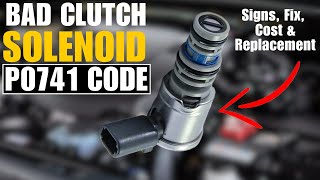
Generation note: The 2011-2018 range covers the third generation (UB; 2011-2017) and the start of the fourth generation (YB; 2017-2018) Rio. Both generations used a 6-speed A6GF1 automatic transmission where this P0741 issue is prevalent, as noted in manufacturer TSBs 🎬 Watch: A quick 3-minute breakdown of the P0741 code. and owner forums.
Symptoms You May Notice
- Check Engine Light is on
- Reduced fuel economy
- Engine RPMs are higher than normal at highway speeds, feeling like the transmission won't shift into the final gear
- Transmission shuddering or vibrating, especially when trying to maintain cruising speed (40-60 mph)
- Engine stalling or nearly stalling when coming to a stop
- Transmission may feel like it's slipping or shifting harshly
- Transmission may overheat, especially during long drives or under load
- Replacing the entire torque converter when only the TCC solenoid is faulty. This is a much more expensive repair and may not solve the problem if the issue is electronic or hydraulic.
- Replacing the entire transmission when only the solenoid, valve body, or internal harness needs service, as advised against in TSB-TRA051R1.
Most Likely Causes

- Faulty Torque Converter Clutch (TCC) Solenoid 🔴 High Probability This is a well-documented issue for the A6GF1 transmission. Kia's TSB-TRA051R1 specifically instructs technicians to replace the solenoid to fix P0741. The solenoids can fail electrically or become clogged with debris from normal wear, preventing them from operating the hydraulic valve correctly.
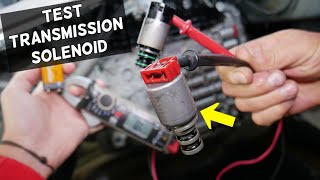
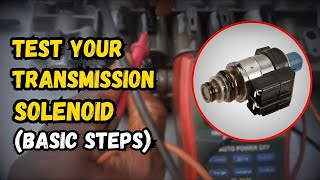
How to confirm: A mechanic can use a professional scan tool to command the TCC solenoid on and off while monitoring live data for TCC slip RPM. 🎬 See how to diagnose and test solenoids on Kia models. The solenoid's electrical circuit can also be tested for proper resistance (ohm test). A significant deviation from spec indicates failure.
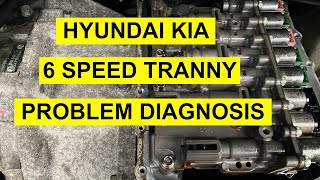
Typical fix: Replace the faulty TCC solenoid. This is located on the valve body inside the transmission and requires removing the transmission pan. 🎬 Watch: How to clean and test Kia 6-speed transmission solenoids.
Est. part cost: $50-$150 - Low or Dirty Transmission Fluid 🟡 Medium Probability The A6GF1 is sensitive to fluid condition. Degraded fluid loses its hydraulic properties and can't operate the clutches and solenoids effectively. It also leads to increased wear, creating debris that can clog the fine passages in the valve body and the solenoids themselves.
How to confirm: Check the transmission fluid level and condition via the fill plug (this transmission has no dipstick). The fluid should be at the correct level, bright red (for OEM fluid), and not smell burnt. Dark, brown, or metallic-flecked fluid indicates a problem.
Typical fix: Perform a transmission fluid drain-and-fill. If the fluid is very dirty, the pan should be dropped to clean it and replace the filter. A full flush is sometimes recommended but can also cause issues in high-mileage transmissions if not done regularly.
Est. part cost: $75-$250 for fluid and filter - Worn Transmission Valve Body ⚪ Low Probability The valve body in the A6 series transmission is known to be a weak point, with bores wearing out prematurely, sometimes in as little as 40,000 miles. This wear allows hydraulic pressure to leak past the valves, preventing the TCC solenoid from effectively engaging the clutch, even if the solenoid itself is new.
How to confirm: This is typically diagnosed after a new solenoid fails to fix the problem. It requires professional inspection of the valve body for scoring and wear, often using specialized tools.
Typical fix: The valve body may need to be repaired with oversized valves and reamed bores, or replaced entirely.
Est. part cost: $400-$1000
Rare But Worth Checking
- Damaged Internal Wiring Harness: The internal transmission wiring harness on the A6GF1 is a known high-failure part. Wires can become brittle from heat cycles and fluid exposure, leading to shorts or open circuits for the TCC solenoid, triggering P0741 or P0743.
- Failing Torque Converter: The internal clutch material of the torque converter itself can wear out, or the internal seals can fail. When this happens, it cannot lock up even if the solenoid and hydraulics are perfect. This often results in metallic debris in the transmission fluid.
- Faulty Transmission Control Module (TCM) or Powertrain Control Module (PCM): While very rare, the control module can fail and stop sending the correct signal to the TCC solenoid. This should be the last consideration after all other possibilities are ruled out. Replacement can be very expensive, often over $1,500.
Diagnosis Steps
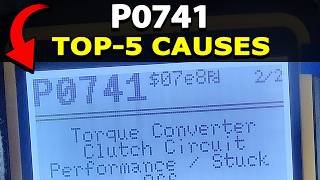
- Verify the P0741 code with an OBD-II scanner. Note any other transmission-related codes, especially electrical fault codes like P0743.
- Check the transmission fluid level and condition. The A6GF1 does not have a dipstick, so this must be done from a fill plug on the side of the transmission case with the vehicle level and at operating temperature. Fluid should be bright red and clear.
- Use a professional scan tool to monitor live data while driving. Watch 'TCC Slip Speed'. It should be high during acceleration and drop to near zero (under 50 RPM) when the TCC is commanded to lock at cruising speed. If slip remains high, there is a problem.
- Command the TCC solenoid on and off with the scan tool while stationary to listen for a click and observe data changes. This confirms if the solenoid is responding to commands.
- If the solenoid seems unresponsive, drop the transmission pan and test the electrical resistance of the TCC solenoid. Compare it to the manufacturer's specifications. An open circuit (infinite resistance) or short (zero resistance) indicates a failed solenoid.
- Inspect the internal wiring harness for any visible damage, corrosion, or loose connections while the pan is off.
- If the solenoid and wiring test good, the issue is likely hydraulic (clogged/worn valve body) or mechanical (failed torque converter), which requires more in-depth professional diagnosis.
Parts You'll Likely Need

- Torque Converter Clutch Solenoid
(OEM #46313-3B771, 46313-23010)— This is the most common failure part for P0741 on this vehicle, as confirmed by Kia's TSBs. It is the electronic valve that controls the lock-up function.
Trusted brands: Kia (OEM), Standard Motor Products (SMP), Fitzall
OEM price range: $70-$120
Aftermarket price range: $50-$90 - Automatic Transmission Fluid
(OEM #SP-IV)— Fluid must be drained and replaced to service the solenoid. Using the correct OEM-spec fluid is critical for the A6GF1 transmission.
Trusted brands: Kia/Hyundai SP-IV (OEM), Valvoline MaxLife ATF, Castrol Transmax Full Synthetic Multi-Vehicle
OEM price range: $18-$25 per quart
Aftermarket price range: $10-$20 per quart - Automatic Transmission Filter and Pan Gasket — These should always be replaced as part of the job when the transmission pan is removed to prevent leaks and ensure proper fluid filtration.
Trusted brands: Wix, ATP, Kia (OEM)
OEM price range: $40-$70
Aftermarket price range: $25-$50
Related Codes That Often Appear With This One
- P0743 — P0743 indicates an electrical circuit fault (e.g., open or short) in the TCC solenoid. If the solenoid's wiring fails, it can't function, leading to the P0741 performance code. TSB TRA051R1 lists these codes together as being resolved by solenoid replacement.
Technical Service Bulletins (TSBs) & Recalls
- TSB-TRA051: Provides information on replacing the Damper Clutch (D/C) Solenoid on 6-speed automatic transaxles with DTC P0741.
- TSBTRA051R1: Revises and expands upon the previous TSB, covering multiple DTCs and reinforcing the solenoid replacement procedure.
Platform-Specific Known Issues
- Kia issued Technical Service Bulletin TSB-TRA051 and its revision TSBTRA051R1, which directly instruct technicians to replace specific solenoids, including the Damper Clutch (TCC) solenoid, to resolve DTC P0741 on 6-speed automatic transaxles. The bulletin explicitly states NOT to replace the transaxle for this code.
Mechanic-Grade Diagnostic Values
- TCC Solenoid (Variable Force Solenoid) Resistance — expected: 5.1 - 5.3 Ohms. Failure: A reading of 0 ohms (short), infinite/OL (open), or a value significantly outside the 5.1-5.3 Ohm range.
- On/Off Shift Solenoid Resistance — expected: 10 - 11 Ohms. Failure: A reading significantly outside this range. This is for other solenoids in the valve body, useful for general diagnostics while the pan is off.
Scan Tool Commands That Help
- Kia GDS (Global Diagnostic System): Solenoid Actuation Test — This bidirectional command allows a technician to individually command the TCC solenoid on and off while the vehicle is stationary. It's used to verify if the solenoid is mechanically clicking and if the PCM driver circuit is functional. This can help isolate a failed solenoid from a wiring or PCM issue before removing the transmission pan.
- Kia GDS (Global Diagnostic System): Current Data Monitoring — While driving, a technician can monitor the commanded current (in milliamps) being sent to the TCC solenoid and compare it to the actual TCC slip RPM. If high current is commanded but slip remains high, it points to a hydraulic or mechanical failure (bad solenoid, worn valve body, bad torque converter).
Real Owner Repair Stories
- CarKiller Forum User (2007 Kia Rondo 2.7L V6, 178k miles (Note: While not a Rio, this uses a similar generation Kia automatic with TCC lockup, and the symptoms/code are identical)) — RPMs hunting up and down by about 200 RPM while going up hills, as if the torque converter was locking and unlocking repeatedly. Threw a P0741 code twice.
❌ Tried (didn't work) The user was advised by others that it was likely a worn-out transmission and that replacing the solenoid would be a waste of money.
✅ What actually fixed it The user did not post a final fix, but the symptoms described perfectly match TCC slip which is the primary indicator for P0741, reinforcing the diagnosis of a TCC system failure rather than general transmission wear.
OEM Part Supersession History
46313-23010→46313-3B771, 46313-3B073, 46313-3B170— Part number evolution and minor design updates by Hyundai/Kia for the VFS solenoids used across the A6 family of transmissions.
Heads up: While multiple part numbers exist for VFS solenoids in the A6GF1, it is critical to match the correct solenoid to its position. The TCC solenoid is a specific type (VFS, normally low). While other VFS solenoids may have the same resistance and connector, their hydraulic function can differ. Always replace with the specific TCC part number or a cross-referenced equivalent.
Helpful Videos




We Have This Part in Stock


The information in this article is provided for general reference and educational purposes only. Vehicle specifications, procedures, and part compatibility can vary by production date, trim level, and region. Always consult your vehicle's factory service manual and verify part numbers before purchasing or performing repairs. Safety-critical components such as airbags, seat belts, and braking systems should be installed by a qualified professional.
- Kia RIO:
- 🎬 Helpful Videos
- 🛍️ Shop This Part
- What's Unique About the 2011-2018 Kia RIO
- Diagnostic Flowchart
- Symptoms You May Notice
- Most Likely Causes
- Rare But Worth Checking
- Diagnosis Steps
- Parts You'll Likely Need
- Related Codes That Often Appear With This One
- Technical Service Bulletins (TSBs) & Recalls
- Platform-Specific Known Issues
- Mechanic-Grade Diagnostic Values
- Scan Tool Commands That Help
- Real Owner Repair Stories
- OEM Part Supersession History
- 🎟️ Get 5% Off