

P0740 on 2009-2016 Dodge Journey: TCC Solenoid and Torque Converter Guide
On a 2009-2016 Dodge Journey with the 62TE transmission, code P0740 almost always points to a failed torque converter, especially if jerking, shuddering, or slipping occurs at highway speeds. A Dodge TSB confirms this is the likely cause if the TCC solenoid tests okay. While the solenoid can be the cause, owner experiences and mechanic consensus strongly suggest the torque converter is the more probable, and more expensive, culprit.
- P0740 on a Dodge Journey indicates the torque converter clutch is failing to lock up as commanded by the computer.
- A manufacturer TSB (#9004206) for this vehicle's transmission (62TE) strongly suggests the torque converter is the root cause if the control solenoid is working.
- Diagnosis is critical. Before committing to a costly torque converter replacement, the TCC solenoid function and wiring must be tested.
- Always check the transmission fluid level and condition first, as low or dirty fluid can cause similar symptoms.
- This is a serious issue that requires professional attention due to the complexity of the transmission repairs involved.
What's Unique About the 2009-2016 Dodge JOURNEY

The Dodge Journey in this year range primarily uses the 62TE automatic transmission, which is known for torque converter issues. Dodge issued a Technical Service Bulletin (TSB #9004206, later superseded by others like 21-015-13) that directly links code P0740 to a failed torque converter if the control solenoid is functioning properly. The theory is that the internal clutch material of the converter wears out, preventing a solid lock-up. When the TCM commands lock-up and detects slip greater than a specified RPM (e.g., over 100 RPM), it sets the code. This makes the diagnosis more pointed than on other vehicles, where a circuit or solenoid fault is often the final diagnosis.
Diagnostic Flowchart

Tap your situation to follow the diagnostic path that matches what you're seeing on this vehicle.
Symptoms You May Notice
- Check Engine Light is on
- Vehicle jerking, shuddering, or slipping, particularly at highway speeds (40-60 mph).
- Engine RPMs are higher than normal at cruising speed.
- Noticeable decrease in fuel economy.
- Transmission may feel like it's hunting for gears or have harsh shifts.
- Stalling when coming to a stop, as if the clutch is not disengaging.
- A whining noise from the transmission area.
- Replacing the TCC solenoid when the actual failure is the torque converter. The provided TSB #9004206 specifically warns that if the solenoid checks out, the converter is the problem. Many owner and mechanic accounts confirm this; the code often returns shortly after a solenoid-only replacement.
Most Likely Causes


- Failed Torque Converter 🔴 High Probability As per Dodge TSB #9004206, this is the indicated failure on the 62TE transmission if the TCC solenoid is operational. The internal clutch lining of the converter can wear out, generating debris and failing to lock. This is the most widely reported real-world fix in owner forums.
How to confirm: Use a scan tool to monitor TCC slip RPM. If the solenoid is commanded on but slip remains high (over ~100 RPM), the converter clutch is failing. Finding excessive dark clutch material on the pan magnet is another strong indicator. A mechanic noted that in 100% of his repairs for this code on the 62TE, the torque converter was the ultimate cause.
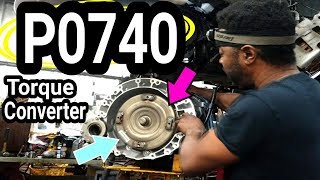
Typical fix: Replace the torque converter. This requires removing the transmission from the vehicle. 🎬 Watch: How to replace the torque converter and fix whining noises. Many mechanics recommend also replacing the front pump and/or pump seal at the same time.
Est. part cost: $200-$600 - Faulty Torque Converter Clutch (TCC) Solenoid 🟡 Medium Probability The TCC solenoid (also called a Variable Force Solenoid or EMCC solenoid) controls the hydraulic pressure to the converter clutch. It can fail electrically, mechanically (sticking), or become clogged with contaminated fluid. While a possible cause, it's often misdiagnosed when the converter is the real issue.
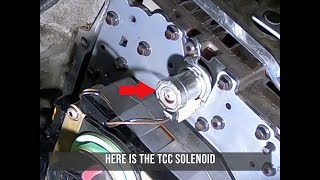
How to confirm: Test the solenoid's resistance with a multimeter to see if it's within the manufacturer's specification (a common range is around 5.0 ohms). A scan tool can also be used to command the solenoid on and off to check for a response. The solenoid is located behind the side cover of the transmission.
Typical fix: Replace the TCC solenoid. This requires removing the front transmission side pan, which is accessible from the driver's side wheel well after removing the battery and tray. 🎬 See this walkthrough for replacing the TCC solenoid and checking fluid.
Est. part cost: $60-$150 - Low or Dirty Transmission Fluid 🟡 Medium Probability The 62TE transmission is sensitive to fluid level and condition. Low fluid can cause pressure loss, while old, burnt, or contaminated fluid (often from a failing converter) can clog solenoids and hydraulic passages.
How to confirm: Check the transmission fluid level and condition. The fluid should be red and clear, not brown, black, or smell burnt. Note: Most Journeys do not have a traditional dipstick and require a special tool (Miller #9336A) and a specific temperature-based procedure to check the level accurately.
Typical fix: Perform a transmission fluid and filter change using the correct Mopar ATF+4 fluid. This is often the first step but rarely the final solution if the code is already present.
Est. part cost: $100-$250 - Failing Transmission Oil Pump ⚪ Low Probability Recall S44 (NHTSA 16V-461) was issued for some 2016 Dodge Journey models due to improperly manufactured transaxle oil pumps that could lead to a loss of hydraulic pressure. An owner complaint also linked P0740 to this issue. A failing pump can cause a lack of pressure to engage the TCC.
How to confirm: Requires testing transmission line pressure with a gauge set. A loss of pressure that affects overall transmission function points to the pump. A worn pump bushing can also lead to TCC codes. This is a professional-level diagnosis.
Typical fix: Replace the transmission oil pump. This is a major repair often done during a transmission rebuild or torque converter replacement.
Est. part cost: $150-$400
Rare But Worth Checking
- Internal Transmission Wiring Damage: The wiring harness inside the transmission leading to the solenoid pack can become brittle, shorted, or fail, causing an open or short circuit. This should be inspected when the pan is off. One Reddit user reported P0740 after a transmission swap that was suspected to be wiring-related.
- Faulty Powertrain Control Module (PCM): This is extremely rare. The PCM should only be considered after all other possibilities, including wiring, solenoids, and mechanical parts, have been exhaustively tested and ruled out.
Diagnosis Steps
- Check and verify the transmission fluid level and condition. Ensure the correct ATF+4 fluid is used. Note the lack of a dipstick on most models.
- Use an OBD-II scanner to check for any other related trouble codes, especially P2764 or other transmission codes.
- With an advanced scan tool, monitor the 'TCC Slip Speed' or 'Torque Converter Slip' data PID while driving at a steady cruise speed (above 45 mph).
- If the slip RPM is high (e.g., matching engine RPM or over 100 RPM) when the TCC is commanded 'On' or 'Locked', it confirms the clutch is not engaging mechanically.
- If the slip RPM is near zero as commanded, the issue may be intermittent or related to the circuit itself.
- Inspect the transmission's external wiring harness and connector for any damage, corrosion, or loose connections.
- If external wiring is good, the next step is to access the TCC solenoid. Drop the transmission side pan (from the driver's wheel well) to inspect the internal wiring and test the TCC solenoid's resistance with a multimeter.
- If the solenoid and wiring test good, but the slip remains high during the road test, the torque converter has failed internally, as indicated by TSB #9004206 and numerous owner experiences.
Parts You'll Likely Need
- Torque Converter
(OEM #04753534AD (for 2.4L), other codes include 538AA)— This is the most probable cause of P0740 on the 62TE transmission, as confirmed by a manufacturer TSB and extensive owner reports.
Trusted brands: Mopar, DACCO, Transtar
OEM price range: $400-$600
Aftermarket price range: $200-$400 - Transmission Solenoid Pack
(OEM #68371508AB (supersedes 5078709AB, 68376696AA))— This contains the TCC solenoid. It is a common failure point and is often replaced as a primary diagnostic step before condemning the torque converter.
Trusted brands: Mopar, Dorman, Rostra Precision Controls
OEM price range: $250-$400
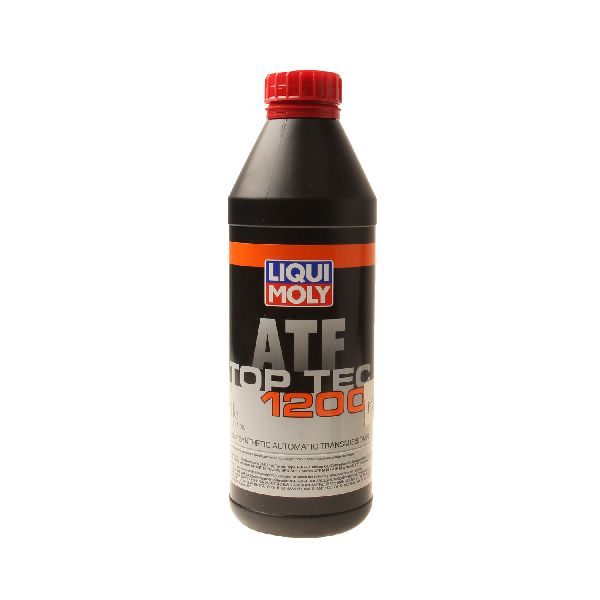
Aftermarket price range: $150-$250 - Mopar ATF+4 Transmission Fluid
(OEM #68218057AC (Quart), 68218058AC (Gallon))— This specific fluid is required for any service on the 62TE transmission. Using incorrect fluid can cause shifting problems and component damage.
Trusted brands: Mopar, Valvoline, Castrol
OEM price range: $10-$15 (quart)
Aftermarket price range: $7-$12 (quart)
Related Codes That Often Appear With This One
- P2764 — This code for 'Torque Converter Clutch Pressure Control Solenoid Control Circuit Low' is often seen with P0740. TSB #9004206 groups them together as pointing to a torque converter failure if the solenoid is okay.
- P0700 — This is a generic code indicating that the Transmission Control Module (TCM) has stored a fault code. It acts as a general alert and will always be present alongside a specific transmission code like P0740.
- P0741 — P0741 indicates 'Torque Converter Clutch Circuit Performance or Stuck Off'. While P0740 is often an electrical circuit fault definition, on the 62TE it is triggered by excessive slip, making it functionally similar to P0741 and reinforcing the likelihood of a mechanical converter failure.
Technical Service Bulletins (TSBs) & Recalls
- TSB #9004206: Links P0740 and P2764 to torque converter failure on 62TE transmissions if the solenoid is functional.
- TSB #21-015-13: Supersedes previous bulletins and provides updated diagnostic information for P0740 and related shudder/slip complaints, reinforcing the torque converter as the likely cause.
Platform-Specific Known Issues
- Dodge Technical Service Bulletin #9004206 explicitly states that for vehicles with the 62TE transmission, if the vehicle is jerking or slipping with code P0740 or P2764, and the TCC solenoid operation is confirmed to be okay, the torque converter has failed and must be replaced.
- Safety Recall S44 / NHTSA 16V-461 was issued for certain 2016 Dodge Journey models for an improperly manufactured transaxle oil pump that could fail and cause a loss of motive power.
- The 62TE transmission does not have a conventional dipstick for checking fluid levels. It requires a special tool and a procedure that involves monitoring fluid temperature with a scan tool, making DIY fluid checks difficult for novices.
Mechanic-Grade Diagnostic Values
- TCC Solenoid Resistance — expected: ~5.0 - 5.3 Ohms at ~70°F. Failure: A reading significantly outside this range, or an open/short circuit.
- Shift Solenoid Resistance (for comparison) — expected: ~1.6 - 1.9 Ohms at ~70°F. Failure: A reading that is significantly different from the other identical shift solenoids in the pack.
- Scan Tool TCC Slip RPM (in FEMCC mode) — expected: Under 60 RPM. Failure: Slip is greater than 100 RPM for 10 seconds.
- Scan Tool TCC Solenoid Duty Cycle (in PEMCC mode) — expected: Below 85%. Failure: Duty cycle is commanded above 85% for 10 seconds, indicating the TCM is trying its hardest to apply the clutch but it's still slipping.
Scan Tool Commands That Help
- Advanced Scan Tool (e.g., wiTECH, Autel, Snap-on): TCC Solenoid Activation / Duty Cycle Control — This bidirectional command allows a technician to manually command the TCC solenoid on, off, or at a specific duty cycle while the vehicle is on a lift. This helps isolate whether the solenoid is physically responding to electrical commands, separating a circuit/solenoid issue from a mechanical/hydraulic one.
- Advanced Scan Tool: View Event Data / Freeze Frame — This function shows the vehicle's operating conditions (speed, temperature, engine load, etc.) at the exact moment the P0740 code was triggered. This can provide crucial clues, for example, if the code only sets when the transmission is very hot.
Wiring & Ground Locations
- Transmission Connector (C1) — The main round electrical connector on the 62TE transmission case.. This is the primary connection point for all transmission electronics. Testing for power and control signals should be done here. Pin 3 is the TCC VFS (Variable Force Solenoid) control wire, and Pin 10 is the main power feed from the transmission control relay.
- Main Battery Ground Stud — Located on the driver's side strut tower in the engine bay. The negative battery cable connects here.. This is the central grounding point for the vehicle's electrical system. Corrosion or a loose connection here can cause widespread, erratic electrical issues, including fault codes for control circuits like P0740.
- G924 — Lower right rear corner of the engine compartment.. This is a key engine compartment ground point. A poor connection here could affect the transmission control circuits.
- G305 — Under the front passenger's seat.. This is an interior ground point that services multiple modules. While less likely to be the primary cause, it's part of the overall ground system that needs to be solid for proper module communication.
Real Owner Repair Stories
- Dodge Journey Forum user (2016 Dodge Journey, 3.6L V6) — Check Engine Light with code P0740. Transmission otherwise runs great with no noticeable problems.
❌ Tried (didn't work) Replaced the torque converter., Replaced the TCC solenoid.
✅ What actually fixed it Unresolved. The owner reported the code remained even after replacing the two most common culprits, suggesting the fault lies elsewhere, such as internal wear, valve body issues, or a wiring problem. - Reddit user in r/MechanicAdvice (2016 Chrysler Town & Country (same 62TE transmission)) — Check Engine Light with P0740 immediately after a used transmission was installed. Vehicle drives and shifts normally with no shudder or slipping.
❌ Tried (didn't work) Clearing the code (it returns)., Fixing a pan leak and correcting the fluid level.
✅ What actually fixed it Unresolved. The context strongly suggests the issue is not a typical wear-and-tear failure but is related to the swap. Possibilities include a damaged wiring harness during installation, a faulty solenoid/converter in the replacement transmission, or a compatibility issue.
When the Usual Fixes Don't Work
- While the vast majority of P0740 cases on the 62TE transmission are resolved by replacing the torque converter or the TCC solenoid, there are documented instances where this does not fix the problem. In one case involving a 2016 Dodge Journey, the owner replaced both the torque converter and the TCC solenoid, yet the P0740 code persisted. This indicates that in some situations, the fault lies deeper within the transmission's hydraulic or mechanical systems, such as a worn transmission pump, worn accumulator bores in the valve body, or an elusive wiring issue that wasn't resolved by simply replacing the end components.
OEM Part Supersession History
5078709AA, 5078709AB, 68371508AA, 68376696AA→68371508AB— Standard part revision and consolidation by the manufacturer.
Heads up: The new part number (68371508AB) is the correct service replacement for all the previous numbers and should be fully compatible with all 2009-2016 Dodge Journey models with the 62TE transmission.
Model Year Variations Within This Range
- 2016 only: Some 2016 models were subject to NHTSA recall 16V-461 (Mopar S44) for a transaxle oil pump that could fail, leading to a loss of hydraulic pressure and propulsion. This can be a direct cause of P0740 if the pump fails to supply pressure to the TCC circuit.
- 2009-2016: While the core mechanicals are similar, TCM firmware was updated over the years. This can lead to slight differences in when and how a diagnostic trouble code is triggered, though the root causes for P0740 remain consistent.
Helpful Videos
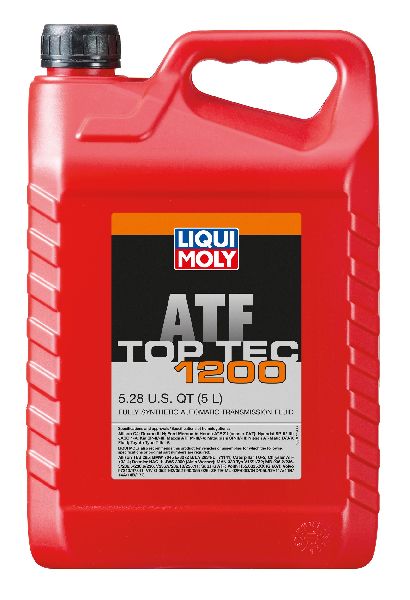
We Have This Part in Stock


The information in this article is provided for general reference and educational purposes only. Vehicle specifications, procedures, and part compatibility can vary by production date, trim level, and region. Always consult your vehicle's factory service manual and verify part numbers before purchasing or performing repairs. Safety-critical components such as airbags, seat belts, and braking systems should be installed by a qualified professional.
- Dodge JOURNEY:
- 🎬 Helpful Videos
- 🛍️ Shop This Part
- What's Unique About the 2009-2016 Dodge JOURNEY
- Diagnostic Flowchart
- Symptoms You May Notice
- Most Likely Causes
- Rare But Worth Checking
- Diagnosis Steps
- Parts You'll Likely Need
- Related Codes That Often Appear With This One
- Technical Service Bulletins (TSBs) & Recalls
- Platform-Specific Known Issues
- Mechanic-Grade Diagnostic Values
- Scan Tool Commands That Help
- Wiring & Ground Locations
- Real Owner Repair Stories
- When the Usual Fixes Don't Work
- OEM Part Supersession History
- Model Year Variations Within This Range
- 🎟️ Get 5% Off