

P0736 on 2011-2013 GMC Sierra: Reverse Incorrect Ratio Causes and Fixes
On a 2011-2013 GMC Sierra, P0736 means the transmission cannot properly engage reverse. After checking for low or burnt fluid, the most likely cause is an internal issue with the 6L80 transmission's valve body or a failed 3-5-Reverse clutch pack. A cracked 3-5-R clutch drum is a very common and well-documented failure point for this transmission. This is a complex repair best left to a professional.
- P0736 means your truck's transmission is failing to engage reverse gear properly.
- Always check the transmission fluid level and condition first; it's the simplest possible fix.
- On the 2011-2013 Sierra, this code frequently points to a known issue within the 6L80 transmission's valve body or a failed clutch pack.
- This is not a simple DIY repair. Diagnosis and repair should be handled by a qualified transmission technician to avoid causing more damage.
- Do not continue to drive for an extended period, as you have no reverse gear and risk causing a catastrophic, more expensive transmission failure.
What's Unique About the 2011-2013 Gmc SIERRA
The 2011-2013 GMC Sierra is equipped with the 6L80 or 6L90 6-speed automatic transmission. While low fluid is always the first check, these specific transmissions are known for internal hydraulic and mechanical issues that cause a P0736 code. Failures often center on the valve body or the 3-5-Reverse clutch assembly. Specifically, the stamped steel 3-5-R clutch drum is notorious for developing cracks at the weld, leading to a loss of hydraulic pressure for the clutch pack and a no-reverse condition. Another common failure is a checkball in the valve body wearing and getting stuck in the separator plate, blocking the reverse hydraulic circuit.
Diagnostic Flowchart
Tap your situation to follow the diagnostic path that matches what you're seeing on this vehicle.
Symptoms You May Notice
- Check Engine Light is on
- Transmission will not shift into reverse
- Delayed or harsh engagement into reverse
- Vehicle does not move when in reverse
- Grinding or clunking sound when shifting into reverse
- A burning smell from the transmission fluid
- Transmission slipping out of reverse
- Replacing only a shift solenoid when the root cause is a worn valve body or failed clutch pack. Debris from the primary failure will likely cause the new solenoid to fail as well.
- Condemning the 3-5-R drum during an air check due to hearing air escape from the normal air bleed orifice, not an actual crack.
Most Likely Causes
- Low or Burnt Transmission Fluid 🔴 High Probability Leaks from cooler lines, pan gaskets, or seals can lead to low fluid levels over time. Low fluid causes a loss of hydraulic pressure required to engage the clutches. TSB #PIP4379K specifically calls out checking the fluid level as a primary diagnostic step.
How to confirm: Check the transmission fluid level and condition using the dipstick. The fluid should be at the correct level, red in color, and not smell burnt. Dark, gritty, or metallic fluid indicates internal clutch wear and a probable major failure.
Typical fix: If low, top off the fluid with DEXRON-VI and inspect for leaks. If the fluid is burnt or dirty, a fluid and filter change is a starting point, but it often indicates a more serious internal problem is present that will not be solved by the fluid change alone.
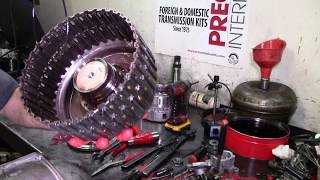
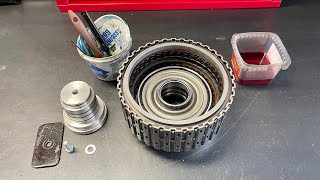
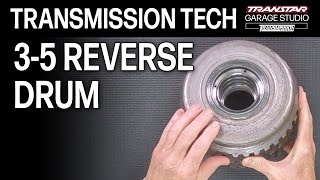
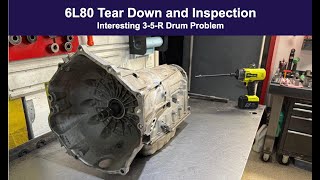
Est. part cost: $50-$150 for fluid and filter - Failed 3-5-Reverse Clutch Drum 🔴 High Probability The 6L80/6L90 uses a stamped steel 3-5-R clutch drum where the center tower is fusion welded to the housing. This weld is a known weak point and is prone to cracking, causing a loss of hydraulic pressure to the 3-5-R clutch pack. This is a very common failure mode for these transmissions, often resulting in a sudden loss of reverse.
How to confirm: This is a major internal failure. Diagnosis is confirmed by finding excessive clutch material in the transmission pan and by a complete transmission teardown and inspection. A technician can air-check the drum for leaks once it is removed from the transmission. 🎬 See how to inspect the 3-5-Reverse drum for cracks.
Typical fix: Requires a complete transmission rebuild or replacement. The cracked drum must be replaced with an updated or aftermarket version. The burnt clutches must also be replaced.
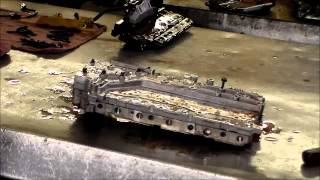
Est. part cost: $1500-$4000+ for a rebuild or replacement transmission - Worn Valve Body Components 🟡 Medium Probability The 6L80/6L90 transmission is known for valve body issues. A common failure is a checkball (specifically the #5 ball for the reverse circuit) wearing down and getting stuck in the separator plate, blocking hydraulic flow. Bore wear around regulator valves can also cause pressure loss.
How to confirm: A transmission specialist must drop the pan and valve body to physically inspect the checkballs, valve bores, and separator plate for wear and blockages. Vacuum testing the valve body can also identify leaks.
Typical fix: Requires replacement of the worn checkballs and repair of the separator plate. Aftermarket kits like the Sonnax Zip Kit (6L45-6L90-ZIP) are available to address these wear issues without needing to replace the entire valve body 🎬 Watch: A detailed look at 6L80E valve body components..
Est. part cost: $100-$800 for repair kits or a remanufactured valve body - Faulty Shift Solenoid ⚪ Low Probability While solenoids can fail, it is less common for a single solenoid failure to cause only a P0736 code without other accompanying codes. Often, debris from another failure (like a failing torque converter) clogs the solenoid, making the solenoid a symptom rather than the root cause.
How to confirm: A professional scan tool can command the reverse solenoid on and off to test its electrical function. The solenoid can also be removed and tested for resistance.
Typical fix: Replace the faulty shift solenoid. This is located inside the transmission on the valve body (TEHCM).
Est. part cost: $40-$100
Rare But Worth Checking
- Faulty Transmission Control Module (TCM): A software glitch or internal hardware failure in the TCM (which is integrated into the valve body on the 6L80) can incorrectly set this code. This is rare and should only be considered after all mechanical and hydraulic causes are ruled out.
- Cracked Internal Suction Filter: TSB #PIP4379N mentions that a crack in the body of the internal transmission filter can cause it to suck air, leading to a loss of pump prime and setting ratio codes like P0736, especially after a fluid change or on a cold start.
Diagnosis Steps
- Connect an OBD-II scanner to confirm P0736 and check for any other transmission-related codes.
- Check the transmission fluid level and condition. Note if it is low, dark, smells burnt, or contains metallic debris.
- If the fluid is low, top it off with DEXRON-VI, clear the code, and test drive to see if the problem returns. If it does, inspect for leaks.
- If the fluid is dirty or burnt, a fluid and filter change may be attempted, but be prepared for a more serious issue.
- Have a professional use a scan tool to monitor live data from the input and output speed sensors while attempting to engage reverse.
- If basic checks don't resolve the issue, the transmission pan should be dropped to inspect for metal shavings or clutch material, which would indicate a major internal failure.
- Inspect the valve body for worn or stuck checkballs (especially the #5 ball for the reverse circuit), scored valve bores, and a damaged separator plate.
- Inspect the internal transmission filter for any cracks in its housing.
- If no valve body or filter issues are found, the problem is almost certainly a deeper internal mechanical failure, such as the cracked 3-5-R clutch drum, requiring transmission removal and teardown for confirmation.
Parts You'll Likely Need
- Transmission Fluid and Filter Kit
(OEM #24236933 (Filter), Gasket is often separate or reusable)— This is the first and most basic service to perform when addressing any transmission issue. Correct fluid level is critical for hydraulic pressure.
Trusted brands: ACDelco
OEM price range: $80-$150
Aftermarket price range: $50-$100 - Transmission Valve Body Repair Kit
(OEM #6L45-6L90-ZIP (Sonnax))— A common failure point on the 6L80/6L90 transmission that directly causes a no-reverse condition. This kit addresses wear in the valve body that leads to pressure loss.
Trusted brands: Sonnax
OEM price range: N/A
Aftermarket price range: $100-$250 - 3-5-Reverse Clutch Drum — A cracked drum is a primary cause of P0736 on this platform. If the drum fails, it must be replaced, which requires a full transmission rebuild.
Trusted brands: ACDelco (Updated Design), Aftermarket Heavy-Duty options
OEM price range: $150-$300 (part only)
Aftermarket price range: $100-$250 (part only)
Related Codes That Often Appear With This One
- P0700 — This is a general transmission fault code that simply indicates the TCM has stored a trouble code, such as P0736.
- P0776 — This code for 'Pressure Control Solenoid 'B' Stuck Off' is often associated with problems in the 3-5-Reverse clutch circuit and can be a strong indicator of a cracked 3-5-R drum or a related valve body issue.
- P0731-P0735 — These codes indicate incorrect gear ratios in forward gears. If seen with P0736, it strongly suggests a widespread problem like very low fluid pressure, a clogged/cracked filter, or a major mechanical failure affecting multiple gear sets.
Technical Service Bulletins (TSBs) & Recalls
- PIP4379K: Mentions P0736 as part of a group of codes related to no drive, delayed engagement, or no reverse engagement, suggesting a common underlying issue. The bulletin advises following published diagnostics, starting with code P0701 if present, and ensuring the fluid level is correct.
Platform-Specific Known Issues
- The provided Technical Service Bulletin (TSB) #PIP4379K lists P0736 among a wide range of codes related to delayed engagement or no engagement in drive or reverse, pointing to a known pattern of issues on these GM trucks. The bulletin advises checking fluid level and inspecting the internal filter for cracks.
- A very common failure is the weld on the 3-5-Reverse clutch drum cracking, leading to a complete loss of hydraulic pressure for that clutch pack and a sudden no-reverse condition.
Mechanic-Grade Diagnostic Values
- On/Off Shift Solenoid Resistance — expected: 20 - 40 Ohms. Failure: A reading outside this range indicates a failed solenoid coil.
- PWM Pressure Control Solenoid Resistance — expected: 3 - 8 Ohms. Failure: A reading outside this range indicates a failed solenoid coil.
- Solenoid Operational Voltage from TCM — expected: 8.3 - 9.3 Volts. Failure: Incorrect voltage from the TCM can indicate an internal module fault.
Scan Tool Commands That Help
- GDS2 / Tech2: Solenoid Cleaning Procedure — This automated test cycles all solenoids to dislodge small amounts of debris. It can be used as a diagnostic step if a sticking solenoid is suspected before replacing the TEHCM.
- GDS2 / Tech2: Output Control - Cycle Solenoids — Allows a technician to manually command individual solenoids on and off while monitoring pressure to isolate a specific solenoid that is failing to actuate.
- GDS2 / Tech2 or equivalent: Fast Learn / Reset Adapts — This procedure must be performed after installing and programming a new TEHCM to allow the module to learn the hydraulic characteristics of the transmission for proper shift quality.
Wiring & Ground Locations
- G103 — On the lower left front of the engine block.. A primary engine block ground. A poor connection here can affect sensor readings and control modules that the TCM relies on for proper operation.
- G104 — On the back of the left (driver's side) cylinder head.. This ground is critical for the engine and transmission control systems. A loose or corroded connection can introduce electrical noise and cause erratic behavior.
- TEHCM Connector Pin 4 — On the main 16-pin connector at the transmission case.. This is the main battery positive (+) feed to the TEHCM. Verifying solid voltage at this pin is a fundamental step in diagnosing any electronic transmission fault.
- TEHCM Connector Pin 5 — On the main 16-pin connector at the transmission case.. This is the main ground (-) for the TEHCM. Verifying a clean, solid ground path at this pin is critical for stable module operation.
When the Usual Fixes Don't Work
- While the pass 2 information correctly flags a faulty shift solenoid as a low-probability cause, it's critical to understand *why*. On the 6L80, a solenoid code is often a symptom of a failing torque converter. The torque converter clutch sheds friction material, which contaminates the fluid and clogs the fine mesh screens on the solenoids, causing them to stick. Replacing the TEHCM (solenoid body) without also replacing the torque converter and flushing the cooler lines will almost certainly lead to a repeat failure.
OEM Part Supersession History
24256861→24260028 (and others)— Hardware and software revisions to improve reliability and address common failure points like pressure switch degradation.
Heads up: TEHCMs are year-range specific. A unit for a 2011-2013 Sierra (e.g., 24256861) is not directly compatible with a 2014+ model (e.g., 24274046) due to hardware and software differences. The correct part for the year must be used and programmed to the vehicle's VIN.
Model Year Variations Within This Range
- Mid-2011 and later: The 3-5-Reverse clutch drum was redesigned mid-2011 with a different depth for the apply/balance piston snap ring. The later design is less prone to the weld cracking that causes P0736. When rebuilding an early 2011 or older transmission, it is a common upgrade to use the later style drum.
Helpful Videos
Used OEM Parts in Stock


New Aftermarket Parts Available



The information in this article is provided for general reference and educational purposes only. Vehicle specifications, procedures, and part compatibility can vary by production date, trim level, and region. Always consult your vehicle's factory service manual and verify part numbers before purchasing or performing repairs. Safety-critical components such as airbags, seat belts, and braking systems should be installed by a qualified professional.
- Gmc SIERRA:
- 🎬 Helpful Videos
- 🛍️ Shop This Part
- What's Unique About the 2011-2013 Gmc SIERRA
- Diagnostic Flowchart
- Symptoms You May Notice
- Most Likely Causes
- Rare But Worth Checking
- Diagnosis Steps
- Parts You'll Likely Need
- Related Codes That Often Appear With This One
- Technical Service Bulletins (TSBs) & Recalls
- Platform-Specific Known Issues
- Mechanic-Grade Diagnostic Values
- Scan Tool Commands That Help
- Wiring & Ground Locations
- When the Usual Fixes Don't Work
- OEM Part Supersession History
- Model Year Variations Within This Range
- 🎟️ Get 5% Off