

P0736 on 2006-2010 GMC Sierra: Reverse Incorrect Ratio Causes and Fixes
P0736 on a 2006-2010 GMC Sierra means the transmission is failing to engage or hold reverse gear. The most common causes are low or burnt transmission fluid. However, it often points to a more serious internal issue like a failed shift solenoid, a broken sun shell in 4-speed models, or worn clutches in 6-speed models, requiring professional diagnosis and repair.
- P0736 indicates a serious problem with engaging reverse gear; do not ignore it.
- Always check the transmission fluid level and condition first, as this is the simplest and a common cause.
- Driving is not recommended as you may not have a reverse gear and could cause severe, expensive damage to the transmission.
- Due to the complexity of automatic transmissions, this code almost always requires diagnosis and repair by a professional mechanic.
What's Unique About the 2006-2010 Gmc SIERRA
This year range covers two Sierra generations: the GMT800 ('Classic' models in 2006/2007) and the GMT900 (new body style from 2007). GMT800s typically used the 4L60-E or 4L65-E 4-speed automatic, while many GMT900s used the newer 6L80 6-speed. While the code's meaning is the same, a common failure point on the 4L60-E/4L65-E that can cause this code is a broken reaction sun shell, a well-documented weak point that also causes loss of 2nd and 4th gear. For the 6L80, this code often points to a failed 3-5-Reverse clutch pack or issues within the valve body.
Diagnostic Flowchart
Tap your situation to follow the diagnostic path that matches what you're seeing on this vehicle.
Generation note: The 2006-2010 range includes the end of the first generation (GMT800), sold as the 'Classic' in 2007, and the second generation (GMT900), which debuted in 2007. GMT800 models often have 4-speed transmissions (4L60-E, 4L65-E, 4L70-E), while GMT900s may have a 4-speed or the 6-speed 6L80. A key failure on the 4-speeds is a broken sun shell, while 6L80 models are known for valve body issues and worn 3-5-R clutch packs. All are susceptible to fluid, solenoid, and clutch issues.
Symptoms You May Notice
- Transmission will not shift into reverse.
- Delayed or harsh engagement into reverse.
- Check Engine Light is on.
- Transmission slipping while in reverse.
- Engine RPMs flare when shifting to reverse, with no movement.
- Grinding or clunking noise when reverse is selected.
- No symptoms other than the code (rare).
- Replacing speed sensors. While speed sensors provide the data, they are rarely the cause of a P0736 code. The code indicates a mechanical or hydraulic slip, which the sensors are correctly reporting.
- Condemning the TCM immediately. This code is most often caused by a mechanical or hydraulic fault inside the transmission. The TCM is usually just reporting the problem it detects.
Most Likely Causes
- Low or Dirty Transmission Fluid 🔴 High Probability Transmissions like the 4L60-E and 6L80 are sensitive to fluid level and condition. Leaks or extended service intervals can easily lead to low or degraded fluid, causing hydraulic pressure loss.
How to confirm: Check the transmission fluid level and condition using the dipstick (if equipped) when the transmission is at operating temperature. The fluid should be at the correct level, bright red (DEXRON-VI), and not smell burnt.
Typical fix: Top off the fluid or perform a transmission fluid and filter change. If the fluid is very dark or contains metal, internal damage is likely.
Est. part cost: $50-$150 - Failed Shift Solenoid 🟡 Medium Probability Solenoids control the flow of hydraulic fluid to engage different gears. Over time, they can fail electronically or become clogged with debris, preventing reverse from engaging.
How to confirm: A professional technician can command the solenoid on and off with a scan tool and check for resistance across the solenoid's circuit (typically 20-22 ohms for a 4L60-E). This requires dropping the transmission pan.
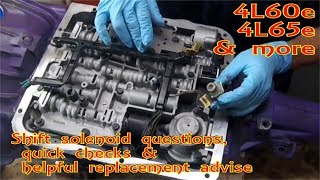
Typical fix: Replace the faulty shift solenoid. For the 4L60-E, the A and B shift solenoids (Part #24230298) are identical and often replaced as a pair. 🎬 See this walkthrough on replacing Silverado shift solenoids.
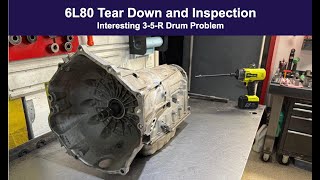
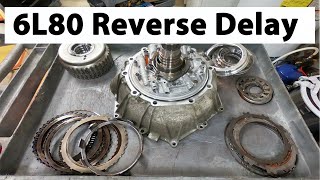
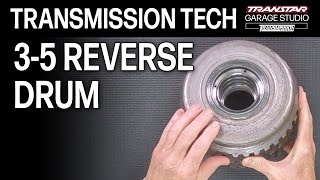
Est. part cost: $100-$300 - Internal Mechanical Failure (e.g., Worn Clutch Pack, Broken Sun Shell) 🟡 Medium Probability On 4L60-E/4L65-E transmissions, the reaction sun shell is a notorious weak point that can break 🎬 Watch: See how a stripped sun shell causes reverse failure., causing a loss of reverse, 2nd, and 4th gears. On 6L80 models, the 3-5-Reverse clutch pack is a common failure point. 🎬 Watch: 6L80 reverse drum failure and internal inspection. Worn clutch frictions prevent the gear from holding power.
How to confirm: This requires a transmission teardown and inspection. A large amount of metallic or clutch material shavings in the transmission pan is a strong indicator of internal mechanical failure.
Typical fix: Rebuild or replace the transmission. Upgraded sun shells like the Sonnax 'Smart Shell' (Part #77749-02K) are often used in 4L60-E rebuilds to prevent repeat failure.
Est. part cost: $1800-$4500 - Faulty Transmission Valve Body ⚪ Low Probability The valve body directs hydraulic fluid. It can become clogged with debris, check balls can wear, or solenoid regulator valves can wear out their bores, causing pressure loss to the reverse circuit. On the 6L80, the gasket between the pump stator and body can fail, causing cross-leaks.
How to confirm: A technician will perform hydraulic pressure tests at various ports to check for pressure loss. The valve body may be removed for inspection of the bores and check balls.
Typical fix: Clean and inspect the valve body, install a repair kit (e.g., Sonnax TCC Regulator Valve Kit), or replace the entire valve body assembly.
Est. part cost: $300-$800
Rare But Worth Checking
- Faulty Transmission Control Module (TCM): While uncommon, a failing TCM can misinterpret sensor data or fail to command shifts correctly. On 6L80 transmissions, the TCM (TEHCM) is located inside the transmission on the valve body, making it susceptible to heat and vibration. This is usually considered after all mechanical and hydraulic causes are ruled out.
- Wiring Issues: Damaged wiring or corroded connectors between the TCM and the transmission's sensors or solenoids can disrupt signals, leading to the code. Check the main harness connector at the transmission case for corrosion or pushed-out pins.
- Worn Stator Shaft Bushings (6L80): The aluminum bushings in the 6L80 stator shaft are prone to premature wear, which can cause TCC apply/release issues and contribute to pressure loss that may affect reverse engagement.
Diagnosis Steps
- Check the transmission fluid level and condition. If low, top it off with DEXRON-VI. If it is dark, burnt, or contains metal particles, a fluid/filter change is a starting point, but internal damage is likely.
- Scan the TCM for any other transmission-related codes. Codes for other gear ratio errors (P0731-P0735) or solenoid faults can help pinpoint the issue.
- Use a professional scan tool to monitor the input and output speed sensors in real-time while attempting to engage reverse. This confirms if the computer is seeing the slip.
- Perform a transmission fluid pressure test. A technician will connect gauges to test ports to verify if the hydraulic pressure is within spec for reverse gear. Low pressure points to a leak, worn pump, or valve body issue.
- If pressure is low or fluid is full of debris, drop the transmission pan to inspect for metal shavings, clutch material, or broken hard parts. This gives access to the valve body and solenoids.
- Test the resistance and function of the reverse shift solenoid. For a 4L60-E, this would be the 'A' or 'B' shift solenoid (Part #24230298).
- If solenoids and the valve body appear fine, the issue is almost certainly a deeper internal mechanical problem (clutches, bands, sun shell) requiring a transmission rebuild or replacement.
Parts You'll Likely Need
- Transmission Fluid and Filter Kit
(OEM #ACDelco 24236933 (4L60-E Filter Kit))— This is the first and most basic step. Dirty or low fluid is a common cause of hydraulic issues that trigger this code.
Trusted brands: ACDelco
OEM price range: $60-$100
Aftermarket price range: $40-$80 - Transmission Shift Solenoid (A/B)
(OEM #ACDelco 24230298 (For 4L60-E/4L65-E))— A failed solenoid can prevent hydraulic pressure from engaging the reverse gear components. On the 4L60-E, the A and B solenoids are identical and control multiple shifts.
Trusted brands: ACDelco, Bosch
OEM price range: $50-$120
Aftermarket price range: $30-$80 - Reaction Sun Shell (4L60-E)
(OEM #Sonnax 77749-02K ('The Beast'))— The factory sun shell in the 4L60-E is a common failure point that leads to a loss of reverse, 2nd, and 4th gears. Aftermarket upgraded versions are highly recommended during a rebuild.
Related Codes That Often Appear With This One
- P0700 — This is a general transmission fault code that simply means the TCM has stored a trouble code. It acts as a 'check engine light' for the transmission system and will almost always be present with P0736.
- P0731-P0735 — These codes indicate incorrect gear ratios in forward gears. Seeing them alongside P0736 strongly suggests a widespread problem like very low fluid, a clogged filter, or a major internal failure affecting multiple gear sets.
- P0729, P0734 (4L60-E) — On a 4L60-E transmission, having codes for incorrect 2nd gear (P0732) or 4th gear (P0734) ratio along with P0736 (no reverse) is a classic symptom set for a broken reaction sun shell.
Technical Service Bulletins (TSBs) & Recalls
- PIP4379K: Mentions P0736 as one of several DTCs related to conditions like no reverse engagement, delayed shifts, or a range inhibit. It advises technicians to follow standard service diagnostics for the specific symptom.
- 01-07-30-038: While not directly for P0736, this older TSB addresses a no 3rd or 4th gear condition due to a stuck 2-3 shift solenoid (P0757), highlighting the known issues with solenoids in this transmission family.
Platform-Specific Known Issues
- The provided Technical Service Bulletin (TSB) #PIP4379K mentions P0736 in a long list of transmission codes that can result from issues causing a no-reverse condition, confirming this is a known problem area for GM trucks.
- For 4L60-E equipped models, a broken reaction sun shell is the most infamous cause of P0736, often accompanied by loss of 2nd and 4th gear. This is a widely discussed failure in owner forums.
- For 6L80 equipped models, a cracked 3-5-Reverse clutch drum wave plate was a common issue in early models, though less so by this year range. More common now is wear in the valve body or failure of the 3-5-R clutch pack itself.
Mechanic-Grade Diagnostic Values
- 4L60-E Shift Solenoid (A or B) Resistance — expected: 20-30 Ohms (typically 20-25 Ohms). Failure: Infinite resistance (open) or 0 Ohms (shorted). Readings outside the 20-30 Ohm range indicate a failing solenoid.
- 4L60-E EPC (Electronic Pressure Control) Solenoid Resistance — expected: 3.5 - 8.0 Ohms. Failure: Reading outside of this range.
- 6L80 Shift Solenoid (On/Off type) Resistance — expected: 20 - 24 Ohms. Failure: Reading outside of this range.
- 6L80 Pressure Control Solenoids (PWM type) Resistance — expected: 3 - 8 Ohms (typically 5-6 Ohms). Failure: Reading outside of this range.
- 4L60-E Line Pressure at Idle (in Reverse) — expected: 65 - 75 PSI (can be up to 125 PSI). Failure: Significantly lower pressure indicates a hydraulic leak, worn pump, or valve body issue.
- 4L60-E Line Pressure at Idle (in Drive) — expected: 55 - 65 PSI. Failure: Lower pressure can indicate an internal leak or pump issue.
- 4L60-E Line Pressure at WOT Stall (in Reverse) — expected: up to 325 PSI. Failure: Low pressure under load confirms a significant hydraulic problem.
Scan Tool Commands That Help
- Tech2 / GDS2: Solenoid Cleaning Procedure — On 6L80 transmissions, if debris is suspected of causing a solenoid to stick, a scan tool can command the TEHCM to cycle all solenoids in a cleaning routine. This can sometimes resolve intermittent issues without replacing parts.
- Tech2 / GDS2: Solenoid Valve State — To command individual shift solenoids on and off while monitoring transmission pressure at the corresponding test port. This helps isolate a failed solenoid from a hydraulic leak or valve body problem.
Wiring & Ground Locations
- Main Transmission Connector (X175 on some models) — On the side of the transmission case, where the main vehicle harness connects to the transmission.. This is the primary connection for all electronic signals to and from the transmission, including power, ground, sensor data, and solenoid commands. Corrosion, moisture, or pushed-out pins here can cause P0736 and other transmission codes.
- G103 / Engine to Chassis Ground — Typically a braided strap from the rear of the passenger side cylinder head to the firewall. Another key ground is from the negative battery cable to the frame, often under the driver's side near the radiator support.. A poor engine or body ground can cause erratic behavior in electronic modules, including the TCM. The TCM may set false codes or fail to operate solenoids correctly due to unstable voltage or ground references.
- TCM Connector (4L60-E) — For many 4L60-E applications, the TCM is a separate module, often located under the dash or in the engine bay. The connector has 49 pins.. Pin 20 (Yellow wire) is the control for Shift Solenoid 2 ('B'), and Pin 2 (Light Green wire) is for Shift Solenoid 1 ('A'). Testing for continuity and voltage at these pins can diagnose wiring issues between the TCM and the transmission.
Real Owner Repair Stories
- Forum discussions and technician consensus (2007 Silverado with 4L60-E) — No reverse, code P0736.
❌ Tried (didn't work) Checking fluid, which was found to be full.
✅ What actually fixed it The ultimate cause was a cracked reverse input drum. During a rebuild, the drum was disassembled, and the crack was found. Replacing the drum and rebuilding the clutch pack within it resolved the no-reverse condition.
Model Year Variations Within This Range
- 2007: 2007 was a transition year. A '2007 Sierra Classic' is a GMT800 chassis and will almost certainly have a 4-speed (4L60-E/4L65-E). A '2007 Sierra' (new body style) is a GMT900 and could have a 4-speed or the 6-speed 6L80. The diagnostic path differs significantly between the two transmissions.
- 2009+: Starting around 2009, the 6L80 transmission became much more common in V8 models. These transmissions use an internal Transmission Electro-Hydraulic Control Module (TEHCM), which combines the TCM and valve body solenoids into one unit inside the pan. A failure here requires replacing the entire TEHCM/valve body assembly, which must then be programmed to the vehicle.
Helpful Videos

We Have This Part in Stock




The information in this article is provided for general reference and educational purposes only. Vehicle specifications, procedures, and part compatibility can vary by production date, trim level, and region. Always consult your vehicle's factory service manual and verify part numbers before purchasing or performing repairs. Safety-critical components such as airbags, seat belts, and braking systems should be installed by a qualified professional.
- Gmc SIERRA:
- 🎬 Helpful Videos
- 🛍️ Shop This Part
- What's Unique About the 2006-2010 Gmc SIERRA
- Diagnostic Flowchart
- Symptoms You May Notice
- Most Likely Causes
- Rare But Worth Checking
- Diagnosis Steps
- Parts You'll Likely Need
- Related Codes That Often Appear With This One
- Technical Service Bulletins (TSBs) & Recalls
- Platform-Specific Known Issues
- Mechanic-Grade Diagnostic Values
- Scan Tool Commands That Help
- Wiring & Ground Locations
- Real Owner Repair Stories
- Model Year Variations Within This Range
- 🎟️ Get 5% Off