

P0736 on 2009-2010 Chevrolet Silverado 2500: Reverse Incorrect Ratio Explained
This code means your truck's transmission is failing to engage or hold reverse gear. The most common causes are low or contaminated transmission fluid, a faulty shift solenoid, or internal wear in the valve body or clutch packs. A fluid and filter change is the first step, but be prepared for a more involved repair, as a cracked 3-5-Reverse clutch drum is a well-documented failure on the 6L90 transmission.
- P0736 on your Silverado 2500 indicates a serious problem with the reverse gear, most often due to internal transmission slippage.
- Always check the transmission fluid level and condition first; this is the simplest and cheapest potential fix.
- Due to the complexity of the 6L90 transmission, professional diagnosis is highly recommended to pinpoint whether the cause is fluid, the valve body, or an internal mechanical failure like a cracked clutch drum.
- Do not continue to drive with this code, as you may not have a reverse gear and could cause catastrophic, expensive damage to the transmission.
What's Unique About the 2009-2010 Chevrolet SILVERADO 2500
The 2009-2010 Silverado 2500 typically uses the heavy-duty 6L90 (RPO code MYD) automatic transmission. While generally robust, these transmissions are known for several specific failures that trigger a P0736 code. The most notorious is a cracked weld on the 3-5-Reverse clutch drum, which leads to a loss of hydraulic pressure for the reverse clutches. Additionally, issues within the integrated Transmission Electro-Hydraulic Control Module (TEHCM), which houses the TCM and solenoids on the valve body, are common. A GM Technical Service Bulletin (PIP4379N) confirms that a no-reverse or delayed-reverse condition, often accompanied by code P0736, is a known issue across many model years, including this one.
Diagnostic Flowchart
Tap your situation to follow the diagnostic path that matches what you're seeing on this vehicle.
Symptoms You May Notice
- Inability to shift into reverse or delayed engagement.
- Check Engine Light is on.
- Harsh clunking or grinding noise when shifting into reverse.
- Transmission may enter "limp mode," limiting available gears.
- Vehicle may not move when in reverse.
- A feeling of the transmission slipping in reverse, where engine RPMs increase but the vehicle doesn't move accordingly.
- Replacing the entire transmission when the fault is a less expensive component like the TEHCM.
- Replacing speed sensors when the problem is actually hydraulic or mechanical slippage. The code indicates the ratio is incorrect, not necessarily that the sensors are bad.
- Condemning the 3-5-R drum without a proper air-check, as a small amount of air leakage from the bleed orifice is normal.
Most Likely Causes
- Low or Contaminated Transmission Fluid 🔴 High Probability High mileage, heavy towing, and demanding use can accelerate fluid breakdown or cause leaks. Burnt or dirty fluid loses its hydraulic properties, causing pressure loss and slippage. TSB PIP4379N explicitly lists low fluid as a primary cause for this code, especially after a recent fluid service or long periods of storage.
How to confirm: Check the transmission fluid level and condition using the dipstick with the transmission at operating temperature (around 175°F). The fluid should be at the correct level, bright red, and not have a burnt smell. Dark, gritty fluid indicates clutch material is present, signaling a severe internal failure.
Typical fix: Perform a transmission fluid and filter change using the manufacturer-specified fluid (ACDelco DEXRON-VI). If the fluid is very dirty, a full fluid flush may be recommended by a professional.
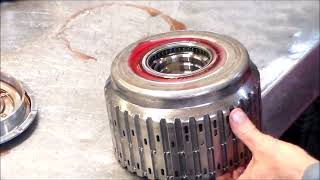
Est. part cost: $75-$150 - Internal Transmission Mechanical Failure (Cracked 3-5-R Drum) 🔴 High Probability A widely documented failure point in the 6L80/6L90 is the 3-5-Reverse clutch drum, where the factory welds between the stamped steel drum and the center tower can crack. This crack causes a loss of hydraulic pressure needed to apply the reverse clutches, resulting in no reverse, slipping, and often codes P0736 and P0776.
How to confirm: This is diagnosed by eliminating all other possibilities. A transmission specialist may drop the pan and find excessive clutch material. Definitive confirmation requires transmission removal and disassembly to visually inspect and air-check the drum for leaks at the welds.
Typical fix: Requires a complete transmission rebuild to replace the damaged drum and clutch packs. It is highly recommended to use an updated OEM drum or a stronger aftermarket (e.g., Sonnax) drum to prevent recurrence. 🎬 See how experts fix common 6L80 and 6L90 internal failures
Est. part cost: $500-$2500+ - Worn or Sticking Transmission Valve Body / TEHCM 🟡 Medium Probability The 6L90 transmission uses a Transmission Electro-Hydraulic Control Module (TEHCM) that combines the valve body, solenoids, and TCM into one unit. These units are known for failures, including stuck solenoids, internal circuit board issues, and pressure switch failures, which can cause incorrect hydraulic pressure and trigger P0736.
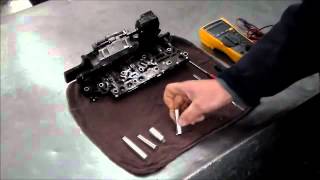
How to confirm: This requires professional diagnosis with a scan tool to monitor solenoid commands, line pressures, and check for other TEHCM-specific codes. A physical inspection of the valve body for wear may be necessary. 🎬 Watch: How to rebuild TEHCM pressure switches yourself
Typical fix: Replacement of the entire TEHCM assembly. The new TEHCM must be programmed to the vehicle's VIN. This is not a DIY-friendly repair.
Est. part cost: $300-$900 - Faulty Shift Solenoid ⚪ Low Probability
How to confirm: A mechanic can use a scan tool to command the reverse shift solenoid and check for proper operation. Resistance can also be checked with a multimeter. However, since the solenoids are integrated into the TEHCM on a 6L90, a single solenoid failure usually necessitates replacing the entire TEHCM.
Typical fix: Replace the entire TEHCM assembly.
Est. part cost: $50-$100
Rare But Worth Checking
- Faulty Transmission Control Module (TCM): While rare, a software glitch or internal hardware failure in the TCM can cause it to misinterpret sensor data and trigger P0736. The TSB PIP4379N specifically notes that replacing the TCM is unlikely to fix this issue if it's the sole diagnosis. On the 6L90, the TCM is part of the TEHCM, so a failure requires replacing the whole unit.
- Wiring or Connector Issues: Damaged wiring or corroded connectors between the main vehicle harness and the transmission can disrupt signals from speed sensors or to the TEHCM, leading to the code. This is more common on trucks that see harsh weather or off-road use.
Diagnosis Steps
- Check the transmission fluid level and condition. Top up or replace if low, dirty, or burnt. Use only DEXRON-VI fluid.
- Use an OBD-II scanner to check for other transmission-related codes, especially P0700 and P0776, which provide critical context.
- With a professional scan tool, monitor the transmission input and output speed sensors in real-time to confirm they are reading and not dropping out.
- Inspect the main transmission wiring harness and the connector at the transmission case for any visible damage, corrosion, or loose connections.
- Command the reverse shift solenoid on and off with a scan tool to test its function, listening for an audible click from the transmission pan area.
- If external checks pass, a transmission specialist will need to check transmission line pressure in reverse to see if it meets specifications. Low pressure indicates an internal leak.
- If pressure is low, the next step is to drop the transmission pan to inspect the valve body/TEHCM and check for excessive metal or clutch debris, which would indicate internal mechanical failure like a cracked drum.
- For definitive diagnosis of a cracked 3-5-R drum, the transmission must be removed and disassembled for a bench air test.
Parts You'll Likely Need
- Transmission Fluid and Filter Kit — This is the first and most crucial step in diagnosis and can sometimes resolve the issue if it's caused by low or degraded fluid. Use only ACDelco DEXRON-VI fluid.
Trusted brands: ACDelco
OEM price range: $100-$150
Aftermarket price range: $75-$120 - Transmission Electro-Hydraulic Control Module (TEHCM)
(OEM #24256861 (Verify by VIN))— A common point of failure on 6L90 transmissions, causing hydraulic pressure loss or incorrect solenoid function that leads to slippage in reverse. This part integrates the TCM, solenoids, and pressure switches. Requires programming.
Trusted brands: ACDelco (GM Genuine), Street Smart Transmission (Remanufactured)
OEM price range: $500-$900
Aftermarket price range: $350-$600
Related Codes That Often Appear With This One
- P0700 — P0700 is a general transmission fault code. It means the TCM has detected a problem (like P0736) and has requested the main engine computer to turn on the Check Engine Light.
- P0776 — This code for 'Pressure Control Solenoid 'B' Performance or Stuck Off' is very commonly associated with the 3-5-Reverse circuit. If P0776 appears with P0736, it strongly points towards a cracked 3-5-R drum or a related hydraulic leak.
- P0731-P0735 — These codes indicate incorrect gear ratios in forward gears. If they appear with P0736, it points to a more widespread issue like very low fluid, a clogged filter, or a failing transmission pump.
- P0751, P0756, P0761 — These are codes for shift solenoid performance issues. They are listed alongside P0736 in TSB PIP4379N, indicating they are commonly related to engagement problems caused by hydraulic or electronic faults within the TEHCM.
Technical Service Bulletins (TSBs) & Recalls
- PIP4379N: Addresses issues with delayed or no engagement into drive or reverse and lists P0736 as a related trouble code. It emphasizes checking fluid level first and notes the condition can be worse on a cold start.
Platform-Specific Known Issues
- A General Motors Technical Service Bulletin, #PIP4379N, directly addresses customer complaints of "delayed, no engagement into reverse" and lists P0736 as one of the potential diagnostic trouble codes stored. This confirms it's a recognized issue by the manufacturer and points initial diagnosis toward fluid level and pump prime issues.
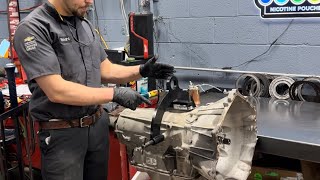
- The 3-5-Reverse clutch drum weld failure is a hallmark issue for the 6L80/6L90 family. Forum discussions and transmission rebuilder videos frequently cite this as the root cause for a sudden loss of reverse accompanied by P0736.
Mechanic-Grade Diagnostic Values
- Shift Solenoid (On/Off type) Amperage — expected: 0.3–0.7 amps at 12 volts. Failure: Readings outside this range indicate a failed solenoid within the TEHCM.
- Shift Solenoid (PWM type) Amperage — expected: 1.5–4.0 amps at 12 volts. Failure: Readings outside this range indicate a failed solenoid within the TEHCM.
- TEHCM Pressure Switch Resistance — expected: Approximately 0.5 to 10 ohms. Failure: A pressure switch code was set even with a reading below 0.5 ohms, suggesting that any deviation can be problematic.
- Transmission Main Line Pressure at Idle (in gear) — expected: 45-80 PSI. Failure: Pressure significantly below the expected range (e.g., under 30 PSI) points to a major hydraulic leak or pump issue.
- Pump Rotor and Slide End Clearance — expected: 0.0008 - 0.002 inches (0.02032 - 0.0508mm). Failure: Incorrect clearance, checked with Plastigage after a rebuild or pump service, can lead to erratic pressures and pump damage.
Scan Tool Commands That Help
- GM GDS2/Tech2 or equivalent: Service Fast Learn Adapts — After replacing the TEHCM or rebuilding the transmission, this procedure must be performed to reset and relearn transmission shift adapts. Failure to do so will result in poor shift quality. The procedure requires specific conditions, such as fluid temperature between 158°F and 239°F.
- GM GDS2/Tech2 or equivalent: Solenoid Cleaning Procedure — If a solenoid performance code is present, this automated function can be attempted before replacing the TEHCM to try and clear debris from a sticky solenoid.
- GM GDS2/Tech2 or equivalent: Reset Adapts / Transmission Adaptive Values Learn — This is a general function to reset learned shift pressures. It is a necessary step after many transmission repairs, especially after TEHCM replacement, to ensure the transmission learns the new components correctly.
Wiring & Ground Locations
- G303 — On the lower left (driver's side) 'B' pillar, behind the trim panel.. The B-pillar grounds are crucial for various interior modules and body controls. While not a direct ground for the transmission itself, poor body grounds can introduce electrical noise and voltage issues that can affect communication with the TEHCM.
- G304 — On the lower right (passenger's side) 'B' pillar, behind the trim panel.. Similar to G303, this ground serves the passenger side of the cabin. Ensuring all major body grounds are clean and secure is a key step in diagnosing complex electronic issues.
- Engine Block to Firewall/Body Ground Strap — Typically runs from the rear of the driver's side cylinder head to a bolt on the firewall.. This is a primary ground path for the engine and its sensors. A corroded or broken strap can cause a host of electrical problems, including erratic sensor readings and communication errors between the ECM and TCM/TEHCM.
- Transmission Main Connector (16-pin) — On the side of the transmission case, where the main vehicle harness connects to the TEHCM.. This is the single point of communication and power for the entire TEHCM. All sensor data and solenoid commands pass through this connector. Corrosion or damage here will directly cause transmission codes and malfunctions.
Real Owner Repair Stories
- YouTube video (2008 Chevrolet Silverado 2500 with 6.0L engine and 6L90 transmission) — Slipping, not running right, multiple pressure control solenoid codes (stuck on/stuck off), and a pressure switch code.
❌ Tried (didn't work) The technician immediately suspected an internal hydraulic or mechanical issue rather than just electrical.
✅ What actually fixed it The technician diagnosed faulty pressure switches on the TEHCM. The video demonstrates rebuilding the pressure switches using a Sonnax tool kit as a cost-effective alternative to replacing the entire $600 TEHCM.
OEM Part Supersession History
24256861→19431596— This is an upgraded Transmission Control Module (TCM/TEHCM).
Heads up: A new TEHCM must be programmed to the vehicle's VIN using GM's Service Programming System (SPS) or equivalent tool before it will function. Used modules from other vehicles cannot be reprogrammed and will cause a no-start condition due to VIN mismatch.
Model Year Variations Within This Range
- 2009-2010: While the core 6L90 is similar, there can be variations in the tail shaft housing and output shaft length, particularly between different drivetrain configurations (2WD vs. 4WD) or production runs. One documented case showed a 2010 Sierra 2500 having a 5-inch long transfer case adapter housing, while a replacement unit had a 4-inch housing and a shorter output shaft, making them incompatible without further modification.
Helpful Videos
We Have This Part in Stock


The information in this article is provided for general reference and educational purposes only. Vehicle specifications, procedures, and part compatibility can vary by production date, trim level, and region. Always consult your vehicle's factory service manual and verify part numbers before purchasing or performing repairs. Safety-critical components such as airbags, seat belts, and braking systems should be installed by a qualified professional.
- Chevrolet SILVERADO 2500:
- 🎬 Helpful Videos
- 🛍️ Shop This Part
- What's Unique About the 2009-2010 Chevrolet SILVERADO 2500
- Diagnostic Flowchart
- Symptoms You May Notice
- Most Likely Causes
- Rare But Worth Checking
- Diagnosis Steps
- Parts You'll Likely Need
- Related Codes That Often Appear With This One
- Technical Service Bulletins (TSBs) & Recalls
- Platform-Specific Known Issues
- Mechanic-Grade Diagnostic Values
- Scan Tool Commands That Help
- Wiring & Ground Locations
- Real Owner Repair Stories
- OEM Part Supersession History
- Model Year Variations Within This Range
- 🎟️ Get 5% Off