

P0736 on 2001-2008 Chevrolet Silverado 2500: Reverse Incorrect Ratio Fixes
P0736 on a Silverado 2500 means the transmission has a problem engaging reverse. The most common fix is to address low or dirty transmission fluid. If that doesn't work, the cause is likely an internal issue like a bad shift solenoid, a worn reverse servo, or a failed clutch pack, which may require professional service.
- P0736 means the transmission is failing to properly engage or hold reverse gear.
- Always check the transmission fluid level and condition first; this is the simplest and most common fix.
- This code indicates a serious problem that can leave you stranded without a reverse gear. Do not continue to drive.
- If a fluid change doesn't solve the issue, the problem is likely internal (solenoid, clutch, valve body) and requires professional diagnosis and repair.
What's Unique About the 2001-2008 Chevrolet SILVERADO 2500
The 2001-2008 Silverado 2500 range used robust transmissions like the 4L80-E and the Allison 1000. While durable, these units are sensitive to fluid condition and level. A P0736 code on these trucks is very frequently a direct result of a hydraulic issue (low fluid, clogged filter). TSB #PIP4379N confirms that issues like low fluid, a cracked internal filter, or a stuck lube regulator valve can cause this and other ratio codes, especially after a fluid service or long periods of storage. Specific to the 4L80-E, a worn or broken low/reverse servo piston or pin can also be a direct cause of no reverse. For the Allison 1000, the C5 (reverse) clutch pack is a key area of concern.
Diagnostic Flowchart
Tap your situation to follow the diagnostic path that matches what you're seeing on this vehicle.
Generation note: This range covers two Silverado generations: the first generation (GMT800, 2001-2007 'Classic') and the second generation (GMT900, 2007-2008). Both generations used heavy-duty transmissions like the 4L80-E and Allison 1000. The diagnostic approach for P0736 is similar for both, as the fundamental causes (fluid, solenoids, internal wear) are common to these types of automatic transmissions. However, a key change occurred around 2006-2007.5 when the 6-speed Allison replaced the 5-speed, and the 6L90 began to replace the 4L80-E in some gas models, introducing different internal components and solenoid strategies.
Symptoms You May Notice
- Check Engine Light is on.
- Vehicle will not shift into reverse.
- Delayed or harsh engagement into reverse.
- Transmission slips while in reverse.
- Grinding or clunking noises when shifting into reverse.
- Vehicle may enter "limp mode," getting stuck in one gear.
- Increased fuel consumption.
- Replacing shift solenoids when the root cause is simply low or dirty transmission fluid.
- Assuming the entire transmission needs a rebuild before checking fluid level, fluid condition, and performing electronic diagnostics.
- Replacing the Transmission Control Module (TCM) when the fault is mechanical or hydraulic.
Most Likely Causes
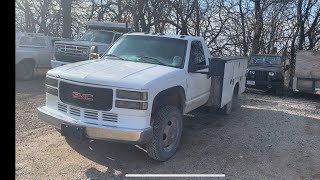
- Low or Dirty Transmission Fluid 🔴 High Probability High-mileage work trucks may have overdue fluid services. 🎬 Watch: Diagnosing and fixing lost reverse on a work truck. Degraded or low fluid fails to provide the necessary hydraulic pressure for the reverse clutch pack to engage properly. TSB #PIP4379N specifically calls out checking the fluid level using the hot check procedure as a primary step.
How to confirm: Check the transmission fluid level and condition using the dipstick. The fluid should be at the correct level, pinkish-red, and not smell burnt.
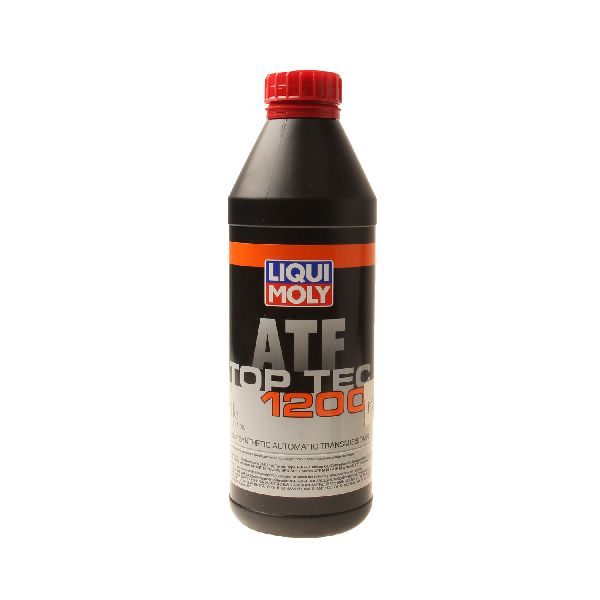
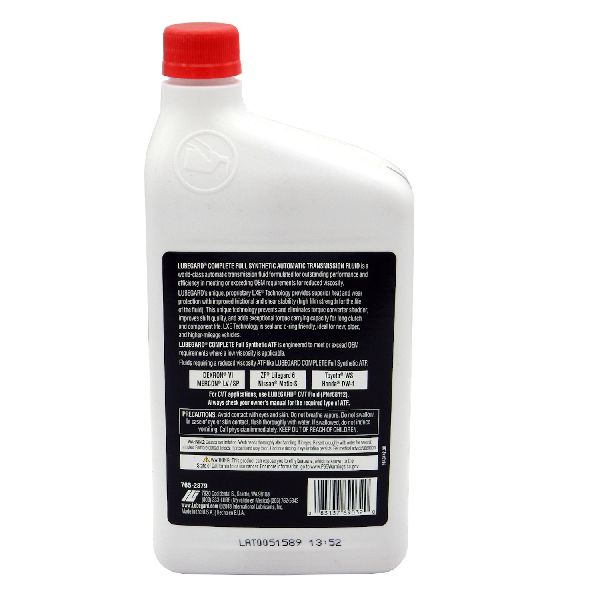
Typical fix: Perform a transmission fluid and filter change. Ensure the correct type of fluid (e.g., DEXRON-VI for most GM applications) is used.
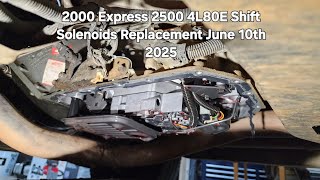
Est. part cost: $50-$150 - Faulty Shift Solenoid 🟡 Medium Probability Solenoids are electro-hydraulic valves that control fluid flow. Over time, they can fail electrically or become clogged with debris, preventing them from directing fluid to engage the reverse gear. In the 4L80-E, the Shift Solenoid 'B' (2-3) is involved in the reverse gear hydraulic circuit.
How to confirm: A professional scan tool can command the solenoid on and off to test its function. It can also be tested for resistance with a multimeter (typically 20-22 ohms for 4L80-E solenoids) after removing the transmission pan.
Typical fix: Replace the faulty shift solenoid. This is typically done by dropping the transmission pan to access the valve body where the solenoids are mounted. For the 4L80-E, both 'A' and 'B' solenoids are often replaced together.
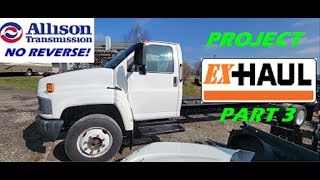
Est. part cost: $40-$100 - Internal Mechanical Failure ⚪ Low Probability On high-mileage or hard-working trucks, internal components can fail. Common failures in the 4L80-E include a broken sun shell (which can cause loss of 2nd gear and reverse), a worn or broken low/reverse servo piston, or burnt-out reverse clutch pack frictions. For the Allison 1000, this often points to failure of the C5 (reverse) clutch pack. 🎬 Watch: A simple fix for an Allison transmission with no reverse.
How to confirm: This is diagnosed by inspecting the transmission pan for excessive metal debris. If significant debris is found, it confirms internal damage. This requires a transmission teardown.
Typical fix: The transmission will need to be rebuilt or replaced.
Est. part cost: $1500-$4000+ - Faulty Valve Body ⚪ Low Probability The valve body is the hydraulic brain of the transmission. Passages can become clogged with sludge, or regulator valves can wear their bores, causing pressure loss to the reverse circuit. Aftermarket kits, like the Sonnax TCC Regulator Valve Kit (34994-01K), exist to repair these common wear points. In the 4L80-E, check ball capsules within the valve body are also known to wear out, causing pressure leaks specific to the reverse circuit.
How to confirm: Requires removal and inspection by a transmission specialist. Pressure testing specific ports can also help diagnose a valve body issue.
Typical fix: The valve body may be cleaned and serviced with oversized valves and reamers, or replaced entirely.
Est. part cost: $300-$800
Rare But Worth Checking
- Damaged Wiring or Connectors: The wiring harness leading to the transmission can be damaged by road debris or heat, causing a loss of signal from sensors or to solenoids. It's worth a visual inspection before assuming an internal failure.
- Faulty Transmission Control Module (TCM): While rare, the TCM itself can fail, causing it to misinterpret sensor data or fail to command shifts correctly. TSB #PIP4379N explicitly states that replacing the TCM is unlikely to correct this code. This is usually the last item to suspect after all other possibilities are exhausted.
Diagnosis Steps
- Check the transmission fluid level and condition. Ensure it is at the top of the 'hot' mark when at operating temperature (around 175°F) per TSB #PIP4379N. Top off or change if low, dirty, or burnt-smelling.
- Use an OBD-II scanner to check for other transmission-related codes.
- With a professional scan tool, monitor live data for the Input Speed Sensor (ISS) and Output Speed Sensor (OSS) while attempting to engage reverse. A mismatch or lack of signal can point to a sensor or wiring issue.
- Inspect the transmission wiring harness and connectors for any visible damage, corrosion, or loose connections.
- If fluid and electronics seem okay, drop the transmission pan and inspect for excessive metal shavings or clutch material, which indicates internal failure. Check the internal filter for cracks, as noted in TSB #PIP4379N.
- While the pan is off, test the resistance of the reverse-related shift solenoids (Solenoid 'B' on 4L80-E). Compare the reading to the manufacturer's specification (typically 20-30 ohms).
- Inspect the low/reverse servo piston and pin for wear or damage, a known issue on the 4L80-E.
- If the cause is still not found, consult a professional for transmission line pressure testing and potential internal inspection.
Parts You'll Likely Need
- Transmission Fluid and Filter Kit
(OEM #ACDelco 24208576 (4L80-E Deep Pan Filter Kit))— This is the first and most common fix, addressing issues caused by low or degraded fluid.
Trusted brands: ACDelco, Valvoline, Wix
OEM price range: $60-$120
Aftermarket price range: $40-$80 - Transmission Shift Solenoid Kit (A & B)
(OEM #ACDelco 24230298 (Kit includes both A/B solenoids for 4L80-E))— A common electrical failure point inside the transmission that prevents reverse from engaging. Solenoid 'B' is critical for reverse.
Trusted brands: ACDelco, Bosch, Rostra
OEM price range: $70-$130
Aftermarket price range: $40-$80 - Low/Reverse Servo Piston — A specific weak point in the 4L80-E transmission that can crack or wear, causing a loss of reverse. Aftermarket billet aluminum versions are a common upgrade.
Trusted brands: Sonnax (e.g., 34914-01), Transtar
OEM price range: N/A
Aftermarket price range: $30-$60 - Transmission Rebuild Kit — Required if internal inspection reveals worn clutches, seals, or other hard parts, which is the cause in severe cases.
Trusted brands: Transtar, Alto, Precision International
Related Codes That Often Appear With This One
- P0730 — This is a general 'Incorrect Gear Ratio' code. It often appears with more specific gear ratio codes like P0736, indicating a widespread slipping or hydraulic issue.
- P0700 — This code means the Transmission Control Module (TCM) has stored a fault. It's a generic code that tells the main engine computer to turn on the Check Engine Light and that a more specific transmission code, like P0736, is present in the TCM's memory.
- P0731-P0735 — These codes correspond to incorrect gear ratios in forward gears (1st through 5th). If seen with P0736, it strongly suggests a systemic problem like low fluid, a clogged filter, or a failing torque converter, rather than an issue isolated to the reverse gear circuit.
Technical Service Bulletins (TSBs) & Recalls
- PIP4379N: Addresses conditions like no reverse engagement and lists P0736 as a possible diagnostic trouble code. [⭐ MANUFACTURER TSB — highest authority]
Platform-Specific Known Issues
- Per NHTSA TSB #PIP4379N, this code can be part of a larger group of DTCs related to delayed or no engagement into reverse. The bulletin advises technicians to first verify the fluid level is correct using the hot check procedure, as low fluid is a primary cause. It also suggests inspecting the internal suction filter for cracks and checking for a stuck lube regulator valve, especially after a fluid change or if the vehicle has been stored.
Mechanic-Grade Diagnostic Values
- 4L80-E Shift Solenoid A & B Resistance — expected: 20-22 ohms. Failure: Readings significantly outside this range indicate a failed solenoid coil.
- 4L80-E EPC (Force Motor) Solenoid Resistance — expected: 3.5-8 ohms (depending on year/design). Failure: An open or shorted reading points to a faulty pressure control solenoid.
- Allison 1000 (2001-2005 5-Speed) Shift Solenoid C, D, E Resistance — expected: 22-24.5 ohms. Failure: Out-of-spec resistance suggests an electrical failure in the solenoid.
- 4L80-E Line Pressure in Reverse at Idle — expected: 60-70 PSI. Failure: Significantly lower pressure (e.g., 25-50 PSI) indicates a hydraulic leak, worn pump, or valve body issue.
- 4L80-E Line Pressure in Reverse at Full Throttle (Stall Test) — expected: 300-330 PSI. Failure: Failure to reach this pressure confirms a major hydraulic circuit problem preventing the reverse band/clutches from applying.
Scan Tool Commands That Help
- GM Tech2 / Professional Scan Tool: Solenoid Activation Test / Output Controls — This allows a technician to command individual shift solenoids on and off with the engine running and transmission in gear (or pan removed) to verify the solenoid clicks and that the wiring from the TCM is functional. This helps isolate a faulty solenoid from a wiring or TCM issue.
- GM Tech2 / Professional Scan Tool: TCM Adaptation Reset / Transmission Learn Process — After replacing major components like the valve body or solenoids, or performing a rebuild, this function should be used to clear the learned shift parameters. This forces the TCM to relearn shift timing and pressures, which can resolve some ratio-related codes that persist after a repair.
Wiring & Ground Locations
- G103 / G104 — On the rear of the cylinder heads (G103 on the right, G104 on the left) on the GMT800 platform.. These are primary engine-to-chassis grounds. A poor connection at these points can cause erratic behavior in all electronic modules, including the PCM/TCM, leading to incorrect sensor readings and false transmission codes.
- Transmission Main Connector (C2 on PCM) — The large round connector on the passenger side of the transmission case. Wires run to the Powertrain Control Module (PCM) connectors, typically blue (C1) and green (C2) on 2005-2006 models.. This is the single point of connection for all solenoids and sensors inside the transmission. Testing for resistance and voltage should be done at the PCM connector pins to verify the integrity of the entire circuit from the module to the component. For example, on a 2001 model, the 2-3 Shift Solenoid (part of the reverse circuit) is controlled via Pin 48 on the C2 (Blue) connector.
- Underhood Fuse Block — Located on the driver's side of the engine compartment, near the battery.. Contains critical fuses for the PCM and TCM, such as 'PCM B' (20A) and 'PCM 1' (15A). A loss of power from one of these fuses can cause the TCM to malfunction and set various codes, including P0736.
Real Owner Repair Stories
- YouTube video by 'J's Automotive' (Chevrolet Suburban with 4L80-E (similar application)) — No reverse, or slips/chatters when trying to engage reverse.
❌ Tried (didn't work) Initial diagnosis pointed towards internal failure, but forward gears worked perfectly.
✅ What actually fixed it The low/reverse servo apply pin had worn down and was too short to fully apply the reverse band. The fix was to remove the valve body, access the servo pin, weld a small amount of material onto the tip, and grind it down to the correct length to achieve proper band clearance. The video also notes that worn check ball capsules in the valve body can cause similar delayed reverse issues. - LS1Tech forum user (Vehicle with a 1998 4L80-E transmission) — Lost reverse suddenly. After sitting, it would try to move but slip badly.
❌ Tried (didn't work) Replaced the reverse band, which only fixed the issue for about 100 miles.
✅ What actually fixed it The root cause was the reverse servo piston slamming into the case and cracking it, causing a pressure loss. The final repair involved replacing the entire reverse servo assembly with one that included a longer apply pin, which has worked for over 5 years.
OEM Part Supersession History
Bosch-style EPC Solenoid (Silver)→Holley-style EPC Solenoid (Black)— The Holley design added a spring and increased spool valve size to eliminate the need for a 10-second cleaning pulse on startup.
Heads up: The older Bosch (silver) solenoid cannot be used in a transmission designed for the Holley (black) solenoid. Doing so will result in excessively high line pressure because the oil channeling in the valve body is different.
Model Year Variations Within This Range
- 2001-2005: These trucks primarily used the 4-speed 4L80-E (for gas V8s) or the 5-speed Allison 1000 (for Duramax and 8.1L gas). The Allison 1000 in these years did not have an internal neutral safety switch (it was external) and used a different solenoid strategy than later versions.
- 2006-2008: This period saw the transition to the GMT900 platform ('07-'08). The Allison 1000 became a 6-speed, gaining a gear and changing its internal logic. The 4L80-E began to be phased out for the 6-speed 6L90 in some gas 2500HD models. These newer transmissions have different solenoid types, resistance values, and internal failure points for a P0736 code.
Helpful Videos
We Have This Part in Stock


The information in this article is provided for general reference and educational purposes only. Vehicle specifications, procedures, and part compatibility can vary by production date, trim level, and region. Always consult your vehicle's factory service manual and verify part numbers before purchasing or performing repairs. Safety-critical components such as airbags, seat belts, and braking systems should be installed by a qualified professional.
- Chevrolet SILVERADO 2500:
- 🎬 Helpful Videos
- 🛍️ Shop This Part
- What's Unique About the 2001-2008 Chevrolet SILVERADO 2500
- Diagnostic Flowchart
- Symptoms You May Notice
- Most Likely Causes
- Rare But Worth Checking
- Diagnosis Steps
- Parts You'll Likely Need
- Related Codes That Often Appear With This One
- Technical Service Bulletins (TSBs) & Recalls
- Platform-Specific Known Issues
- Mechanic-Grade Diagnostic Values
- Scan Tool Commands That Help
- Wiring & Ground Locations
- Real Owner Repair Stories
- OEM Part Supersession History
- Model Year Variations Within This Range
- 🎟️ Get 5% Off