

P0735 on 2011-2013 GMC Sierra Denali: Gear 5 Incorrect Ratio Causes and Fixes
On a 2011-2013 GMC Sierra Denali with the 6L80 transmission, P0735 almost always points to internal transmission problems. The most common cause is debris from a failing torque converter lockup clutch, which looks like fine, dark 'coffee grounds' in the pan. This debris clogs hydraulic passages in the valve body separator plate, preventing the 4-5-6 clutch from applying correctly. This is a serious, complex repair requiring professional diagnosis and likely a torque converter replacement to prev
- P0735 on a 2011-2013 Sierra Denali is a serious code that requires immediate attention to prevent severe transmission damage.
- The cause is very likely a physical blockage inside the transmission's valve body, as documented by GM.
- Simply changing the fluid and filter is unlikely to solve the root problem.
- Diagnosis and repair should be performed by a qualified transmission specialist who is aware of the TSBs for this issue.
- Always use OEM-specified DEXRON-VI transmission fluid.
What's Unique About the 2011-2013 Gmc SIERRA DENALI
For this specific generation of GMC Sierra with the 6L80/6L90 transmission, the P0735 code is strongly linked to a known issue documented in GM Technical Service Bulletins. The primary culprit is often not a sensor but physical debris from a failing torque converter or aftermarket filter that contaminates the transmission fluid. This debris blocks tiny orifices in the valve body separator plate, specifically those feeding the 4-5-6 clutch circuit, preventing the proper hydraulic pressure needed to engage fifth gear.
Diagnostic Flowchart
Tap your situation to follow the diagnostic path that matches what you're seeing on this vehicle.
Symptoms You May Notice
- Check Engine Light is illuminated, often with code P0700.
- Transmission fails to shift into 5th gear, may feel like it's 'stuck' in 4th.
- Vehicle enters 'limp mode', often stuck in a lower gear (e.g., 3rd).
- Harsh or delayed shifting between other gears, particularly 2-3 and 3-4 shifts.
- A noticeable shudder or vibration under light throttle at highway speeds (80-100 km/h), which is a classic sign of torque converter clutch failure.
- Noticeable loss of power, especially at highway speeds.
- Poor fuel economy.
- In severe cases mentioned in TSBs, the vehicle may not move in forward or reverse at all.
- Replacing only the input or output speed sensors. While these sensors are involved in detecting the ratio, they are rarely the cause of an isolated P0735 code without other sensor-specific codes present.
- Performing only a fluid and filter change. If the transmission pan contains significant debris, simply changing the fluid will not clear the blockages within the valve body, and the problem will persist.
Most Likely Causes
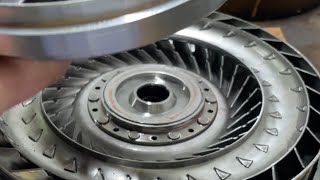
- Failing Torque Converter 🔴 High Probability The lockup clutch (TCC) within the torque converter is a widely acknowledged weak point 🎬 Watch: A breakdown of common 6L80 torque converter failures. on the 6L80 transmission. It degrades and sheds metallic debris, contaminating the entire system and causing a cascade of failures.
How to confirm: Inspecting the transmission pan for excessive metallic debris that looks like fine, dark 'coffee grounds' is a strong indicator. A transmission specialist can perform tests to confirm torque converter failure, and the presence of code P0741 is a very strong clue.
Typical fix: Replacement of the torque converter is the definitive fix. This must be done along with a full transmission flush and cleaning/servicing of the valve body to remove all debris. Many owners opt for a heavy-duty or billet aftermarket converter to prevent recurrence.
Est. part cost: $300-$800 - Blocked Valve Body Separator Plate Orifices 🔴 High Probability This is a well-documented issue in GM TSBs #PIP5100A and #PIP5100. Debris from the failing torque converter is known to collect here, blocking the small orifices that supply hydraulic pressure to the clutch packs.
How to confirm: Drop the transmission pan and valve body to visually inspect the separator plate and its orifices for blockage. This is a labor-intensive check.
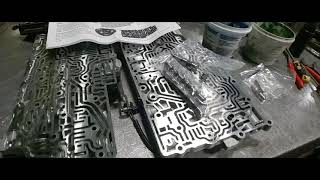
Typical fix: Replace the separator plate with an updated OEM version (e.g., ACDelco 24245720) or an aftermarket kit from a brand like Sonnax. This repair must include a new filter, a complete fluid flush, and ideally, addressing the source of the debris (the torque converter).
Est. part cost: $20-$120 - Low or Contaminated Transmission Fluid 🟡 Medium Probability
How to confirm: Check the transmission fluid level and condition via the check plug. Fluid should be bright red and clear, not brown, black, or smelling burnt. Burnt fluid indicates clutch material breakdown.
Typical fix: Perform a transmission fluid and filter change using the correct DEXRON-VI fluid. Note: This is often a temporary fix or a first step; if significant debris is present, it will not clear the blockages in the valve body.
Est. part cost: $100-$200 - Failed Shift Solenoid ⚪ Low Probability Solenoids can fail, but they are more often clogged by debris from the torque converter rather than failing electrically. A clogged solenoid will get stuck and be unable to direct fluid pressure.
How to confirm: A professional scan tool can command individual solenoids to check for response and monitor pressure. Resistance can also be checked with a multimeter if the valve body is removed.
Typical fix: Replace the faulty solenoid, which is located inside the transmission on the valve body. This is often done as part of a larger valve body service.
Est. part cost: $50-$150
Rare But Worth Checking
- Debris from Aftermarket Spin-on Filter: GM TSB #PIP5100A specifically mentions that an aftermarket spin-on filter can disintegrate and cause the blockage leading to P0735. If a non-OEM filter has been installed, it should be a primary suspect.
- Burnt/Failed 4-5-6 Clutch Pack: The P0735 code indicates a slip in 5th gear, which uses the 4-5-6 clutch pack. If the slip is severe or prolonged, the clutches can burn out. This is often a consequence of the primary hydraulic issue (debris, low pressure) rather than the root cause, but at this stage, a full rebuild is necessary.
- Faulty Transmission Control Module (TCM): While possible, TCM (or TEHCM) failure is uncommon for this specific code. All other mechanical and hydraulic possibilities should be exhausted before condemning the TCM. Sometimes low battery voltage can cause communication errors that mimic a TCM fault.
Diagnosis Steps
- Check the transmission fluid level and condition. If dark, burnt, or smelling foul, internal damage is confirmed.
- Use a professional scan tool to check for other transmission-related codes, especially P0700 and P0741.
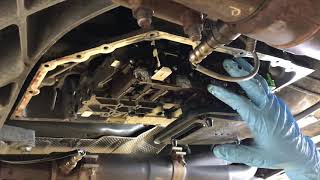
- Drop the transmission oil pan and inspect for debris. A significant amount of fine, dark, metallic 'coffee grounds' points directly to torque converter clutch failure.
- If debris is found, the torque converter is the likely root cause and must be replaced to prevent a repeat failure.
- Following the guidance of TSB #PIP5100A, remove and inspect the valve body separator plate orifices for blockage.
- If orifices are blocked, replace the separator plate with an updated part (e.g., ACDelco 24245720). Consider installing a valve body upgrade kit like a Sonnax Zip Kit to address known wear points. 🎬 Watch: How to install a Sonnax Zip Kit in your valve body.
- Perform a complete transmission fluid flush with DEXRON-VI to remove all contaminated fluid from the cooler and lines.
- If no debris is found, test the operation and resistance of the shift solenoids using a capable scan tool and multimeter.
Parts You'll Likely Need
- Torque Converter — Often the source of the debris that contaminates the transmission fluid and clogs the valve body, causing the P0735 code.
Trusted brands: ACDelco, Transtar, Luk, Circle D (Performance/Billet)
OEM price range: $500-$900
Aftermarket price range: $300-$700 - Transmission Valve Body Separator Plate
(OEM #24245720 (Updated design))— This is the specific part noted in GM TSBs as being prone to clogged orifices, directly causing the P0735 code. The updated plate is recommended.
Trusted brands: ACDelco, Sonnax, TransGo
OEM price range: $20-$60
Aftermarket price range: $40-$80 - Transmission Filter and Gasket Kit
(OEM #24256025)— Required for any service that involves dropping the transmission pan. A clogged filter can cause hydraulic pressure issues.
Trusted brands: ACDelco, Wix, ATP
OEM price range: $50-$80
Aftermarket price range: $30-$60 - Automatic Transmission Fluid
(OEM #ACDelco 10-9395 (DEXRON-VI))
Related Codes That Often Appear With This One
- P0700 — This is a generic code indicating the TCM has requested the check engine light be turned on. It almost always accompanies specific transmission codes like P0735.
- P0741 — Stands for 'Torque Converter Clutch Circuit Performance or Stuck Off'. Its presence is a massive clue, strongly pointing to the torque converter as the root cause of the debris that leads to the P0735 code.
- P0729, P0731, P0732, P0733, P0734 — These are incorrect ratio codes for other gears. Their presence alongside P0735 points to a more widespread problem like a failing torque converter, major valve body issue, or clogged filter affecting multiple gear circuits.
Technical Service Bulletins (TSBs) & Recalls
- PIP5100A: Mentions vehicles that will not move and lists P0735 as a possible code due to blocked valve body separator plate orifices from an aftermarket spin-on filter.
- PIP5100: Also points technicians to inspect the valve body separator plate orifices for debris when diagnosing P0735 and other related codes.
- 09-07-30-004J: Addresses slips, delayed engagement, and harsh shifts (including codes like P0776) related to internal housing and seal ring issues in 6L80/6L90 transmissions.
Platform-Specific Known Issues
- GM Technical Service Bulletin #PIP5100A directly links P0735 to blocked valve body separator plate orifices, sometimes due to debris from an aftermarket spin-on filter.
- The torque converter lockup clutch is a frequent failure point in the 6L80/6L90 transmission, causing system-wide contamination that leads to various shifting issues, including P0735. Owners often report a distinct shudder at highway speeds before the code appears.
- Failure of the 4-5-6 clutch pack due to hydraulic pressure loss from the clogged valve body is a common endpoint for this issue, often necessitating a more costly rebuild.
Mechanic-Grade Diagnostic Values
- Shift Solenoid (On/Off type) Resistance — expected: 20 - 40 Ohms. Failure: A reading outside this range indicates a failed solenoid within the TEHCM.
- Pressure Control Solenoid (PWM type) Resistance — expected: 3.0 - 8.0 Ohms. Failure: A reading outside this range indicates a failed solenoid within the TEHCM.
- Pressure Control Solenoid (PWM type) Current Draw — expected: 1.5 - 4.0 Amps at 12V. Failure: Incorrect amperage draw signifies a faulty solenoid requiring TEHCM replacement.
- TCM/TEHCM Operating Voltage to Solenoids — expected: 8.3 - 9.3 Volts. Failure: Incorrect voltage from the TEHCM suggests an internal module fault.
Scan Tool Commands That Help
- GM GDS2 (or equivalent): Solenoid Cleaning Procedure / Transmission Cleaning Procedure — This function can be used if a solenoid performance DTC is present or if debris is suspected of causing a solenoid to stick. The tool commands the TEHCM to cycle all solenoids, which can help flush out minor debris from the solenoids and their hydraulic circuits before replacing the entire TEHCM.
- GM GDS2 (or equivalent): Transmission Adaptive Learning Reset — After replacing major components like the valve body, TEHCM, or torque converter, this function must be performed. It clears the learned shift pressure values, allowing the TCM to relearn clutch apply times for smooth shifting. Failure to do this can result in harsh shifts or clunks.
Wiring & Ground Locations
- TEHCM Connector — Inside the transmission oil pan, connected to the Transmission Electro-Hydraulic Control Module (TEHCM).. The main 16-pin connector and internal harness provide all power, ground, and data signals to the TCM and solenoids. Fluid intrusion or a corroded pin can cause a wide range of erratic codes, including P0735. Pin 9 is a key ground, and Pin 10 is battery positive voltage.
- G110 — On the right rear of the engine, mounted to the back of the cylinder head.. This is a primary ground point for the engine and body harnesses. A loose or corroded G110 ground can cause voltage drops and erratic signals for the ECM and TCM, potentially leading to incorrect calculations and fault codes.
- Rad Support Grounds — On both the driver and passenger side radiator core supports.. These are key chassis grounding points. While not directly tied to the transmission, poor chassis grounds can create electrical noise and unstable voltage for the entire vehicle, affecting sensitive modules like the TCM. Upgrading these grounds is a common practice to improve overall electrical stability on GMT900 trucks.
Real Owner Repair Stories
- Tahoe Yukon Forum user (2011 Chevrolet Silverado) — Slipping on 2-3 and 4-5 shifts.
❌ Tried (didn't work) Initial diagnosis pointed towards internal transmission failure.
✅ What actually fixed it The user swapped the failing 6L80 transmission with a used unit from a newer model year. The key to success was swapping the original, known-good TEHCM from the 2011 truck into the replacement transmission and ordering the correct torque converter for the 2011 model year. This highlights that the TEHCM and torque converter are often year-specific.
OEM Part Supersession History
e.g., 24256939, 24257213→e.g., GM6L-TEHCM-C6 (Sonnax Reman)— GM has revised the TEHCM multiple times to improve solenoid performance and pressure switch durability.
Heads up: TEHCMs are VIN-specific and must be programmed upon installation. A TEHCM from a different year or model may not be compatible due to hardware and software differences, even if it physically fits. Swapping a used TEHCM will often result in a no-start condition until it is reprogrammed by a dealer or qualified shop with a J2534 device.
Model Year Variations Within This Range
- 2011-2013: While the core 6L80 transmission is similar, the TEHCM (TCM) and torque converter designs were updated during this period. A TEHCM from a 2013 model may not be plug-and-play in a 2011 model without correct programming. It is critical to use the correct TEHCM and torque converter specified for the vehicle's exact year and VIN to ensure compatibility.
Helpful Videos
We Have This Part in Stock



The information in this article is provided for general reference and educational purposes only. Vehicle specifications, procedures, and part compatibility can vary by production date, trim level, and region. Always consult your vehicle's factory service manual and verify part numbers before purchasing or performing repairs. Safety-critical components such as airbags, seat belts, and braking systems should be installed by a qualified professional.
- Gmc SIERRA DENALI:
- 🎬 Helpful Videos
- 🛍️ Shop This Part
- What's Unique About the 2011-2013 Gmc SIERRA DENALI
- Diagnostic Flowchart
- Symptoms You May Notice
- Most Likely Causes
- Rare But Worth Checking
- Diagnosis Steps
- Parts You'll Likely Need
- Related Codes That Often Appear With This One
- Technical Service Bulletins (TSBs) & Recalls
- Platform-Specific Known Issues
- Mechanic-Grade Diagnostic Values
- Scan Tool Commands That Help
- Wiring & Ground Locations
- Real Owner Repair Stories
- OEM Part Supersession History
- Model Year Variations Within This Range
- 🎟️ Get 5% Off