

P0735 on 2011-2013 GMC Sierra: Gear 5 Incorrect Ratio Causes and Fixes
On a 2011-2013 GMC Sierra with the 6L80/6L90 transmission, P0735 often points to internal transmission issues, most notably debris from the torque converter or other components blocking passages in the valve body separator plate, as highlighted in GM Technical Service Bulletins. The fix typically involves cleaning or replacing the valve body, installing an updated separator plate, and a complete fluid and filter change. In many cases, torque converter failure is the root cause of the debris.
- P0735 on a 2011-2013 Sierra is a serious code indicating a slip in 5th gear and should be addressed immediately.
- Check GM Technical Service Bulletins first; a known issue with debris in the valve body is a highly probable cause for this specific truck.
- A diagnostic process should start with a fluid check, but quickly move to inspecting the transmission pan and valve body for debris.
- This is not a DIY-friendly repair for beginners. Professional service is strongly recommended due to the complexity of internal transmission work.
- Always use OEM-specified DEXRON-VI transmission fluid and a quality filter when performing service.
What's Unique About the 2011-2013 Gmc SIERRA
For the 2011-2013 Sierra, equipped with the 6L80 or 6L90 automatic transmission, this code is specifically addressed in manufacturer TSBs. These bulletins point to a known issue where debris can block orifices in the valve body separator plate, leading to incorrect gear ratios and even a no-move condition. A very common source of this debris is the original equipment torque converter, which is prone to premature failure of its lockup clutch, sending metallic particles throughout the transmission. This makes a failing torque converter and resulting hydraulic circuit blockage a higher-probability cause on these trucks compared to other vehicles where electronic sensors might be the first suspect.
Diagnostic Flowchart
Tap your situation to follow the diagnostic path that matches what you're seeing on this vehicle.
Symptoms You May Notice
- Check Engine Light is on
- Transmission slipping or failing to engage 5th gear
- Harsh, delayed, or erratic shifting
- Vehicle enters 'limp mode', limiting available gears and speed
- Inability for the vehicle to move in forward or reverse (as noted in TSB PIP5100A)
- Decreased fuel economy
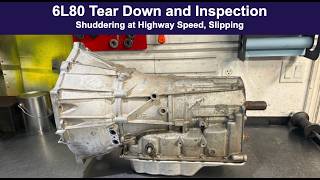
- Shuddering or vibration, especially during light acceleration at highway speeds (a key symptom of torque converter failure)
- Engine RPMs flare up during shifts without a corresponding increase in speed
- Replacing input/output speed sensors without confirming their failure. While they can fail, the TSBs and common experience with the 6L80 transmission point to a much higher likelihood of a hydraulic/mechanical issue originating from the torque converter and valve body.
- Simply performing a fluid and filter change without addressing the source of contamination. If significant debris is present, the problem will quickly return.
Most Likely Causes
- Debris in Valve Body Separator Plate Orifices 🔴 High Probability This is a documented issue in GM Technical Service Bulletins PIP5100 and PIP5100A for these vehicles. The TSBs note that debris can cause a variety of incorrect gear ratio codes, including P0735. The debris often originates from a failing torque converter lockup clutch.
How to confirm: A technician needs to remove the transmission pan and valve body to physically inspect the separator plate orifices for blockages. The presence of fine, dark, metallic 'coffee grounds' like debris in the pan is a strong indicator of torque converter clutch failure.
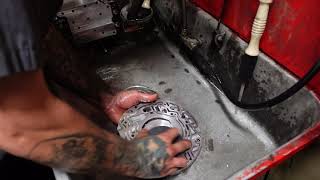
Typical fix: Cleaning the valve body and separator plate, or replacing the valve body assembly. It is highly recommended to install an updated, thicker separator plate with bonded gaskets (e.g., ACDelco 24245720 for 2010+ models). This service must include a new filter and a complete fluid change with OEM-specified fluid. Many owners also install a Sonnax Zip Kit (6L45-6L90-ZIP) to address known pressure loss points in the valve body. 🎬 See this walkthrough for installing a Sonnax Zip Kit.
Est. part cost: $200-$800 - Failing Torque Converter 🔴 High Probability The OEM 6L80 torque converter is a known weak point. The lockup clutch material degrades, sending metal debris throughout the transmission, which clogs the valve body, solenoids, and TEHCM pressure circuits, directly causing codes like P0735.
How to confirm: Symptoms like a shudder between 35-55 mph, RPM flares, and grinding/metallic debris in the pan are strong indicators. A technician can also monitor torque converter clutch (TCC) slip RPM with a scan tool; excessive slip under lockup command confirms the failure.
Typical fix: Replacement of the torque converter, ideally with a more robust aftermarket billet unit. This repair necessitates transmission removal and should always be done in conjunction with a thorough cleaning or replacement of the valve body and a full fluid flush of the transmission and cooler lines.
Est. part cost: $400-$1200 - Low or Contaminated Transmission Fluid 🟡 Medium Probability
How to confirm: Check the transmission fluid level and condition. The fluid should be at the correct level, pinkish-red, and free of burnt smells or excessive metallic particles.
Typical fix: Top off or perform a transmission fluid and filter change using ACDelco DEXRON-VI or an equivalent certified fluid. If significant debris is found, this is a symptom of a larger problem, not the root cause.
Est. part cost: $75-$150 - Failed Shift Solenoid 🟡 Medium Probability Solenoids can become clogged with the same debris that affects the valve body, causing them to stick or respond slowly.
How to confirm: A professional scan tool can be used to command the 5th gear shift solenoid and monitor its response. Resistance can also be checked with a multimeter.
Typical fix: Replace the faulty shift solenoid, which is located inside the transmission on the valve body. Often replaced as a full pack during a valve body service.
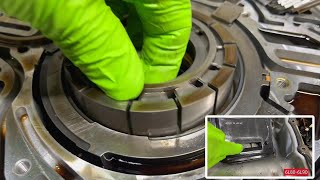
Est. part cost: $50-$250 - Internal Mechanical Failure (Clutch Packs) ⚪ Low Probability Sustained slipping caused by low pressure (from valve body/converter issues) will eventually burn out the clutch packs, particularly the 3-5-R clutch pack in the 6L80.
How to confirm: After ruling out fluid, electronic, and valve body issues, the presence of significant clutch material (fibrous, not metallic) in the transmission pan points to internal wear. This requires transmission disassembly to confirm.
Typical fix: A complete transmission rebuild, including replacement of all worn clutch packs, seals, and often the torque converter and valve body components.
Est. part cost: $1500+
Rare But Worth Checking
- Faulty Transmission Control Module (TCM/TEHCM): The TEHCM (Transmission Electro-Hydraulic Control Module) is integrated with the valve body. While a full failure is less common, its internal pressure switches and circuits can be damaged by debris. This should be considered after other causes are ruled out.
- Damaged Wiring Harness: Check the main transmission wiring harness connector for corrosion or fluid intrusion, which can cause erratic solenoid behavior and false codes. Also inspect for physical damage to the harness.
Diagnosis Steps
- Check and verify the transmission fluid level and condition. Note any burnt smell or the presence of dark, metallic debris.
- Use a professional OBD-II scanner to check for any other accompanying transmission codes, especially P0741. Note the freeze-frame data.
- Review Technical Service Bulletins (TSBs) PIP5100A and PIP5100. Given the vehicle, this is a critical step.
- Perform a road test while monitoring TCC slip RPM with a scan tool. Look for shuddering under light acceleration or excessive slip RPMs when lockup is commanded.
- Drop the transmission pan to inspect for debris. The presence of fine metallic dust resembling 'coffee grounds' is a tell-tale sign of TCC failure.
- If debris is present, remove and inspect the valve body separator plate for blocked orifices, as indicated by the TSBs.
- Consider installing a valve body upgrade kit like the Sonnax Zip Kit (6L45-6L90-ZIP) to address known wear points and pressure leaks.
- If the valve body is clear and solenoids test okay, but symptoms persist, the issue is likely a failing torque converter or more significant internal mechanical failure requiring transmission removal.
Parts You'll Likely Need
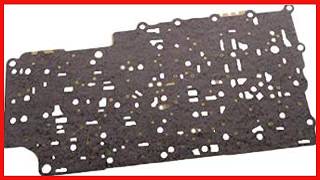
- Transmission Valve Body Separator Plate
(OEM #24245720 (For 2010+ models with 8 check balls))— The original plate may have orifices prone to blockage from debris. An updated plate with bonded gaskets provides better sealing. 🎬 Watch: Overview of the ACDelco replacement valve body separator plate.
Related Codes That Often Appear With This One
- P0700 — P0700 is a generic code indicating the TCM has requested the Check Engine Light to be turned on. It is almost always present with any specific transmission code like P0735.
- P0741 — P0741 indicates 'Torque Converter Clutch Circuit Performance or Stuck Off'. Its presence strongly points to the torque converter as the root cause of the P0735 code, as a failing TCC sheds the debris that clogs the system.
- P0731, P0732, P0733, P0734 — These are incorrect ratio codes for gears 1 through 4. If seen with P0735, it strongly suggests a systemic problem like a failing torque converter, major valve body issue, or clogged filter affecting multiple gear circuits.
- P0751, P0756, P0761 — These are shift solenoid performance codes. Their presence alongside P0735 helps pinpoint a specific solenoid circuit that may be stuck or failing, likely due to debris.
Technical Service Bulletins (TSBs) & Recalls
- PIP5100A: Addresses vehicles that won't move and multiple gear ratio codes (including P0735) due to blocked valve body separator plate orifices, potentially from an aftermarket filter.
- PIP5100: An earlier version of the bulletin also pointing to debris in the valve body separator plate as the cause for multiple gear ratio DTCs.
Platform-Specific Known Issues
- GM issued Technical Service Bulletin #PIP5100A which directly links P0735 (and other gear ratio codes) to blocked valve body separator plate orifices, sometimes due to debris from an aftermarket spin-on filter. The bulletin applies to vehicles that may not move in forward or reverse.
- A related TSB, #PIP5100, also mentions inspecting the valve body separator plate orifices for debris as a primary diagnostic step for these codes.
- The stock torque converter's lockup clutch is a frequent failure point, causing a system-wide contamination that leads to various shifting issues, including P0735.
Mechanic-Grade Diagnostic Values
- Shift Solenoid (On/Off type) resistance — expected: 20-40 Ohms. Failure: A reading outside this range indicates a failed solenoid within the TEHCM.
- Pressure Control Solenoid (PWM type) resistance — expected: 3-8 Ohms. Failure: A reading outside this range indicates a failed solenoid within the TEHCM.
- Line Pressure at Idle (in Park/Neutral) — expected: 45-80 psi. Failure: Pressure significantly below this range indicates a problem with the pump, pressure regulator valve, or major internal leaks.
Scan Tool Commands That Help
- GM GDS2 (or equivalent professional scan tool): Solenoid Cleaning Procedure / Transmission Cleaning Procedure — This is an automated function that cycles all solenoids to flush debris. It can be used as a diagnostic step after a fluid/filter change to see if a code or performance issue clears, potentially avoiding TEHCM replacement if the issue was minor debris.
- HP Tuners: Modify TCC Apply/Release Parameters — For advanced users trying to mitigate torque converter shudder. By changing the target slip RPM to zero and disabling lockup in lower gears, the TCC can be forced to act as a simple on/off clutch, which can eliminate shudder caused by the factory PWM slip strategy on a worn converter. This is a tuning adjustment, not a mechanical repair.
Wiring & Ground Locations
- Main Transmission Connector (16-pin) — On the passenger side of the transmission case.. This is the sole electrical interface for the TEHCM. Pins can become bent or corroded, and the connector seal can fail, leading to fluid intrusion and communication errors that can cause various codes, including P0735. Pin 5 is a critical ground, and Pin 4 is Battery +.
- G110 — On the right rear of the engine, mounted to the back of the cylinder head.. This is a major engine and body harness ground point. A loose or corroded G110 ground can cause a host of electrical issues, including erratic behavior from the ECM and TCM, potentially leading to false codes or improper transmission operation. While not a direct cause, poor grounds are a common source of difficult-to-diagnose electronic problems.
Real Owner Repair Stories
- Reddit user in r/gmcsierra (2019 GMC Sierra with 6L80 transmission) — Torque converter shudder and related transmission issues.
❌ Tried (didn't work) The user's research indicated that simply replacing the torque converter often isn't enough because debris has already contaminated the entire transmission.
✅ What actually fixed it A complete transmission rebuild from a reputable shop, which included a billet torque converter. The total cost was $5,900. This is presented as the permanent solution once TC failure symptoms appear. - Tahoe Yukon Forum user (2013 Cadillac Escalade ESV (GMT900 platform) with 124,000 miles) — Preventative maintenance and desire for firmer, more positive shifts, addressing known 6L80 weak points.
✅ What actually fixed it The owner performed a comprehensive valve body upgrade including a Sonnax ZIP kit, rebuilt the TEHCM pressure switches, installed a new pan with a drain plug, and added an external spin-on filter. This addresses the root causes of pressure loss and contamination that lead to codes like P0735.
OEM Part Supersession History
Various early designs (e.g., 24239203)→24245720— The original separator plates were prone to warping and had issues with gasket integrity. The updated 24245720 plate (Type 2, introduced in 2010) features improved orifice sizing and is designed for use with bonded gaskets, providing better sealing and durability against debris-related issues.
Heads up: The 24245720 plate is the correct service replacement for 2010-2014 models. A later Type 3 plate was introduced in 2014 with a smaller orifice for an 8th check ball; while it can be retrofitted, the 24245720 is the direct replacement for the 2011-2013 model years.
Model Year Variations Within This Range
- 2011-2013: The TEHCM (Transmission Electro-Hydraulic Control Module) used in this period (approx. P/N 24256861) is specific to these years. While the transmission mechanics are similar to later models, the TEHCM from a newer truck (e.g., 2014+) is not directly interchangeable due to calibration and logic changes. Swapping transmissions from different year ranges requires using the original TEHCM or ensuring proper programming compatibility.
Helpful Videos

Used OEM Parts in Stock



New Aftermarket Parts Available



The information in this article is provided for general reference and educational purposes only. Vehicle specifications, procedures, and part compatibility can vary by production date, trim level, and region. Always consult your vehicle's factory service manual and verify part numbers before purchasing or performing repairs. Safety-critical components such as airbags, seat belts, and braking systems should be installed by a qualified professional.
- Gmc SIERRA:
- 🎬 Helpful Videos
- 🛍️ Shop This Part
- What's Unique About the 2011-2013 Gmc SIERRA
- Diagnostic Flowchart
- Symptoms You May Notice
- Most Likely Causes
- Rare But Worth Checking
- Diagnosis Steps
- Parts You'll Likely Need
- Related Codes That Often Appear With This One
- Technical Service Bulletins (TSBs) & Recalls
- Platform-Specific Known Issues
- Mechanic-Grade Diagnostic Values
- Scan Tool Commands That Help
- Wiring & Ground Locations
- Real Owner Repair Stories
- OEM Part Supersession History
- Model Year Variations Within This Range
- 🎟️ Get 5% Off