

P0735 on 2019-2023 Ford Ranger: Gear 5 Incorrect Ratio Causes and Fixes
P0735 on a 2019-2023 Ford Ranger indicates a slip in 5th gear. This is often due to an internal issue in the 10R80 transmission, such as a faulty valve body or a problem with the CDF clutch cylinder, as noted in Ford TSBs. While low fluid is a possible cause, this code frequently requires professional diagnosis and internal transmission repair, often involving updated parts designed by Ford to correct the original flaws.
- P0735 on a 2019-2023 Ranger indicates a serious transmission issue, specifically a slip in 5th gear.
- Do not ignore this code. Continued driving can lead to catastrophic transmission failure.
- While you should always check the transmission fluid first, the root cause is often an internal mechanical or hydraulic fault with the valve body or CDF clutch drum.
- Ford has acknowledged related issues in TSB 25-2134, which is crucial information for your mechanic.
- Due to the complexity of the 10R80 transmission, diagnosis and repair should be left to a qualified professional.
What's Unique About the 2019-2023 Ford RANGER
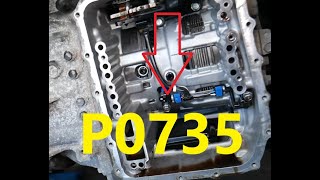
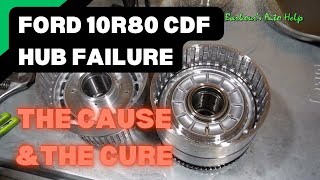
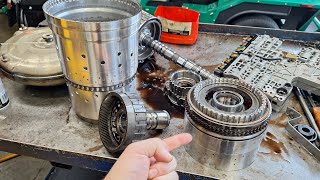
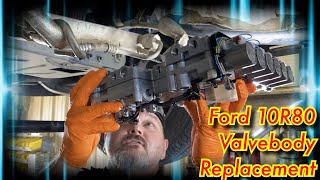
The 2019-2023 Ford Ranger uses the 10-speed 10R80 automatic transmission, co-developed with GM. This sophisticated gearbox 🎬 Watch: A breakdown of common Ranger 10-speed issues and fixes. has very closely spaced ratios, making it sensitive to even minor pressure losses or clutch slip. Ford has issued multiple Technical Service Bulletins (TSBs) that link P0735 and other shift-related codes to two primary, well-documented issues: a main control valve body that requires overhauling or replacement, and axial movement of the CDF clutch cylinder sleeve which causes hydraulic leaks. The CDF drum issue is so common that Ford redesigned the part with a machined lip to prevent the internal sleeve from 'walking' and exposing hydraulic passages, 🎬 See how the CDF hub fails and the updated cure. which was the root cause of the failure. This indicates a known pattern of internal mechanical or hydraulic issues rather than just simple sensor failures.
Diagnostic Flowchart
Tap your situation to follow the diagnostic path that matches what you're seeing on this vehicle.
Symptoms You May Notice
- Check Engine Light or Malfunction Indicator Lamp (MIL) is on
- Transmission warning light illuminated
- Harsh, delayed, or failed shifts into 5th gear
- RPMs flare up when shifting into 5th gear (engine revs without a corresponding increase in speed)
- Transmission gets stuck in a lower gear (limp mode)
- Poor acceleration and reduced fuel economy
- Vehicle 'hunts' for gears while cruising
- Clunking or banging noise when shifting from Park to Drive or between gears
- Replacing a shift solenoid when the root cause is a sticking valve in the valve body or a leak in the CDF clutch drum circuit.
- Immediately performing a transmission rebuild without first checking for software updates or considering external causes like a subtle engine misfire.
- Replacing the valve body and CDF drum without verifying the PCM is commanding the solenoids correctly, which can lead to the problem persisting post-repair.
Most Likely Causes
- Low or Contaminated Transmission Fluid 🟡 Medium Probability Fluid is the lifeblood of the transmission, responsible for hydraulic pressure. The 10R80 is sensitive to fluid level and condition and requires a specific Motorcraft Mercon ULV fluid. Operating with low or degraded fluid can cause pressure loss and clutch slip.
How to confirm: Check the transmission fluid level and condition as per the manufacturer's procedure. The fluid should be at the correct level and be bright red, not brown, black, or burnt-smelling. Many owners on forums recommend fluid and filter changes more frequently than the 100,000+ mile interval suggested by Ford.
Typical fix: Perform a fluid and filter change using the correct Motorcraft ULV fluid. If the fluid is heavily contaminated or contains metal debris, it indicates a more severe internal problem requiring a teardown.
Est. part cost: $150-$300 for fluid and filter - Main Control Valve Body Issue 🔴 High Probability Ford TSBs (like 21-2357 and 23-2123) point to sticking valves or an incompatibility of the adaptive learning strategy to hardware wear-in over time as a primary cause for shifting problems in the 10R80 transmission. Aftermarket companies also note that retainer clips and springs in the valve body can cause binding or cross-leakage issues.
How to confirm: A technician can perform a pressure test and use a diagnostic scan tool to monitor solenoid commands and response. Diagnosis often follows TSB procedures, which may start with a software update/relearn and progress to valve body overhaul or replacement.
Typical fix: Depending on the diagnosis, the fix can be a PCM/TCM software update and adaptive learning drive cycle, or a complete overhaul or replacement of the main control valve body and its solenoids.
Est. part cost: $600-$1500 - CDF Clutch Cylinder Failure 🔴 High Probability Multiple TSBs (including 23-2134) explicitly mention that axial movement of the CDF clutch cylinder sleeve can cause hydraulic circuit leaks, leading to a host of gear ratio and shift performance codes, including P0735. The internal sleeve slides out of position, exposing fluid passages and causing a pressure drop to the C, D, and F clutches. Ford has released an updated part to permanently fix this design flaw.
How to confirm: This is an internal transmission component. Diagnosis requires transmission disassembly and inspection by a qualified technician. A user on Reddit confirmed this failure on their 2019 Ranger at 68,000 miles.
Typical fix: The transmission must be removed and disassembled to replace the CDF clutch cylinder with the updated part (OEM part number JL3Z-7H351-B). This is a major repair.
Est. part cost: $200-$800 for the drum assembly, plus significant labor - Worn 'E' Clutch Pack 🟡 Medium Probability The 'E' clutch is one of the components responsible for 5th gear. Slippage, often initiated by hydraulic issues from the valve body or CDF drum, causes the friction material to wear down, similar to brake pads. The code is often accompanied by P2704, which points directly to the 'E' clutch apply time.
How to confirm: Confirmed by internal transmission inspection after other causes are ruled out. Burnt fluid and clutch debris in the transmission pan are strong indicators.
Typical fix: Transmission rebuild to replace the worn clutch pack, seals, and any other damaged parts. This is often done at the same time as a CDF drum replacement.
Est. part cost: $1500-$4000+ for a rebuild
Rare But Worth Checking
- Powertrain Control Module (PCM) or TCM Software Issue: Sometimes, outdated or corrupt software can cause shifting errors. A software update or adaptive learning reset is a relatively simple first step outlined in several TSBs before attempting major mechanical repairs.
- Faulty Input/Output Speed Sensor: While possible, a faulty speed sensor is less common than internal mechanical issues for this specific code on this platform. It would also likely trigger other speed sensor-specific codes, such as P0720.
- Subtle Engine Misfire: In at least one documented case for a 10R80-equipped F-150, a P0735 code was ultimately traced back to minor engine misfires that were not significant enough to set a P030x misfire code. The slight disruption in engine speed was enough to confuse the TCM's gear ratio calculation. The fix was a new set of spark plugs.
Diagnosis Steps
- Verify the transmission fluid level and condition. Ensure the correct Motorcraft ULV fluid is used.
- Use a professional scan tool to check for any other pending or stored transmission codes, especially P2704 or other gear ratio codes.
- Check for any available PCM/TCM software updates with a Ford-specific diagnostic tool, as per TSBs like 23-2123.
- Perform a road test while monitoring live data, paying close attention to the commanded gear, actual gear, and transmission slip data for 5th gear.
- If slip is confirmed, follow the diagnostic procedures outlined in Ford's Technical Service Bulletins (like TSB 23-2134) which may involve valve body inspection and pressure testing.
- If external checks and valve body inspection do not reveal the cause, an internal transmission inspection is necessary to check the CDF clutch drum for sleeve movement and the 'E' clutch pack for wear.
Parts You'll Likely Need
- Transmission Valve Body
(OEM #JL3Z-7A100-C)— A common failure point on the 10R80 transmission, causing various shifting issues including P0735. TSBs recommend overhaul or replacement to fix sticking valves or adaptive learning issues.
Trusted brands: Motorcraft
OEM price range: $800-$1500
Aftermarket price range: $600-$1200 - CDF Clutch Cylinder Assembly
(OEM #JL3Z-7H351-B)— This is the updated part from Ford designed to fix the known issue of the internal sleeve moving and causing hydraulic leaks, which is a primary cause of P0735.
Trusted brands: Motorcraft
OEM price range: $200-$500 - Automatic Transmission Fluid (Motorcraft ULV)
(OEM #XT-12-QULV)— Required for any service. Incorrect fluid type will cause damage and further shifting issues.
Trusted brands: Motorcraft
Related Codes That Often Appear With This One
- P2704 — Stands for 'Friction Element 'E' Apply Time Range/Performance'. Since the 'E' clutch is involved in 5th gear, this code often appears with P0735, pointing directly to a problem with that clutch circuit, whether it's hydraulic or mechanical.
- P0731, P0732, P0733, P0734, P0736 — These are incorrect gear ratio codes for other gears. If multiple codes are present, it suggests a more widespread problem like low fluid, a failing pump, or a major valve body or CDF drum issue affecting multiple clutch circuits.
Technical Service Bulletins (TSBs) & Recalls
- TSB 23-2134: Supersedes several previous bulletins for harsh/delayed shifts and lists P0735 among many other codes. It identifies a primary cause as axial movement of the CDF clutch cylinder sleeve, requiring internal transmission removal and replacement of the drum.
- TSB 23-2123: Supersedes TSB 22-2139. Addresses harsh/delayed shifts and DTCs including P0735. Points to incompatibility of the adaptive calibration over time and prescribes a valve body overhaul and/or an adaptive learning drive cycle.
Platform-Specific Known Issues
- Ford Technical Service Bulletin TSB 23-2134 (which supersedes earlier versions) specifically addresses harsh/delayed shifts and a long list of DTCs including P0735. It points to 'axial movement of the CDF clutch cylinder (7H351) sleeve causing hydraulic circuit leaks' as a primary cause requiring internal repair.
- Other TSBs like 23-2123 and 21-2357 address similar symptoms caused by valve body issues, where the adaptive shift strategy fails to compensate for hardware wear-in, requiring a valve body overhaul and/or software relearn.
Mechanic-Grade Diagnostic Values
- Shift Solenoid Resistance — expected: 5.0 - 5.4 Ohms at 20°C (68°F). Failure: A reading outside this range indicates a faulty solenoid coil.
Scan Tool Commands That Help
- Ford IDS, FORScan, or equivalent professional scan tool: Clear Transmission Adaptive Tables (or Reset KAM) — This function should be used after any transmission repair, fluid change, or valve body replacement to erase the learned shift pressure values. Failing to do this can cause continued erratic shifting as the TCM attempts to use old strategies with new hardware.
- Ford IDS, FORScan, or equivalent professional scan tool: Adaptive Learning Drive Cycle — This multi-step procedure MUST be performed after clearing the adaptive tables to allow the TCM to relearn clutch fill times and shift pressures. The procedure involves a specific sequence of light acceleration through the gears and shifting between D, N, and R, repeated multiple times. Skipping this can result in poor shift quality.
Wiring & Ground Locations
- Transmission Internal Connector C177 — Inside the transmission, connecting the valve body solenoids to the main harness.. This connector contains the pin for the 'E' shift solenoid, which is critical for 5th gear. The wire color for the Shift Solenoid E control is Yellow/Violet, which is essential for performing targeted electrical tests.
Real Owner Repair Stories
- Gears Magazine (2019 Ford F-150, 3.5L Engine (with 10R80)) — Transmission slipped in 5th gear, setting codes P0735 and P2704.
❌ Tried (didn't work) A complete transmission teardown and inspection, which revealed no visible damage to the 'E' clutch or CDF drum., Re-assembly of the transmission with a brand new valve body from the dealer and an updated CDF drum.
✅ What actually fixed it The problem persisted after replacing the most common failure parts. The root cause was a faulty Powertrain Control Module (PCM). A technician confirmed the PCM was not correctly commanding the 'E' solenoid by using an oscilloscope on the solenoid circuit during a road test. Replacing the PCM resolved the issue.
"I Checked Everything" — The Actual Cause
- In a documented case involving a 2019 F-150 with a 10R80 transmission throwing P0735 and P2704, the standard diagnosis led to a full transmission rebuild. The technician replaced both the main valve body and the updated CDF clutch drum, which are the two most common causes. However, the 5th gear slip remained. The actual root cause was not mechanical or hydraulic, but electrical; the PCM itself was faulty and failing to properly command the 'E' shift solenoid. This was only discovered after the expensive mechanical parts were replaced and a technician scoped the solenoid's command signal, revealing the PCM was the culprit.
OEM Part Supersession History
HL3Z-7H351-A, JL3Z-7H351-A→JL3Z-7H351-B— The original CDF clutch drum design allowed an internal bushing/sleeve to move axially ('walk'), which would uncover hydraulic passages and cause a pressure loss to the C, D, and F clutches. The updated JL3Z-7H351-B part features a machined lip that physically prevents the sleeve from moving, providing a permanent fix to the design flaw.
Model Year Variations Within This Range
- 2019 - Mid-2022: Vehicles produced before August 16, 2022, were likely built with the original CDF clutch drum design that is prone to the internal sleeve walking and causing hydraulic leaks. Later models (late 2022 and 2023) are more likely to have the updated part from the factory, reducing the probability of this specific failure.
- 2021-2023: Starting in 2021, Ford eliminated the 'gain control valve' from some 10R80 valve bodies. This valve was intended to allow for finer pressure control to the D and E clutches under low load conditions. While its absence may not directly cause P0735, it represents a design change in the hydraulic control system within the specified vehicle year range.
Helpful Videos

We Have This Part in Stock


The information in this article is provided for general reference and educational purposes only. Vehicle specifications, procedures, and part compatibility can vary by production date, trim level, and region. Always consult your vehicle's factory service manual and verify part numbers before purchasing or performing repairs. Safety-critical components such as airbags, seat belts, and braking systems should be installed by a qualified professional.
- Ford RANGER:
- 🎬 Helpful Videos
- 🛍️ Shop This Part
- What's Unique About the 2019-2023 Ford RANGER
- Diagnostic Flowchart
- Symptoms You May Notice
- Most Likely Causes
- Rare But Worth Checking
- Diagnosis Steps
- Parts You'll Likely Need
- Related Codes That Often Appear With This One
- Technical Service Bulletins (TSBs) & Recalls
- Platform-Specific Known Issues
- Mechanic-Grade Diagnostic Values
- Scan Tool Commands That Help
- Wiring & Ground Locations
- Real Owner Repair Stories
- "I Checked Everything" — The Actual Cause
- OEM Part Supersession History
- Model Year Variations Within This Range
- 🎟️ Get 5% Off