

P0734 on 2008-2012 GMC Sierra Denali: 4th Gear Ratio Error Causes & Fixes
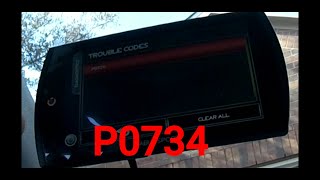
Code P0734 on a 2008-2012 GMC Sierra Denali means the transmission is slipping in 4th gear. The most common causes are low/dirty transmission fluid or debris inside the transmission valve body, an issue highlighted in GM Technical Service Bulletins. A fluid and filter change may fix it for under $200, but internal issues like a worn 4-5-6 clutch pack or valve body problems are also very common in the 6L80 transmission and can lead to repairs costing over $2000.
- P0734 indicates a serious transmission problem (4th gear slippage) that should be addressed immediately to prevent further damage.
- The first and most important diagnostic step is to check the transmission fluid level and condition.
- For the 2008-2012 Sierra Denali, a very common cause is debris blocking passages in the transmission valve body, as documented by GM.
- While a fluid change might solve the problem, be prepared for a more involved repair like a valve body service or solenoid replacement.
- Due to the complexity of internal transmission work, professional diagnosis and repair are strongly recommended.
What's Unique About the 2008-2012 Gmc SIERRA DENALI
The 2008-2012 GMC Sierra Denali is typically equipped with the GM 6L80 6-speed automatic transmission. While generally robust, this transmission family is known for specific issues that can lead to code P0734. 🎬 Watch: Understanding the common causes and fixes for P0734 codes. Manufacturer TSBs for this platform specifically point to problems like debris clogging orifices in the valve body separator plate, which disrupts the hydraulic pressure needed to engage gears properly. [Bulletin #PIP5100A, Bulletin #PIP5100] TSB #PIP5100A explicitly mentions that debris from an aftermarket spin-on filter can be a cause of this blockage. A more severe and common issue in the 6L80 is the failure of the 4-5-6 clutch pack, often due to a weak 'waved' spring plate or cracked pistons, which prevents the clutch from applying correctly and leads to burnout.
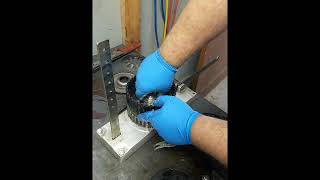
🎬 See how to service and upgrade the 4-5-6 clutch pack.Diagnostic Flowchart
Tap your situation to follow the diagnostic path that matches what you're seeing on this vehicle.
Symptoms You May Notice
- Check Engine Light is on
- Transmission slipping in 4th gear (engine RPMs rise without an increase in speed)
- Harsh or delayed shifting into or out of 4th gear.
- Vehicle fails to shift into 4th gear, remaining in 3rd at highway speeds.
- A noticeable clunk or lurch when 4th gear engages.
- Reduced fuel economy due to the engine running at higher RPMs.
- Transmission enters "limp mode," getting stuck in a single gear (often 3rd).
- Smell of burnt transmission fluid.
- Replacing the entire transmission when the issue is a simple fluid problem or a faulty solenoid.
- Replacing input/output speed sensors when the problem is actually hydraulic (low fluid or clogged valve body) or mechanical (worn clutches).
- Condemning the transmission without first inspecting the valve body separator plate for blockages as described in TSB #PIP5100A.
Most Likely Causes
- Low or Dirty Transmission Fluid 🔴 High Probability Fluid is the lifeblood of the transmission, providing hydraulic pressure. Leaks or extended service intervals can lead to low or contaminated fluid, causing pressure drops and slipping. A clogged filter can also starve the pump for fluid, leading to the same symptoms.
How to confirm: Check the transmission fluid level and condition via the dipstick (if equipped) or service plug. The fluid should be bright red and clear, not dark, burnt-smelling, or full of particles. A large amount of metallic debris on the pan magnet is a sign of severe internal wear.
Typical fix: Perform a transmission fluid and filter change using the correct fluid (ACDelco DEXRON-VI). If the fluid is very dirty, a full fluid flush may be recommended by a professional.
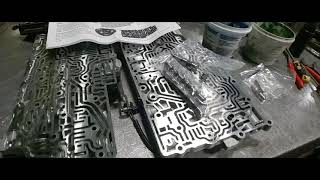
Est. part cost: $75-$150 - Debris in Valve Body / Clogged Solenoids 🔴 High Probability As cited in GM TSBs #PIP5100A and #PIP5100, debris from clutch material or a failing torque converter can block small orifices in the valve body separator plate, preventing correct hydraulic pressure from reaching the 4th gear clutch pack. TSB #PIP5100A specifically warns that debris from aftermarket spin-on filters can cause this blockage.
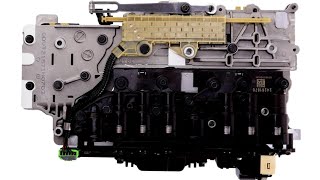
How to confirm: This requires dropping the transmission pan and removing the valve body for inspection. A professional will look for metal shavings or other debris in the fluid pan and within the valve body passages. A sticking pressure regulator valve is a common culprit.
Typical fix: The valve body must be removed, disassembled, cleaned, and inspected. In many cases, the separator plate is replaced. Sonnax and other companies make kits to repair worn valve body bores.
Est. part cost: $200-$600 - Worn 4-5-6 Clutch Pack 🟡 Medium Probability This is a widely documented failure point in the 6L80 transmission. The original waved plate for the 4-5-6 clutch is prone to breaking or coning, which leads to uneven pressure, slippage, and eventual burnout of the clutch friction plates. A cracked 1-2-3-4 / 3-5-R clutch housing can also cause pressure loss leading to this failure.
How to confirm: This is a diagnosis of exclusion after fluid, solenoids, and the valve body have been ruled out. A large amount of black clutch material in the transmission pan is a very strong indicator of this failure. A transmission pressure test may show low pressure to the 4th gear circuit.
Typical fix: This requires a complete transmission rebuild to replace the worn 4-5-6 clutch pack, pistons, and seals. Upgraded billet pistons and flat (not waved) steel plates are often used in rebuilds to prevent recurrence.
Est. part cost: $500-$1000 (for rebuild kit parts) - Failed Shift Solenoid 🟡 Medium Probability Solenoids are electronic actuators that direct fluid flow. The solenoid responsible for the 4th gear shift can fail electronically or become stuck mechanically due to debris.
How to confirm: A professional scan tool can command the solenoid on and off to check its response. Resistance can also be checked with a multimeter once the solenoid is accessed.
Typical fix: Replace the faulty shift solenoid. This is located inside the transmission on the valve body.
Est. part cost: $50-$150
Rare But Worth Checking
- Faulty Transmission Control Module (TCM): While rare, a software glitch or internal failure in the TCM (which is integrated with the valve body in the 6L80) can cause it to misinterpret sensor data or fail to command shifts correctly. Sometimes a re-flash with updated software can resolve issues.
- Damaged Input/Output Speed Sensors: If the sensors that report shaft speeds to the TCM are faulty, the computer may calculate an incorrect ratio and set the code, even if there is no mechanical slip. This often sets other sensor-specific codes as well.
- Cracked Torque Converter: Failure of the torque converter clutch (TCC) is a very common 6L80 issue that often precedes other codes. A failing TCC can shed debris that clogs the valve body and leads to gear ratio codes. In some cases, the converter base itself can crack.
Diagnosis Steps
- Check and verify the transmission fluid level and condition. Ensure the fluid is at the correct level and is not dark, burnt, or contaminated.
- Use an OBD-II scanner to check for any other transmission-related codes that could provide more context, especially P0700, P0741, or other gear ratio codes.
- With an advanced scan tool, monitor live data for Transmission Input Speed, Output Speed, and commanded gear to confirm the slippage in 4th gear.
- Perform a transmission fluid pressure test to check if the hydraulic pressure is within specification for the 4th gear circuit.
- Drop the transmission oil pan and inspect the filter and pan for excessive metal shavings or black clutch material, which would indicate internal mechanical wear.
- If the fluid is clean, inspect the valve body and shift solenoids for blockages or electrical faults as per TSBs PIP5100A and PIP5100.
- Inspect the 4-5-6 clutch housing for cracks and the clutch plates for burning, as this is a very common failure point for the 6L80 transmission.
- If all other steps fail to find the cause, internal mechanical failure (e.g., worn clutch pack, cracked drum) is likely, requiring a transmission teardown.
Parts You'll Likely Need
- Automatic Transmission Fluid and Filter Kit
(OEM #24236933 (Filter Kit))— Low or dirty fluid is a primary cause. A fluid and filter service is the first and most crucial step
Related Codes That Often Appear With This One
- P0700 — P0700 is a general Transmission Control System Malfunction code. It is a request from the TCM to the main engine computer (ECM) to turn on the Check Engine Light. It almost always appears with more specific transmission codes like P0734.
- P0731, P0732, P0733, P0735 — These are incorrect gear ratio codes for 1st, 2nd, 3rd, and 5th gears, respectively. If you see multiple gear ratio codes, it strongly points to a systemic issue like low fluid, a clogged filter, or a major hydraulic problem affecting multiple circuits. [Bulletin #PIP4379M]
- P2723 — This code for "Pressure Control Solenoid 'E' Performance/Stuck Off" is often seen with gear ratio codes on these transmissions, as noted in TSBs. It points directly to a hydraulic control issue within the valve body. [Bulletin #PIP5100A, 10, 50]
- P0741 — This code for "Torque Converter Clutch Performance / Stuck Off" is extremely common on 6L80 transmissions and often a precursor to other issues. A failing TCC sheds debris that can clog the valve body and cause subsequent gear ratio codes.
Technical Service Bulletins (TSBs) & Recalls
- PIP4379M: Addresses multiple transmission DTCs including P0734 related to delayed engagement or range inhibit.
- PIP5100A: Points to blocked valve body separator plate orifices as a cause for P0734 and other codes, especially when a vehicle won't move.
- PIP5100: A similar bulletin to PIP5100A, also highlighting debris in the valve body separator plate as a likely cause.
Platform-Specific Known Issues
- 4-5-6 Clutch Pack Failure: The most notorious internal weak point of the 6L80 transmission. The original design uses a 'waved' steel plate that applies the clutch. This plate is prone to fatigue, breaking, or 'coning' (flexing unevenly). This causes the clutch plates to apply with insufficient or uneven pressure, leading to slippage, overheating, and rapid burning of the friction material. A large amount of black debris in the pan is a classic sign of this failure. Rebuilds often use a stronger, flat steel plate design to correct this flaw.
- Torque Converter Clutch (TCC) Failure: Another extremely common issue, often presenting as a 'shudder' during light acceleration before any codes appear. The TCC lockup piston can fail, shedding metallic debris throughout the transmission. This debris is a primary cause of subsequent valve body issues, as it clogs solenoids and fine passages, leading to pressure loss and codes like P0734. Many experts recommend replacing the torque converter as a preventative measure during any 6L80 rebuild.
Mechanic-Grade Diagnostic Values
- Shift Solenoid (On/Off type) resistance — expected: 20 - 40 Ohms. Failure: Readings outside this range indicate a failed solenoid coil.
- Pressure Control & TCC Solenoid (PWM type) resistance — expected: 3 - 8 Ohms. Failure: Readings outside this range indicate a failed solenoid coil.
- Transmission Line Pressure at Idle (in gear) — expected: 45 - 80 psi. Failure: Pressure below this range indicates a potential pump, valve body, or major leak issue.
- Transmission Line Pressure at Wide Open Throttle (WOT) — expected: Up to 300 psi. Failure: Failure to reach high pressure under load points to a weak pump, sticking pressure regulator valve, or major internal leaks.
- Internal Mode Switch (IMS) Bias Voltage — expected: 8.3 - 9.3 Volts. Failure: Incorrect voltage can lead to the TCM misinterpreting the selected gear.
Scan Tool Commands That Help
- GM GDS2 / Tech2 or equivalent: Solenoid Output Control / Override — To individually command solenoids on and off during a bench test with a test plate or to check for response, helping isolate a mechanically stuck or electrically failed solenoid.
- GM GDS2 / Tech2 or equivalent: Solenoid Cleaning Procedure — This automated function cycles all solenoids to flush out small amounts of debris that may be causing a performance DTC. It can be attempted before replacing the TEHCM.
- GM GDS2 / Tech2 or equivalent: Service Fast Learn Adapts — This is a mandatory procedure after replacing the transmission, TEHCM, or performing a calibration update. It resets and relearns the clutch apply pressures and shift timing. Failure to perform this can cause harsh shifts or damage to the new components.
Wiring & Ground Locations
- Main Engine/Trans Ground Strap — A braided ground strap from the rear of the passenger side cylinder head to the firewall/body.. A poor ground connection here can cause a host of electrical issues, including erratic sensor readings and improper TCM operation, which can mimic internal transmission faults.
- PCM/TCM Main Ground — A wire from the main engine harness to a 10mm or 13mm bolt on the back of the engine block, often near the bellhousing.. This is a critical ground for the powertrain control electronics. It is notoriously prone to corrosion or breaking, which can cause shifting problems, incorrect sensor data for the TCM, and set false codes.
- Transmission 16-pin Connector (Vehicle Harness Side) — The main electrical connector on the passenger side of the transmission case.. Pin 5 is the main ground, Pin 4 is battery power, and Pins 10/11 & 13/14 are CAN bus data lines. Verifying solid power, ground, and clean data lines at this connector is essential for diagnosing electrical issues.
Real Owner Repair Stories
- Reddit user in r/transmissionbuilding (2012 Chevrolet Silverado, 267,000 miles) — Torque converter shutter, which is a common precursor to debris-related codes like P0734.
❌ Tried (didn't work) The user was planning a preventative rebuild before total failure.
✅ What actually fixed it The consensus expert advice for the rebuild was to not just replace clutches, but to address the root causes: replace the OEM torque converter with a heavy-duty aftermarket unit, replace the entire TEHCM, install a shift kit (e.g., Sonnax) in the valve body to correct hydraulic issues, and have the transmission pump machined if scored. - YouTube user (GM Truck with P0734) — Check engine light with code P0734.
❌ Tried (didn't work) Initially, the user replaced both the input and output speed sensors.
✅ What actually fixed it Replacing the speed sensors made the problem go away temporarily, but the user identified the likely true culprit as the transmission control solenoid module (TEHCM) and planned to replace it next. This highlights how sensor replacement can be a misdiagnosis or only a partial fix.
When the Usual Fixes Don't Work
- While the most common causes of P0734 are severe internal hydraulic or mechanical failures, it should not be immediately assumed. In some documented cases, the issue was resolved, at least temporarily, by replacing the input and output speed sensors. This suggests that while less common, an electrical fault with the speed sensors themselves can be the root cause and should be properly ruled out before condemning the transmission for a full rebuild.
OEM Part Supersession History
Multiple, including 24256939, 24257213, 24259835→Remanufactured units like Sonnax GM6L-TEHCM-C6— OE TEHCMs are prone to internal circuit faults. Remanufactured units are tested and repaired.
Heads up: TEHCMs are year- and model-specific. A new or reman TEHCM must be programmed to the vehicle's VIN using a J2534 device before it will function.24248581 (Seal Kit)→24248559 (Seal Kit)— Updated pump cover seal design to address 2-3 shift complaints and pressure loss.
Heads up: The new design uses a deeper groove to accommodate a rubber O-ring under the seal.Original 4-5-6 clutch backing plate→Sonnax 104140A-01 (Heavy Duty Backing Plate) or 104960-01K (Piston & Plate Kit)— The OE backing plate is prone to flexing ('coning'), which causes uneven clutch apply and leads to the 4-5-6 clutch pack burning out.
Model Year Variations Within This Range
- Mid-2008 and newer: The valve body separator plate and clutch select valve springs were changed to address a P0751 code. The spring load was lowered to allow valves to move at lower pressure.
- 2008 and newer: The 3-5-Reverse clutch piston oil capacity was reduced by 20%. This change requires a corresponding TCM calibration; using an older calibration with a newer transmission (or vice-versa) can cause issues.
- Mid-2009 and newer: An updated pump cover seal kit (P/N 24248559) was introduced to improve sealing and address pressure loss issues that could contribute to shift problems.
- March 2012 and newer: A 'UNIGEAR' design was introduced, combining the output ring gear and output shaft into a single assembly. This part will back-service older models only if the speed sensor is also replaced.
Helpful Videos


We Have This Part in Stock



The information in this article is provided for general reference and educational purposes only. Vehicle specifications, procedures, and part compatibility can vary by production date, trim level, and region. Always consult your vehicle's factory service manual and verify part numbers before purchasing or performing repairs. Safety-critical components such as airbags, seat belts, and braking systems should be installed by a qualified professional.
- Gmc SIERRA DENALI:
- 🎬 Helpful Videos
- 🛍️ Shop This Part
- What's Unique About the 2008-2012 Gmc SIERRA DENALI
- Diagnostic Flowchart
- Symptoms You May Notice
- Most Likely Causes
- Rare But Worth Checking
- Diagnosis Steps
- Parts You'll Likely Need
- Related Codes That Often Appear With This One
- Technical Service Bulletins (TSBs) & Recalls
- Platform-Specific Known Issues
- Mechanic-Grade Diagnostic Values
- Scan Tool Commands That Help
- Wiring & Ground Locations
- Real Owner Repair Stories
- When the Usual Fixes Don't Work
- OEM Part Supersession History
- Model Year Variations Within This Range
- 🎟️ Get 5% Off