

P0734 on 2011-2013 GMC Sierra: Gear 4 Incorrect Ratio Causes and Fixes
P0734 on a 2011-2013 GMC Sierra indicates a 4th gear slip, often caused by low/dirty fluid, a failing torque converter shedding debris, or a clogged valve body. Checking the fluid is the first step, but this code frequently points to a serious internal transmission issue, most commonly a failed torque converter, requiring professional diagnosis and repair.
- P0734 means your transmission is slipping in 4th gear, which is a serious problem that should not be ignored.
- The first and simplest check is the transmission fluid level and condition. However, on these trucks, clean fluid does not rule out a major problem.
- The most likely root cause on a 2011-2013 Sierra is a failing torque converter shedding debris that clogs the valve body, as supported by multiple TSBs.
- Do not drive the vehicle. Continued operation with a slipping transmission can lead to catastrophic failure, requiring a complete and very expensive replacement.
- This is not a DIY-friendly repair. Due to the complexity and need for special tools, professional service is strongly recommended.
What's Unique About the 2011-2013 Gmc SIERRA
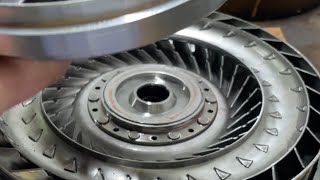
The 2011-2013 GMC Sierra typically uses the GM 6L80 or 6L90 6-speed automatic transmission. A well-documented and extremely common issue with these units is the failure of the torque converter lock-up clutch (TCC). 🎬 Watch: A mechanic explains why these torque converters fail so often. This clutch can disintegrate, sending metallic debris throughout the transmission. This debris contaminates the fluid, clogs the valve body passages and solenoids, and leads to hydraulic pressure loss, which directly causes gear ratio codes like P0734. GM TSBs PIP5100 and PIP5100A specifically mention that debris blocking orifices in the valve body separator plate is a direct cause for this family of codes.
Diagnostic Flowchart
Tap your situation to follow the diagnostic path that matches what you're seeing on this vehicle.
Symptoms You May Notice
- Check Engine Light is on
- Transmission slipping in 4th gear (engine RPMs rise without an increase in speed)
- Delayed or harsh shifting into 4th gear
- Vehicle may not shift into 4th gear, causing high RPMs at highway speeds
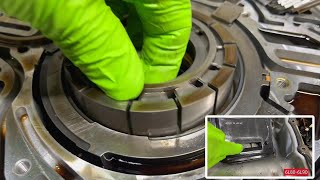
- A 'rumble strip' shudder or vibration felt during light acceleration, especially between 35-55 mph, which is a classic sign of TCC failure. 🎬 See this video for a real-world look at fixing transmission shudder.
- Delayed engagement when shifting into Drive or Reverse [PIP4379K, 19]
- Vehicle may not move forward or reverse at all [PIP5100, PIP5100A]
- Reduced fuel economy due to inefficient power transfer and high RPMs.
- Transmission may enter "limp mode," locking it in a single gear (often 3rd) to prevent further damage.
- Replacing only the input or output speed sensors. While these sensors can fail, it's rare for them to be the root cause of a P0734 code without an accompanying sensor-specific code. Often, debris on the magnetic tip of a sensor is a symptom of the real internal problem.
- Replacing a single shift solenoid when the entire valve body is contaminated with debris. The new solenoid will likely fail or the problem will persist due to blockages elsewhere in the hydraulic circuits.
- Performing only a transmission fluid and filter change when significant debris is present. This does not remove the source of the debris (the failing torque converter) or clear blockages deep within the valve body, leading to a quick return of the problem.
Most Likely Causes
- Low or Dirty Transmission Fluid 🔴 High Probability Leaks from cooler lines or gaskets are common, and fluid can become contaminated by internal component wear, especially debris from a failing torque converter.
How to confirm: Check the transmission fluid level and condition. The fluid should be red and clear, not brown, black, or smelling burnt. Note that many of these trucks do not have a dipstick, requiring a check at the fill plug on the transmission with the fluid at operating temperature (around 175°F per TSB PIP4379K). Finding metallic 'glitter' is a key indicator of torque converter or other hard part failure.
Typical fix: Top off the fluid or perform a full fluid and filter change with ACDelco DEXRON-VI or equivalent. If the fluid is very dirty or full of debris, this is a symptom of a larger problem that a fluid change alone will not fix.
Est. part cost: $75-$150 - Failing Torque Converter 🔴 High Probability The lock-up clutch (TCC) within the 6L80/6L90 torque converter is a known, widespread weak point that sheds metallic debris when it fails. This debris is the primary source of contamination that leads to clogged valve bodies and subsequent ratio codes like P0734.
How to confirm: A key symptom is a shudder or 'rumble strip' feeling at highway speeds (35-55 mph). Dropping the transmission pan and finding excessive metallic, glitter-like debris ('coffee grounds') is a strong indicator. A scan tool may also show excessive TCC slip RPMs.
Typical fix: The torque converter must be replaced. This is a major job that requires removing the transmission. To prevent a repeat failure, the transmission cooler and lines must be professionally flushed, and the valve body and solenoids should be replaced or thoroughly cleaned.
Est. part cost: $300-$800 - Clogged Valve Body or Failed Solenoids (TEHCM) 🟡 Medium Probability Debris from a failing torque converter or normal wear directly clogs the small orifices in the valve body separator plate and causes shift solenoids to stick. TSB PIP5100A specifically calls out inspecting the separator plate orifices for blockage.
How to confirm: This is confirmed by dropping the transmission pan and inspecting the valve body separator plate for blocked orifices. A scan tool can also command solenoids to check for response, but a mechanical blockage from debris won't show as an electrical fault.
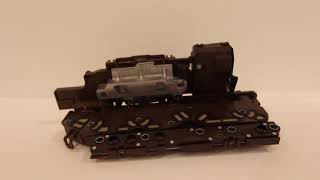
Typical fix: The valve body may be cleaned and an updated separator plate installed, but replacement of the entire TEHCM (which includes the valve body, TCM, and solenoids) is often more reliable. If the TEHCM is replaced, it will require programming to the vehicle. 🎬 Watch: What you need to know about TEHCM and TCM replacements.
Est. part cost: $400-$1200 - Worn 4-5-6 Clutch Pack ⚪ Low Probability While less common than torque converter failure on the 6L80, the 4-5-6 clutch pack can burn out from high mileage, heat, or sustained hydraulic pressure loss caused by a clogged valve body or failing torque converter. A cracked clutch housing is also a possible failure point.
How to confirm: Confirmed by finding significant dark, fibrous clutch friction material in the transmission pan and by performing hydraulic pressure tests. This is a major internal failure requiring a complete transmission teardown and rebuild.
Typical fix: The transmission must be removed and rebuilt to replace the worn clutch pack, seals, and any other damaged components. The root cause of the pressure loss must also be addressed.
Est. part cost: $500-$1500 (for a rebuild kit)
Rare But Worth Checking
- Failed Transmission Control Module (TCM/TEHCM): The TEHCM (Transmission Electro-Hydraulic Control Module) is located inside the oil pan and combines the TCM and solenoids. While robust, it can fail from heat or contamination. This is usually diagnosed after all other mechanical and hydraulic issues are ruled out.
- Damaged Wiring Harness: The wiring to the transmission can be damaged by heat, road debris, or corrosion, leading to intermittent signals from sensors or to solenoids. This would typically be accompanied by other electrical codes.
- Cracked Transmission Filter: TSB PIP4379K mentions that a cracked internal suction filter can cause a loss of prime, leading to low fluid pressure and multiple gear ratio codes, especially after a cold start. This can happen after a fluid service if the filter is not installed correctly.
Diagnosis Steps
- Check for other stored DTCs. A P0700 or other gear ratio codes (P0731-P0735) or a TCC code (P0741) provide important context.
- Check the transmission fluid level and condition. This must be done at the fill plug with the vehicle level and at operating temperature (approx. 175°F). Look for dark, burnt fluid or metallic debris.
- Drop the transmission pan to inspect for debris. A light coating of fine grey material is normal, but large metal shavings, chunks, or excessive 'coffee ground' like material indicates a serious internal failure, likely from the torque converter.
- Inspect the valve body separator plate orifices for blockage, as recommended by GM Technical Service Bulletins PIP5100 and PIP5100A.
- Use a professional scan tool to monitor live data, including input/output speed sensor readings, commanded gear vs. actual gear, and torque converter clutch (TCC) slip RPM.
- Perform a line pressure test to check for hydraulic issues within the transmission. At idle in drive, pressure should be 45-80 PSI.
- If a torque converter failure is suspected, the transmission must be removed for replacement. At this time, inspect the transmission pump for scoring and the valve body for contamination.
Parts You'll Likely Need
- Transmission Electro-Hydraulic Control Module (TEHCM)
- Torque Converter
- Transmission Fluid (DEXRON-VI)
- Transmission Filter and Pan Gasket
- Transmission Rebuild Kit
Related Codes That Often Appear With This One
- P0700 — This is a generic code indicating the Transmission Control Module (TCM) has stored a fault. It almost always appears alongside specific transmission codes like P0734.
- P0731, P0732, P0733, P0735 — These codes indicate incorrect gear ratios for 1st, 2nd, 3rd, and 5th gears. Seeing multiple ratio codes together points to a widespread issue like very low fluid, a failing torque converter contaminating the whole system, or a major hydraulic failure. [3, PIP4379K]
- P0741 — This code indicates a problem with the Torque Converter Clutch (TCC) circuit being stuck off. Since TCC failure is a primary cause of debris leading to P0734 on these trucks, seeing both codes together strongly suggests a failing torque converter is the root cause.
Technical Service Bulletins (TSBs) & Recalls
- PIP4379K: Addresses no/delayed engagement and various ratio codes (including P0734), pointing to potential issues with low fluid, a cracked internal filter, or a stuck lube regulator valve in the pump cover.
- PIP5100 / PIP5100A: Specifically instructs technicians to inspect the valve body separator plate orifices for blockage when multiple ratio codes (including P0734) or a no-move condition are present.
- PIP5108: While not directly for P0734, this TSB for 2011-2013 Sierras addresses an engine whine noise related to the thermostat and water pump, providing related platform service information.
Platform-Specific Known Issues
- The Common Failure Cascade: Torque Converter to P0734: Many owners of 2011-2013 Sierras experience a specific chain of events. It often starts with a subtle shudder or vibration at highway speeds (the TCC failing). If ignored, this escalates, and eventually, the Check Engine Light appears with codes P0741 and/or P0734. By the time P0734 is set, the debris from the failing converter has already circulated through the transmission, contaminating the fluid and clogging the valve body. A repair at this stage requires not just replacing the torque converter, but also addressing the contamination downstream by flushing the cooler lines and replacing or cleaning the valve body/TEHCM to prevent a repeat failure.
Mechanic-Grade Diagnostic Values
- Shift Solenoid (On/Off type) Resistance — expected: 20-40 Ohms. Failure: A reading outside this range indicates a failed solenoid coil, requiring TEHCM replacement.
- Pressure Control & TCC Solenoid (PWM type) Resistance — expected: 3-8 Ohms (most sources cite 5-6 Ohms). Failure: A reading outside this range points to a failed solenoid coil, requiring TEHCM replacement.
- Main Line Pressure at Idle (in Drive) — expected: Greater than 50 PSI (typically 45-80 PSI). Failure: Significantly lower pressure indicates a worn pump, clogged filter, or major internal leaks.
- TEHCM Solenoid Feed Voltage — expected: 8.3 - 9.3 Volts. Failure: Incorrect voltage from the TEHCM to the solenoids can indicate an internal power regulation problem within the module.
Scan Tool Commands That Help
- GM Tech2 / GDS2: Solenoid Control / Output Control — Allows a technician to command specific shift solenoids on and off with the engine running to verify electrical circuit integrity and listen for an audible click from the solenoid. This helps isolate a failed solenoid without immediate disassembly.
- GM Tech2 / GDS2: Transmission Service > Solenoid Cleaning — This automated procedure cycles all solenoids to flush debris from the valves and their circuits. It can be attempted if a performance DTC is set and debris is suspected, potentially avoiding TEHCM replacement if successful.
- GM Tech2 / GDS2: Reset Adapts / Fast Learn — This function must be performed after replacing the TEHCM or rebuilding the transmission. It resets the learned shift parameters and allows the module to quickly adapt to the new components for proper shift quality.
Wiring & Ground Locations
- G103 — On the front of the passenger side (right) cylinder head.. This is a primary engine ground. A poor connection here can cause a variety of electrical issues, including erratic sensor readings and improper TCM/TEHCM operation.
- G110 — On the left front lower side of the engine block (for diesel engines) or at the rear of the cylinder head on some gas models.. This is a critical ground point for the engine and transmission control systems. A loose or corroded G110 is a known cause of seemingly unrelated electrical faults and can affect the TEHCM's power and ground integrity.
- Transmission Harness Connector (X1) — The main 16-pin circular connector on the passenger side of the transmission case.. All power, ground, and data signals between the vehicle and the TEHCM pass through this connector. Corrosion or damaged pins here can directly cause communication loss or incorrect solenoid commands, leading to ratio codes.
Real Owner Repair Stories
- YouTube user @HickabillyMoto (GMC Sierra (year not specified, but consistent with 6L80 issues)) — P0734 code, Check Engine Light.
❌ Tried (didn't work) Replaced input speed sensor., Replaced output speed sensor.
✅ What actually fixed it The problem persisted and worsened, eventually leading to a loss of most gears. The final fix was a complete transmission rebuild. The fluid was found to be black and burnt, and the clutch plates showed significant damage, indicating a severe internal mechanical failure was the root cause, not the sensors.
OEM Part Supersession History
Various (e.g., 24252114)→24256861 (common for 2010-2013)— Hardware and software updates to improve solenoid reliability and address pressure switch failures common in earlier models.
Heads up: TEHCMs are year-range specific and not interchangeable. Installing a TEHCM with the wrong Tag ID or from a different year range will result in a no-start or immediate limp mode condition. Programming to the vehicle's VIN is always required.24268442, 24279756→24291284— Updates to the torque converter clutch (TCC) lining and internal components to improve durability and reduce the likelihood of shudder and debris generation.
Model Year Variations Within This Range
- 2010-2013: Compared to earlier 6L80s (2006-2009), the TEHCM used in the 2011-2013 Sierra (often part number 24256861) featured improved solenoids and an updated pressure manifold gasket to increase reliability. However, they are still highly susceptible to contamination from torque converter debris.
Helpful Videos
Used OEM Parts in Stock


New Aftermarket Parts Available



The information in this article is provided for general reference and educational purposes only. Vehicle specifications, procedures, and part compatibility can vary by production date, trim level, and region. Always consult your vehicle's factory service manual and verify part numbers before purchasing or performing repairs. Safety-critical components such as airbags, seat belts, and braking systems should be installed by a qualified professional.
- Gmc SIERRA:
- 🎬 Helpful Videos
- 🛍️ Shop This Part
- What's Unique About the 2011-2013 Gmc SIERRA
- Diagnostic Flowchart
- Symptoms You May Notice
- Most Likely Causes
- Rare But Worth Checking
- Diagnosis Steps
- Parts You'll Likely Need
- Related Codes That Often Appear With This One
- Technical Service Bulletins (TSBs) & Recalls
- Platform-Specific Known Issues
- Mechanic-Grade Diagnostic Values
- Scan Tool Commands That Help
- Wiring & Ground Locations
- Real Owner Repair Stories
- OEM Part Supersession History
- Model Year Variations Within This Range
- 🎟️ Get 5% Off