

P0734 on 2009-2010 Chevrolet Silverado 2500: Gear 4 Incorrect Ratio Fixes
P0734 on a 2009-2010 Silverado 2500 indicates the transmission is slipping in 4th gear. While low or dirty fluid is a possible cause, it more commonly points to a significant internal issue with the 6L90 transmission. Frequent culprits include a failing torque converter shedding debris, a faulty shift solenoid, or a worn 4-5-6 clutch pack. This repair is complex, often requires a transmission rebuild or replacement, and should be handled by a professional.
- P0734 means your Silverado's transmission is slipping in 4th gear.
- Always check the transmission fluid level and condition first; it's the easiest and cheapest potential fix.
- This code on a 2009-2010 Silverado 2500 often indicates a serious internal problem, such as a failed solenoid or worn clutch pack, not just a bad sensor.
- Due to the complexity of the 6L90 transmission, professional diagnosis and repair are strongly recommended to avoid further damage and unnecessary cost.
- Do not ignore this code. Continued driving can lead to complete transmission failure, leaving you stranded and facing a much more expensive repair.
What's Unique About the 2009-2010 Chevrolet SILVERADO 2500
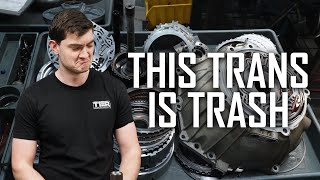
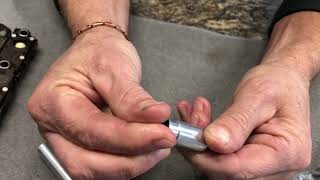
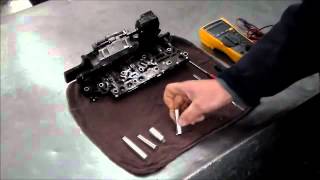
The 2009-2010 Silverado 2500 is equipped with the heavy-duty GM 6L90 (RPO code MYD) 6-speed automatic transmission. 🎬 Watch: Common 6L90 problems that lead to transmission destruction While generally robust, this transmission family is known for failures that can trigger a P0734 code. A very common point of failure is the torque converter clutch, which can fail and send metallic debris throughout the transmission, clogging the valve body, solenoids, and damaging the pump. This often leads to a complete transmission failure requiring a rebuild or replacement. Another known issue is cracking of the 1-2-3-4-5 reverse drum weld. Technical Service Bulletin #PIP4379N lists P0734 among a wide array of codes that can result from hydraulic issues, often stemming from low fluid levels which can be a precursor to these larger mechanical failures.
Diagnostic Flowchart
Tap your situation to follow the diagnostic path that matches what you're seeing on this vehicle.
Symptoms You May Notice
- Check Engine Light is on
- Transmission fails to shift into 4th gear, or the shift is delayed and harsh
- Engine RPMs are unusually high at highway speeds
- Vehicle feels like it is slipping or hesitating, especially during the 3-4 shift
- Reduced fuel economy
- Transmission may enter "limp mode," locking it in a single gear (often 2nd) to prevent further damage
- A shudder or vibration that feels like driving over a rumble strip, especially under light throttle
- Replacing input or output speed sensors. These sensors are reporting the problem (the slip), not causing it. The error indicates a real mechanical or hydraulic slip, not a faulty sensor reading in most cases.
- Replacing only the torque converter. If the old converter has failed, it has sent debris throughout the transmission. Without a full teardown and cleaning, the new converter and the rest of the transmission will fail again quickly.
Most Likely Causes
- Low or Contaminated Transmission Fluid 🟡 Medium Probability Leaks from seals or cooler lines can lower fluid levels. Fluid can also become contaminated with metal shavings from a failing torque converter or clutch pack, which is a common issue in the 6L90.
How to confirm: Check the transmission fluid level and condition using the dipstick. The fluid should be at the 'full' mark when hot and appear bright red and clean. Dark, burnt-smelling fluid, or fluid with visible metal particles, indicates a serious internal problem.
Typical fix: If the fluid is just low, top it off with DEXRON-VI automatic transmission fluid and check for leaks. If the fluid is dirty or burnt, a fluid and filter change can be attempted, but it's often a symptom of a larger failure.
Est. part cost: $50-$150 - Failing Torque Converter 🔴 High Probability The torque converter clutch is a well-documented weak point in the 6L80/6L90 family. The clutch material delaminates, or the converter base flexes and warps, creating metal debris that contaminates the entire transmission. This debris clogs solenoids, scores the pump, and leads to widespread failure.
How to confirm: Symptoms include a 'rumble strip' shudder, transmission overheating, and metal shavings in the pan. A professional diagnosis is needed, often confirmed by inspecting the fluid and pan after other causes are ruled out.
Typical fix: The torque converter must be replaced. Due to the contamination it causes, this repair almost always requires a full transmission rebuild or replacement to be successful long-term. Simply replacing the converter is not enough.
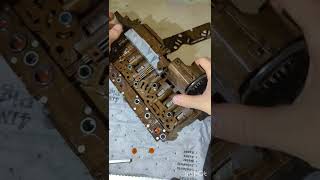
Est. part cost: $300-$800 for an upgraded billet converter, plus rebuild kit costs - Failed Shift Solenoid / TEHCM Unit 🟡 Medium Probability The shift solenoids, which are part of the Transmission Electro-Hydraulic Control Module (TEHCM) inside the oil pan, can fail electronically or become clogged with debris from a failing torque converter.
How to confirm: A professional scan tool can command the specific shift solenoid for 4th gear and monitor its operation. The solenoid's resistance can also be tested. Debris in the pan is a strong indicator that the solenoid is clogged rather than electrically faulty.
Typical fix: Replace the entire TEHCM assembly (which includes all solenoids). This requires removing the transmission oil pan and valve body. The new TEHCM must be programmed to the vehicle's VIN.
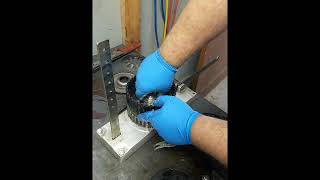
Est. part cost: $400-$750 for the TEHCM assembly - Worn or Damaged 4-5-6 Clutch Pack 🔴 High Probability The friction materials on the clutch pack responsible for 4th, 5th, and 6th gears can wear out, especially in high-mileage or hard-working trucks. This is a known mechanical failure point leading to slippage. 🎬 See how to service and upgrade the 4-5-6 clutch pack This can also be a secondary failure caused by debris from the torque converter.
How to confirm: This is typically diagnosed after ruling out fluid and electronic issues. Burnt or dark fluid with excessive clutch material in the pan is a strong indicator. A transmission pressure test may also point to an internal leak in the clutch circuit.
Typical fix: This is an expensive and labor-intensive repair, requiring a complete transmission rebuild to replace the worn clutches, steels, seals, and gaskets.
Est. part cost: $500-$2500 for a rebuild kit
Rare But Worth Checking
- Cracked 3-5-Reverse Drum: In some 6L80/6L90 transmissions, the weld on the 3-5-R drum can crack, leading to a loss of reverse, 3rd, and 5th gears. While not directly causing a P0734, the resulting debris and pressure loss can trigger multiple gear ratio codes.
- Faulty Transmission Control Module (TCM): The TCM is integrated into the solenoid assembly (TEHCM) on the valve body. While a full TEHCM failure is possible, TSB #PIP4379N notes that replacing it is unlikely to correct this DTC unless there's a specific solenoid or sensor fault within the unit.
- Wiring Harness Issues: Damaged wires or loose connections between the main vehicle computer and the transmission's internal harness connector can cause incorrect signals and trigger the code, though this is less common than internal mechanical or hydraulic failures.
Diagnosis Steps
- Check the transmission fluid level and condition. Top off or change if necessary. Inspect the pan magnet for excessive metal shavings, a key indicator of internal failure.
- Use a professional OBD-II scanner to check for other pending or active transmission-related codes.
- Review live data on the scanner to monitor transmission input and output speeds, as well as commanded vs. actual gear, to confirm the slip in 4th gear.
- Inspect the external wiring harness and connector to the transmission for any visible damage, corrosion, or loose connections.
- If fluid and wiring are good, command the shift solenoids using a bi-directional scan tool to check for response. Note that a clogged solenoid may still click but not flow fluid properly.
- Perform a transmission line pressure test to check for internal hydraulic leaks, which could indicate worn seals or a failing pump.
- If tests point to an internal issue (like metal in pan, pressure loss, or no response from electronics), the final step is to remove the transmission for internal inspection, focusing on the torque converter, oil pump, valve body/TEHCM, and the 4-5-6 clutch pack.
Parts You'll Likely Need
- Automatic Transmission Fluid and Filter Kit — This is the first and most basic step. Dirty or low fluid is a common cause of shifting problems. Use DEXRON-VI fluid.
Trusted brands: ACDelco
OEM price range: $80-$120
Aftermarket price range: $50-$90 - Transmission Control Module (TEHCM)
(OEM #24275874 (supersedes many earlier numbers, verify by VIN))— This assembly contains all the shift solenoids and the TCM. It is replaced as a single unit if a solenoid has failed or is clogged beyond cleaning. Must be programmed.
Trusted brands: ACDelco, Sonnax
OEM price range: $400-$750
Aftermarket price range: $350-$600
Related Codes That Often Appear With This One
- P0731, P0732, P0733, P0735 — These are incorrect gear ratio codes for other gears (1st, 2nd, 3rd, 5th). Multiple ratio codes strongly suggest a systemic problem like a failing torque converter, clogged filter, or a major internal hydraulic failure.
- P0894 — This code for 'Transmission Component Slipping' often accompanies specific gear ratio codes and confirms a significant internal mechanical or hydraulic issue, frequently linked to torque converter or clutch failure.
- P0700 — This is a general transmission fault code. It means the TCM has detected a fault and has requested the main engine computer (ECM) to turn on the Check Engine Light. P0700 will always be present with a more specific code like P0734.
Technical Service Bulletins (TSBs) & Recalls
- PIP4379N: Addresses delayed or no engagement in drive or reverse, which can be accompanied by P0734 and other DTCs. It emphasizes checking for correct fluid level as the first step for these hydraulic-related codes.
- PIP5882: While for later models, it provides diagnostic tips for overheating concerns in 6L80/6L90 transmissions related to the thermal bypass valve (TBV), which can contribute to fluid breakdown and premature wear.
Platform-Specific Known Issues
- Per Technical Service Bulletin #PIP4379N, code P0734 can appear with a host of other transmission codes due to conditions like delayed engagement or a loss of pump prime, often stemming from low fluid levels or internal hydraulic issues. The TSB primarily recommends ensuring the fluid level is correct before proceeding with more complex diagnostics.
- Torque Converter Failure is Epidemic: Multiple sources, including transmission repair specialists and owner forums, point to the failure of the torque converter clutch as the root cause for many 6L90 transmission issues. The clutch sheds material, which then takes out the oil pump, valve body, and solenoids, leading to codes like P0734. A common owner experience involves a transmission shudder developing over time, which, if ignored, leads to total failure.
Mechanic-Grade Diagnostic Values
- Shift Solenoid (On/Off type) resistance — expected: 20-40 Ohms. Failure: A reading outside this range indicates a failed solenoid coil, requiring TEHCM replacement.
- Shift and Line Pressure Solenoid (PWM type) resistance — expected: 3-8 Ohms. Failure: A reading outside this range indicates a failed solenoid coil, requiring TEHCM replacement.
- Line Pressure at Idle (in Park/Neutral) — expected: Approximately 45-80 PSI. Failure: Significantly lower pressure can indicate a worn pump, valve body leaks, or a clogged filter.
Scan Tool Commands That Help
- GM Tech2 / GDS2: Solenoid Automated Cleaning Process — Use this function when a solenoid performance DTC is present but before replacing the TEHCM. It cycles all solenoids to flush out debris, which may resolve the issue without part replacement.
- GM Tech2 / GDS2: Solenoid Control / Output Control — This bidirectional function allows a technician to command individual shift solenoids on and off with the engine off to verify the electrical circuit and listen for an audible click, helping to isolate a faulty solenoid.
- GM Tech2 / GDS2: Transmission Service Fast Learn / Adaptive Procedure Reset — This procedure must be performed after replacing the TEHCM or rebuilding the transmission. It allows the TCM to relearn clutch apply pressures and shift timing. Failure to perform this can result in harsh shifts and clunks.
Wiring & Ground Locations
- G103 — On the front of the right (passenger side) cylinder head.. This is a primary engine and transmission ground. A poor or corroded connection here can cause erratic voltage to the TEHCM, leading to incorrect sensor readings, solenoid malfunctions, and false diagnostic codes.
- Engine Harness Chafe Point 1 — Against the sharp edge of the black ECM/TCM mounting bracket on the driver's side of the engine compartment.. Vibrations can cause the harness to rub through, potentially shorting communication (CAN bus) or power wires for the transmission, leading to various DTCs including P0734.
- Engine Harness Chafe Point 2 — Near the driver's side upper control arm and the shock tower bolt.. Similar to the bracket chafe, engine and suspension movement can damage the harness in this area, interrupting signals to and from the transmission.
- X2 / T42 Connector (External Transmission Connector) — The main 16-pin round connector on the passenger side of the transmission case.. This is the sole electrical link to the internal TEHCM. Checking for battery voltage at Pin 4 (RD/WH wire) and good ground at Pin 5 (BK/WH wire) is a critical first step in diagnosing a potential power supply issue to the module.
Real Owner Repair Stories
- Go-Parts.com repair documentation (GMC Sierra Denali with 6L80 transmission (similar architecture)) — P0734 and other gear ratio codes present.
❌ Tried (didn't work) A fluid and filter change did not resolve the issue.
✅ What actually fixed it A transmission teardown revealed the 4-5-6 clutch pack was completely burnt. The root cause was determined to be a failed torque converter that had shed debris, starving the clutch pack of hydraulic pressure. The final repair was a full transmission rebuild, including a new torque converter, a new 4-5-6 clutch drum and piston assembly, and a thorough flush of the valve body and cooler lines.
OEM Part Supersession History
24241350, 24252114 (and others)→24256861, 24275874 (verify by VIN)— GM made several revisions to the TEHCM to address common failure points. Later generations feature improved solenoids, updated pressure manifold gaskets, and better thermal tolerance.
Heads up: TEHCMs are not universally interchangeable between year ranges due to hardware and software differences. Installing an incorrect TEHCM can result in a no-start condition, limp mode, or communication errors. The replacement TEHCM must be programmed to the vehicle's VIN using dealer software (Techline Connect).
Helpful Videos

We Have This Part in Stock


The information in this article is provided for general reference and educational purposes only. Vehicle specifications, procedures, and part compatibility can vary by production date, trim level, and region. Always consult your vehicle's factory service manual and verify part numbers before purchasing or performing repairs. Safety-critical components such as airbags, seat belts, and braking systems should be installed by a qualified professional.
- Chevrolet SILVERADO 2500:
- 🎬 Helpful Videos
- 🛍️ Shop This Part
- What's Unique About the 2009-2010 Chevrolet SILVERADO 2500
- Diagnostic Flowchart
- Symptoms You May Notice
- Most Likely Causes
- Rare But Worth Checking
- Diagnosis Steps
- Parts You'll Likely Need
- Related Codes That Often Appear With This One
- Technical Service Bulletins (TSBs) & Recalls
- Platform-Specific Known Issues
- Mechanic-Grade Diagnostic Values
- Scan Tool Commands That Help
- Wiring & Ground Locations
- Real Owner Repair Stories
- OEM Part Supersession History
- 🎟️ Get 5% Off