

P0734 on 2011-2013 Chevrolet Silverado: Gear 4 Incorrect Ratio Causes and Fixes
On a 2011-2013 Silverado with the 6L80 transmission, P0734 means the transmission is slipping in 4th gear. The most common causes are a failing torque converter shedding debris, low or dirty fluid, or debris clogging the valve body separator plate as noted in GM TSBs. If fluid is okay, suspect an internal hydraulic or mechanical issue requiring professional diagnosis.
- P0734 on a 2011-2013 Silverado indicates a 4th gear slip, which is a serious issue.
- Do not drive the vehicle, as you risk getting stranded or causing catastrophic transmission damage.
- Always check the transmission fluid level and condition first.
- Be aware of the specific TSBs for this truck that point to debris in the valve body separator plate as a likely cause.
- Due to the complexity and risk of expensive damage, professional diagnosis is strongly recommended.
What's Unique About the 2011-2013 Chevrolet SILVERADO
The 2011-2013 Silverado primarily uses the GM 6L80 6-speed automatic transmission. For this platform, a primary weak point is the torque converter clutch (TCC), which is known to fail and shed metallic debris into the fluid. This contaminated fluid then travels to the valve body, where the debris can block tiny orifices in the separator plate, a specific issue addressed by manufacturer Technical Service Bulletins (TSBs) PIP5100 and PIP5100A. This makes a failing torque converter and resulting valve body contamination a higher-than-usual suspect compared to other vehicles.
Diagnostic Flowchart
Tap your situation to follow the diagnostic path that matches what you're seeing on this vehicle.
Symptoms You May Notice
- Check Engine Light is on
- Transmission slipping or failing to engage 4th gear
- Harsh or delayed shifting, particularly the 3-4 shift
- Vehicle enters "limp mode" (stuck in a single gear)
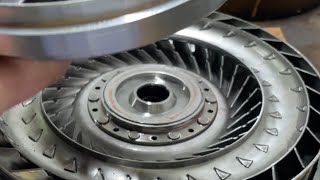
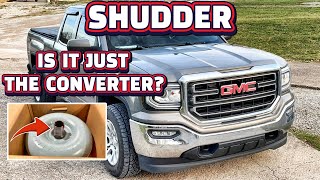
- A vibration or 'rumble strip' feeling during light acceleration (a classic sign of TCC failure 🎬 Watch: A deep dive into common 6L80 torque converter issues)
- Inability to move in forward or reverse [PIP5100, PIP5100A]
- Reduced fuel economy due to inefficient gear operation
- Replacing transmission speed sensors. While a sensor can fail, it's far less common than fluid contamination, solenoid, or valve body issues for this specific code on the 6L80. A failing sensor will typically set its own specific code (e.g., P0720).
- Assuming a complete transmission rebuild is needed immediately. The issue could be addressed with a new torque converter, valve body service, and fluid flush if caught early before the clutches are damaged. Proper diagnosis is key.
- Performing only a fluid and filter change. If the fluid is full of debris from a failing torque converter, simply changing the fluid is a temporary fix at best. The source of the debris must be replaced, or the new fluid will quickly become contaminated and the problem will return. 🎬 See why replacing just the torque converter isn't enough
Most Likely Causes
- Low or Dirty Transmission Fluid 🔴 High Probability Fluid is the lifeblood for hydraulic pressure. On the 6L80, fluid contaminated with debris from a failing torque converter is a very common cause of shifting issues and codes like P0734.
How to confirm: Check the transmission fluid level and condition. The fluid should be at the correct level, red in color, and not smell burnt. The presence of excessive metallic 'glitter' in the fluid is a strong indicator of torque converter or other internal component failure.
Typical fix: Top off the fluid if low and inspect for leaks. If the fluid is dark, burnt, or full of debris, a simple fluid change is not enough. The system must be thoroughly flushed and the root cause of the debris (often the torque converter) must be addressed.
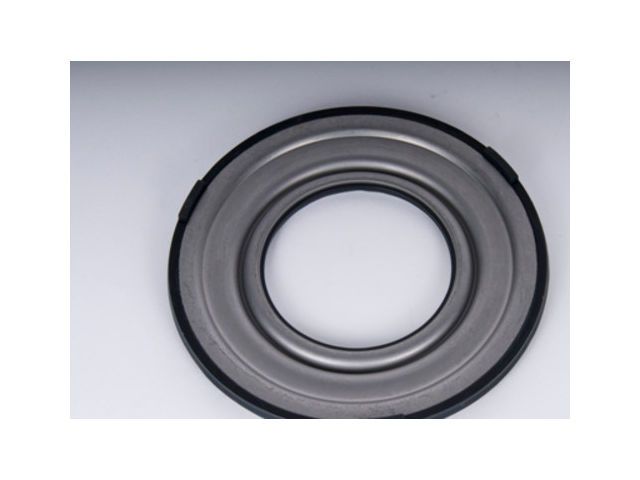
Est. part cost: $50-$150 for a fluid/filter change, but this is often not the complete fix. - Debris in Valve Body Separator Plate 🔴 High Probability This is a documented issue in GM TSBs PIP5100 and PIP5100A. Debris from a failing torque converter or aftermarket filters clogs the small orifices on the plate, starving clutches of the hydraulic pressure needed to engage.
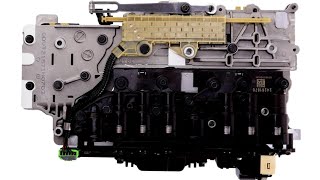
How to confirm: After dropping the transmission pan, the valve body must be removed and the separator plate inspected for blocked orifices. This is best done by a professional. 🎬 Watch: How to disassemble and clean the 6L80 valve body
Typical fix: Clean or replace the valve body separator plate and perform a full fluid flush. Often, the torque converter must also be replaced to prevent a repeat failure. Aftermarket companies like Sonnax offer improved separator plates.
Est. part cost: $100-$400 - Failing Shift Solenoid 🟡 Medium Probability Solenoids in the 6L80's TEHCM (Transmission Electro-Hydraulic Control Module) control fluid flow. They can fail electronically or, more commonly, become clogged or stuck due to debris in the fluid.
How to confirm: A professional can use a high-end scan tool to command the specific solenoid on and off to test its function. Resistance can also be checked with a multimeter once the solenoid is accessed.
Typical fix: Replace the faulty shift solenoid or the entire TEHCM/valve body assembly. This is located inside the transmission pan.
Est. part cost: $50-$250 for a single solenoid, much more for a full TEHCM. - Internal Mechanical Failure (4-5-6 Clutch Pack) 🟡 Medium Probability If the issue is not resolved, hydraulic pressure loss from the causes above will lead to the 4-5-6 clutch pack slipping and burning out. This is the clutch pack responsible for applying 4th gear. Cracks in the stator support tube can also cause pressure loss to this specific clutch.
How to confirm: This is a diagnosis of exclusion after other causes are ruled out. A large amount of dark, burnt clutch material in the transmission pan is a definitive sign.
Typical fix: Requires a complete transmission rebuild or replacement.
Est. part cost: $2000-$5500+
Rare But Worth Checking
- Faulty Transmission Control Module (TCM/TEHCM): The TCM is integrated with the valve body on the 6L80, forming the TEHCM. While total electronic failure is less common than hydraulic or mechanical issues, it can happen and typically requires replacing the entire valve body/TEHCM unit.
- Damaged Wiring Harness: Wiring to the main transmission connector can be damaged by heat or road debris, causing erratic signals. This usually triggers other, more specific electrical codes alongside P0734.
Diagnosis Steps
- Check and verify the transmission fluid level and condition. Look for a burnt smell or the presence of excessive metallic debris ('glitter').
- Use a professional scan tool to check for any other transmission-related codes. Note any solenoid or other gear ratio codes.
- Review live data from the input and output speed sensors while driving to confirm the slippage in 4th gear. The ratio should be approximately 1.15:1.
- Monitor torque converter clutch (TCC) slip RPM on the scan tool. Excessive slip or shuddering points to a failing torque converter.
- Drop the transmission pan and inspect for excessive metal debris or clutch material. A small amount of fine gray material is normal, but large flakes or chunks indicate serious internal wear.
- Inspect the transmission filter for clogging.
- Following the guidance of TSBs PIP5100 and PIP5100A, inspect the valve body separator plate for blocked orifices.
- If the separator plate is clear, test the relevant shift solenoids for proper electrical function.
- If all other tests pass, the issue is likely a deeper internal mechanical problem (e.g., burnt 4-5-6 clutches or a cracked apply piston) requiring a transmission specialist.
Parts You'll Likely Need
- Transmission Fluid and Filter Kit
(OEM #ACDelco 24254907 (Deep Pan Filter Kit))— Low or dirty fluid is a primary cause. A fluid and filter change is the first step, but often insufficient if debris is present. Always use DEXRON-VI fluid.
Trusted brands: ACDelco
OEM price range: $80-$120
Aftermarket price range: $50-$90 - Valve Body Separator Plate
(OEM #GM 24245720 (Updated 8-checkball design))— GM TSBs identify this part as prone to blockage from debris. The original plate can be replaced with an updated design, but may require other supporting parts for correct function.
Trusted brands: ACDelco, Sonnax
OEM price range: $60-$100
Aftermarket price range: $40-$80 - Torque Converter — A failing TCC is a primary source of the debris that causes P0734. If the converter has failed, it must be replaced to prevent repeat transmission damage.
Trusted brands: GM Genuine, Circle D, Sonnax
OEM price range: $400-$700
Aftermarket price range: $500-$900 (for heavy-duty/billet units) - Remanufactured Transmission — In cases of severe internal damage, such as burnt clutches or a cracked drum, a complete remanufactured unit is often the most reliable and cost-effective long-term solution.
Trusted brands: Monster Transmission, Moveras, GM Genuine
OEM price range: $3000-$5000
Aftermarket price range: $2500-$4500
Related Codes That Often Appear With This One
- P0700 — This is a general transmission fault code that indicates the TCM has stored a specific code, like P0734. It acts as a 'check engine light' for the transmission system.
- P0751, P0756, P0761, P0776 — These are codes for specific shift solenoids being stuck off. Their presence alongside P0734 strongly suggests a hydraulic blockage or electrical issue affecting the valve body, as mentioned in TSB PIP4379K.
- P0731, P0732, P0733 — These are incorrect gear ratio codes for 1st, 2nd, and 3rd gear, respectively. Seeing multiple gear ratio codes points to a widespread problem like a failing torque converter, clogged filter, or major internal failure. [PIP4379K]
Technical Service Bulletins (TSBs) & Recalls
- PIP5100 / PIP5100A: Points to debris, specifically from aftermarket spin-on filters, blocking valve body separator plate orifices, causing no-move conditions and various gear ratio codes including P0734.
- PIP4379K: A comprehensive bulletin that lists P0734 among many other codes that can result from internal hydraulic leaks, solenoid performance issues, or loss of pump prime.
Platform-Specific Known Issues
- TSB #PIP5100A specifically calls out that debris from an aftermarket spin-on filter can block orifices in the valve body separator plate, causing a no-move condition and setting codes like P0734.
- TSB #PIP4379K groups P0734 with a wide range of other transmission codes that can result from internal hydraulic leaks or solenoid performance issues.
- The Torque Converter Clutch (TCC) is a known major failure point on the 6L80. It sheds metallic debris that contaminates the fluid, clogs the filter, blocks valve body passages, and ultimately leads to clutch pack failure and codes like P0734.
Mechanic-Grade Diagnostic Values
- Shift Solenoid (On/Off type) Resistance — expected: 20-40 Ohms. Failure: A reading outside this range indicates a failed solenoid coil, requiring TEHCM replacement.
- Pressure Control Solenoid (PWM type) Resistance — expected: 3-8 Ohms. Failure: A reading outside this range indicates a failed solenoid coil. Some sources state a tighter range of 5-6 Ohms.
- Shift Solenoid (On/Off type) Current Draw at 12V — expected: 0.3 - 0.7 Amps. Failure: Incorrect amperage suggests a failing solenoid, even if resistance is within spec.
- Pressure Control Solenoid (PWM type) Current Draw at 12V — expected: 1.5 - 4.0 Amps. Failure: Incorrect amperage points to a solenoid failure. This test should be performed quickly to avoid overheating the solenoid.
- 4th Gear Clutch Pressure — expected: Approximately 200-240 psi. Failure: Low pressure indicates a hydraulic leak from components like a cracked piston, worn seals, or valve body issues.
Scan Tool Commands That Help
- GDS2 / Tech2 or equivalent professional scanner: Solenoid Cleaning Procedure — When a solenoid performance code is present or sticking is suspected. The tool automatically cycles all solenoids to flush debris. If the code returns after cleaning, TEHCM replacement is likely needed.
- GDS2 / Tech2 or equivalent professional scanner: Reset Transmission Adapts / Service Fast Learn — This is required after replacing major transmission components like the TEHCM, valve body, or a full transmission rebuild. It clears the learned shift parameters and forces the TCM to relearn clutch apply pressures for smooth shifting.
- GM SPS2 (Service Programming System) with a J2534 device: TEHCM Programming — This is mandatory when installing a new or remanufactured TEHCM. The module must be programmed with the vehicle's specific VIN and calibration files, otherwise the vehicle may not start or shift correctly.
Wiring & Ground Locations
- G103 — On the front of the passenger side cylinder head.. This is a primary engine ground. A poor connection here can cause erratic behavior from various sensors and modules, including the ECM which communicates with the TCM.
- G110 — On the right rear of the engine, mounted to the back of the cylinder head.. Another critical engine ground point. On some diagrams, this ground is shared by multiple components, and a loose or corroded connection can cause widespread electrical issues.
- Main Chassis to Engine Block Ground Strap — Typically runs from the firewall/chassis on the driver's side to a bolt on the back of the engine block.. This is a main ground path. If this strap is broken or corroded, modules may seek ground through other, smaller wires, leading to voltage drops and unpredictable electronic faults that can mimic internal transmission problems.
- Transmission Connector (X215/X1) — The main 16-pin electrical connector on the side of the transmission case.. This connector contains all power, ground, and communication lines for the TEHCM. A bad ground connection at pins 1 or 18 (on some diagrams) can cause a loss of communication or erratic solenoid operation.
Real Owner Repair Stories
- Reddit user in r/mechanic (2012 Chevrolet Silverado 1500 5.3L with 175k miles) — Sudden stuttering/hesitation like running out of fuel while on cruise control. Minor jerking under light load between 1000-2000 RPM. Idled perfectly and accelerated hard without issue.
❌ Tried (didn't work) Fuel pressure test (checked out okay), Changed spark plugs and wires previously, Changed transmission fluid and filter 6 months prior
✅ What actually fixed it The user replaced the torque converter, which resolved the issue. They noted that despite a recent fluid change, the fluid was "nasty AF," confirming the torque converter was failing and contaminating the system.
"I Checked Everything" — The Actual Cause
- In the context of a 6L80 transmission, the equivalent of a 'smoke test clean' scenario is when fluid level is correct, the fluid is clean, and solenoids test good electronically, yet P0734 persists. In these cases, the root cause is often a hidden mechanical failure causing a hydraulic leak. A primary culprit is a cracked 4-5-6 clutch apply piston, which prevents the clutch pack from engaging fully due to pressure loss. Another possibility is a hairline crack in the stator support tube liner, which specifically affects the 4-5-6 clutch circuit and is easily missed during a standard rebuild unless specifically inspected.
OEM Part Supersession History
Various early 6L80 TEHCMs (e.g., 24241350, 24252114)→24256861 / 24256863 (Typical for 2011-2013)— Hardware and software improvements, including updated solenoids and pressure manifold gaskets.
Heads up: TEHCMs are specific to year ranges and software calibrations (identified by a 'Tag ID' on the unit). Installing a TEHCM from a different year group can result in a no-start condition, immediate limp mode, or shifting problems. They are not interchangeable and must be programmed to the vehicle's VIN.Early design 1-2-3-4 Clutch Piston→Updated GM Piston (multiple revisions)— Original cast aluminum pistons were prone to cracking under stress.
Heads up: When rebuilding an early 6L80, it is critical to replace the original piston with the latest GM design or a stronger aftermarket billet version to prevent repeat failure.Early design Stator Support Sealing Rings→Updated Stator Support Sealing Rings— Original rings were prone to leaking, especially during cold operation, causing delayed engagements.
Heads up: The updated ring design will not fit on the previous design pump. To use the updated rings, the pump must either be replaced with a later model or have the ring grooves machined to accept the new design.
Model Year Variations Within This Range
- 2011-2013: The specific TEHCM 'Tag ID' (e.g., 24256861) is critical for this period. While the 6L80 was introduced earlier, models in this range benefit from some early production fixes but may still have torque converter and valve body issues that were further addressed in later (2014+) versions. Always verify the correct TEHCM part number for the specific year and vehicle options before replacement.
Helpful Videos
Used OEM Parts in Stock


New Aftermarket Parts Available


The information in this article is provided for general reference and educational purposes only. Vehicle specifications, procedures, and part compatibility can vary by production date, trim level, and region. Always consult your vehicle's factory service manual and verify part numbers before purchasing or performing repairs. Safety-critical components such as airbags, seat belts, and braking systems should be installed by a qualified professional.
- Chevrolet SILVERADO:
- 🎬 Helpful Videos
- 🛍️ Shop This Part
- What's Unique About the 2011-2013 Chevrolet SILVERADO
- Diagnostic Flowchart
- Symptoms You May Notice
- Most Likely Causes
- Rare But Worth Checking
- Diagnosis Steps
- Parts You'll Likely Need
- Related Codes That Often Appear With This One
- Technical Service Bulletins (TSBs) & Recalls
- Platform-Specific Known Issues
- Mechanic-Grade Diagnostic Values
- Scan Tool Commands That Help
- Wiring & Ground Locations
- Real Owner Repair Stories
- "I Checked Everything" — The Actual Cause
- OEM Part Supersession History
- Model Year Variations Within This Range
- 🎟️ Get 5% Off