

P0733 on 2008-2012 GMC Sierra Denali: Gear 3 Ratio Error Causes & Fixes
P0733 on a 2008-2012 Sierra Denali indicates the transmission is slipping in 3rd gear. The most common causes are low/dirty transmission fluid or a blocked valve body separator plate, an issue cited in GM Technical Service Bulletins. A less common but significant cause is the failure of the 3-5-R clutch drum due to cracked welds. A fluid and filter change may cost $150-$300, while valve body work can range from $500 to $1,500. A clutch drum failure requires a transmission rebuild.
- P0733 means your truck's transmission is slipping in 3rd gear. Stop driving immediately to prevent severe damage.
- Always start diagnosis by checking the transmission fluid level and condition. This is the simplest and most common cause.
- On this specific GMC Sierra, a blocked valve body separator plate is a very common cause, as documented in official GM service bulletins.
- Do not immediately assume a full transmission replacement is needed. The problem is often a less expensive component like a solenoid or the separator plate.
- This is a complex repair that should be handled by a professional mechanic with experience in automatic transmissions.
What's Unique About the 2008-2012 Gmc SIERRA DENALI
The 2008-2012 GMC Sierra Denali uses a 6-speed automatic transmission (the 6L80), which is known for specific vulnerabilities. While P0733 can occur on any automatic, this platform has documented issues that can lead to this code. Specifically, GM has issued Technical Service Bulletins (TSBs) pointing to debris or worn check balls blocking orifices in the valve body separator plate, which disrupts hydraulic pressure. [PIP5100A] Furthermore, the 3-5-R clutch drum in pre-2010 models is known for poor welds that can crack, causing a catastrophic loss of hydraulic pressure for 3rd, 5th, and Reverse gears, making internal mechanical failure a distinct possibility.
🎬 Watch: Common 6L80 problems like slipping in third and reverse.Diagnostic Flowchart
Tap your situation to follow the diagnostic path that matches what you're seeing on this vehicle.
Symptoms You May Notice
- Check Engine Light is on.
- Vehicle enters 'limp mode' (reduced power and limited gears).
- Harsh, delayed, or failed shifts into 3rd gear.
- Engine RPMs flare up during the 2-3 shift without a corresponding increase in speed (slipping).
- Transmission hesitation or shuddering, particularly around the 2-3 shift.
- Decreased fuel economy.
- Loss of 5th gear and Reverse if the 3-5-R clutch pack is the cause.
- Replacing the entire transmission without first inspecting the valve body and solenoids. A much cheaper valve body service or separator plate replacement can often fix the issue.
- Mistaking a TEHCM failure for a major mechanical fault. Codes for pressure switches or solenoids often point to a faulty TEHCM, not necessarily the individual components.
Most Likely Causes
- Low or Dirty Transmission Fluid 🔴 High Probability Over time, fluid degrades and can become contaminated with clutch material, especially in high-mileage trucks. Low fluid levels prevent proper hydraulic pressure for gear engagement.
How to confirm: Check the transmission fluid level and condition using the dipstick with the engine running and warm. The fluid should be bright red and not smell burnt. Dark fluid with metal or clutch material indicates a problem.
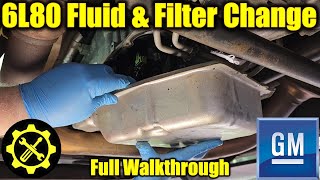
Typical fix: Perform a transmission fluid and filter change using the correct fluid (ACDelco DEXRON-VI).
Est. part cost: $75-$150 - Blocked Valve Body Separator Plate 🔴 High Probability As documented in GM TSBs #PIP5100A and #PIP5100, debris or worn plastic check balls can become lodged in the separator plate orifices, disrupting fluid flow and pressure needed to engage gears correctly. This is a very common failure point on the 6L80.
How to confirm: This requires removing the transmission oil pan and valve body for visual inspection of the separator plate orifices. Sometimes a check ball will be visibly stuck in the plate.
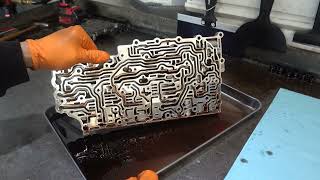
Typical fix: The valve body must be removed to clean or replace the separator plate. Often done as part of a valve body service. Upgraded Sonnax plates are available to address known wear issues.
Est. part cost: $50-$200 - Failed Shift Solenoid 🟡 Medium Probability Solenoids are electro-hydraulic valves that control shifting. They can fail electrically or become clogged with debris, preventing proper gear changes.
How to confirm: A professional scan tool can command the solenoids to operate and check for response. Resistance can also be checked with a multimeter once the valve body is accessed.
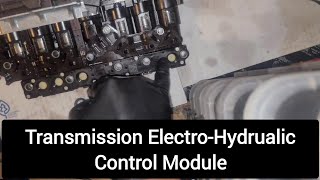
Typical fix: Replace the faulty shift solenoid. Solenoids are located on the TEHCM (Transmission Electro-Hydraulic Control Module) and require replacement of the entire TEHCM assembly.
Est. part cost: $50-$150 per solenoid - Worn or Failed 3-5-R Clutch Pack/Drum 🟡 Medium Probability The 6L80 transmission, particularly in pre-2010 models, is known for having poorly executed welds on the 3-5-R clutch drum. These welds can crack, causing a major hydraulic leak that prevents the clutch from applying. This results in no 3rd gear, 5th gear, or Reverse.
How to confirm: Confirmed by finding excessive clutch material in the transmission pan and by performing an air pressure test on the removed drum to check for leaks at the welds. This is a major repair requiring transmission removal.
Typical fix: Requires a complete transmission rebuild or replacement of the 3-5-R drum assembly with an updated part where the welds have been reinforced.
Est. part cost: $400-$800 for a rebuild kit
Rare But Worth Checking
- Faulty Transmission Control Module (TCM): While less common, a failing TCM (which is integrated with the valve body on a 6L80 as the TEHCM) can send incorrect signals or misinterpret sensor data, leading to this code. This is usually considered after all mechanical and hydraulic causes are ruled out.
- Internal Wiring or Sensor Failure: Damage to the internal transmission wiring harness or a failure of the input/output speed sensors can cause incorrect ratio calculations.
- Broken 3-5-R Waved Clutch Plate: The waved plate within the 3-5-R clutch pack can break, causing shifting issues. This is a known, though less frequent, failure point within the clutch pack itself.
Diagnosis Steps
- Check the transmission fluid level and condition. If low, top off and check for leaks. If dark or burnt, a fluid and filter change is the first step.
- Use an advanced OBD-II scanner to check for other transmission-related codes and view freeze-frame data to see the conditions when the code was set.
- Monitor live data from the transmission input and output speed sensors to confirm they are reading correctly.
- Drop the transmission oil pan and inspect for excessive metal shavings or clutch material. A large amount of debris points towards severe internal mechanical wear, likely a clutch failure.
- If the fluid is clean and sensors are working, inspect the valve body and its solenoids. Test solenoid resistance and check for blockages or stuck check balls in the separator plate as per TSBs #PIP5100A and #PIP5100.
- If the valve body is clear, the issue is likely internal. If 3rd, 5th, and Reverse are all problematic, suspect the 3-5-R clutch drum. This requires transmission removal for inspection and air testing of the drum for weld leaks.
Parts You'll Likely Need
- Transmission Fluid and Filter Kit — The first and most important step in diagnosis and repair. Dirty or low fluid is a primary cause of shifting problems.
Trusted brands: ACDelco
OEM price range: $100-$150
Aftermarket price range: $75-$120 - Transmission Valve Body Separator Plate
(OEM #24245720)— A known failure point on this platform, where debris or worn check balls can cause blockages leading to P0733, as cited in GM TSBs.
Trusted brands: ACDelco, Sonnax
OEM price range: $70-$120
Aftermarket price range: $40-$80 - Transmission Shift Solenoid — Solenoids control the hydraulic pressure for shifting and are a common failure item that can cause incorrect gear ratio codes. On the 6L80, they are integrated into the TEHCM and not serviced separately.
Trusted brands: ACDelco, Bosch
OEM price range: $60-$100
Aftermarket price range: $40-$80
Related Codes That Often Appear With This One
- P0700 — P0700 is a general code indicating the Transmission Control Module (TCM) has stored a fault. It acts as a 'check engine light' for the transmission and will almost always accompany a specific transmission code like P0733.
- P0731, P0732, P0734, P0735 — These codes indicate incorrect gear ratios for 1st, 2nd, 4th, and 5th gears. Seeing them together with P0733 points to a widespread hydraulic or mechanical issue affecting multiple gear circuits, such as a failing valve body, a cracked 3-5-R drum (which also affects 5th), or widespread clutch failure. [PIP4379M]
- P2723 — This code relates to the Pressure Control Solenoid 'E' Performance/Stuck Off. It is listed alongside P0733 in GM TSBs, indicating a potential link between solenoid failure and the gear ratio error. [PIP5100A]
Technical Service Bulletins (TSBs) & Recalls
- PIP4379M: Diagnostic aid for various transmission codes and no-move/delayed engagement conditions
- PIP5100A: Information on no-move conditions and DTCs related to valve body separator plate blockage
- PIP5100: Earlier version of PIP5100A, also pointing to separator plate debris
Platform-Specific Known Issues
- Bulletin #PIP5100A: Warns that aftermarket valve body components can cause blockages in the separator plate orifices, leading to various shifting codes including P0733.
- Bulletin #PIP4379M: Lists P0733 among a wide range of codes that can be caused by internal transmission issues, advising technicians to follow standard diagnostic procedures.
- Bulletin #PIP5100: Points to debris in the valve body separator plate as a cause for no-move conditions and codes like P0733.
Mechanic-Grade Diagnostic Values
- Shift Solenoid (On/Off type) Resistance — expected: 20-40 Ohms. Failure: A reading outside this range indicates a failed solenoid, requiring TEHCM replacement.
- Pressure Control (PWM type) Solenoid Resistance — expected: 3-8 Ohms. Failure: A reading outside this range indicates a failed solenoid, requiring TEHCM replacement.
- Line Pressure at Idle (in Park/Neutral) — expected: 45-80 PSI. Failure: Pressure significantly below this range can indicate a weak pump, internal leaks, or a clogged filter.
Scan Tool Commands That Help
- GDS2 / Tech2: Solenoid Valve Automated Cleaning — Use this function when a solenoid performance DTC is present. The scan tool commands the TEHCM to cycle all solenoids to flush out debris. This should be attempted before replacing the TEHCM for a suspected stuck solenoid.
- GDS2 / Tech2: Line Pressure Control — During a pressure test, a scan tool is used to command specific line pressures (e.g., minimum and maximum) while a technician reads the actual pressure from a mechanical gauge connected to the test port. This verifies the operation of the pressure control solenoid and pump.
Wiring & Ground Locations
- G104 — Rear of the driver's side (left) cylinder head.. This is a primary engine-to-chassis ground. A poor connection here can cause electrical noise and voltage drops, potentially affecting sensor readings and TEHCM operation.
- G108 — Top of the driver's side (left) cylinder head, where the ground strap from the firewall attaches.. This is the main ground point for the body control module and other in-cab electronics that communicate with the powertrain. A bad ground here can disrupt CAN bus communication with the TEHCM.
- Transmission Case Connector (T43) — External connector on the driver's side of the transmission case.. This is the main electrical connection for the entire TEHCM. It is a twist-lock connector that is commonly not fully seated, leading to intermittent communication loss (U0101) and various transmission fault codes. Before condemning the TEHCM, always verify this connector is fully seated and locked.
Real Owner Repair Stories
- gm-trucks.com forum user (2009 GMC Sierra 1500 w/ 6L80) — P0733, P0735, P073R (likely P0729 for Reverse). No 3rd, 5th, or Reverse gears. Slipping in other gears.
❌ Tried (didn't work) The user immediately suspected a major internal failure due to the loss of 3rd, 5th, and Reverse gears, which is a classic symptom.
✅ What actually fixed it The user performed a complete transmission rebuild. The root cause was confirmed to be a cracked 3-5-R clutch drum, a known failure point on early 6L80s. Replacing the drum with an updated, stronger version and rebuilding the rest of the transmission resolved all codes and symptoms.
OEM Part Supersession History
Unknown early PNs→24259848 (loaded drum assembly), 24263590, 24260892— The original 3-5-R clutch drum used in early 6L80 transmissions (approx. before 2010) had weak welds that were prone to cracking, causing a catastrophic loss of hydraulic pressure for the 3-5-R clutch circuit.
Heads up: The updated drums are direct replacements. It is critical to use the updated part during a rebuild to prevent a repeat failure.
Model Year Variations Within This Range
- 2008-2010: These earlier models are more susceptible to the cracked 3-5-R clutch drum failure. They also used earlier generation TEHCMs which had more frequent issues with pressure switch failures and heat-related logic problems.
- 2011-2012: These later models generally came with the improved 3-5-R clutch drum from the factory. The TEHCMs were also updated with improved solenoids and logic, though still susceptible to failure over time.
Helpful Videos
We Have This Part in Stock



The information in this article is provided for general reference and educational purposes only. Vehicle specifications, procedures, and part compatibility can vary by production date, trim level, and region. Always consult your vehicle's factory service manual and verify part numbers before purchasing or performing repairs. Safety-critical components such as airbags, seat belts, and braking systems should be installed by a qualified professional.
- Gmc SIERRA DENALI:
- 🎬 Helpful Videos
- 🛍️ Shop This Part
- What's Unique About the 2008-2012 Gmc SIERRA DENALI
- Diagnostic Flowchart
- Symptoms You May Notice
- Most Likely Causes
- Rare But Worth Checking
- Diagnosis Steps
- Parts You'll Likely Need
- Related Codes That Often Appear With This One
- Technical Service Bulletins (TSBs) & Recalls
- Platform-Specific Known Issues
- Mechanic-Grade Diagnostic Values
- Scan Tool Commands That Help
- Wiring & Ground Locations
- Real Owner Repair Stories
- OEM Part Supersession History
- Model Year Variations Within This Range
- 🎟️ Get 5% Off