

P0733 on 2003-2007 GMC Sierra Denali: 3rd Gear Incorrect Ratio Causes and Fixes
P0733 on a 2003-2007 GMC Sierra Denali almost always indicates an internal transmission problem, most commonly a worn or failed 3-4 clutch pack in the 4L60E/4L65E transmission. This is a serious issue that typically requires a transmission rebuild or replacement, as continued driving can lead to catastrophic failure.
- P0733 on a 2003-2007 Sierra Denali means the transmission is slipping in 3rd gear.
- The most probable cause is a failed 3-4 clutch pack, a well-known weak point in the 4L65-E transmission.
- A simple fluid change is unlikely to fix the problem; this code usually signals the need for a transmission rebuild or replacement.
- Due to the complexity and need for special tools, this repair is not recommended for DIYers and should be handled by a professional transmission shop.
- Continuing to drive the vehicle can cause more severe and expensive damage to the transmission.
What's Unique About the 2003-2007 Gmc SIERRA DENALI
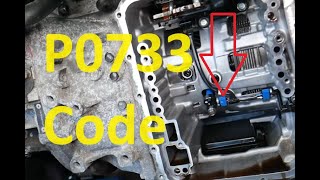
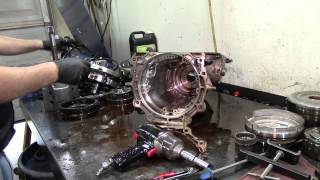
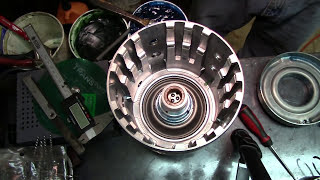
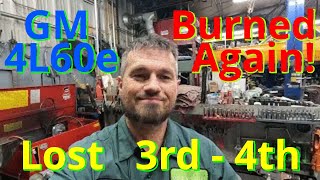
The 2003-2007 Sierra Denali primarily uses the 4L65-E automatic transmission, a heavier-duty version of the very common 4L60-E, typically paired with the 6.0L V8 engine. A widely documented weak point in this transmission family is the 3-4 clutch pack. This specific clutch pack is required to engage 3rd gear, and when it wears out, it begins to slip, directly causing the P0733 code. 🎬 Watch: Understanding the causes and fixes for the P0733 code. The failure is so common that it's often the first suspect. The seals for the clutch apply piston can also harden and leak, preventing the clutch pack from getting enough hydraulic pressure to fully engage, which accelerates wear and burning.
Diagnostic Flowchart
Tap your situation to follow the diagnostic path that matches what you're seeing on this vehicle.
Generation note: This range covers the end of the first-generation Sierra (GMT800 platform, 2003-2006 and 2007 "Classic") and the first year of the second-generation (GMT900 platform, 2007). Both generations in the Denali trim typically used the 4L65-E transmission with the 6.0L V8, so the causes and fixes for P0733 are largely the same.
Symptoms You May Notice
- Check Engine Light is on
- Transmission slipping, especially during the 2-3 shift
- Engine RPMs flare up when shifting into 3rd gear without a corresponding increase in vehicle speed
- Delayed or harsh shifting into 3rd gear
- Vehicle may feel like it loses power or gets stuck in a lower gear
- Transmission may refuse to shift into 3rd gear, sometimes getting stuck in 2nd
- A whining noise from the transmission in Park or Neutral
- Reduced fuel economy due to transmission slippage
- In some cases, the transmission may go into a fail-safe or "limp" mode, locking it in 3rd gear (if it can engage) or another gear.
- Replacing only the shift solenoid when the actual problem is a mechanical failure like the 3-4 clutch pack. This will not solve the slipping issue and is a waste of money.
- Assuming the entire transmission must be replaced without proper diagnosis. Sometimes a valve body or solenoid issue can be fixed without a full rebuild, though this is less common for P0733.
- Performing a transmission fluid flush on a high-mileage, slipping transmission. This can sometimes dislodge debris that was creating friction, worsening the slip.
Most Likely Causes
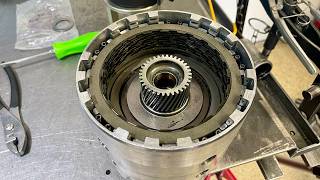
- Worn or Burnt 3-4 Clutch Pack 🔴 High Probability The 3-4 clutch pack is a notorious failure point in the 4L60E/4L65E transmission family due to design limitations and wear over time. The bonded rubber seals on the input drum's apply piston harden and shrink from heat, causing a loss of hydraulic apply pressure to the clutch pack, leading to slipping and burning. This is the most common mechanical failure leading to a P0733 code.
How to confirm: Dropping the transmission pan and inspecting for excessive dark, muddy clutch material is a strong indicator. A transmission pressure test may also show a pressure drop when 3rd gear is commanded. Ultimate confirmation requires transmission disassembly and visual inspection of the clutches, which will often be blackened and worn down to the metal.
Typical fix: The transmission must be removed and rebuilt. This includes replacing the 3-4 clutch pack, steels, and associated seals/pistons. Many rebuild kits, like those from Sonnax, offer upgraded components (e.g., High-Energy frictions, improved backing plates) to prevent repeat failures.
Est. part cost: $200-$500 for a comprehensive rebuild kit - Low or Dirty Transmission Fluid 🟡 Medium Probability
How to confirm: Check the transmission fluid dipstick with the engine running and transmission warm. The fluid should be at the correct level, pink/red in color, and not smell burnt. Dark, brown, or burnt-smelling fluid indicates internal wear and contamination, often from the failing clutches.
Typical fix: If the fluid is only slightly low, topping it off may temporarily help. If the fluid is old, burnt, or full of debris, a fluid and filter change is necessary. However, this is often a symptom of a larger internal problem (like a failing clutch pack) rather than the root cause. A fluid change will not fix a mechanically failed clutch.
Est. part cost: $50-$120 for fluid and a filter kit - Failed 2-3 Shift Solenoid ⚪ Low Probability
How to confirm: A professional scan tool can command the solenoid on and off to check its operation. The solenoid can also be tested with a multimeter for correct resistance (typically 20-30 ohms) after removing the transmission pan.
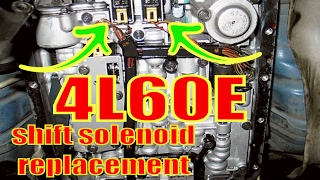
Typical fix: Replace the faulty shift solenoid. This requires removing the transmission pan. The 2-3 shift solenoid is one of two identical solenoids on the valve body and is relatively easy to access once the pan is off. The OEM part number is often shared with the 1-2 shift solenoid.
Est. part cost: $25-$70 for a single ACDelco solenoid (Part #24227792 is often cited for this application). - Valve Body Issues ⚪ Low Probability Over time, bores within the aluminum valve body can wear, causing hydraulic leaks. A worn accumulator piston bore or a sticking valve can cause pressure loss to the 3-4 clutch circuit.
How to confirm: After dropping the pan, the valve body can be inspected for debris, stuck valves, or scoring on the bores. This is typically done by a transmission specialist. Sonnax sells kits like the 77777M-K to ream worn bores and install oversized valves.
Typical fix: The valve body may be cleaned and serviced with a shift kit which includes improved valves and springs. If it is excessively worn or damaged, it may need to be replaced.
Est. part cost: $250-$700 for a remanufactured valve body
Rare But Worth Checking
- Cracked Forward Accumulator Piston:
- Worn or Broken Sun Shell:
Diagnosis Steps
- Check the transmission fluid level and condition. If it is low, black, or smells burnt, internal damage is likely.
- Use an OBD-II scanner to check for other pending or stored transmission codes.
- Perform a road test to confirm the symptoms, specifically noting any slipping or RPM flares during the 2-3 shift. A capable scanner can monitor input and output shaft speeds in real-time to confirm the slip.
- Drop the transmission oil pan and inspect the fluid and pan magnet for metal shavings or excessive clutch material. A layer of black sludge is a tell-tale sign of a burnt clutch pack.
- If the fluid is clean, the next step is to test the shift solenoids for proper electrical resistance and function. This requires removing the pan.
- Perform a transmission line pressure test with a pressure gauge connected to the transmission's test port. Check for a significant pressure drop when 3rd gear is commanded, which confirms a hydraulic leak in that circuit.
- If all external checks and solenoids pass, the problem is internal to the transmission, most likely the 3-4 clutch pack, requiring removal and disassembly for confirmation and repair.
Parts You'll Likely Need
- Transmission Rebuild Kit — This is the most common fix, as P0733 usually points to a failed 3-4 clutch pack which requires a full teardown. A kit includes all necessary clutches, steels, seals, and gaskets.
Trusted brands: ACDelco, Alto (often includes Red Eagle performance clutches), Transtar, Sonnax (Performance Packs and Sure Cure kits address common failures)
OEM price range: $300-$500
Aftermarket price range: $200-$400
Related Codes That Often Appear With This One
- P0730 — Incorrect Gear Ratio. This is a general gear ratio error code that can accompany more specific codes like P0733.
- P0756 — 2-3 Shift Solenoid Valve Performance. This code points directly to a potential electrical or mechanical issue with the solenoid responsible for the shift into 3rd gear.
- P1870 — Transmission Component Slipping. This is a GM-specific code that often indicates internal slippage, frequently related to a worn valve body bore for the torque converter clutch, which can exacerbate other wear issues and contaminate fluid.
- P0734 — Gear 4 Incorrect Ratio. If the 3-4 clutch pack is failing, it will also affect 4th gear (overdrive), and it's common to see both P0733 and P0734 together.
Technical Service Bulletins (TSBs) & Recalls
- PIP4379M: Mentions P0733 in a list of codes related to various transmission engagement problems, pointing towards a need for standard diagnostic procedures to identify an internal fault. The bulletin does not single out a specific component but acknowledges a range of potential internal failures.
Platform-Specific Known Issues
- The provided TSB #PIP4379M lists P0733 among a large group of codes related to delayed or no gear engagement, suggesting a pattern of internal hydraulic or mechanical failures recognized by the manufacturer. [Bulletin #PIP4379M]
- Owner forums are filled with accounts of P0733 directly leading to a 4L65-E rebuild specifically for the 3-4 clutch pack. It is the most discussed failure for this code on this platform.
Mechanic-Grade Diagnostic Values
- 1-2 and 2-3 Shift Solenoid Resistance — expected: 19 to 24 ohms at 68°F (20°C), or 24 to 31 ohms at 212°F (100°C). A common real-world reading on a good solenoid is 20-25 ohms.. Failure: A reading significantly outside this range (open circuit or short) indicates a failed solenoid.
- Pressure Control (PC) Solenoid Resistance — expected: 3.0 to 5.0 ohms.. Failure: A reading outside this range indicates a failed PC solenoid.
- Transmission Line Pressure at Idle (Warm) — expected: In Park or Drive: 55-70 PSI. In Reverse: 65-140 PSI.. Failure: Pressure significantly below 55 PSI at idle in Drive points to a worn pump, clogged filter, or major internal leak.
- Transmission Line Pressure at Wide Open Throttle (WOT) — expected: Minimum of 190 PSI, with 225 PSI considered optimal.. Failure: Failure to reach at least 190 PSI under load indicates a weak pump, a failing Pressure Control Solenoid, or a significant leak in a clutch circuit.
Scan Tool Commands That Help
- GM Tech 2 / GDS2 (or equivalent professional scanner): Pressure Control Solenoid (PCS) Control Test — This is a critical bidirectional test used when diagnosing hydraulic pressure issues. The technician commands the solenoid current in increments (e.g., 0.1A to 0.9A) while monitoring line pressure with a mechanical gauge. This verifies if the PCS, valve body, and pump are responding correctly to computer commands, helping to isolate an electronic fault from a hydraulic or mechanical one.
- GM Tech 2 / GDS2: Transmission Data Display — During a road test, a technician can monitor 'Commanded Gear' vs. 'Current Gear' and the status of each shift solenoid. For P0733, the tech would verify the 2-3 solenoid is commanded 'On' and watch for a corresponding change in the transmission pressure switch manifold (PSM) state to confirm the electrical command is being sent and acknowledged.
Wiring & Ground Locations
- G103 & G104 — On the GMT800 platform, these are key ground points located on the rear of the driver's side cylinder head and the front of the passenger side cylinder head/engine block.. The PCM/TCM relies on clean grounds for accurate sensor readings and solenoid control. A corroded or loose ground at these locations can cause erratic behavior, incorrect data from speed sensors, or improper solenoid function, potentially leading to incorrect ratio codes like P0733.
- Transmission Main Connector (Case Pass-Through) — On the passenger side of the transmission case, above the pan rail.. This is the primary electrical interface for the transmission. Technicians can test solenoid resistance directly at this connector's pins to diagnose the entire circuit (external wiring, internal harness, and solenoid) without dropping the pan first. A pinout diagram for the specific year is required for this test.
Real Owner Repair Stories
- YouTube channel 'SuperDuty Service' (Vehicle with 4L60E transmission) — Transmission was not shifting out of second gear, a common symptom related to P0733.
❌ Tried (didn't work) The 2-3 shift solenoid was tested and passed, showing 21.7 ohms, well within the 20-30 ohm spec.
✅ What actually fixed it The root cause was a leaking check ball inside the accumulator assembly. This leak caused the 3-4 clutch packs to fail prematurely. The final fix was a transmission rebuild, replacing the burnt clutches and addressing the leaking check ball.
OEM Part Supersession History
OE Steel Checkballs (1/4 inch)→Torlon/Plastic Checkballs— The original steel checkballs cause wear on the aluminum separator plate over time, leading to hydraulic leaks. Aftermarket Torlon or other plastic composite checkballs are dimensionally identical but do not damage the plate, preventing future leaks.OE 3-4 Clutch Pack (6 or 7 frictions depending on year/model)→Upgraded 3-4 Clutch Pack (e.g., BorgWarner Hi-Energy, Raybestos Z-Pak)— The OE 3-4 clutch pack is a known failure point. High-performance aftermarket kits offer more durable friction material and sometimes an increased clutch count to improve holding power and heat resistance, preventing premature failure.
Model Year Variations Within This Range
- 2003-2007: The 4L65-E (RPO M32) used in the Denali is an upgraded 4L60-E featuring 5-pinion planetary gearsets (vs. 4-pinion) and a 7-friction 3-4 clutch pack for increased torque capacity to handle the 6.0L V8.
- 2003+: Starting around 2003, the transmission pump-to-case seal was changed from a traditional O-ring to a wedge-style seal. This is a critical difference to note during a rebuild, as the parts are not interchangeable.
- 2003+: The Pressure Control (EPC) solenoid was changed in 2003, however, its electrical operation and function remained the same, and parts are often interchangeable across these years.
Helpful Videos


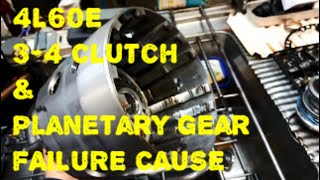
We Have This Part in Stock



The information in this article is provided for general reference and educational purposes only. Vehicle specifications, procedures, and part compatibility can vary by production date, trim level, and region. Always consult your vehicle's factory service manual and verify part numbers before purchasing or performing repairs. Safety-critical components such as airbags, seat belts, and braking systems should be installed by a qualified professional.
- Gmc SIERRA DENALI:
- 🎬 Helpful Videos
- 🛍️ Shop This Part
- What's Unique About the 2003-2007 Gmc SIERRA DENALI
- Diagnostic Flowchart
- Symptoms You May Notice
- Most Likely Causes
- Rare But Worth Checking
- Diagnosis Steps
- Parts You'll Likely Need
- Related Codes That Often Appear With This One
- Technical Service Bulletins (TSBs) & Recalls
- Platform-Specific Known Issues
- Mechanic-Grade Diagnostic Values
- Scan Tool Commands That Help
- Wiring & Ground Locations
- Real Owner Repair Stories
- OEM Part Supersession History
- Model Year Variations Within This Range
- 🎟️ Get 5% Off