

P0733 on 2006-2010 GMC Sierra: Gear 3 Incorrect Ratio Causes and Fixes
P0733 on a 2006-2010 GMC Sierra means the transmission is slipping in 3rd gear. The most common causes are low or dirty transmission fluid, a failing shift solenoid, or internal mechanical wear, particularly the 3-4 clutch pack in the 4L60-E. This is a serious issue that requires prompt diagnosis, often by a professional.
- P0733 indicates a serious transmission problem (slippage in 3rd gear) that should not be ignored.
- Always start diagnosis by checking the transmission fluid level and condition; this is the simplest and most common cause.
- The problem is often internal, such as a bad shift solenoid or worn clutch pack, and likely requires a professional transmission technician.
- Do not replace speed sensors as a first step; they are usually reporting a real problem, not causing it.
- A full transmission replacement should only be considered after a thorough diagnosis rules out less expensive repairs like fluid service or solenoid replacement.
What's Unique About the 2006-2010 Gmc SIERRA
The 2006-2010 GMC Sierra spans the end of the GMT800 platform and the beginning of the GMT900s, utilizing both 4-speed (like the 4L60-E/4L65-E) and 6-speed (like the 6L80) automatic transmissions. While the code's meaning is the same, the specific internal components that fail can differ. For the 4L60-E, P0733 is notoriously caused by the failure of the 3-4 clutch pack, a well-documented weak point. For the 6L80, issues can stem from a cracked 1-2-3-4 / 3-5-R clutch drum, failed sealing rings, or a broken 3-5-R wave plate which can send debris throughout the transmission. A Technical Service Bulletin (TSB) from GM, #PIP4379K, also links this code to a broader set of potential internal hydraulic and control issues, suggesting a more complex diagnostic path than a simple sensor failure.
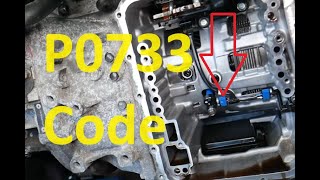
🎬 Watch: A breakdown of common causes and fixes for P0733.Diagnostic Flowchart
Tap your situation to follow the diagnostic path that matches what you're seeing on this vehicle.
Generation note: This range covers the end of the first generation (GMT800), sold as the 'Classic' in 2007, and the second generation (GMT900) from 2007-2013. The GMT800s primarily used 4-speed automatics (4L60-E/4L65-E), while the GMT900s introduced 6-speed automatics like the 6L80. The diagnostic approach is similar, but the specific internal parts (clutches, solenoids) will differ between transmission models. The 4L60-E is known for 3-4 clutch failure, while the 6L80 has known issues with torque converters and wave plates.
Symptoms You May Notice
- Check Engine Light is on
- Transmission slipping in or failing to shift into 3rd gear
- Harsh or delayed shifts, sometimes feeling like a 'thump' or 'lurch'.
- Engine RPMs flare up during the 2-3 shift without a corresponding increase in vehicle speed.
- Vehicle may enter 'limp mode' (stuck in one gear, often 2nd or 3rd)
- Reduced fuel economy.
- Transmission overheating warning light may illuminate.
- Replacing input or output speed sensors. While these sensors provide the data, they rarely fail. The code indicates the data they are providing is showing a real slip, not that the sensor itself is bad.
- Assuming the entire transmission must be replaced immediately without proper diagnosis. A less expensive fix like a fluid change or solenoid replacement could solve the problem, though for P0733, internal wear is highly probable.
Most Likely Causes
- Low or Dirty Transmission Fluid 🔴 High Probability Fluid level is critical for hydraulic pressure. Leaks or extended service intervals can lead to low or degraded fluid, causing slippage. Burnt fluid or fluid containing excessive clutch material (looks like black sediment in the pan) is a strong indicator of internal wear.
How to confirm: Check the transmission fluid level and condition with the engine warm and running in park. The fluid should be at the correct level, pink/red in color, and not smell burnt.
Typical fix: Top off the fluid or perform a complete fluid and filter change using the correct fluid type (DEXRON-VI). If the pan contains significant metal shavings or clutch material, this is a temporary fix at best.
Est. part cost: $50-$150 - Failed Shift Solenoid 🟡 Medium Probability Solenoids control the flow of fluid to engage gears. The solenoid responsible for the 2-3 shift (Solenoid 'B' in the 4L60-E) can fail electrically or become clogged with debris.
How to confirm: A professional scan tool can command the solenoid on and off to test its function. Resistance can also be checked with a multimeter once the transmission pan is removed.
Typical fix: Remove the transmission pan to replace the faulty solenoid. On a 4L60-E, the 'A' (1-2) and 'B' (2-3) solenoids are identical and often replaced as a pair.
Est. part cost: $40-$100 - Worn 3-4 Clutch Pack (4L60-E) 🔴 High Probability This is the most notorious failure on the 4L60-E. The clutch pack is undersized from the factory and wears out, especially in heavy trucks. The friction material disintegrates, causing a no-3rd-gear or slipping condition.
How to confirm: This is an internal failure confirmed by a transmission pressure test and ultimately, disassembly. Finding significant black, sandy clutch material in the pan is a tell-tale sign. The symptom of having 1st and 2nd gear but the engine revving as if in neutral when it should shift to 3rd is a classic indicator. 🎬 See this teardown and inspection of a failed 3-4 clutch.
Typical fix: Requires a complete transmission overhaul or replacement to replace the worn clutch pack, seals, and often upgraded parts like a stronger sun shell.
Est. part cost: $1500-$4000 - Internal 6L80 Transmission Failures 🟡 Medium Probability For 6L80-equipped trucks, P0733 can be caused by a few known issues. A common one is a cracked 3-5-R wave plate, which breaks apart and sends metal through the transmission, damaging clutch packs and the valve body. Another is a cracked 1-2-3-4 clutch drum or failed stator sealing rings causing a cross-leak.
How to confirm: Diagnosed by a transmission specialist. Symptoms like a flare into 3rd and a harsh 5th gear engagement can point to these issues. Disassembly is required for final confirmation.
Typical fix: Requires transmission removal and disassembly to replace the failed drum, wave plate, and any collateral damage to clutches and seals. Often involves replacing the torque converter as well due to contamination.
Est. part cost: $1800-$4500 - Valve Body Issues ⚪ Low Probability The valve body contains a maze of passages and valves that direct fluid. Debris can cause valves to stick or bores to wear (e.g., TCC regulator valve bore wear in the 4L60-E), leading to incorrect pressure and shifting problems.
How to confirm: Diagnosed by a transmission specialist after ruling out fluid and solenoid issues. May involve vacuum testing specific valve circuits.
Typical fix: The valve body may be cleaned and serviced with oversized valves or a sleeve kit, or replaced entirely.
Est. part cost: $300-$800
Rare But Worth Checking
- Faulty Transmission Control Module (TCM): While rare, a faulty TCM can misinterpret sensor data or fail to command shifts correctly. This is usually considered after all mechanical and hydraulic possibilities have been exhausted. On 6L80 transmissions, the TCM (TEHCM) is located inside the transmission on the valve body and is prone to heat-related failures.
- Damaged Wiring or Connectors: Frayed wiring or corroded connectors for the transmission speed sensors or solenoids can cause intermittent and incorrect signals, triggering the code. A visual inspection of the main harness connector at the transmission is a key first step.
Diagnosis Steps
- Check the transmission fluid level and condition. Ensure it is full, clean, and does not smell burnt. A burnt smell is a strong indicator of clutch failure.
- Use an OBD-II scanner to check for any other pending or active trouble codes. Note any codes related to solenoids or other gear ratios.
- Perform a road test to confirm the symptoms, paying close attention to the 2-3 shift. Note if the engine RPMs flare up or if the shift is harsh or delayed.
- If possible, use an advanced scan tool to monitor the input and output speed sensors in real-time to confirm the slippage in 3rd gear.
- Inspect the transmission wiring harness and connectors for any visible damage, corrosion, or loose connections.
- Drop the transmission pan to inspect for debris. A small amount of fine grey material on the magnet is normal. Large metal chunks, or a thick layer of black, gritty material (clutch friction material) indicates a serious internal failure.
- While the pan is off, inspect and test the shift solenoids. Resistance can be checked with a multimeter. For a 4L60-E, the 1-2 ('A') and 2-3 ('B') solenoids should be tested.
- If solenoids are not the issue, a transmission pressure test is needed to check for internal hydraulic leaks. This step is best performed by a professional.
- If pressures are low or erratic, internal inspection of the valve body, clutch packs, and bands is required, often necessitating a transmission rebuild.
Parts You'll Likely Need
- Transmission Filter and Gasket Kit
(OEM #ACDelco TF286 (for 6L80))— Always replaced during a fluid change or any service that requires dropping the pan.
Related Codes That Often Appear With This One
- P0734 — Incorrect Ratio in 4th Gear. On the 4L60-E, the 3-4 clutch pack is used for both 3rd and 4th gear, so a failure often triggers both codes.
- P0894 — Transmission Component Slipping. This is a more general code that often accompanies specific gear ratio codes like P0733, confirming the TCM is detecting a slip.
- P0751 — Shift Solenoid 'A' Performance/Stuck Off. While P0756 (Solenoid 'B') is more directly related to the 2-3 shift, a fault in any solenoid can cause widespread shifting problems and ratio codes.
Technical Service Bulletins (TSBs) & Recalls
- PIP4379K: A general GM TSB that lists a wide array of transmission codes, including P0733, that can be caused by various internal hydraulic leaks, control issues, or engagement problems. It points technicians toward standard diagnostic procedures rather than a single specific part failure.
- PI1343 (superseded by PI1343A): While not directly for P0733, this TSB addresses a harsh 6-4 downshift in 2012 6L80 models caused by a faulty 2-6 clutch wave plate. It instructs technicians to replace the wave plate and also the 1-2-3-4 clutch plates as they are likely distressed, showing the interconnected nature of these failures.
Platform-Specific Known Issues
- 4L60-E 3-4 Clutch Pack Burn-up: The most common cause of P0733 on GMT800 and early GMT900 trucks. The factory clutch pack is a known weak point that cannot handle the heat and load over time, leading to the friction material burning off. Symptoms are classic: good 1-2 shift, then engine revs flare as if in neutral when attempting to shift to 3rd. Repair requires a transmission rebuild.
- 6L80 Broken 3-5-R Wave Plate: A frequent failure in early 6L80 transmissions. A thin, spring-like steel plate in the 3-5-R clutch drum (GM part 24274020 for the plate) fractures into pieces. These pieces can clog the valve body and fluid filter, causing pressure loss and subsequent clutch pack failure, often affecting the 1-2-3-4 clutches. This can lead to multiple ratio codes, including P0733.
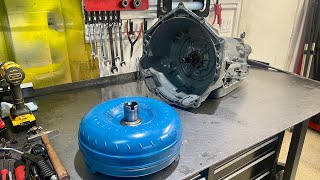
- 6L80 Torque Converter Failure: The torque converters in 6L80 transmissions are another known failure point. When they fail, they send a large amount of metallic debris through the transmission, scoring the pump, clogging the valve body, and leading to clutch failure and overheating. A failing converter can be a root cause for codes like P0733.
Mechanic-Grade Diagnostic Values
- 4L60-E 1-2 (A) & 2-3 (B) Shift Solenoid Resistance — expected: 20-40 Ohms (typically 20-25 Ohms when good).. Failure: A reading outside this range, or an open/short circuit, indicates a failed solenoid.
- 4L60-E Line Pressure at Idle (in Drive) — expected: 55-65 PSI. Failure: Significantly lower pressure indicates a weak pump, internal leaks, or a faulty pressure control solenoid.
- 4L60-E Line Pressure at Stall Speed (in Drive) — expected: 150-175 PSI. Failure: Failure to reach this pressure under load points to major hydraulic leaks or a worn-out pump.
- 6L80 Line Pressure at Idle — expected: 45-80 PSI.. Failure: Low pressure at idle can indicate pump wear, valve body issues, or worn stator support bushings.
- 6L80 Line Pressure at Wide Open Throttle (WOT) — expected: Up to 300 PSI, but typically should not exceed 210 PSI to avoid component damage.. Failure: Low pressure under load will cause clutch slippage. Excessively high pressure (over 210 PSI) can crack drums and pistons.
- 4L60-E Main Connector Voltage — expected: 12V+ at Pin E (Key-On).. Failure: No voltage or low voltage at Pin E indicates a blown fuse (typically the 'TRANS' or 'IGN 0' fuse) or a wiring issue between the fuse block and the transmission.
Scan Tool Commands That Help
- Tech2 / GDS2: Solenoid Valve State Control / Output Control — This bidirectional command allows a technician to manually command each shift solenoid on and off while the vehicle is stationary. By monitoring transmission line pressure during activation, one can isolate a failed solenoid from a hydraulic circuit problem without removing the pan.
- Tech2 / GDS2: Transmission Adaptive Values Learn (Service Fast Learn) — This procedure MUST be performed after replacing the transmission, valve body, TEHCM (on 6L80), or rebuilding clutch packs. It erases the old learned shift pressure data and forces the TCM to perform a rapid relearn of the new components' hydraulic characteristics. Skipping this step can result in harsh shifts, persistent codes, and premature wear of the new parts.
Wiring & Ground Locations
- G103 — On the front of the passenger side cylinder head on GMT900 trucks.. This is a primary engine and transmission-related ground. Corrosion or a loose connection at G103 can cause erratic sensor readings and improper voltage for transmission solenoids, potentially leading to incorrect ratio codes.
- 4L60-E Main Case Connector (20-pin) — Passenger side of the transmission case.. This is the main interface for all electronic controls. Specifically for P0733, Pin E (Pink wire) is the 12V+ supply for the shift solenoids, and Pin B (Yellow/Black wire) is the ground-side control for the 2-3 Shift Solenoid from the PCM/TCM. Testing for voltage at Pin E and resistance to ground at Pin B can quickly diagnose electrical faults.
- Frame Ground under Driver's Door — On the frame rail, below the driver-side A or B pillar area.. This is a major body and chassis ground point on GMT800 and GMT900 trucks. While not directly for the transmission, a poor connection here due to rust (especially in salt-belt regions) can create system-wide electrical issues that may manifest as strange transmission behavior.
Real Owner Repair Stories
- gm-trucks.com forum user (2009 GMC Sierra w/ 4L60-E) — Check engine light with codes P0733 and P0734 (Gear 4 Incorrect Ratio). Transmission would shift 1-2, but then engine would flare as if in neutral instead of engaging 3rd gear.
❌ Tried (didn't work) Replaced both the 1-2 and 2-3 shift solenoids.
✅ What actually fixed it A complete transmission rebuild was required. The teardown confirmed the 3-4 clutch pack was completely burnt and had no friction material left, which is a classic failure for this transmission and directly causes both P0733 and P0734. - gmtruckcentral.com forum user (2010 Chevrolet Silverado w/ 6L80) — P0733, slipping during the 2-3 shift, and a harsh 5th gear engagement.
❌ Tried (didn't work) Initial diagnosis focused on the valve body and solenoids, which tested good.
✅ What actually fixed it The transmission shop found that the stator support shaft seals inside the torque converter housing were worn out. This caused a critical loss of hydraulic pressure to the 1-2-3-4 clutch pack. Replacing the torque converter and the affected seals resolved the pressure loss and fixed the slipping.
OEM Part Supersession History
Varies (Original 3-5-R Wave Plate)→24259810 (Updated GM Wave Plate)— The original wave plate in the 6L80's 3-5-R clutch pack was flat and prone to breaking under stress, sending metal debris throughout the transmission. The updated part is shot-peened for increased durability and stress resistance.Varies (OEM 4L60-E 3-4 Clutch Pack)→Raybestos RZP-001 (Z-Pak) or BorgWarner High-Energy Kits— The OEM 3-4 clutch pack is a known weak point. Aftermarket solutions like the Raybestos Z-Pak use a single-sided clutch design and superior friction material (GPZ) to increase clutch capacity and significantly improve heat dissipation and durability.
Heads up: These are direct-fit upgrades but are intended to be installed as part of a complete transmission rebuild, not as a standalone repair.Varies (OEM 1-2-3-4 / 3-5-R Drum Assembly)→24259848— GM released updated, fully loaded drum assemblies for the 6L80 that include revised clutches and pistons to address cracking and wear issues.
Model Year Variations Within This Range
- 2006-2009 (approx.): Some models in this range, particularly heavy-duty or performance-optioned trucks, were equipped with the 4L65-E or 4L70E instead of the base 4L60-E. The 4L70E, for example, includes an Input Speed Sensor (ISS) which the early 4L60-E lacks. The presence of an ISS allows the TCM to detect slip with much higher precision, potentially causing it to set a P0733 code more readily than a non-ISS unit which relies on less precise calculations.
Helpful Videos
We Have This Part in Stock




The information in this article is provided for general reference and educational purposes only. Vehicle specifications, procedures, and part compatibility can vary by production date, trim level, and region. Always consult your vehicle's factory service manual and verify part numbers before purchasing or performing repairs. Safety-critical components such as airbags, seat belts, and braking systems should be installed by a qualified professional.
- Gmc SIERRA:
- 🎬 Helpful Videos
- 🛍️ Shop This Part
- What's Unique About the 2006-2010 Gmc SIERRA
- Diagnostic Flowchart
- Symptoms You May Notice
- Most Likely Causes
- Rare But Worth Checking
- Diagnosis Steps
- Parts You'll Likely Need
- Related Codes That Often Appear With This One
- Technical Service Bulletins (TSBs) & Recalls
- Platform-Specific Known Issues
- Mechanic-Grade Diagnostic Values
- Scan Tool Commands That Help
- Wiring & Ground Locations
- Real Owner Repair Stories
- OEM Part Supersession History
- Model Year Variations Within This Range
- 🎟️ Get 5% Off