

GMC Sierra P0733: Gear 3 Incorrect Ratio Causes and Fixes (2001-2005)
On a 2001-2005 GMC Sierra, code P0733 almost always indicates a major internal transmission problem, most commonly a failed 3-4 clutch pack in the 4L60E transmission. This is not a simple fix and typically requires a complete transmission rebuild or replacement, costing several thousand dollars.
- P0733 on a 2001-2005 Sierra means the transmission is slipping in third gear.
- The most likely cause by a wide margin is a failed 3-4 clutch pack inside the 4L60E transmission.
- This is a serious issue requiring professional repair; continued driving is not recommended.
- The fix is almost always a transmission rebuild or a full replacement, which is a costly repair.
- Checking fluid level is a good first step, but if the fluid is dark or smells burnt, it confirms a major internal problem.
What's Unique About the 2001-2005 Gmc SIERRA
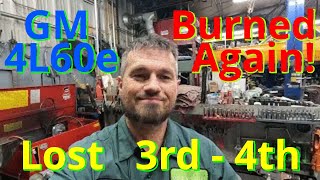
The 2001-2005 GMC Sierra predominantly uses the GM 4L60E automatic transmission. This transmission is widely known for a specific weak point: the 3-4 clutch pack. This clutch pack is prone to wearing out and burning, which directly causes a loss of third and fourth gear, making P0733 (and the related P0734 🎬 Watch: A quick guide to diagnosing no 3rd or 4th gear. for fourth gear) a very common and well-documented issue for this specific truck generation. The failure is so frequent that numerous aftermarket companies like Sonnax and Raybestos offer heavy-duty replacement clutch packs and reinforced input drums to address this design flaw.
Diagnostic Flowchart
Tap your situation to follow the diagnostic path that matches what you're seeing on this vehicle.
Symptoms You May Notice
- Check Engine Light is on
- Transmission slipping, especially during the 2-3 shift
- Engine RPMs flare up without an increase in vehicle speed 🎬 See how failed piston seals can cause this 3-4 shift flare. when shifting into third gear
- Delayed or harsh shifting into third gear
- Vehicle may feel like it has a lack of power or poor acceleration
- Transmission may refuse to shift past 2nd gear.
- In some cases, the transmission may enter a "limp mode," getting stuck in a single gear. However, with a failed 3-4 clutch, the transmission simply loses the ability to engage 3rd and 4th, which is a mechanical failure, not a true electronic limp mode.
- Replacing only the shift solenoids when the 3-4 clutch pack is burnt. The new solenoid will not fix the mechanical slippage.
- Replacing input or output speed sensors. These sensors are usually correctly reporting the slip; they are the messengers, not the cause of the problem.
- Performing only a fluid and filter change on a transmission with burnt fluid and a P0733 code. This will not restore the worn-out friction material on the clutch plates.
Most Likely Causes
- Worn or Burnt 3-4 Clutch Pack 🔴 High Probability The 3-4 clutch pack in the 4L60E is a well-documented weak point. Failure is often accelerated by wear in the input drum where the clutch pack sits, or by hydraulic pressure leaks from worn valve body bores or hardened piston seals.
How to confirm: A definitive diagnosis requires dropping the transmission pan to inspect for excessive clutch material (a gray or black sludge). A transmission pressure test may also show pressure loss in the 3-4 clutch circuit. The transmission fluid will often smell burnt.
Typical fix: The transmission must be removed and either rebuilt with a new, often upgraded, 3-4 clutch pack, or replaced with a remanufactured unit. A proper rebuild also addresses the root cause, such as by installing an input drum reinforcement sleeve or reaming the valve body.
Est. part cost: $150-$400 for a rebuild kit, $1800-$3500 for a remanufactured transmission. - Low or Contaminated Transmission Fluid 🟡 Medium Probability
How to confirm: Check the transmission fluid level using the dipstick with the engine running and the transmission warm. Inspect the fluid's condition; it should be bright red and translucent. If it is dark brown/black, smells burnt, or contains metallic particles, it indicates internal wear or damage.
Typical fix: If the fluid is only low, top it off and check for leaks. If the fluid is burnt or contaminated, a fluid and filter change is a temporary measure at best; it usually signals that internal components like clutches are already damaged and a rebuild is imminent.
Est. part cost: $50-$150 for fluid and a filter. - Faulty Shift Solenoid ⚪ Low Probability
How to confirm: A professional scan tool can be used to command the shift solenoids (specifically the 2-3 shift solenoid) and monitor their operation. Resistance can also be checked with a multimeter once the transmission pan is removed. This is very unlikely to be the sole cause if the fluid is burnt or P0733 is present, as the solenoid is often a victim of debris from the failing clutches, not the cause of the slip.
Typical fix: Replace the faulty solenoid (e.g., the 2-3 shift solenoid). This requires removing the transmission pan and sometimes the valve body.
Est. part cost: $40-$100 per solenoid.
Rare But Worth Checking
- Valve Body Issues: Worn bores, particularly the TCC isolator/regulator valve bores, or stuck valves within the transmission valve body can cause hydraulic pressure leaks. This loss of pressure to the 3-4 clutch pack leads to slipping and eventually burning the clutches. Aftermarket kits from Sonnax are available to ream and sleeve these worn bores.
- Cracked or Worn Input Drum: The input drum that houses the 3-4 clutch pack can develop cracks or wear, preventing the clutch pack from sealing and applying correctly. Sonnax offers reinforcement rings (Part #77733-02K) and complete heavy-duty input drum assemblies (Part #77733-12KB) to prevent this.
- Faulty Transmission Control Module (TCM): While rare, a failing TCM can cause incorrect shifting commands or misinterpret sensor data. This should only be considered after all mechanical and hydraulic issues have been exhaustively ruled out by a professional.
Diagnosis Steps
- Check the transmission fluid level and condition. If it's low, top it off and re-test. If it's dark, burnt, or full of debris, suspect internal failure.
- Use an OBD-II scanner to check for other pending or stored transmission-related codes, especially P0734 and P0894.
- With a professional scan tool, monitor the live data for Input Speed Sensor (ISS) and Output Speed Sensor (OSS) RPMs to confirm the slip in third gear. The slip will be obvious as engine RPMs rise but output speed does not.
- Perform a transmission line pressure test to check for adequate hydraulic pressure. Low pressure in Drive can indicate a worn pump, leaks, or a clogged filter.
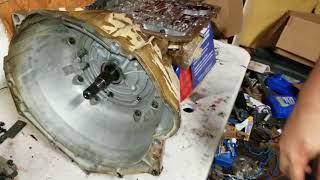
- Drop the transmission oil pan and inspect for metal shavings or excessive friction material (looks like wet black soot). A significant amount of debris confirms 🎬 Watch this disassembly to see how to diagnose internal damage. internal mechanical damage.
- If debris is found, the transmission will need to be removed for a rebuild or replacement. During the rebuild, inspect the input drum for cracks and the valve body separator plate for wear around the 3-4 clutch feed holes.
Parts You'll Likely Need
- Transmission Rebuild Kit — This is the most common fix, as the P0733 code usually points to a failed 3-4 clutch pack which requires a full rebuild to properly address all related worn seals and components.
Trusted brands: Raybestos, Sonnax, Alto
OEM price range: $300-$600
Aftermarket price range: $150-$400 - Remanufactured Transmission
(OEM #RPO code is M30 for 4L60E)— For many owners and shops, replacing the entire transmission is a faster and sometimes more reliable option than rebuilding the original unit, often coming with a warranty.
Trusted brands: ACDelco, Jasper, Monster Transmission
OEM price range: $2500-$4000
Aftermarket price range: $1800-$3000 - Upgraded 3-4 Clutch Pack — This is the specific component within the 4L60E that fails. Upgraded kits offer more clutches or superior friction material to increase durability.
Trusted brands: Raybestos Z-Pak (Part # RZP-001), Sonnax Smart-Tech Input Housing (Part # 77733-12KB)
OEM price range: $80-$150
Aftermarket price range: $70-$250
Related Codes That Often Appear With This One
- P0734 — Stands for 'Gear 4 Incorrect Ratio'. Since the 3-4 clutch pack is used for both 3rd and 4th gears in the 4L60E, it is very common for both codes to appear together when this pack fails.
- P0894 — Stands for 'Transmission Component Slipping'. This is a more general slip code that frequently accompanies specific gear ratio codes like P0733.
- P1870 — Stands for 'Transmission Component Slipping / Stator Temp Switch Circuit Low'. This code often points to wear in the valve body's TCC valve bore, which causes torque converter clutch slip, overheats the fluid, and contributes to the failure of other components like the 3-4 clutches.
Technical Service Bulletins (TSBs) & Recalls
- PIP4379K: Mentions P0733 in a list of codes related to delayed or no gear engagement, suggesting internal transmission issues.
- 01-07-30-038A: Directly addresses the loss of 3rd and 4th gear due to 3-4 clutch failure, which is the primary cause of P0733.
Platform-Specific Known Issues
- The provided Technical Service Bulletin (TSB) #PIP4379K lists P0733 among a wide range of transmission codes related to delayed engagement or no engagement, pointing towards known internal hydraulic or mechanical issues that require diagnosis following service information.
- TSB 01-07-30-038A specifically addresses no 3rd or 4th gear, a harsh 1-2 shift, and codes P0733, P0734, or P0756. It points directly to a worn 3-4 clutch pack and recommends inspection and replacement
Mechanic-Grade Diagnostic Values
- 1-2 and 2-3 Shift Solenoid Resistance — expected: 20-40 Ohms. Failure: A reading outside this range indicates a faulty solenoid.
- Pressure Control (EPC) Solenoid Resistance — expected: 3.5-8.0 Ohms at 68°F. Failure: A reading outside this range suggests a bad EPC solenoid.
- 3-2 Control Solenoid Resistance — expected: 9-14 Ohms. Failure: A reading outside this range indicates a faulty solenoid.
- Torque Converter Clutch (TCC) Solenoid Resistance — expected: 20-40 Ohms. Failure: A reading outside this range points to a bad TCC solenoid.
- TCC PWM Solenoid Resistance — expected: 10-11 Ohms at 68°F. Failure: An open circuit or reading outside this range indicates a failure.
Scan Tool Commands That Help
- GM Tech 2: Transmission Output Controls — To manually command shift solenoids on and off to verify their mechanical function and check for response, helping to isolate a bad solenoid from a wiring or mechanical problem.
- GM Tech 2: Adaptive Learn Reset — After replacing the transmission or major internal components, this function must be performed to clear the old shift timing and pressure values stored in the PCM, allowing it to learn the characteristics of the new parts.
- GM Tech 2: Live Data Monitoring — To monitor parameters like Commanded Gear vs. Current Gear, ISS RPM, and OSS RPM to confirm the slip is occurring in 3rd gear as the code suggests.
Wiring & Ground Locations
- PCM/Engine Block Ground — A ground strap from the main wiring harness that bolts to the back of the engine block, often on the passenger side cylinder head.. A corroded or broken main engine ground can cause a host of electrical issues, including erratic sensor readings and improper commands from the PCM/TCM, potentially leading to shifting problems and fault codes.
- G103 — On the front of the passenger side cylinder head.. This is a primary engine ground point. Poor connection here can affect the entire engine management system, including transmission controls.
- G100 / G101 — Located on the lower left (G100) and lower right (G101) of the radiator core support.. These are main chassis grounds. While less direct, a poor chassis ground can create electrical noise and voltage drops that affect sensitive electronics like the TCM.
- Fuel Pump Frame Ground — On the driver's side frame rail, near the driver's side tire, often near the fuel pump module.. While primarily for the fuel pump, this ground is part of the main chassis grounding scheme. Corrosion here is common and can contribute to widespread electrical gremlins on GMT800 trucks.
- Transmission Main Connector — The round 20-pin connector on the passenger side of the transmission case.. This is the single point of connection for all electronic controls. Checking for bent pins, corrosion, or a loose connection is a key diagnostic step. Solenoid resistance checks can be performed directly at this connector's pins without dropping the pan.
Real Owner Repair Stories
- 5thGenRams Forum (similar transmission issue) (2020 Ram 1500, 18,800 miles) — Check Engine Light on with code P0733, harsh shifting, transmission wouldn't shift out of first gear initially.
❌ Tried (didn't work) Restarting the vehicle temporarily restored shifting., Dealer cleared the code, but the issue was expected to return.
✅ What actually fixed it The dealer determined an internal transmission failure (specifically a synchro failure was mentioned) and replaced the entire transmission under warranty.
Model Year Variations Within This Range
- 2001-onward: In 2001, GM introduced the 4L65E (RPO M32) for higher-torque applications like the 6.0L Vortec engine. The 4L65E is an upgraded 4L60E featuring five-pinion planetary carriers (up from four), a stronger input shaft, and an improved 3-4 clutch pack with seven frictions. While the P0733 cause is the same (3-4 clutch failure), the 4L65E is inherently more durable.
- 2005-onward (late in the generation): Starting in 2005 and fully implemented later, an Input Speed Sensor (ISS) was added to the 4L60E/4L65E family. This required a different input shaft and pump assembly. While most 2001-2005 Sierras will not have the ISS, late-production 2005 models could, which affects component compatibility during a rebuild.
Helpful Videos
We Have This Part in Stock


The information in this article is provided for general reference and educational purposes only. Vehicle specifications, procedures, and part compatibility can vary by production date, trim level, and region. Always consult your vehicle's factory service manual and verify part numbers before purchasing or performing repairs. Safety-critical components such as airbags, seat belts, and braking systems should be installed by a qualified professional.
- Gmc SIERRA:
- 🎬 Helpful Videos
- 🛍️ Shop This Part
- What's Unique About the 2001-2005 Gmc SIERRA
- Diagnostic Flowchart
- Symptoms You May Notice
- Most Likely Causes
- Rare But Worth Checking
- Diagnosis Steps
- Parts You'll Likely Need
- Related Codes That Often Appear With This One
- Technical Service Bulletins (TSBs) & Recalls
- Platform-Specific Known Issues
- Mechanic-Grade Diagnostic Values
- Scan Tool Commands That Help
- Wiring & Ground Locations
- Real Owner Repair Stories
- Model Year Variations Within This Range
- 🎟️ Get 5% Off