

P0732 on 2003-2007 GMC Sierra Denali: Gear 2 Incorrect Ratio Causes and Fixes
P0732 on a GMC Sierra Denali indicates the transmission is slipping in 2nd gear. This is often caused by low or burnt transmission fluid, a faulty shift solenoid, or internal wear in the 4L65-E transmission. A fluid and filter change is the first step, but internal repairs, such as replacing the 2-4 band or servo, may be necessary.
- P0732 means your transmission is slipping in 2nd gear.
- Always start by checking the transmission fluid level and condition; this is the simplest and most common cause.
- The problem could be a simple electronic part like a shift solenoid or a major internal mechanical failure.
- This code exists on two different generations of Sierra Denali (GMT800 and GMT900) which use different transmissions (4-speed vs. 6-speed), so diagnosis and parts will vary.
- Due to the risk of severe damage, it is critical to stop driving and have the vehicle diagnosed as soon as possible.
What's Unique About the 2003-2007 Gmc SIERRA DENALI
The 2003-2007 Sierra Denali spans two truck generations. Most of these trucks (2003-2006 and the 2007 'Classic') use the 4L65-E automatic transmission, an evolution of the 4L60-E. These transmissions are known for specific weak points that can lead to slipping and gear ratio codes like P0732. Common failures include a worn 2-4 band, a leaking 2nd gear servo, or a cracked reaction sun shell. The redesigned 2007 'New Body Style' model introduced a 6-speed automatic (6L80), which has different internal components and potential failure points, though fluid-related issues remain a common cause.
Diagnostic Flowchart
Tap your situation to follow the diagnostic path that matches what you're seeing on this vehicle.
Generation note: The 2003-2006 models and the 2007 "Classic" are part of the GMT800 generation, typically using the 4L65-E transmission. The 2007 "New Body Style" (with smooth door skin) is the first year of the GMT900 generation and uses a 6-speed 6L80 automatic transmission. While causes like low fluid are universal, internal mechanical failures will differ between the 4-speed and 6-speed transmissions. This guide focuses primarily on the more common 4L65-E.
Symptoms You May Notice
- Check Engine Light is on.
- Transmission slipping, especially when shifting into or driving in 2nd gear.
- Delayed or harsh shifts, sometimes feeling like a jolt or thud.
- Engine RPMs flare up without an increase in vehicle speed.
- Vehicle may enter "limp mode," getting stuck in a single gear.
- Reduced fuel economy.
- Sluggish acceleration, particularly from a stop.
- Vehicle may die when coming to a stop after highway driving.
- Replacing only the shift solenoids when the transmission fluid is burnt and full of clutch material. The new solenoids will likely fail again quickly or the problem will persist due to the underlying mechanical failure.
- Blaming the engine for misfire-like symptoms when the issue is actually transmission slippage causing erratic engine RPMs.
Most Likely Causes
- Low or Contaminated Transmission Fluid 🔴 High Probability Transmission fluid can be consumed by leaks from cooler lines, pan gaskets, or seals over time. If the fluid is burnt or full of clutch material, it loses its hydraulic properties and can clog the filter, starving the transmission for pressure and causing slippage.
How to confirm: Check the transmission fluid dipstick for level and condition following the 'Hot Check' procedure in the owner's manual. The fluid should be bright red and not smell burnt. If it's low, brown, or contains metallic particles, this is a strong indicator.
Typical fix: Perform a transmission fluid and filter change. If the fluid is heavily contaminated, a full flush may be considered, but this can sometimes dislodge debris and cause more issues in a high-mileage transmission.
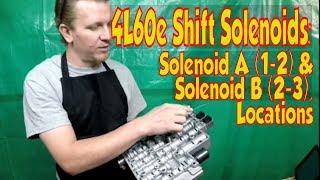
Est. part cost: $50-$150 - Failed Shift Solenoid 🟡 Medium Probability Solenoids are electronic components that live in a harsh environment of heat and vibration inside the transmission. They can fail electrically or become clogged with debris, preventing them from directing fluid pressure to engage a gear. The 1-2 (Solenoid 'A') and 2-3 (Solenoid 'B') are most relevant.
How to confirm: A professional scan tool can command the solenoid on and off to check its response. The solenoid's electrical resistance can also be tested with a multimeter after dropping the transmission pan. Often, a solenoid-specific code like P0751 or P0756 will accompany P0732.
Typical fix: Drop the transmission pan, identify the 1-2 or 2-3 shift solenoid, and replace it. The 'A' and 'B' solenoids are identical and often replaced as a pair. A fluid and filter change is done at the same time.
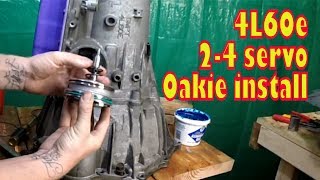
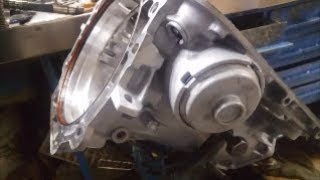
Est. part cost: $40-$100 - Internal Mechanical Failure (Worn 2-4 Band / Servo Issue) 🟡 Medium Probability The 4L65-E transmission's 2-4 band is a primary culprit for P0732. This band wraps around a drum to achieve 2nd gear. If the band's friction material is worn, it cannot hold, causing slippage. Additionally, the servo that applies the band can develop seal leaks, reducing the apply pressure needed to hold the band tight.
How to confirm: This is often a diagnosis of exclusion. If fluid level/condition and solenoids are good, but the slip persists, internal failure is likely. A transmission pressure test can confirm low pressure in the 2nd gear circuit. Finding friction material or metal shavings in the pan is a major clue.
Typical fix: Requires a complete transmission rebuild or replacement. During a rebuild, the worn 2-4 band, seals, and clutches are replaced. Upgraded components, like a wider 2-4 band or an aftermarket servo like the Sonnax Super Hold 2nd Gear Servo Kit (Part No. 77911-03K), are often installed to prevent repeat failures.
Est. part cost: $1500-$3500
Rare But Worth Checking
- Valve Body Issues: The valve body directs hydraulic fluid. Bores within the valve body can wear out, causing pressure leaks to clutches and solenoids. This is a known issue on 4L60E/4L65E transmissions, particularly the TCC regulator valve bore, which can cause overheating that accelerates wear on other components.
- Faulty Transmission Control Module (TCM) or Wiring: While less common, a damaged wire to the transmission or a failing TCM can cause incorrect commands or readings, leading to this code. This is usually diagnosed after all mechanical and hydraulic causes have been ruled out.
- Cracked Reaction Sun Shell: A well-documented weak point in the 4L60E/4L65E family is the reaction sun shell, which can strip its splines or crack at the hub. This failure typically results in the loss of 2nd, 4th, and Reverse gears simultaneously.
Diagnosis Steps
- Check and verify the transmission fluid level and condition. Top off or change if necessary.
- Use an OBD-II scanner to check for any other transmission-related codes, especially for specific solenoids (P0751, P0756).
- With a professional scan tool, monitor live data for transmission input and output speed sensors to confirm they are reading correctly and compare to a GPS speed signal.
- Observe transmission temperature. Overheating can cause many shifting issues.
- If possible, command shift solenoids on and off with the scan tool to check for response.
- Perform a transmission line pressure test to check for adequate hydraulic pressure in all gears, especially 2nd.
- If external checks pass, drop the transmission pan and inspect for excessive metal shavings or clutch material, which indicates internal failure. A small amount of fine grey material is normal, but chunks or a thick sludge are bad signs.
- If the pan is clean, test the resistance of the shift solenoids (typically 20-30 ohms) and inspect the wiring harness for damage.
- If all other components test good, the issue is likely a worn internal component (2-4 band, servo seals) or a faulty valve body, requiring transmission removal.
Parts You'll Likely Need
- Transmission Filter and Gasket Kit
(OEM #24208576)— Required for any service that involves dropping the transmission pan, such as a fluid change or solenoid replacement.
Trusted brands: ACDelco, Wix, ATP
OEM price range: $30-$50
Aftermarket price range: $15-$30 - Shift Solenoid (A or B / 1-2 or 2-3)
(OEM #24230298)— A common electrical failure point that prevents the transmission from shifting into 2nd gear correctly. Both A and B solenoids are identical and often sold as a set.
Trusted brands: ACDelco, Bosch, Rostra
OEM price range: $40-$70
Aftermarket price range: $20-$50 - Remanufactured 4L65-E or 6L80 Transmission — If internal clutches or bands are worn out, a complete remanufactured unit is often the most reliable and time-effective repair.
Related Codes That Often Appear With This One
- P0731 — Incorrect Ratio in 1st Gear. Often appears with P0732 when there is a widespread hydraulic or mechanical issue affecting multiple gear circuits.
- P0751 — Shift Solenoid 'A' Performance/Stuck Off. This code points directly to a potential electrical or mechanical fault with the solenoid responsible for the 1-2 shift.
- P0756 — Shift Solenoid 'B' Performance/Stuck Off. This points to an issue with the 2-3 shift solenoid, which can also be involved in 2nd gear operation.
- P1870 — Transmission Component Slipping. This is a common GM-specific code that indicates slippage, often related to a worn valve body bore for the torque converter clutch, which causes overheating and pressure problems that affect all gears.
Technical Service Bulletins (TSBs) & Recalls
- PIP4379M
Platform-Specific Known Issues
- The provided TSB #PIP4379M lists P0732 among a large group of transmission codes that can result from internal issues on these trucks, indicating a known pattern of transmission problems.
- source — A user on Ford Truck Enthusiasts with a P0732 code described intermittent shifting issues into 2nd gear. After consulting with a transmission specialist (Brian at BTS), the initial diagnosis pointed towards a faulty solenoid pack rather than a major mechanical failure, illustrating the importance of proper electrical diagnosis before condemning the transmission.
Mechanic-Grade Diagnostic Values
- 1-2 and 2-3 Shift Solenoid Resistance — expected: 19-31 Ohms (some sources say 20-40 or 20-30 Ohms).. Failure: A reading outside this range indicates a failed solenoid.
- Transmission Line Pressure at Idle (Park/Neutral/Drive) — expected: 55-75 PSI.. Failure: Pressure below 50 PSI may indicate a worn pump or clogged filter. Pressure significantly above 80 PSI can point to a stuck pressure regulator or valve body issue.
- Transmission Line Pressure at Wide Open Throttle (WOT) — expected: 170-190 PSI (stock), up to 225 PSI for performance builds.. Failure: Low maximum pressure despite good idle pressure can indicate a failing EPC (Electronic Pressure Control) solenoid or a worn boost valve.
- Transmission Line Pressure in Reverse at Idle — expected: 64-75 PSI minimum, can rise to over 300 PSI at max pressure.. Failure: Low reverse pressure can indicate a worn boost valve or internal leaks in the reverse circuit.
Scan Tool Commands That Help
- GM Tech2 / GDS2: Solenoid Test / Output Controls — Used with the engine off or running (in Park/Neutral) to command specific solenoids (1-2, 2-3) on and off. This helps verify if the solenoid is responding to the TCM's command, which can be confirmed by an audible click from the transmission pan.
- GM Tech2 / GDS2: PCS (Pressure Control Solenoid) Control — Allows a technician to manually control the amperage sent to the Pressure Control Solenoid while monitoring line pressure with a mechanical gauge. This is used to verify if the PCS is capable of controlling line pressure across its intended range, helping to diagnose pressure-related issues.
- GM Tech2 / GDS2: Reset Transmission Adapts — After replacing major components like the valve body, solenoids, or the entire transmission, the TCM's learned shift adapt values must be reset. Failure to do so can result in harsh or erratic shifting as the TCM uses old data for the new components.
Wiring & Ground Locations
- Engine-to-Firewall Ground Straps — Located on the rear of the engine, on both the driver and passenger side, connecting the cylinder heads/block to the firewall.. The TCM and transmission solenoids rely on a stable ground path through the engine and chassis. A corroded or loose ground strap at the back of the engine can create electrical noise and voltage drops, potentially causing erratic solenoid behavior and incorrect sensor readings, leading to ratio codes.
- Main PCM/TCM Ground — A specific ground wire that exits the main engine wiring harness and bolts to the engine block, often near the front of the driver's side cylinder head.. This is a critical ground for the powertrain control systems. If this wire becomes frayed or the connection is corroded, it can cause a host of difficult-to-diagnose issues, including transmission codes and improper shifting.
- Transmission Inline Connector — The main 20-way round electrical connector on the passenger side of the transmission case.. Pins for the 1-2 and 2-3 shift solenoids pass through this connector. Bent pins, corrosion from moisture, or fluid wicking up the harness can cause an open or short in the solenoid circuits, directly leading to P0732 and related codes.
Real Owner Repair Stories
- LS1Tech Forum & SilveradoSS.com Forum discussions (Various GM trucks/SUVs with 4L60E/4L65E transmissions) — No forward gears, or slipping in 1st/2nd gear, sometimes accompanied by P0731/P0732.
❌ Tried (didn't work) Fluid and filter change, Replacing shift solenoids
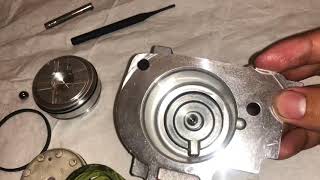
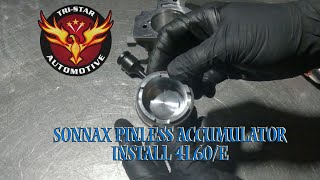
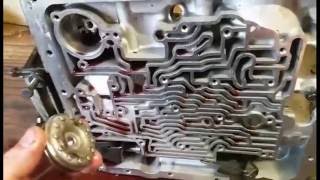
✅ What actually fixed it The plastic forward accumulator piston in the valve body was found to be cracked or had a hole in it. This causes a significant pressure leak in the forward clutch circuit, which is needed for all forward gears but is often noticed first on the 1-2 shift. Replacing the piston (often with an upgraded aluminum one) and its seals resolved the issue.
OEM Part Supersession History
Various older numbers→24230298 (for ACDelco GM OE)— Consolidation of part numbers over the long production run of the 4L60E/4L65E family.
Heads up: The 1-2 and 2-3 shift solenoids (Solenoid A and B) are physically identical and interchangeable for this transmission family. They are often sold as a pair. Part number 24230298 is the standard replacement for both.
Model Year Variations Within This Range
- 2003-2007 Classic (GMT800): These models consistently use the 4L65-E transmission. Diagnostic procedures and internal parts are largely consistent. The primary variation is the introduction of the GMT900 body style in 2007, which uses a completely different 6-speed (6L80) transmission and control system. It is crucial to identify whether a 2007 model is a 'Classic' (GMT800) or 'New Body Style' (GMT900) before diagnosis.
Helpful Videos

We Have This Part in Stock



The information in this article is provided for general reference and educational purposes only. Vehicle specifications, procedures, and part compatibility can vary by production date, trim level, and region. Always consult your vehicle's factory service manual and verify part numbers before purchasing or performing repairs. Safety-critical components such as airbags, seat belts, and braking systems should be installed by a qualified professional.
- Gmc SIERRA DENALI:
- 🎬 Helpful Videos
- 🛍️ Shop This Part
- What's Unique About the 2003-2007 Gmc SIERRA DENALI
- Diagnostic Flowchart
- Symptoms You May Notice
- Most Likely Causes
- Rare But Worth Checking
- Diagnosis Steps
- Parts You'll Likely Need
- Related Codes That Often Appear With This One
- Technical Service Bulletins (TSBs) & Recalls
- Platform-Specific Known Issues
- Mechanic-Grade Diagnostic Values
- Scan Tool Commands That Help
- Wiring & Ground Locations
- Real Owner Repair Stories
- OEM Part Supersession History
- Model Year Variations Within This Range
- 🎟️ Get 5% Off