

P0732 on 2009-2010 GMC Sierra 2500: Gear 2 Incorrect Ratio Causes and Fixes
P0732 on a 2009-2010 Sierra 2500 indicates the transmission is slipping in second gear. The most common causes are low or burnt transmission fluid, a failing torque converter in the 6L90 transmission, or a faulty shift solenoid. Start by checking the fluid; if it's dark or low, a fluid and filter change is the first step. More severe issues, like torque converter failure or internal clutch piston cracks, often require professional diagnosis.
- P0732 means your transmission is slipping in 2nd gear; do not ignore this code as it can lead to severe damage.
- Always start by checking the transmission fluid level and condition. This is the simplest and most common fix.
- For trucks with the 6.0L gas engine (6L90 transmission), a failing torque converter is a very common root cause of this code.
- If the fluid is dark or full of debris, simply changing it is not enough. The source of the debris (usually the torque converter) must be found and fixed.
- Due to the complexity and need for special tools, any repair beyond a fluid/filter change is best left to a professional transmission shop.
What's Unique About the 2009-2010 Gmc SIERRA 2500
The 2009-2010 GMC Sierra 2500 HD models are typically equipped with either the 6-speed 6L90 automatic transmission (for gasoline engines like the 6.0L V8) or the Allison 1000 6-speed (for the 6.6L Duramax diesel). For trucks with the 6L90, P0732 is frequently linked to torque converter failure, where clutch material breaks down and contaminates the entire system, clogging the valve body and solenoids. Another known weak point in the 6L80/6L90 family is a cracked 1-2-3-4 apply piston, which causes a loss of hydraulic pressure for the forward gears. The Allison transmission is generally more robust, but can still suffer from worn C2 clutch packs or solenoid issues under heavy use. TSB #PIP4379N acknowledges this code across a wide range of GM trucks, pointing to potential hydraulic issues like cracked filters or low fluid levels that can occur after a fluid service.
Diagnostic Flowchart
Tap your situation to follow the diagnostic path that matches what you're seeing on this vehicle.
Symptoms You May Notice
- Check Engine Light is on
- Delayed or harsh shifting, especially into second gear
- Transmission slipping (engine RPMs flare up without an increase in speed)
- Vehicle stuck in one gear ('limp mode')
- Failure to engage drive or reverse
- Reduced acceleration
- Shuddering or vibrations during acceleration.
- Increased fuel consumption.
- Replacing input or output speed sensors. These sensors are usually accurately reporting a mechanical slip; they are rarely the cause of the problem.
- Replacing a clogged shift solenoid without flushing the system or replacing the torque converter. If the root cause of contamination isn't fixed, the new solenoid will quickly fail as well.
Most Likely Causes
- Low or Contaminated Transmission Fluid 🔴 High Probability Leaks or simple neglect can lower fluid levels, reducing the hydraulic pressure needed to engage clutches. On 6L90 transmissions, debris from a failing torque converter is a common contaminant, turning the fluid dark and gritty.
How to confirm: Check the transmission fluid level and condition using the dipstick when the transmission is warm (around 175°F). The fluid should be bright red (DEXRON-VI) and clear, not brown, black, or smelling burnt. Significant metallic or dark particles on the dipstick indicate internal wear.
Typical fix: If the fluid is low, top it off. If it's dirty or burnt, perform a transmission fluid and filter change. Note that if heavy debris is present, this is often a temporary fix for a larger internal problem like a failing torque converter.
Est. part cost: $50-$150 - Torque Converter Failure 🔴 High Probability This is a well-documented failure point on the 6L80/6L90 transmissions. The lock-up clutch (TCC) inside the converter can wear out and shed its friction material, which contaminates the valve body, filter, and solenoids.
How to confirm: A key symptom is a shudder or vibration at highway speeds. A professional diagnosis involves monitoring torque converter slip speed with a scan tool. The presence of excessive black clutch material in the transmission pan is a strong indicator. Code P0741 often appears alongside P0732 when the converter is failing.
Typical fix: The torque converter must be replaced. Due to contamination, this often necessitates a full transmission rebuild or replacement to clean out all the debris from the system, including flushing the cooler lines. 🎬 See why you shouldn't just replace the torque converter alone
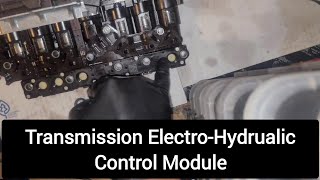
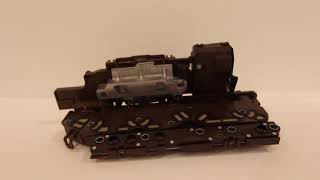
Est. part cost: $400-$800 for the converter; $2500+ for a rebuild/replacement. - Faulty Shift Solenoid / TEHCM Issue 🟡 Medium Probability In the 6L90, the solenoids are part of the TEHCM (Transmission Electro-Hydraulic Control Module). Solenoids can fail electronically or, more commonly, become clogged with debris from fluid contamination, causing them to stick. This prevents the correct hydraulic pressure from being routed to apply the 2nd gear clutches.
How to confirm: A professional scan tool (like a GM Tech2/GDS2) can command the specific shift solenoid on and off to test its electronic function and observe the transmission's response. Some scan tools have a 'solenoid cleaning' function that can sometimes dislodge minor debris.
Typical fix: Since solenoids are integrated, the entire TEHCM is often replaced and must be programmed to the vehicle's VIN. In some cases, the valve body can be disassembled for cleaning.
Est. part cost: $50-$100 - Cracked Transmission Filter or Seal ⚪ Low Probability As mentioned in TSB #PIP4379N, the suction filter inside the transmission can develop a crack in its neck, causing the pump to suck in air instead of fluid. This leads to a loss of hydraulic pressure and slipping, especially after a recent filter change if not installed correctly.
How to confirm: This can only be confirmed by dropping the transmission pan and visually inspecting the filter and its seal for cracks or improper seating.
Typical fix: Replace the transmission filter and seal. Ensure the old seal is removed from the pump bore before installing the new one.
Est. part cost: $30-$60
Rare But Worth Checking
- Cracked 1-2-3-4 Apply Piston: A known weak point in the 6L80/6L90 transmission is the 1-2-3-4 clutch apply piston, which is prone to cracking. This causes a significant hydraulic leak within the clutch drum, leading to slipping in the first four gears and codes like P0731, P0732, etc. This requires a transmission rebuild to replace the piston and inspect the clutch pack for heat damage.
- Worn Internal Clutch Pack: The clutch pack responsible for 2nd gear (the 1-2-3-4 clutch in the 6L90) can wear out, especially under heavy towing or high mileage. This is a major internal failure requiring a transmission rebuild to fix.
- Faulty Transmission Control Module (TCM/TEHCM): While less common, the electronic portion of the TEHCM itself can fail due to internal shorts or cracked pressure switch laminates. 🎬 Watch: How to rebuild and test TEHCM circuits and switches This can cause erratic behavior, multiple codes, or complete loss of communication. Replacement requires programming to the vehicle.
- Damaged Wiring Harness: The wiring harness to the transmission can be damaged by heat or chafing, leading to a poor connection for a shift solenoid or speed sensor.
Diagnosis Steps
- Check and verify the transmission fluid level and condition. Look for fluid that is dark, burnt-smelling, or contains metallic particles.
- Connect a professional OBD-II scanner to read the codes and view live data. Monitor the transmission input and output speed sensors to confirm they are reading correctly.
- Observe the 'Commanded Gear' vs. 'Actual Gear' PIDs on the scan tool during a test drive to confirm the slip is happening in 2nd gear.
- If fluid is low, top it off and re-test. If fluid is dirty, perform a fluid and filter change. Inspect the old filter for cracks and the pan for excessive debris (a small amount of fine gray material on the magnet is normal; large flakes or excessive black clutch material is not).
- If the problem persists, use a scan tool to command the shift solenoids on and off to test their functionality. A GM-specific tool may have a solenoid cleaning cycle.
- Perform a transmission pressure test to check for internal hydraulic leaks. Low pressure can indicate a worn pump, a leak at the filter seal, or a major internal leak.
- If solenoids and pressure test okay, the issue is likely a major internal mechanical failure like a cracked 1-2-3-4 piston, a worn clutch pack, or a failing torque converter, requiring transmission removal for inspection and repair.
Parts You'll Likely Need
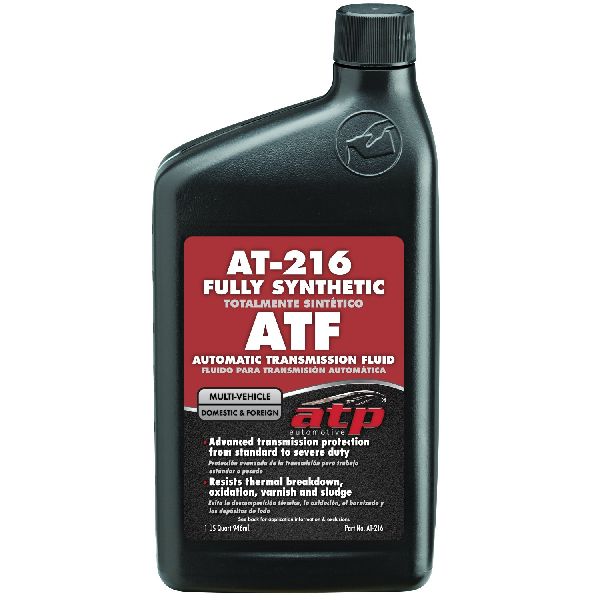
- Automatic Transmission Fluid and Filter Kit
(OEM #24208576)— This is the first and most crucial step. Low or dirty fluid is the most common cause of slipping and shifting issues. Use only
Related Codes That Often Appear With This One
- P0731 — Incorrect Ratio in 1st Gear. Seeing both codes together strongly suggests a systemic issue like low fluid, a bad valve body, or a failing 1-2-3-4 clutch piston that affects multiple gears.
- P0741 — Torque Converter Clutch Circuit Performance or Stuck Off. This code is a major red flag that the torque converter is failing and is likely the source of debris causing the P0732 code.
- P0751 — Shift Solenoid 'A' Performance/Stuck Off. This code directly points to a problem with the 1-2 shift solenoid, which is a primary component for achieving second gear.
- P0894 — Transmission Component Slipping. This is a more general slip code that often accompanies specific gear ratio codes like P0732, indicating the TCM has confirmed a significant slip event.
Technical Service Bulletins (TSBs) & Recalls
- PIP4379N: Addresses multiple DTCs including P0732 related to delayed engagement or no-drive conditions. Points to low fluid levels or cracked/mis-installed filters as potential causes, especially after a fluid service.
- PI1393B: While for DTC P0741, it's highly relevant. It describes how damaged torque converter clutch material can cause low line pressure, damage the pump, and distress other clutches, leading to codes like P0732. It mandates flushing the cooler and replacing the filter if the converter is replaced.
Platform-Specific Known Issues
- TSB #PIP4379N: This GM bulletin covers a wide range of transmission codes, including P0732, related to delayed or no gear engagement. It advises technicians to check fluid levels and inspect the internal transmission filter for cracks before replacing major components.
Mechanic-Grade Diagnostic Values
- 6L90 On/Off Shift Solenoid Resistance — expected: 20-40 Ohms. Failure: A reading outside this range indicates a failed solenoid coil, requiring TEHCM replacement.
- 6L90 PWM Solenoid Resistance (Pressure Control) — expected: 3-8 Ohms. Failure: A reading outside this range points to a faulty pressure control solenoid, requiring TEHCM replacement.
- 6L90 Transmission Line Pressure at Idle — expected: 45-80 psi. Failure: Pressure significantly below this range at idle can indicate a worn pump, clogged filter, or major internal leak.
- 6L90 Transmission Line Pressure at Wide-Open Throttle (WOT) — expected: Upwards of 300 psi. Failure: Failure to reach high pressure under load confirms a hydraulic issue (pump, valve body, or internal seals).
- 6L90 Pump Slide and Rotor Thickness — expected: Approx. 0.707 inches. Failure: Significant deviation from this thickness indicates pump wear, often caused by debris from a failing torque converter.
Scan Tool Commands That Help
- GM Tech2 / GDS2: Solenoid Valve State / Output Controls — To manually command the 1-2 shift solenoid on and off to see if it responds. This helps isolate a faulty solenoid from a larger hydraulic or mechanical problem.
- GM Tech2 / GDS2: Solenoid Cleaning Process — This function automatically cycles all solenoids in a specific sequence to attempt to dislodge minor debris that may be causing a solenoid to stick. It can be used before deciding to replace the TEHCM.
- GM Tech2 / GDS2: Reset Transmission Adapts (Learns) — This is a critical step after replacing the TEHCM, valve body, or rebuilding the transmission. It clears the TCM's learned shift pressure values and forces a re-learn process for the new components.
Wiring & Ground Locations
- 16-Pin Main Transmission Connector (GM #15131300) — On the driver's side of the transmission case, this is the main external electrical connection to the internal TEHCM.. Corrosion, bent pins, or fluid intrusion in this connector can interrupt power, ground, or CAN bus signals to the TEHCM, causing a wide range of codes including P0732 and communication errors like U0101. Pin 4 is Battery+, Pin 5 is Ground-, and Pins 10/11 and 13/14 are for CAN bus communication.
- TCM/ECM Grounds — Typically located on the engine block or cylinder head, identified as a black wire bolted directly to the metal. Main frame and battery grounds should also be inspected.. A poor ground connection for the control modules can cause erratic voltage readings and incorrect calculations, potentially leading to false gear ratio codes.
Real Owner Repair Stories
- YouTube user 'life with Derrick' (GM Truck with 6L80/6L90 transmission) — Transmission shifting problems, determined to be a bad #2 solenoid.
❌ Tried (didn't work) The user first tried a fluid and filter change, which did not resolve the issue.
✅ What actually fixed it The problem was ultimately solved by replacing the entire TEHCM (which includes the solenoids) and the valve body as a complete assembly. After installation and adding new fluid, the test drive showed perfect shifting.
OEM Part Supersession History
Multiple early versions→Updated OEM piston, or aftermarket billet piston (e.g., Sonnax 104984-01)— The original cast aluminum 1-2-3-4 apply pistons in the 6L80/90 are known to crack from stress. GM released several revisions, but the issue persists. Billet aluminum replacements offer a more durable solution.25798353, 29545535, and others→24256861 (for Allison Transmission)— Consolidation of part numbers for the external Transmission Control Module (TCM) used with the Allison 1000 transmission in Duramax-equipped trucks.
Heads up: This part number is for the external TCM on Allison transmissions, not the internal TEHCM used in 6L90 gas-engine trucks. The TEHCM is a different part and must be ordered for the specific application.Early 35R clutch drum (no QR code)→Updated drum with dot matrix QR label— The weld on the original drum design was prone to cracking, leading to 3-5-R clutch issues. The updated drum is stronger.
Model Year Variations Within This Range
- 2009-2010: When replacing a 6L90 transmission, the tail shaft housing length must be verified. A 2010 Sierra 2500 was documented to have a 5-inch long housing, while a readily available replacement unit had a 4-inch housing, making it incompatible without swapping the housing. This difference is not widely documented.
Helpful Videos


![What is P0732 Engine Code [Quick Guide]](https://img.youtube.com/vi/LV7IkwtpqjY/mqdefault.jpg)
We Have This Part in Stock




The information in this article is provided for general reference and educational purposes only. Vehicle specifications, procedures, and part compatibility can vary by production date, trim level, and region. Always consult your vehicle's factory service manual and verify part numbers before purchasing or performing repairs. Safety-critical components such as airbags, seat belts, and braking systems should be installed by a qualified professional.
- Gmc SIERRA 2500:
- 🎬 Helpful Videos
- 🛍️ Shop This Part
- What's Unique About the 2009-2010 Gmc SIERRA 2500
- Diagnostic Flowchart
- Symptoms You May Notice
- Most Likely Causes
- Rare But Worth Checking
- Diagnosis Steps
- Parts You'll Likely Need
- Related Codes That Often Appear With This One
- Technical Service Bulletins (TSBs) & Recalls
- Platform-Specific Known Issues
- Mechanic-Grade Diagnostic Values
- Scan Tool Commands That Help
- Wiring & Ground Locations
- Real Owner Repair Stories
- OEM Part Supersession History
- Model Year Variations Within This Range
- 🎟️ Get 5% Off