

P0732 on 2011-2013 GMC Sierra: Gear 2 Incorrect Ratio Causes & Fixes
P0732 on a 2011-2013 Sierra indicates the transmission is slipping in 2nd gear. The most common cause, cited in GM service bulletins, is debris from a failing torque converter clogging the valve body separator plate. This is not a simple sensor fix and requires professional diagnosis, often involving valve body service or, in severe cases, a transmission rebuild to clean out all contaminants.
- P0732 on a 2011-2013 Sierra indicates a serious internal transmission slip in 2nd gear and should be addressed immediately.
- Do not assume it's a bad sensor; the most likely causes are mechanical or hydraulic.
- The first step is always to check the transmission fluid level and condition.
- GM has issued service bulletins pointing directly to debris clogging the valve body separator plate as a common cause for this code.
- This is not a beginner-friendly DIY repair. Professional diagnosis with a proper scan tool is highly recommended to avoid unnecessary, expensive part replacements.
What's Unique About the 2011-2013 Gmc SIERRA
The 2011-2013 GMC Sierra primarily uses the 6L80 6-speed automatic transmission. While the code's meaning is standard, this platform has specific, well-documented failure points. A very common failure sequence begins with the torque converter's lock-up clutch failing and shedding metallic debris throughout the transmission. This debris then clogs the filter and, critically, the small orifices in the valve body separator plate, which is a known issue directly linked to P0732 in GM Technical Service Bulletins (TSBs). This disruption of hydraulic pressure prevents the 2-6 clutch from applying correctly, causing the slip in 2nd gear.
Diagnostic Flowchart
Tap your situation to follow the diagnostic path that matches what you're seeing on this vehicle.
Symptoms You May Notice
- Check Engine Light is on
- Transmission slipping or flaring between shifts
- Delayed or no engagement into Drive or Reverse
- Harsh or jerky shifting, especially the 2-3 shift
- Vehicle will not move forward or reverse
- Transmission stuck in one gear (limp mode)
- Shuddering feeling, like driving over a rumble strip, especially at light throttle
- Increased fuel consumption
- Replacing the input or output speed sensors. These sensors are usually accurately reporting the slip; the problem is the mechanical or hydraulic cause of the slip itself. On the 6L80, these sensors are internal to the transmission, making replacement a labor-intensive misdiagnosis.
- Only replacing the torque converter. If the old converter failed and sent debris through the system, just installing a new converter without a full system flush and valve body cleaning will likely lead to a repeat failure of the new converter and other components.
Most Likely Causes
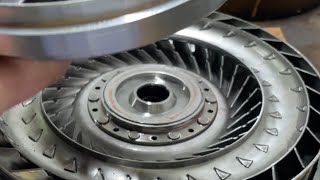
- Failing Torque Converter 🔴 High Probability The lock-up clutch within the stock 6L80 torque converter is a well-documented, primary failure point. It disintegrates, sending metallic debris throughout the transmission. This debris is the root cause of downstream issues, clogging the filter, valve body, and solenoids, which directly leads to P0732.
How to confirm: Symptoms include a shudder (like driving on a rumble strip) and the presence of code P0741. 🎬 See a breakdown of 6L80 torque converter issues A large amount of metallic debris in the transmission pan is a strong indicator. A professional can perform a stall test or analyze live data for TCC slip.
Typical fix: Replacement of the torque converter and a complete transmission flush or rebuild to clean out all the debris. Simply replacing the converter without cleaning the rest of the system often leads to repeat failure.
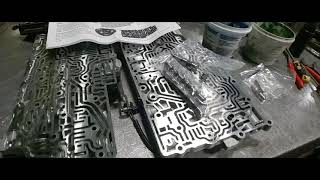
Est. part cost: $400-$1200 for a new or remanufactured torque converter. - Blocked Valve Body Separator Plate Orifices 🔴 High Probability This is a direct consequence of the failing torque converter. TSBs #PIP5100 and #PIP5100A specifically instruct technicians to inspect the valve body separator plate for debris as a primary diagnostic step for P0732.
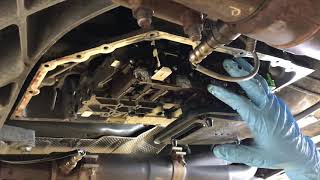
How to confirm: Drop the transmission pan and remove the valve body. 🎬 Watch: Step-by-step 6L80 valve body removal guide The separator plate must be visually inspected for clogged orifices or check ball seats.
Typical fix: The valve body must be disassembled, and the separator plate and channels must be thoroughly cleaned. Upgraded separator plates and valve body kits from brands like Sonnax are available to improve durability. A full fluid flush is required.
Est. part cost: $50-$150 for a new plate and gaskets. A Sonnax Zip Kit (6L45-6L90-ZIP) costs around $150-$200 and addresses multiple wear points in the valve body. - Low or Contaminated Transmission Fluid 🔴 High Probability Fluid is the lifeblood of the transmission, required for hydraulic pressure and cooling. Low levels cause pressure loss and slipping, while contaminated fluid (often with clutch or metal debris from a failing converter) can clog passages and cause this code.
How to confirm: Check the transmission fluid level and condition via the dipstick or service plug. The fluid should be bright red and not smell burnt. Dark, brown, or metallic fluid indicates a serious internal problem.
Typical fix: If low, top off and check for leaks. If dirty, a fluid and filter change is the first step. However, if the fluid is heavily contaminated with metal, it's a symptom of a larger failure (like the torque converter) and a simple fluid change will not be a lasting fix.
Est. part cost: $75-$200 for fluid and a filter kit. - Failed Shift Solenoid 🟡 Medium Probability
How to confirm: A professional scan tool can command the specific solenoid for 2nd gear to check for a response. In the 6L80, the solenoids are integrated into the TEHCM (Transmission Electro-Hydraulic Control Module), making individual replacement difficult.
Typical fix: Replace the entire TEHCM/solenoid assembly, which is located inside the transmission on the valve body. This requires programming to the vehicle.
Est. part cost: $300-$600+ for a new or remanufactured TEHCM. - Worn or Damaged 2-6 Clutch Pack ⚪ Low Probability
How to confirm: This can only be confirmed by disassembling the transmission and visually inspecting the clutch plates for wear or damage. The 2-6 clutch is a stationary clutch that holds the 2-6/3-5-R shell.
Typical fix: A complete transmission rebuild is required to replace the worn clutch pack and associated seals.
Est. part cost: $400-$800 for a rebuild kit.
Rare But Worth Checking
- Cracked 1-2-3-4 Clutch Housing: TSB 09-07-30-004J points to a cracked weld on the 1-2-3-4 / 3-5-R clutch housing as a potential cause for slips and harsh shifts in 6L80 transmissions, which could lead to a P0732 code. This requires a full transmission teardown to diagnose and fix by inspecting the weld area for cracks.
- Faulty Transmission Control Module (TCM/TEHCM): While possible, this is rare. The TCM is integrated with the valve body and solenoids in the TEHCM. It should only be suspected after all mechanical, hydraulic, and wiring issues have been ruled out. A user on a Duramax forum mentioned a tech suspected TCM failure for a P0732 after flooring the truck.
Diagnosis Steps
- Check the transmission fluid level and condition. Note any burnt smell or metallic particles, which strongly suggest torque converter or clutch failure.
- Use a professional OBD-II scanner to read all stored codes and view live transmission data, including input/output speeds, commanded gear, and TCC slip RPM.
- Monitor the transmission slip speed for the 2nd gear clutch. High slip confirms a mechanical or hydraulic issue.
- Perform a transmission fluid pressure test to check for low overall hydraulic pressure, which could indicate a worn pump or major internal leak.
- Drop the transmission pan and inspect for debris. A layer of fine grey clutch material is normal, but large metal shavings or chunks are signs of catastrophic failure, often from the torque converter.
- Following TSB #PIP5100, remove and inspect the valve body and separator plate for blockages, stuck check balls, or scoring.
- If TSB 09-07-30-004J is relevant, inspect the 1-2-3-4 / 3-5-R clutch housing for cracked welds using a soap solution and compressed air.
- If the valve body is clean and no other hydraulic leaks are found, further internal inspection of clutch packs and seals is necessary, which requires transmission removal.
Parts You'll Likely Need
- Transmission Filter & Gasket Kit
(OEM #24236933)— Required for any service that involves dropping the transmission pan.
Trusted brands: ACDelco
OEM price range: $40-$60
Aftermarket price range: $20-$40 - Valve Body Separator Plate
(OEM #24245720)— This plate is a primary suspect for clogging from torque converter debris, as noted in GM TSBs. It is often replaced during a valve body service.
Related Codes That Often Appear With This One
- P0700 — This is a generic code indicating the TCM has requested the Check Engine Light be turned on. It will almost always be present with any specific transmission code like P0732.
- P0731 — Incorrect Ratio in 1st Gear. Seeing both codes together points to a more widespread issue like low fluid, a failing torque converter, or a major valve body problem affecting multiple clutch circuits.
- P0741 — Torque Converter Clutch Circuit Performance or Stuck Off. This code is a strong indicator that the torque converter is failing and is likely the source of the debris causing the P0732 code.
- P0751, P0756, P0776 — These are shift solenoid performance codes. Their presence alongside P0732 can help pinpoint whether the issue is electrical (solenoid) or hydraulic/mechanical, as noted in TSB #PIP4379K.
Technical Service Bulletins (TSBs) & Recalls
- PIP5100A: Instructs technicians to inspect valve body separator plate orifices for blockage when encountering P0732 and other ratio codes.
- PIP4379K: Lists P0732 among a wide range of codes that can be set due to various hydraulic and electrical faults within the 6L80.
- 09-07-30-004J: Details a potential cause of harsh shifts and ratio codes being a cracked weld on the 1-2-3-4 / 3-5-R clutch housing, requiring transmission disassembly to inspect.
Platform-Specific Known Issues
- Torque Converter Debris Cascade Failure: The most common and significant issue for the 6L80 in this truck is a cascading failure that begins with the torque converter clutch. Material from the clutch breaks down, circulates as abrasive debris through the transmission fluid, clogs the filter and valve body separator plate, and starves clutches of the hydraulic pressure needed to engage properly. This sequence is the primary driver for code P0732.
Mechanic-Grade Diagnostic Values
- Pressure Control Solenoid (PCS) and TCC Solenoid Resistance — expected: 3.0-8.0 ohms. Failure: A reading outside this range indicates a failed solenoid, requiring TEHCM replacement.
- Shift Solenoid (On/Off type) Resistance — expected: 20-40 ohms. Failure: A reading outside this range points to a faulty shift solenoid, requiring TEHCM replacement.
- Transmission Line Pressure at Idle — expected: 45-80 psi. Failure: Pressure significantly below this range indicates a potential pump issue, major leak, or fluid starvation.
- Transmission Line Pressure at Wide Open Throttle (WOT) Stall — expected: Up to 300 psi. Failure: Failure to reach high pressure under load points to a weak pump, clogged filter, or significant internal hydraulic leaks.
- TEHCM Solenoid Operating Voltage — expected: 8.3–9.3 volts. Failure: Incorrect voltage from the TCM section of the TEHCM can indicate an internal module fault.
Scan Tool Commands That Help
- GM GDS2/Tech2: Solenoid Valve Cleaning Procedure — This is an automated function to use when a solenoid performance code is present or a solenoid is suspected of sticking due to minor debris. The tool cycles all solenoids to flush contaminants from their internal circuits. If the code returns after cleaning, replacement is necessary.
- GM GDS2/Tech2: Transmission Output Controls — To individually command each shift and pressure control solenoid on and off while monitoring pressure or listening for an audible click (with the pan off). This helps isolate a single failed solenoid within the TEHCM without a road test.
- GM GDS2/Tech2: Reset Transmission Adapts / Fast Learn — This must be performed after replacing the TEHCM or valve body. It clears the learned shift timing and pressure adjustments, forcing the TCM to relearn the clutch apply characteristics to ensure smooth shifting.
Wiring & Ground Locations
- G110 — On the right rear (passenger side) of the cylinder head. A ground strap may connect from here to the firewall.. This is a major ground point for the engine and potentially the powertrain control systems. A loose or corroded connection at G110 can cause erratic sensor readings and communication issues for the ECM/TCM, leading to incorrect calculations and fault codes. A Reddit user reported a cross-threaded G110 bolt after a transmission replacement caused intermittent ground loss and shifting issues.
- TEHCM Main Connector — On the passenger side of the transmission case, this round, 16-pin connector is the sole electrical link to the internal TEHCM.. All power, ground, and CAN bus communication for the transmission's computer and solenoids pass through this single connector. Any corrosion, moisture intrusion, or pushed-back pins can directly cause communication loss or erratic solenoid behavior, triggering various transmission codes including P0732.
- G103 — On the driver's side of the engine block, often near the oil pan, providing a ground path for the ECM.. As a primary ground for the Engine Control Module, a poor connection here can affect the ECM's ability to communicate accurately with the TCM over the CAN bus, potentially leading to false codes or improper transmission commands.
Real Owner Repair Stories
- Tahoe Yukon Forum user @skpyle (2013 Cadillac Escalade ESV (GMT900 platform shared with Sierra)) — Not specified for P0732, but performed a preventative valve body upgrade to address common 6L80 issues.
✅ What actually fixed it The user proactively installed a Sonnax Zip Kit and a pressure switch rebuild kit. The key takeaway was the confirmation that debris from a failing torque converter is the root cause of valve body issues. The user also replaced the solenoid filter plate (GM P/N 24236934) because the old seals had taken a set, which is a critical step during service.
OEM Part Supersession History
24241350, 24252114 (Gen 1 TEHCM, up to 2009)→24256861 / 24256863 (For 2010-2013 models)— The later generation TEHCMs for the 2010-2013 model years featured improved solenoids and an updated pressure manifold gasket to address common failure points in earlier units.
Heads up: TEHCMs are not interchangeable between year groups. Installing an early TEHCM in a 2011-2013 Sierra, or vice-versa, will result in a no-start condition or immediate limp mode because the internal logic and calibration are different. The correct part must be identified by the Tag ID on the module itself.N/A→Sonnax Zip Kit 6L45-6L90-ZIP— The aftermarket Sonnax kit addresses multiple known wear points in the valve body that cause hydraulic leaks, including actuator feed limit valve bore wear and end plug leakage. It contains O-ringed end plugs and other components that are more robust than the OE design.
Heads up: The full kit contains some parts, like the Clutch Select Valve Springs, that are only for pre-2010.5 models. The instructions must be followed carefully to ensure only the correct parts for the specific year of the valve body are installed.
Model Year Variations Within This Range
- 2010-2013: The TEHCM (part numbers like 24256861) used in this range featured improved solenoids and pressure manifold gaskets compared to the 2006-2009 units. While more reliable, they are still susceptible to failure from debris and heat. They are not interchangeable with earlier or later (2014+) versions.
Helpful Videos
Used OEM Parts in Stock


New Aftermarket Parts Available



The information in this article is provided for general reference and educational purposes only. Vehicle specifications, procedures, and part compatibility can vary by production date, trim level, and region. Always consult your vehicle's factory service manual and verify part numbers before purchasing or performing repairs. Safety-critical components such as airbags, seat belts, and braking systems should be installed by a qualified professional.
- Gmc SIERRA:
- 🎬 Helpful Videos
- 🛍️ Shop This Part
- What's Unique About the 2011-2013 Gmc SIERRA
- Diagnostic Flowchart
- Symptoms You May Notice
- Most Likely Causes
- Rare But Worth Checking
- Diagnosis Steps
- Parts You'll Likely Need
- Related Codes That Often Appear With This One
- Technical Service Bulletins (TSBs) & Recalls
- Platform-Specific Known Issues
- Mechanic-Grade Diagnostic Values
- Scan Tool Commands That Help
- Wiring & Ground Locations
- Real Owner Repair Stories
- OEM Part Supersession History
- Model Year Variations Within This Range
- 🎟️ Get 5% Off