

P0732 on 2001-2005 GMC Sierra: Gear 2 Incorrect Ratio Causes and Fixes
On a 2001-2005 GMC Sierra, code P0732 typically points to an internal transmission issue, often a failing shift solenoid or worn clutch pack in the 4L60E transmission. The first step is to check transmission fluid level and condition, but prepare for a potential internal repair costing several hundred dollars, with common culprits being the 2-4 band or a fractured reaction sun shell.
- P0732 means the transmission is slipping in second gear.
- Always check the transmission fluid level and condition first; it's the easiest and most common fix.
- On the 2001-2005 Sierra, this code frequently points to a failing shift solenoid inside the transmission.
- Do not ignore this code. Continued driving can lead to catastrophic transmission failure, requiring a complete and expensive rebuild.
- Due to the complexity of internal transmission work, professional diagnosis and repair are strongly recommended.
What's Unique About the 2001-2005 Gmc SIERRA
The 2001-2005 GMC Sierra primarily uses the 4L60E or its heavier-duty variants (4L65E/4L80E). The 4L60E is well-known for specific failure points that can lead to a P0732 code. A key failure is the fracturing of the factory reaction sun shell, which is notoriously weak at the splines; a break here often results in the loss of 2nd, 4th, and Reverse gears. Another common issue is the 2-4 band wearing out or breaking, which is required to engage second gear. A worn 2-4 band can be diagnosed by measuring the servo pin travel; if it exceeds 1/8 inch, the band is likely worn. Lastly, wear in the valve body, specifically the TCC regulator valve bore, can cause hydraulic pressure losses that lead to slipping and associated codes like P1870 and P0732.
Diagnostic Flowchart
Tap your situation to follow the diagnostic path that matches what you're seeing on this vehicle.
Symptoms You May Notice
- Check Engine Light is on.
- Transmission slipping, especially in second gear.
- Harsh, jerky, or delayed shifts into or out of second gear.
- Engine RPMs flare up during the 1-2 shift without an increase in speed.
- Vehicle enters "limp mode," often getting stuck in 3rd gear.
- Complete loss of 2nd gear, with the transmission shifting from 1st directly to 3rd.
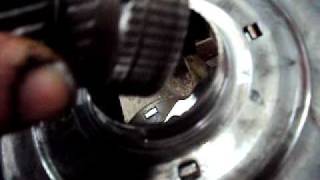
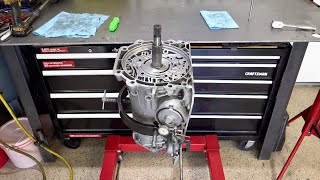
- Loss of reverse gear (can be related to a broken drive shell, a known 4L60E issue). 🎬 See what a stripped reaction sun shell looks like inside.
- Reduced fuel economy.
- Replacing the input or output speed sensors. While these sensors provide the data, they are rarely the cause of the problem themselves. The issue is usually the mechanical or hydraulic slip that they are correctly detecting.
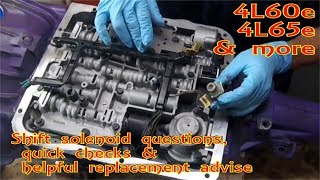
- Assuming any shift problem requires a full transmission rebuild. Sometimes, the issue is an inexpensive and accessible part like a shift solenoid, which can be replaced by simply dropping the pan. 🎬 Watch: Step-by-step guide to replacing all shift and TCC solenoids.
Most Likely Causes
- Low or Contaminated Transmission Fluid 🔴 High Probability Leaks from the pan gasket, cooler lines, or seals are common. Extended service intervals lead to fluid breakdown, reducing its hydraulic properties and causing slippage.
How to confirm: Check the transmission fluid dipstick for level and condition. The fluid should be bright red and not smell burnt. Dark, brown, or metallic fluid indicates a serious internal problem requiring more than just a fluid change.
Typical fix: Top off the fluid or perform a complete fluid and filter change. If the fluid is heavily contaminated, this is often a symptom of a larger mechanical failure.
Est. part cost: $50-$150 - Faulty Shift Solenoid 🟡 Medium Probability The 1-2 (Solenoid A) and 2-3 (Solenoid B) shift solenoids in the 4L60E are a common failure point. They can get stuck or fail electronically, preventing proper hydraulic pressure for the gear change.
How to confirm: A professional scan tool can command the solenoids on and off to test their function. They can also be tested with a multimeter for correct resistance after dropping the transmission pan. The expected resistance for these solenoids is typically between 20 and 30 ohms. A reading outside this range indicates a faulty solenoid.
Typical fix: Replace the faulty shift solenoid(s). It is best practice to replace both the 1-2 and 2-3 solenoids at the same time as they are the same part and subject to similar wear.
Est. part cost: $40-$100 per solenoid - Internal Mechanical Failure (Sun Shell, 2-4 Band) 🟡 Medium Probability The 4L60E is notorious for two specific failures causing this code. First, the factory reaction sun shell can fracture at the splines, leading to a loss of 2nd, 4th, and Reverse. Second, the 2-4 band, which must apply for 2nd gear to engage, can become worn out or break.
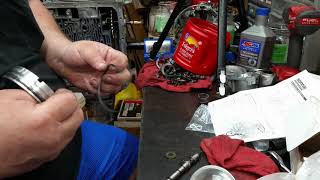
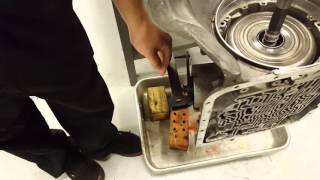
How to confirm: A broken sun shell is confirmed by the simultaneous loss of 2nd, 4th, and Reverse gears. A worn 2-4 band is confirmed by finding band material (a gritty, dark substance) in the transmission pan. A transmission pressure test or checking the 2-4 servo travel (spec is .075" to .125") can also diagnose a worn band. 🎬 Watch: How to measure servo travel and check band clearance.
Typical fix: This requires a transmission rebuild to replace the broken sun shell and/or the worn 2-4 band. Upgraded, hardened sun shells (often called 'The Beast') are available and highly recommended.
Est. part cost: $500-$2000+ - Valve Body Issues ⚪ Low Probability The valve body contains a maze of channels and valves that direct fluid. The TCC regulator valve bore is a known weak spot that wears over time, allowing pressure to exhaust. This leak reduces overall line pressure, which can cause clutch and band slippage, leading to codes like P0732 and P1870.
How to confirm: This is difficult to confirm without specialized tools. A primary symptom is the presence of code P1870 alongside P0732. Inspection of the valve body may reveal scoring in the TCC regulator valve bore.
Typical fix: The valve body bore must be reamed and an oversized valve kit installed. Sonnax kit 77754-03K is a common aftermarket solution for this specific problem.
Est. part cost: $300-$700
Rare But Worth Checking
- Faulty Transmission Control Module (TCM): While rare, a software glitch or hardware failure in the TCM can cause it to misinterpret sensor data and set a false P0732 code.
- Damaged Wiring Harness: The wiring harness leading to the transmission can become damaged from heat, debris, or corrosion, causing intermittent signals from sensors or to solenoids, particularly at the main case connector.
Diagnosis Steps
- Check the transmission fluid level and condition. If it's low, top it off and check for leaks. If it's dark or smells burnt, a fluid and filter change is a good first step, but be prepared for more significant issues.
- Use an OBD-II scanner to check for any other pending or active trouble codes. Note any codes related to solenoids (P0751, P0756) or slipping (P1870).
- With an advanced scan tool, monitor the live data for the input and output speed sensors to confirm they are reading correctly. Observe the slip RPM when the transmission attempts to shift into 2nd gear.
- Inspect the transmission wiring harness and the main round connector for any visible damage, corrosion, or loose connections.
- Drop the transmission oil pan and inspect for metal shavings or clutch material. A small amount of fine metallic dust is normal, but larger pieces or a thick layer of dark, gritty material (from the 2-4 band) indicate serious internal wear.
- While the pan is off, inspect and test the 1-2 and 2-3 shift solenoids for proper resistance with a multimeter. The reading should be between 20-30 ohms.
- If solenoids test good and no major debris is found, the next step is to inspect the valve body for wear or perform a transmission pressure test to check for internal hydraulic leaks. This is best performed by a professional.
Parts You'll Likely Need
- Transmission Filter and Gasket Kit
(OEM #24208576 (ACDelco TF351))— Required for any service that involves dropping the transmission pan, such as a fluid change or solenoid replacement. A clean filter is critical for proper hydraulic function.
Trusted brands: ACDelco, ATP, Raybestos
OEM price range: $30-$50
Aftermarket price range: $20-$40 - 1-2 Shift Solenoid (Solenoid A)
(OEM #24230298)— This solenoid is critical for the 1-2 shift. It's a very common failure point inside the 4L60E transmission that directly causes P0732.
Trusted brands: ACDelco, Bosch
OEM price range: $35-$60
Aftermarket price range: $20-$40 - 2-3 Shift Solenoid (Solenoid B)
(OEM #24230298)— This solenoid works in conjunction with the 1-2 solenoid. It's common practice to replace both at the same time since they are the same part and subject to similar wear.
Trusted brands: ACDelco, Bosch
OEM price range: $35-$60
Aftermarket price range: $20-$40
Related Codes That Often Appear With This One
- P0731 — Incorrect Ratio in 1st Gear. Often appears with P0732 when there is a widespread hydraulic or solenoid issue affecting multiple gears.
- P0751 — Shift Solenoid 'A' Performance/Stuck Off. This directly points to a problem with the 1-2 shift solenoid, a primary cause of the P0732 code.
- P0756 — Shift Solenoid 'B' Performance/Stuck Off. This points to an issue with the 2-3 shift solenoid, which can also affect the transmission's ability to hold second gear correctly.
- P1870 — Transmission Component Slipping. This is a GM-specific code that often indicates slipping caused by a worn TCC regulator valve in the valve body, a known issue on the 4L60E that leads to system-wide pressure loss.
Technical Service Bulletins (TSBs) & Recalls
- A general diagnostic TSB for various transmission issues including no engagement, delayed shifts, and multiple DTCs including P0732. It advises technicians to follow standard service information for diagnosis, indicating a wide range of potential causes rather than a single specific fix.
Platform-Specific Known Issues
- Reaction Sun Shell Failure: A very common failure on the 4L60E in these trucks is the factory reaction sun shell stripping or breaking at the splines. This typically results in a loss of 2nd gear, 4th gear, and Reverse. Owners will experience the engine revving freely when shifting into reverse, and the transmission will shift from 1st directly to 3rd. The fix requires transmission removal and disassembly to install a new, often upgraded, sun shell.
- Worn 2-4 Band: The 2-4 band is a friction component that must apply to engage 2nd gear. Over time, this band can wear out, losing its friction material, or even break. The primary symptom is slipping in 2nd gear or a complete failure to engage the gear. A large amount of black, gritty material in the transmission pan is a strong indicator of a worn band. This also requires a transmission rebuild to replace.
Mechanic-Grade Diagnostic Values
- 2-4 Servo Pin End Play/Travel — expected: 0.075 to 0.125 inches (1/16" to 1/8"). Failure: Travel greater than 3/16 inch indicates a likely worn or broken 2-4 band, requiring major repair.
Scan Tool Commands That Help
- Tech2 / GDS2 or equivalent professional scanner: Transmission Re-learn / Reset Adaptive Values — This procedure should be performed after a transmission is rebuilt, replaced, or has major components like the valve body or clutch packs serviced. Failing to reset the adaptive memory can cause the TCM to use old parameters that don't match the new components, leading to incorrect shift pressures and codes like P0732.
Wiring & Ground Locations
- G110 — On the left front body mount.. A poor ground at this location can cause erratic behavior from the Powertrain Control Module (PCM) and other electronics, potentially leading to false transmission codes.
- Powertrain Control Module (PCM) — Located in the left front of the engine compartment.. This is the brain of the operation. All sensor data is processed here, and all commands to the transmission solenoids originate from here. The main harness connector at the PCM is a critical point of inspection.
- Battery to Frame Ground — A 10-gauge wire running from the battery area down to the frame, often near the B-pillar body mount.. This is a primary ground for the entire vehicle's electrical system. Corrosion here can cause widespread, intermittent electrical issues that are difficult to diagnose, including faulty sensor readings that could trigger a P0732.
- Transmission Case Connector — The main round electrical connector on the passenger side of the transmission case.. This is the single point of connection for all internal electronics (solenoids, sensors). Damage or corrosion on its pins can directly cause solenoid or sensor circuit faults.
Real Owner Repair Stories
- SilveradoSS.com forum user (2003 GMC Sierra (or similar 4L60E-equipped vehicle)) — Preparing for a shift kit installation, but the principle applies to fixing hydraulic leaks causing slipping.
✅ What actually fixed it To prevent future issues like slipping and burned clutches, the user replaced the stock plastic forward accumulator pistons with aftermarket pinless accumulator pistons. The original plastic pistons are known to crack or wear at the pin bore, creating a hydraulic leak that can cause engagement delays and clutch/band failure. The pinless design eliminates this common failure point. - LS1Tech.com forum user (Vehicle with 4L60E transmission) — Loss of 2nd and 4th gears, with fluid and filter being clean. Solenoids tested good.
❌ Tried (didn't work) Fluid and filter change, Solenoid testing
✅ What actually fixed it The problem was diagnosed as a worn 2-4 band. As a temporary, low-cost fix, the user considered welding a small 'blob' of material onto the end of the servo pin to extend its length by about 1/8 inch. This would take up the extra clearance from the worn band, allowing the servo to apply the band again. While a proper rebuild is the correct long-term fix, this mechanic's trick can restore function for a period of time.
OEM Part Supersession History
Pre-2007 4L60E Pump Assembly→Post-2007 4L60E Pump Assembly (with Input Speed Sensor provision)— An Input Speed Sensor (ISS) was added to the transmission design.
Heads up: A critical incompatibility exists between the newer pump (designed for the ISS) and the older input shaft. The newer pump has a much larger opening in the stator support sleeve. If an older input shaft is used with this newer pump, the front Teflon seal on the shaft will pass over this large opening and be cut or damaged. This will cause a massive hydraulic leak, typically resulting in a no-reverse and/or no-3rd/4th gear condition immediately after a rebuild.
Model Year Variations Within This Range
- 2001-2005: The 4L65E was introduced in 2001, primarily for higher-torque applications like the 6.0L V8. It can be identified by its 5-pinion front and rear planetary carriers, compared to the 4-pinion carriers in the 4L60E. This makes the 4L65E stronger but internal parts like planetary gear sets are not directly interchangeable with the 4L60E.
- 2003-2005: Starting in 2003, the connector for the electronic pressure control (EPC) solenoid changed from a two-prong style to a more modern, integrated connector. While the function is the same, the wiring harness and solenoid are specific to the year range.
Helpful Videos

We Have This Part in Stock


The information in this article is provided for general reference and educational purposes only. Vehicle specifications, procedures, and part compatibility can vary by production date, trim level, and region. Always consult your vehicle's factory service manual and verify part numbers before purchasing or performing repairs. Safety-critical components such as airbags, seat belts, and braking systems should be installed by a qualified professional.
- Gmc SIERRA:
- 🎬 Helpful Videos
- 🛍️ Shop This Part
- What's Unique About the 2001-2005 Gmc SIERRA
- Diagnostic Flowchart
- Symptoms You May Notice
- Most Likely Causes
- Rare But Worth Checking
- Diagnosis Steps
- Parts You'll Likely Need
- Related Codes That Often Appear With This One
- Technical Service Bulletins (TSBs) & Recalls
- Platform-Specific Known Issues
- Mechanic-Grade Diagnostic Values
- Scan Tool Commands That Help
- Wiring & Ground Locations
- Real Owner Repair Stories
- OEM Part Supersession History
- Model Year Variations Within This Range
- 🎟️ Get 5% Off