

P0732 on 2009-2010 Chevrolet Silverado 2500: Gear 2 Incorrect Ratio Causes and Fixes
P0732 on a 2009-2010 Silverado 2500 means the transmission is slipping in 2nd gear. This is often caused by low or dirty transmission fluid, but on the 6L90 transmission used in these trucks, it can also point to internal issues like a failing torque converter or worn clutch packs, which can be a costly repair. For diesel models with the Allison 1000, this code can point to C2 clutch failure, especially under heavy use.
- P0732 means your transmission is slipping in 2nd gear and should be diagnosed immediately to prevent catastrophic damage.
- Always start by checking the transmission fluid level and condition; this is the simplest and most common potential fix.
- On the 6L90 transmission in your Silverado 2500, this code can point to serious internal mechanical failures like worn clutches or a cracked clutch housing, not just a simple sensor or solenoid.
- Due to the complexity and high cost of a potential rebuild, professional diagnosis is strongly recommended before replacing any parts.
What's Unique About the 2009-2010 Chevrolet SILVERADO 2500
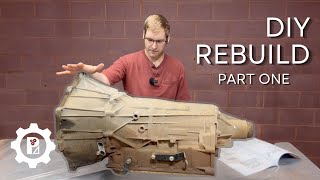
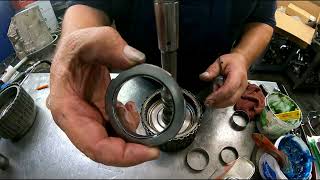
The 2009-2010 Silverado 2500 HD models typically use the heavy-duty 6-speed 6L90 automatic transmission for gasoline engines or the Allison 1000 for diesel engines. While P0732 is a generic code, on the 6L90, it can be a symptom of known, severe failure points like a cracked 1-2-3-4 clutch apply piston or a cracked clutch drum housing, 🎬 Watch: See a full 6L90E teardown to identify internal damage. which cause hydraulic pressure loss. Torque converter failure, where the lock-up clutch disintegrates and sends metal debris through the system, is another common cause of this code on the 6L90. The provided TSB PIP4379N confirms a pattern of engagement and shifting issues across this transmission family, often stemming from low fluid levels. For the Allison transmission, this code can also point toward internal C2 clutch failure, especially on trucks that are tuned or used for heavy towing. For Duramax models, the Allison TCM is located externally on the driver's side fan shroud, making it easier to access than the 6L90's internal TEHCM.
Diagnostic Flowchart
Tap your situation to follow the diagnostic path that matches what you're seeing on this vehicle.
Symptoms You May Notice
- Check Engine Light is on
- Transmission slipping or engine RPMs flaring up during the 1-2 shift
- Harsh, delayed, or failed shifts into 2nd gear
- Vehicle feels like it's starting in 3rd gear (limp mode)
- "Shift Range Inhibited" message on the driver information center (DIC)
- Shuddering or jerking during shifts, sometimes described as feeling like running over rumble strips
- Increased fuel consumption
- Burning smell from the transmission fluid
- Replacing only the speed sensors when the code is caused by a mechanical slip. The sensors are correctly reporting the slip, they are not the cause of it.
- Replacing shift solenoids when the root cause is a major hydraulic leak from a cracked clutch housing or a completely worn-out clutch pack.
- Replacing only the torque converter without cleaning or rebuilding the rest of the transmission. Debris from the original converter will remain and destroy the new converter and other components.
Most Likely Causes
- Low or Dirty Transmission Fluid 🔴 High Probability Leaks from transmission cooler lines, pan gaskets, or seals are common on work trucks. Fluid level is critical for hydraulic pressure. TSB PIP4379N specifically calls out checking the fluid level first for this type of complaint.
How to confirm: Check the transmission fluid level and condition using the dipstick when the transmission is warm. The fluid should be at the correct level, red in color (DEXRON-VI), and not smell burnt. Dark, burnt-smelling fluid or fluid with visible metal particles indicates a serious internal problem.
Typical fix: If the fluid is low, top it off and check for leaks. If it's dirty or old, perform a transmission fluid and filter change. This is the first and most crucial diagnostic step.
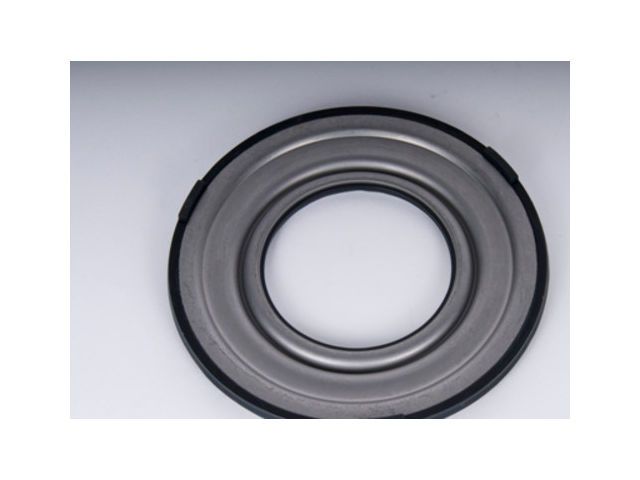
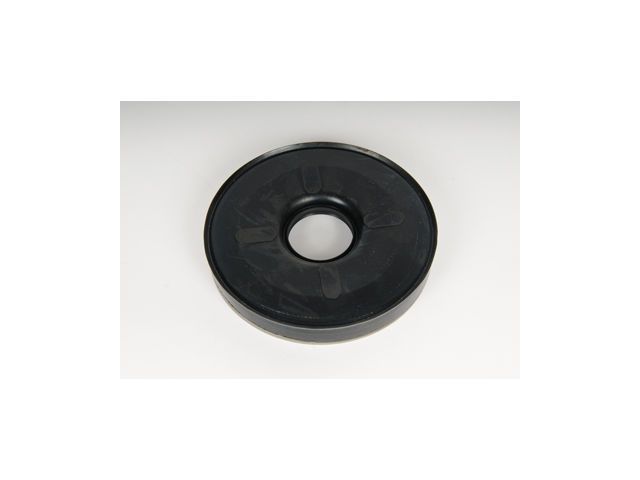
Est. part cost: $50-$150 - Internal Mechanical Failure (Worn Clutches, Cracked Housing/Piston) 🟡 Medium Probability The 6L80/6L90 transmissions are known for issues with the 1-2-3-4 clutch apply piston cracking due to casting flaws. The drum that houses these clutches can also crack at the weld. These failures cause a major hydraulic pressure leak, leading to slipping. The 2-6 clutch pack, which is applied for 2nd gear, can also wear out from heat and use.
How to confirm: This requires professional diagnosis. A mechanic will perform line pressure tests and drop the transmission pan. A large amount of metallic or clutch material debris in the pan is a strong indicator of internal failure. Billet aftermarket pistons are a common upgrade during rebuilds to prevent repeat failure.
Typical fix: This is a major repair requiring a complete transmission rebuild to replace the damaged clutch packs, steels, seals, and the cracked piston or drum.
Est. part cost: $500-$2500+ - Failed Shift Solenoid or TEHCM 🟡 Medium Probability The Transmission Electro-Hydraulic Control Module (TEHCM), which contains the solenoids and the TCM, is located inside the transmission pan. It is subjected to heat and any contaminated fluid, which can lead to electrical failure of the solenoids or the module itself. Multiple solenoid or pressure switch codes appearing at once is a classic sign of TEHCM failure.
How to confirm: A professional scan tool can command the solenoids on and off to test their function and monitor for electrical faults. Resistance checks can also be performed on the solenoid circuits. For an on/off shift solenoid, the resistance should be 20-40 Ohms.
Typical fix: Drop the transmission pan to access and replace the faulty shift solenoid or the entire TEHCM assembly. The new module must be programmed to the vehicle's VIN using specialized software.
Est. part cost: $200-$600 - Failing Torque Converter ⚪ Low Probability The stock torque converter clutch in the 6L90 is a known weak point. It can fail, causing a shudder and shedding metallic debris that contaminates the entire transmission. This debris clogs the valve body, filter, and solenoids, leading to pressure loss and shifting issues like P0732.
How to confirm: A mechanic can perform a torque converter stall test or use a scan tool to monitor torque converter clutch (TCC) slip speed. A tell-tale sign is a shudder at highway speeds. Finding significant metallic debris in the pan points to converter failure.
Typical fix: Replacement of the torque converter, which requires removing the transmission. If the converter has failed, a full transmission flush or rebuild is mandatory to remove debris and prevent immediate failure of the new parts. Many owners opt for a more robust aftermarket billet converter.
Est. part cost: $300-$800
Rare But Worth Checking
- Corroded or Broken Ground Wire: A bad engine-to-chassis ground can cause erratic electrical signals to the TCM and solenoids, mimicking internal transmission faults. It's a simple and cheap check to perform before authorizing expensive transmission work. On GMT900 trucks, ground G103 (on the front of the right cylinder head) and G107 (on the transmission bellhousing) are critical for the powertrain.
- Clogged Valve Body Passages: Debris from a failing torque converter or normal wear can clog the small passages in the valve body, preventing correct hydraulic pressure from reaching the 2nd gear clutch pack.
- Incorrect Tire Size Programming: On tuned trucks or after changing tire sizes significantly (e.g., from 35" to 37"), if the TCM is not recalibrated for the new tire diameter, it can miscalculate the output shaft speed and incorrectly set a gear ratio code, especially under hard acceleration.
Diagnosis Steps
- Check and verify the transmission fluid level and condition. Note any burnt smell or discoloration. This is the first and most important step.
- Use a professional OBD-II scanner to check for any other transmission-related codes and to view live data, such as input speed, output speed, commanded gear, and TCC slip.
- Inspect all transmission-related wiring and connectors for damage, corrosion, or looseness, paying special attention to the main harness connector and ground straps.
- If fluid and wiring are good, perform a transmission line pressure test to check for adequate hydraulic pressure from the pump. Low pressure points to internal leaks or a failing pump.
- With a bi-directional scan tool, command the shift solenoids on and off to test their electrical function.
- Drop the transmission oil pan to inspect for metal debris. A large amount of debris confirms a significant internal mechanical failure (torque converter, clutches, etc.).
- If debris is present, the transmission must be removed for overhaul/rebuild. If the pan is clean, the issue is more likely isolated to the valve body or TEHCM, which can be accessed for further testing or replacement.
- If replacing the TEHCM, ensure the new unit is programmed to the vehicle's VIN.
Parts You'll Likely Need
- Automatic Transmission Fluid and Filter Kit (6L90)
(OEM #24248573 (ACDelco Kit), 10-9395 (ACDelco DEXRON-VI Fluid))
Related Codes That Often Appear With This One
- P0700 — This is a generic code indicating that the Transmission Control Module (TCM) has stored a fault. It acts as a 'check engine light' for the transmission and will almost always appear with P0732.
- P0731 — This code indicates 'Gear 1 Incorrect Ratio.' Seeing it with P0732 suggests a more widespread problem affecting multiple gear circuits, possibly related to the 1-2-3-4 clutch pack, valve body, or low fluid pressure.
- P0751 — This code points to a performance issue with 'Shift Solenoid A' (the 1-2 shift solenoid). It strongly suggests the cause of the P0732 slip is electrical or hydraulic related to that specific solenoid circuit.
- P0894 — This is a general code for 'Transmission Component Slipping'. It confirms the TCM is detecting a slip but is less specific than P0732. It often appears alongside specific gear ratio codes.
Technical Service Bulletins (TSBs) & Recalls
- PIP4379N: Addresses delayed or no engagement and various shift codes, including P0732. It emphasizes that the primary diagnostic step should be a meticulous check of the transmission fluid level and condition, as low fluid or a loss of pump prime is a common cause.
- PIP5882: While not directly for P0732, it discusses overheating in 6L80/6L90 transmissions and the function of the thermal bypass valve (TBV), which can contribute to fluid breakdown and subsequent component failure.
Platform-Specific Known Issues
- TSB #PIP4379N: This bulletin acknowledges a wide range of transmission codes, including P0732, related to issues like delayed engagement or no engagement into drive/reverse. It advises technicians to follow standard service information but highlights a pattern of shifting complaints for this family of transmissions.
Mechanic-Grade Diagnostic Values
- 6L80/6L90 On/Off Shift Solenoid Resistance — expected: 20-40 Ohms. Failure: A reading outside this range indicates a failed solenoid coil within the TEHCM.
- 6L80/6L90 PWM Pressure Control Solenoid Resistance — expected: 3-8 Ohms. Failure: A reading outside this range indicates a failed solenoid coil, requiring TEHCM replacement.
- 6L80/6L90 Line Pressure at Idle — expected: 45-80 PSI. Failure: Significantly lower pressure suggests a failing pump, clogged filter, or major internal hydraulic leaks.
- 6L80/6L90 Line Pressure at Stall Speed (in Drive) — expected: 150-180 PSI. Failure: Low pressure during a stall test points to a weak pump or significant internal leaks preventing proper clutch application.
- 6L80/6L90 On/Off Shift Solenoid Amperage Draw — expected: 0.3-0.7 Amps at 12V. Failure: Incorrect amperage draw confirms a failed solenoid within the TEHCM.
Scan Tool Commands That Help
- GDS2 / Tech2: Solenoid Valve State / Output Controls — To manually command the 1-2 shift solenoid on and off to see if it responds mechanically and electrically. This helps isolate a faulty solenoid from a hydraulic or mechanical clutch issue.
- GDS2 / Tech2: Solenoid Cleaning Process — For 6L80/6L90 transmissions, this automated function cycles all solenoids to try and dislodge small amounts of debris that may be causing a solenoid to stick. It's a useful step to try before committing to TEHCM replacement.
- GDS2 / Tech2: Transmission Slip Speed (Live Data) — To monitor the real-time slip RPM of the 2nd gear clutch pack when it is commanded. High slip confirms the ratio error is due to a mechanical or hydraulic problem.
Wiring & Ground Locations
- X175 Connector — The main 16-pin vehicle harness connector on the passenger's side of the 6L90 transmission case.. This is the single point of failure for all communication and power between the truck and the internal TEHCM. Corrosion or damage here can cause P0732 and multiple other transmission codes.
- G103 — On the front of the right-side cylinder head.. This is a primary engine and powertrain ground. A poor connection here can cause erratic signals and behavior from the TCM/TEHCM, mimicking internal faults.
- G107 — A ground stud on the transmission bellhousing, just down and to the right of the oil filter housing.. This is a critical ground path for the transmission itself. Corrosion or looseness can lead to shifting problems and fault codes.
- TCM (Allison) — For Duramax diesel models with the Allison transmission, the TCM is not inside the pan. It is mounted externally on the driver's side of the radiator fan shroud.. This makes it much easier to inspect the module and its connectors for damage or corrosion without dropping the transmission pan, unlike on the gas-engine 6L90.
OEM Part Supersession History
24252363, 25798353, 24256670→24256861— Hardware and software revisions to improve solenoid performance and pressure switch durability.
Heads up: TEHCMs are not interchangeable between model years. Installing the wrong year or part number TEHCM can result in a no-start condition or immediate limp mode. The new module must be programmed with the vehicle's VIN.
Model Year Variations Within This Range
- 2009-2010: The TEHCM (part #24256861) used in these years is known as a 'Gen 1' module and is noted for having more frequent pressure switch and solenoid failures compared to later revisions.
Helpful Videos
We Have This Part in Stock


The information in this article is provided for general reference and educational purposes only. Vehicle specifications, procedures, and part compatibility can vary by production date, trim level, and region. Always consult your vehicle's factory service manual and verify part numbers before purchasing or performing repairs. Safety-critical components such as airbags, seat belts, and braking systems should be installed by a qualified professional.
- Chevrolet SILVERADO 2500:
- 🎬 Helpful Videos
- 🛍️ Shop This Part
- What's Unique About the 2009-2010 Chevrolet SILVERADO 2500
- Diagnostic Flowchart
- Symptoms You May Notice
- Most Likely Causes
- Rare But Worth Checking
- Diagnosis Steps
- Parts You'll Likely Need
- Related Codes That Often Appear With This One
- Technical Service Bulletins (TSBs) & Recalls
- Platform-Specific Known Issues
- Mechanic-Grade Diagnostic Values
- Scan Tool Commands That Help
- Wiring & Ground Locations
- OEM Part Supersession History
- Model Year Variations Within This Range
- 🎟️ Get 5% Off