

P0732 on 2002-2003 Chevrolet Silverado 1500 HD: Gear 2 Ratio Error Causes & Fixes
On a 2002-2003 Silverado 1500 HD with a P0732 code, the most likely causes are low/dirty transmission fluid or a failed shift solenoid inside the transmission pan. A fluid check using DEXRON-VI fluid is the first step, while replacing the solenoids is a common, relatively inexpensive repair for around $50-$100 in parts.
- P0732 means your truck's transmission is slipping in 2nd gear.
- The first and most important diagnostic step is to check the transmission fluid level and condition.
- For the 4L80-E transmission in your Silverado HD, a faulty shift solenoid is a very common and relatively inexpensive cause.
- Do not continue to drive with this code, as it can turn a minor solenoid or fluid issue into a catastrophic transmission failure requiring a full rebuild.
- If you are not comfortable dropping the transmission pan, professional service is highly recommended to avoid costly misdiagnosis.
What's Unique About the 2002-2003 Chevrolet SILVERADO 1500 HD
The 2002-2003 Silverado 1500 HD typically uses the robust 4L80-E automatic transmission, especially with the 6.0L V8 engine. While very durable, a common failure point leading to P0732 is the shift solenoids. Unlike some other transmissions where this code might immediately suggest major internal failure, on the 4L80-E, it's frequently a more accessible and affordable solenoid issue that can be fixed by dropping the transmission pan.
Diagnostic Flowchart
Tap your situation to follow the diagnostic path that matches what you're seeing on this vehicle.
Symptoms You May Notice
- Check Engine Light is on
- Delayed or harsh shifting into 2nd gear
- Transmission slipping (engine RPMs flare up without an increase in speed)
- Vehicle enters "limp mode" (may be stuck in 1st or 3rd gear)
- Failure to engage drive or reverse, as noted in TSB PIP4379M
- Poor acceleration from a stop
- Vehicle feels like it skips 2nd gear, shifting from 1st directly to 3rd
- Replacing the entire transmission when only a fluid change or a new shift solenoid was needed.
- Replacing input/output speed sensors when they are not the cause. A failing speed sensor will typically set its own specific trouble code (e.g., P0722).
- Condemning the transmission for internal failure before checking for simple electrical issues like a bad ground strap, which can cause identical symptoms.
Most Likely Causes
- Low or Contaminated Transmission Fluid 🔴 High Probability These are work trucks often subjected to heavy use, which can accelerate fluid breakdown or expose slow leaks that go unnoticed. Old fluid loses its hydraulic properties and can cause slipping.
How to confirm: Check the transmission fluid dipstick with the engine running and warm. The fluid should be at the correct level, bright red, and not smell burnt. Dark, brown, or metallic-flecked fluid indicates a problem.
Typical fix: If low, top off the fluid. If dirty or burnt, perform a complete transmission fluid and filter change using DEXRON-VI fluid. Note that burnt fluid is often a symptom of a larger internal problem.
Est. part cost: $50-$150 - Failed Shift Solenoid ('A' or 'B') 🔴 High Probability This is a very common electronic failure point on the 4L80-E transmission. The solenoids control the flow of fluid to engage gears and can fail electrically or mechanically over time, leading to a slip.
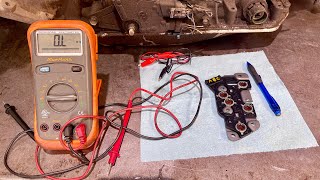
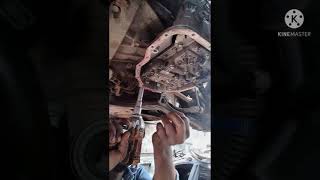
How to confirm: A professional scan tool can command the solenoids on and off to test their function. They can also be tested for resistance with a multimeter (typically 20-30 ohms) after removing the transmission pan. 🎬 See how to test solenoids and sensors with a multimeter.
Typical fix: Replace the faulty shift solenoid(s). It is highly recommended to replace both the 'A' (1-2) and 'B' (2-3) solenoids at the same time as they are located together and subject to the same wear. A documented owner repair confirmed this fixed the issue when a fluid change did not.
Est. part cost: $40-$100 - Internal Transmission Wiring Harness Failure 🟡 Medium Probability The internal harness connector seal can degrade over time, allowing transmission fluid to leak into the main 🎬 Watch: How to fix a leaking internal wiring harness connector. electrical connector, causing shorts and erratic signals.
How to confirm: Unplug the main round electrical connector on the driver's side of the transmission. If transmission fluid is present inside the connector pins, the internal harness has failed.
Typical fix: Replace the internal transmission wiring harness, which requires dropping the pan and valve body. The OEM part number for the 1991-2003 4L80-E harness is 24222798 or an equivalent replacement like AC-Delco 24230344.
Est. part cost: $50-$120 - Internal Mechanical Failure (Worn Clutches/Bands) ⚪ Low Probability While the 4L80-E is strong, very high mileage or extreme heavy-duty use can eventually wear out the friction materials (clutches and bands) responsible for holding 2nd gear.
How to confirm: This is diagnosed after all other possibilities (fluid, solenoids, wiring) have been ruled out. A transmission pressure test can help confirm, but finding significant metal debris or black friction material in the pan is a definitive sign.
Typical fix: This requires a complete transmission rebuild or replacement.
Est. part cost: $1800-$4000
Rare But Worth Checking
- Faulty Valve Body: Debris from old fluid can cause valves to stick or bores to wear out, preventing correct hydraulic pressure. This is usually diagnosed by a transmission specialist during inspection.
- Failing Transmission Control Module (TCM): This is very rare. The TCM is the computer that controls the transmission. It should only be considered after all other mechanical and electrical possibilities have been exhaustively checked.
- Corroded or Missing Ground Straps: A missing or corroded engine-to-chassis or engine-to-firewall ground strap can cause electrical noise and voltage spikes, leading the TCM to set false codes. This can mimic internal transmission failure and should be inspected before condemning expensive components.
Diagnosis Steps
- Check the transmission fluid level and condition. Ensure it is full, red, and free of debris or a burnt smell. Use DEXRON-VI fluid for top-off or replacement.
- Scan the TCM for any other stored codes. Codes like P0751 can pinpoint the faulty component.
- Inspect all engine and chassis ground straps for corrosion or damage. Ensure there is a clean, tight connection, especially from the engine to the firewall.
- Using a capable scan tool, monitor real-time data for input and output speed sensors to ensure they are reading correctly and rationally.
- Inspect the main transmission electrical connector for fluid intrusion, corrosion, or damaged pins.
- If fluid and external wiring are good, drop the transmission pan and inspect for excessive metal debris. A small amount of fine grey material is normal, but large flakes or chunks indicate severe internal damage.
- While the pan is off, test the resistance of the 1-2 ('A') and 2-3 ('B') shift solenoids with a multimeter. The reading should be between 20-30 ohms.
- If solenoids test good, inspect the internal wiring harness for brittle wires or damage.
- If all of the above check out, the issue is likely a more complex internal problem (valve body, clutches) requiring professional diagnosis, possibly including a line pressure test.
Parts You'll Likely Need
- Shift Solenoid Kit (A & B)
(OEM #24230288)— This is the most common fix for P0732 on the 4L80-E transmission. The kit replaces both the 1-2 and 2-3 shift solenoids, which are known failure points.
Trusted brands: ACDelco, Bosch
OEM price range: $60-$90
Aftermarket price range: $40-$70 - Transmission Filter and Gasket Kit — Required whenever the transmission pan is removed to service solenoids or change the fluid. A clogged filter can cause low pressure and trigger this code.
Trusted brands: ACDelco, Wix, ATP
OEM price range: $40-$60
Aftermarket price range: $20-$40 - Internal Transmission Wiring Harness
(OEM #24222798)— Replaced if the external connector is found to be contaminated with fluid, causing electrical faults. The original harness can become brittle with age.
Trusted brands: ACDelco (24230344), Dorman, Rostra
OEM price range: $80-$120
Aftermarket price range: $50-$80
Related Codes That Often Appear With This One
- P0700 — This is a generic code that simply means the Transmission Control Module (TCM) has stored a fault code. It will almost always appear with any specific transmission code like P0732.
- P0731 — This indicates an incorrect ratio in 1st gear. Seeing it with P0732 points towards a more widespread issue like low fluid pressure or a problem with a component shared between the gears.
- P0751 — This code points directly to a performance problem with the 1-2 Shift Solenoid ('A'), which is a primary cause of P0732.
- P0894 — This is a general code for 'Transmission Component Slipping' and often accompanies specific gear ratio codes like P0732 to indicate a slip has been detected.
Technical Service Bulletins (TSBs) & Recalls
- PIP4379M: Mentions a group of transmission codes including P0732 related to delayed or no gear engagement and advises technicians to follow standard service procedures.
Platform-Specific Known Issues
- The provided Technical Service Bulletin (TSB) #PIP4379M mentions that codes like P0732 can be related to delayed or no engagement into drive or reverse, and advises following published service information, indicating a wide variety of potential root causes rather than one single problem.
- A forum post about a 2002 Silverado 2500 with the 4L80-E transmission confirmed that replacing both shift solenoids (part #24230288) successfully fixed a P0732 code after a fluid change had no effect.
Mechanic-Grade Diagnostic Values
- Shift Solenoid 'A' (1-2) and 'B' (2-3) Resistance — expected: 20-22 ohms. Failure: A reading significantly outside this range indicates a failed solenoid.
- Electronic Pressure Control (EPC) Solenoid Resistance — expected: 3.5-8 ohms (depending on year/manufacturer). Failure: An open or shorted reading points to a faulty EPC solenoid.
- Line Pressure at Idle (in Drive) — expected: Approximately 55-65 PSI. Failure: Significantly lower pressure indicates a hydraulic leak, weak pump, or sticking pressure regulator valve.
- Line Pressure at Stall Speed — expected: Can exceed 200 PSI. Failure: Failure to build high pressure under load points to major internal leaks or a failing pump.
Scan Tool Commands That Help
- Tech2/GDS2 or equivalent professional scanner: Solenoid Activation Test — Used to command individual shift solenoids on and off with the key on and engine off. An audible click should be heard from the transmission pan. Lack of a click suggests a failed solenoid or wiring issue.
- Tech2/GDS2 or equivalent professional scanner: Line Pressure Command — Allows the technician to command specific line pressures while monitoring actual pressure with a mechanical gauge. This helps diagnose issues with the Pressure Control (PC) solenoid and pressure regulator valve. A discrepancy between commanded and actual pressure indicates a fault.
Wiring & Ground Locations
- G103 & G104 — G103 is on the right rear of the engine block; G104 is on the left rear of the engine block. These are primary engine-to-chassis grounds.. Poor connection at these main grounds can cause electrical noise and voltage discrepancies, leading the PCM/TCM to misinterpret sensor data and set false transmission codes.
- Main Transmission Connector — Large, round electrical connector on the driver's side of the 4L80-E transmission case.. This is the single point of connection for all internal electronics. Fluid intrusion from a failed internal harness seal, or pushed-out/corroded pins here, will directly interrupt signals to the shift solenoids, causing this code.
- Firewall Ground Straps — Braided ground straps connecting the rear of the engine/cylinder heads to the vehicle's firewall.. These straps ensure the engine and body have the same ground potential. A broken or corroded strap can cause the TCM, which is grounded to the body, to see incorrect signals from the transmission sensors, which are grounded to the engine block.
Real Owner Repair Stories
- PerformanceTrucks.net forum user (2002 Silverado 2500 with 6.0L V8 and 4L80-E) — P0732 code, harsh 1-2 shift, occasional slipping with high RPMs before engaging 2nd gear.
❌ Tried (didn't work) A complete transmission fluid and filter change.
✅ What actually fixed it The owner dropped the transmission pan and replaced both the 1-2 ('A') and 2-3 ('B') shift solenoids using ACDelco part number 24230288. This resolved the code and all shifting issues.
OEM Part Supersession History
10478140, 10478142, 10478147, 24238243→24230288— Part consolidation and design updates by GM.
Heads up: Part 24230288 is the correct service replacement for both 'A' and 'B' shift solenoids on 1991-2009 4L80-E transmissions.24222798→24230344— Updated design and materials for the internal transmission wiring harness.
Heads up: The harness 24230344 fits 1993-2003 models. Early 1991-1993 models require an updated external vehicle-side connector to use this harness.
Model Year Variations Within This Range
- 1991-1993 vs 1994+: The 4L80-E transmission received an updated pressure control solenoid (from Bosch to Holley), new shift solenoids, and a new internal wiring harness and case connector starting in the 1994 model year. While the 2002-2003 models use the later design, this is critical information if sourcing parts from or swapping a transmission from an earlier truck.
Helpful Videos
We Have This Part in Stock



The information in this article is provided for general reference and educational purposes only. Vehicle specifications, procedures, and part compatibility can vary by production date, trim level, and region. Always consult your vehicle's factory service manual and verify part numbers before purchasing or performing repairs. Safety-critical components such as airbags, seat belts, and braking systems should be installed by a qualified professional.
- Chevrolet SILVERADO 1500 HD:
- 🎬 Helpful Videos
- 🛍️ Shop This Part
- What's Unique About the 2002-2003 Chevrolet SILVERADO 1500 HD
- Diagnostic Flowchart
- Symptoms You May Notice
- Most Likely Causes
- Rare But Worth Checking
- Diagnosis Steps
- Parts You'll Likely Need
- Related Codes That Often Appear With This One
- Technical Service Bulletins (TSBs) & Recalls
- Platform-Specific Known Issues
- Mechanic-Grade Diagnostic Values
- Scan Tool Commands That Help
- Wiring & Ground Locations
- Real Owner Repair Stories
- OEM Part Supersession History
- Model Year Variations Within This Range
- 🎟️ Get 5% Off