

P0731 on 2008-2012 GMC Sierra Denali: Incorrect Gear 1 Ratio Causes and Fixes
P0731 on a 2008-2012 Sierra Denali means the transmission is slipping in first gear. The most common causes are low or dirty transmission fluid, or a blocked valve body separator plate, a known issue for this platform. Debris from a failing torque converter is a frequent cause of this blockage. A fluid and filter change may fix it, but inspecting the separator plate and torque converter is often necessary.
- P0731 indicates a serious transmission problem (first gear slipping) that should be addressed promptly to avoid further damage.
- Always start diagnosis by checking the transmission fluid level and condition; this is the simplest and a very common fix.
- For the 2008-2012 Sierra Denali, a blocked valve body separator plate is a highly likely cause, as documented in official GM service bulletins.
- Do not immediately assume a costly transmission rebuild is necessary. A thorough diagnosis of the fluid, filter, and valve body can often lead to a much more affordable repair.
What's Unique About the 2008-2012 Gmc SIERRA DENALI
The 2008-2012 GMC Sierra Denali uses the GM 6L80 or 6L90 automatic transmission. While the code itself is generic, this platform is specifically called out in GM Technical Service Bulletins (TSBs) for issues leading to this code. The TSBs point directly to problems within the valve body, such as blocked orifices in the separator plate, as a key issue to investigate. [PIP5100A] Furthermore, the 6L80 is known for other pattern failures that can cause or contribute to P0731, such as 🎬 Watch: A guide to diagnosing and fixing P0731 codes. a failing torque converter that sheds debris, or a blown gasket between the pump stator and pump body, which causes a critical loss of hydraulic pressure to the clutch packs. This makes it more than just a generic fluid or solenoid problem; it's a documented pattern failure for this specific transmission family.
Diagnostic Flowchart
Tap your situation to follow the diagnostic path that matches what you're seeing on this vehicle.
Symptoms You May Notice
- Delayed or no engagement into Drive or Reverse. [PIP4379M, PIP5100A]
- Harsh or abrupt shifting into first gear, sometimes with a clunk.
- Vehicle hesitates or has weak acceleration from a stop.
- Transmission slipping (engine RPMs rise without an increase in speed).
- Check Engine Light or Transmission Warning Light is on.
- Decreased fuel economy.
- Transmission gets stuck in a higher gear ('limp mode').
- Replacing speed sensors when the problem is actually low or dirty fluid.
- Assuming a complete transmission rebuild is needed before inspecting the valve body separator plate, which is a known issue and a much cheaper fix. [PIP5100A]
- Replacing the valve body or solenoids without addressing a failing torque converter, which is the source of the contamination. The problem will quickly return.
Most Likely Causes
- Low or Contaminated Transmission Fluid 🔴 High Probability Fluid is the lifeblood of the transmission; leaks or extended service intervals can lead to low levels or fluid breakdown. Contamination with metal shavings from a failing torque converter is a common source of debris that clogs passages.
How to confirm: Check the transmission fluid level and condition using the dipstick while the vehicle is warm and on a level surface. Fluid should be bright red and not smell burnt. Dark, glittery, or burnt-smelling fluid indicates a more serious internal problem.
Typical fix: Top off the fluid to the correct level or perform a transmission fluid and filter change. Use fluid that meets GM's DEXRON-VI specification. This is often a first step, but may not be a permanent fix if there is an underlying mechanical issue.
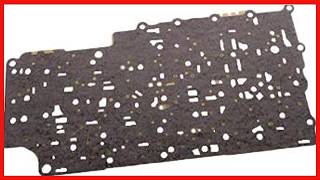
Est. part cost: $50-$150 - Blocked Valve Body Separator Plate Orifices 🔴 High Probability As documented in GM TSBs #PIP5100A and #PIP5100, debris (often from a failing torque converter) can block small orifices in the valve body separator plate, preventing correct hydraulic pressure for gear engagement. [PIP5100A] Aftermarket companies like Sonnax produce updated or more durable plates to address these weak points.
How to confirm: This requires removing the transmission oil pan and the valve body to visually inspect the separator plate for blockages or debris. The checkballs can also shrink and get lodged in the plate.
Typical fix: Clean or replace the valve body separator plate. The OEM part is GM #24245720 (updated 8-checkball design). It is critical to ensure the correct plate is used for the valve body type, as mismatches can cause no-move conditions. While the valve body is removed, it's common to inspect and clean the entire assembly.
Est. part cost: $30-$100 for a new plate - Failed Torque Converter 🟡 Medium Probability The lock-up clutch inside the torque converter on 6L80 transmissions is a known failure point. It can shudder, vibrate, and ultimately fail, sending metallic debris throughout the transmission. This debris is often what clogs the separator plate and solenoids, leading to codes like P0731.
How to confirm: Symptoms include a shudder or vibration at highway speeds (45-65 mph). A professional can use a scan tool to monitor torque converter clutch (TCC) slip RPM. Excessive metal debris in the transmission pan is a strong indicator.
Typical fix: Replace the torque converter. This is a major repair. If the converter has failed, a complete transmission flush is mandatory to remove debris from the cooler and lines. Many shops recommend a full rebuild at this point, as the debris can cause widespread damage.
Est. part cost: $300-$800 for the converter alone - Failed Shift Solenoid 🟡 Medium Probability Solenoids are electro-hydraulic valves that control fluid flow. They can fail electrically or become clogged with debris (often from the torque converter) and get stuck.
How to confirm: A professional scan tool can command the solenoid on and off to test its function. Resistance can also be checked with a multimeter. This requires dropping the transmission pan.
Typical fix: Replace the faulty shift solenoid. Solenoids are located on the valve body (part of the TEHCM).
Est. part cost: $40-$100 per solenoid - Internal Transmission Failure (Stator/Clutch) ⚪ Low Probability Besides the torque converter, the 6L80 can suffer from other internal failures. A common one is a blown gasket between the pump stator shaft and the pump body, causing a pressure leak that starves the clutches. Worn clutch packs for first gear can also cause slipping.
How to confirm: Confirmed by finding excessive clutch material in the transmission pan, performing hydraulic pressure tests, and eliminating all other possibilities. A stator gasket failure requires significant disassembly to find.
Typical fix: Requires a partial or complete transmission rebuild or replacement.
Est. part cost: $2000-$5000+
Rare But Worth Checking
- Faulty Transmission Control Module (TCM): The TCM (or TEHCM - Transmission Electro-Hydraulic Control Module in the 6L80) is located inside the transmission on the valve body. While a full failure is rare, the internal pressure switches are known to fail and can be rebuilt using kits from companies like Sonnax. A software glitch or internal failure can cause incorrect commands or misinterpretation of sensor data. This is usually diagnosed after all mechanical and hydraulic causes are ruled out.
- Faulty Input or Output Speed Sensor: If one of the speed sensors provides an erratic or incorrect signal, the TCM will calculate an incorrect gear ratio and set the code. This is less common than hydraulic or internal mechanical issues for this specific transmission.
Diagnosis Steps
- Check the transmission fluid level and condition. Ensure it is at the proper level and is clean, red, and free of burnt smells or metal particles ('glitter').
- Use an OBD-II scanner to check for any other transmission-related codes, especially P0700 and P0741, to help narrow the diagnosis.
- With a capable scan tool, monitor live data for the Input Speed Sensor (ISS) and Output Speed Sensor (OSS) to confirm they are reading correctly. Also, monitor TCC slip RPM.
- Inspect the transmission's external wiring harness and connectors for any damage, corrosion, or loose connections.
- Drop the transmission oil pan to inspect for excessive metal shavings or clutch material. A 'glitter bomb' in the pan points to torque converter or other major internal failure.
- With the pan off, inspect the transmission filter to see if it is clogged.
- Following GM TSBs #PIP5100A and #PIP5100, remove and inspect the valve body and its separator plate for blocked orifices, stuck checkballs, or debris.
- If the torque converter is suspected, a transmission shop can perform a stall test or use advanced diagnostics to confirm.
- If all other tests pass, the issue may be a more severe internal mechanical failure (stator seal, clutches) or a faulty TEHCM.
Parts You'll Likely Need
- Transmission Fluid and Filter Kit — This is the first and most fundamental step. Dirty fluid or a clogged filter is a very common cause of hydraulic pressure issues leading to P0731. Always use DEXRON-VI fluid.
Trusted brands: ACDelco
OEM price range: $80-$120
Aftermarket price range: $50-$90 - Automatic Transmission Valve Body Separator Plate
(OEM #24245720 (Updated 8-checkball design))— GM has specifically identified blockages in the separator plate as a cause for this code in TSBs PIP5100A and PIP5100. Replacing it is a targeted fix for this known issue. Aftermarket versions from Sonnax are also popular.
Trusted brands: ACDelco, Sonnax
OEM price range: $50-$100
Aftermarket price range: $30-$70 - Torque Converter — A failing torque converter is a very common root cause on the 6L80, shedding debris that clogs the valve body and causes P0731. If there is significant metal in the pan, the converter must be replaced to achieve a lasting repair.
Trusted brands: ACDelco, Hays, Luk
OEM price range: $400-$800
Aftermarket price range: $250-$500 - Transmission Shift Solenoid — A solenoid responsible for activating the first gear clutch pack may have failed electrically or be stuck with debris, preventing proper gear engagement. These are part of the TEHCM assembly.
Trusted brands: ACDelco, Bosch
OEM price range: $60-$100
Aftermarket price range: $40-$80
Related Codes That Often Appear With This One
- P0700 — P0700 is a general Transmission Control System Malfunction code. It simply indicates that the TCM has stored a fault code (like P0731) and has requested the main engine computer to turn on the Check Engine Light.
- P0732, P0733, P0734, etc. — These codes indicate incorrect gear ratios for 2nd, 3rd, 4th gear, etc. If they appear with P0731, it points to a more widespread problem like low fluid, a clogged filter, or a failing valve body affecting multiple gear circuits. [PIP4379M]
- P0741 — This code indicates 'Torque Converter Clutch Circuit Performance or Stuck Off'. It is very commonly seen with P0731 on 6L80 transmissions and strongly points to the torque converter being the root cause of the issue, shedding debris that then causes the gear ratio fault.
Technical Service Bulletins (TSBs) & Recalls
- PIP4379M: Addresses conditions of no or delayed engagement in drive/reverse, listing P0731 as a potential DTC.
- PIP5100A: Points technicians to inspect the valve body separator plate orifices for blockage when encountering no-move conditions and codes like P0731.
- PIP5100: An earlier version of PIP5100A, also pointing to the separator plate as a likely cause for no-move conditions and related DTCs.
Platform-Specific Known Issues
- Per TSB #PIP5100A, vehicles may not move in forward or reverse due to blocked orifices in the valve body separator plate, which can set code P0731.
- TSB #PIP4379M lists P0731 among codes related to delayed engagement, no engagement, or a range inhibit condition, pointing to a potential hydraulic control issue within the transmission.
- A common failure sequence is the torque converter failing, which sends debris into the fluid, clogging the orifices in the separator plate and causing the P0731 code. Simply cleaning the plate without addressing the failing converter will result in the problem returning.
Mechanic-Grade Diagnostic Values
- On/Off Shift Solenoid Resistance — expected: 20-40 Ohms. Failure: Readings outside this range indicate a failed solenoid coil, requiring TEHCM replacement.
- PWM (Variable Force) Solenoid Resistance — expected: 3-8 Ohms. Failure: Readings outside this range for any of the six pressure control solenoids (including TCC) indicate a failed coil, requiring TEHCM replacement.
- Speed Sensor Supply Voltage — expected: 8.3 - 9.3 Volts. Failure: Lack of correct voltage from the TCM to the speed sensors points to a fault within the TEHCM.
- Line Pressure at Idle (in Park/Neutral) — expected: 45-80 PSI (with warm fluid). Failure: Pressure below this range can indicate a weak pump, clogged filter, or major internal leak.
Scan Tool Commands That Help
- GM GDS2 / Tech2: Solenoid Cleaning Procedure — If a solenoid performance DTC is present or a solenoid fails a bench test, this automated function cycles all solenoids to flush out debris. It should be attempted before replacing the TEHCM.
- GM GDS2 / Tech2: Output Controls - Solenoid Test — Used with a special test plate (DT47825) and shop air, this allows a technician to command each solenoid on and off to check for mechanical sticking (stuck open or closed) while monitoring an air pressure gauge.
- GM GDS2 / Tech2: Transmission Service Fast Learn — This procedure is mandatory after replacing the TEHCM or performing major transmission repairs. It allows the TCM to quickly learn clutch fill volumes and adapt shift timing. Failure to perform this can result in harsh shifts or codes.
Wiring & Ground Locations
- G103 — On the front of the passenger side cylinder head.. This is a primary engine-to-chassis ground. Poor connection here can cause a host of electrical issues, including erratic sensor readings and improper module function that could indirectly lead to transmission codes.
- G102 — On the left-hand (driver's) side of the engine block.. Another critical engine ground point. Ensuring it is clean and tight is fundamental for stable voltage and sensor signals for all powertrain components, including communication with the TEHCM.
- TEHCM Main Connector (T43) — The external 16-pin connector on the passenger side of the transmission case.. This is the sole electrical link to the internal TEHCM. Technicians test for battery voltage, ground, and CAN bus communication at this connector's pins to rule out an external wiring issue before condemning the internal module. For example, a loss of ignition voltage on the pink wire can cause communication loss codes.
Real Owner Repair Stories
- YouTube user 'TheShopWorldWide' (2007-2011 GMC Sierra 1500) — Truck was in limp mode and the gear position indicator was not displaying correctly.
❌ Tried (didn't work) Inspected all transmission wiring and grounds, finding no visible issues.
✅ What actually fixed it Replacing the TEHCM (Transmission Control Module) with a remanufactured unit resolved the issue.
OEM Part Supersession History
Varies (e.g., 24241350, 24252114 for early models)→Varies (e.g., 24256939, 24275873 for later models)— GM revised the TEHCM hardware and software multiple times to improve solenoid performance and pressure switch durability.
Heads up: TEHCMs are NOT interchangeable between year ranges or certain software calibrations (Tag IDs). Installing the wrong TEHCM can cause a no-start condition, immediate limp mode, or communication errors. The replacement TEHCM must be programmed to the vehicle's VIN using GM SPS2 or Techline Connect after installation.
Model Year Variations Within This Range
- 2008-2010 vs 2011-2012: Earlier 6L80 TEHCMs (approx. 2008-2010) are known to be more prone to pressure switch failures and TCC solenoid issues. Later models (approx. 2011+) received internal updates with improved solenoids and pressure manifold gaskets. While the P0731 code can occur on any year, the likelihood of it being caused by a TEHCM component failure is higher on earlier units.
Helpful Videos


We Have This Part in Stock



The information in this article is provided for general reference and educational purposes only. Vehicle specifications, procedures, and part compatibility can vary by production date, trim level, and region. Always consult your vehicle's factory service manual and verify part numbers before purchasing or performing repairs. Safety-critical components such as airbags, seat belts, and braking systems should be installed by a qualified professional.
- Gmc SIERRA DENALI:
- 🎬 Helpful Videos
- 🛍️ Shop This Part
- What's Unique About the 2008-2012 Gmc SIERRA DENALI
- Diagnostic Flowchart
- Symptoms You May Notice
- Most Likely Causes
- Rare But Worth Checking
- Diagnosis Steps
- Parts You'll Likely Need
- Related Codes That Often Appear With This One
- Technical Service Bulletins (TSBs) & Recalls
- Platform-Specific Known Issues
- Mechanic-Grade Diagnostic Values
- Scan Tool Commands That Help
- Wiring & Ground Locations
- Real Owner Repair Stories
- OEM Part Supersession History
- Model Year Variations Within This Range
- 🎟️ Get 5% Off