

P0731 on 2011-2013 GMC Sierra: Gear 1 Incorrect Ratio Causes and Fixes
P0731 on a 2011-2013 Sierra, typically equipped with the 6L80 transmission, means the transmission is slipping in first gear. This is often a serious issue caused by a failing torque converter spreading metallic debris ('glitter') into the fluid, which clogs the valve body and integrated control module (TEHCM). This is a well-documented failure pattern. Expect professional repair costing from $1,500 for a valve body/TEHCM replacement to over $4,000 for a full transmission rebuild, which is often
- P0731 on a 2011-2013 Sierra is a serious code indicating first gear is slipping and requires immediate attention.
- Do not continue to drive the vehicle, as you risk severe and expensive damage to the transmission.
- The most common underlying cause is a failing torque converter contaminating the transmission with debris, which then clogs the valve body.
- Diagnosis should always begin with checking the transmission fluid level and condition for signs of contamination.
- This is not a simple DIY fix. Professional diagnosis is critical to avoid replacing the wrong parts and ensure the root cause is addressed.
What's Unique About the 2011-2013 Gmc SIERRA
The 2011-2013 GMC Sierra primarily uses the 6L80 6-speed automatic transmission. This transmission is known for a specific failure pattern that triggers the P0731 code. The issue often starts with the lock-up clutch within the torque converter, which was designed with a focus on fuel economy over durability. This clutch is prone to wearing out and shedding fine metallic debris into the transmission fluid. This contaminated fluid then circulates and scores the transmission pump, clogs the small passages and solenoid screens in the valve body, and damages the integrated Transmission Electro-Hydraulic Control Module (TEHCM). This leads to a loss of hydraulic pressure required to firmly apply the 1-2-3-4 clutch pack, causing the slip in first gear that sets P0731.
Diagnostic Flowchart
Tap your situation to follow the diagnostic path that matches what you're seeing on this vehicle.
Symptoms You May Notice
- Check Engine Light is on
- Transmission warning light may be on
- Vehicle has delayed or no engagement into Drive or Reverse
- Vehicle will not move from a stop
- Slipping sensation when accelerating from a stop
- Engine RPMs rise without a corresponding increase in speed
- Harsh or clunking shifts
- Transmission may be stuck in a higher gear (limp mode)
- Shuddering feeling during light acceleration, especially between 35-55 mph
- Whining noise from the transmission area, indicating a pump starving for fluid
- Replacing only a shift solenoid or the TEHCM when the root cause is a failing torque converter and contaminated fluid. The new parts will soon fail from the same debris.
- Performing only a fluid and filter change without addressing the source of contamination. The problem will quickly return.
- Replacing the torque converter but failing to thoroughly flush or replace the transmission cooler, leaving debris in the system that causes a repeat failure.
Most Likely Causes
- Low or Contaminated Transmission Fluid 🔴 High Probability Fluid becomes contaminated with friction material and metallic 'glitter' from a failing torque converter, a widely known issue on the 6L80 transmission. This debris clogs hydraulic passages and the filter, starving the pump.
How to confirm: Check the transmission fluid via the inspection plug. The fluid should be bright red and clear. If it is dark, smells burnt, or contains visible metallic particles, it is contaminated. Dropping the pan and finding a magnet covered in silvery sludge is a definitive sign.
Typical fix: A fluid and filter change is only a temporary diagnostic step. If significant debris is found, the source (the torque converter) and all affected downstream components (valve body, TEHCM, cooler) must be replaced and the system flushed.
Est. part cost: $75-$150 - Blocked Valve Body Separator Plate Orifices 🔴 High Probability As stated in GM Technical Service Bulletins #PIP5100 and #PIP5100A, debris from torque converter failure is known to block the small orifices in the valve body separator plate, causing pressure loss. TSB #PIP5100A also notes that plastic shrink-wrap from aftermarket spin-on filters can be inadvertently introduced and cause similar blockages.
How to confirm: This requires removing the transmission pan and the valve body for a physical inspection of the separator plate and its passages. The 'Modulated main feed orifice' is a common location for blockages that can cause a P0731.
Typical fix: The valve body must be removed, disassembled, and cleaned. Often, the separator plate is replaced with an updated version, such as ACDelco part #24272467. However, if the blockage is from torque converter debris, the valve body assembly (and the converter) is typically replaced as a unit.
Est. part cost: $300-$1200 - Failing Torque Converter 🔴 High Probability The lock-up clutch inside the stock 6L80 torque converter is a widely documented weak point that wears, overheats, and sheds friction material. This is the root cause of the contamination that leads to the P0731 code in the vast majority of cases.
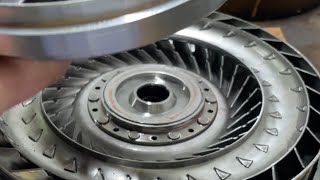
How to confirm: Often diagnosed alongside P0741 (Torque Converter Clutch Circuit). A high amount of metallic debris in the transmission pan is the strongest indicator. A professional may use a scan tool to monitor TCC slip RPM, which will be excessive. A shudder between 35-55 mph is a classic symptom. 🎬 Watch: A mechanic explains common 6L80 torque converter issues
Typical fix: Requires removing the transmission to replace the torque converter. The transmission, cooler, and lines must be thoroughly flushed or replaced to remove all debris. Simply replacing the converter without addressing the contamination will lead to a repeat failure.
Est. part cost: $300-$800 - Worn or Damaged 1-2-3-4 Clutch Pack 🟡 Medium Probability This is typically a secondary failure. The hydraulic pressure loss caused by a clogged valve body or failing TEHCM starves the 1-2-3-4 clutch pack of the pressure needed to engage firmly, causing the clutches to slip and burn out prematurely. The piston for this clutch can also develop cracks.
How to confirm: This is a diagnosis of exclusion after fluid, TEHCM, and valve body issues have been ruled out. Finding burnt, fibrous clutch material (non-magnetic) in the pan is a key sign. It requires a complete transmission teardown to confirm.
Typical fix: A complete transmission rebuild or replacement.
Est. part cost: $2000-$4500
Rare But Worth Checking
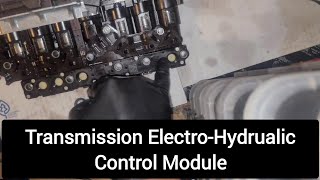
- Failing Transmission Control Module (TCM/TEHCM): In the 6L80, the TCM (also called a TEHCM) is located inside the transmission, mounted to the valve body. While less common 🎬 Watch: How to rebuild and test the TEHCM circuits than mechanical failures, its integrated pressure switches and solenoid screens can become damaged by the same debris from the torque converter, leading to erratic behavior or pressure loss.
- Cracked Stator Support Shaft: Though not common, the stator support tube inside the transmission can develop cracks. Depending on the location of the crack, it can cause a loss of feed oil pressure to the 1-2-3-4 clutch circuit, leading to slipping and a P0731 code. This requires a full teardown to identify.
Diagnosis Steps
- Check the transmission fluid level and condition. Look for fluid that is dark, burnt, or contains metallic particles ('glitter').
- Use a professional OBD-II scanner to check for other transmission-related codes. Note any codes for solenoids (P0751) or the torque converter (P0741) as they provide critical clues.
- Review live data on the scanner, observing the Input (ISS) and Output (OSS) speed sensor readings to confirm they are rational. Monitor TCC slip RPM; high slip under lockup command points to the converter.
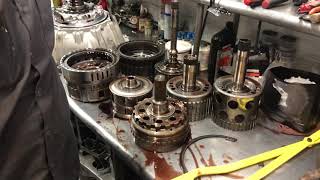
- Drop the transmission oil pan and inspect for excessive metal shavings or clutch material. A magnet covered in a thick, silvery paste is the classic sign 🎬 Watch: See what a catastrophic 6L80 torque converter failure looks like of catastrophic torque converter failure.
- If significant debris is present, the torque converter is the likely root cause. The valve body/TEHCM must be inspected for clogged orifices and solenoid screens, as recommended by TSB #PIP5100A.
- If the fluid is clean and the pan is clear (unlikely), perform hydraulic pressure tests to check for a weak pump or internal leaks in the clutch circuits.
- Inspect the 1-2-3-4 clutch accumulator piston and the stator support shaft for cracks if the transmission is disassembled.
Parts You'll Likely Need
- Transmission Fluid and Filter Kit — This is the first step in diagnosis and is required for any repair that involves opening the transmission pan. The filter will be clogged with debris.
Trusted brands: ACDelco
Related Codes That Often Appear With This One
- P0741 — This code for Torque Converter Clutch Circuit Performance points directly to the torque converter, which is often the root cause of the debris that leads to the P0731 slip code.
- P0751 — This code for Shift Solenoid 'A' Performance/Stuck Off is frequently seen with P0731 because the solenoid controls the hydraulic circuit for first gear, and its function is often impaired by the same debris or pressure loss.
- P0700 — This is a general transmission control system fault code that simply indicates the TCM has stored a fault. It will always be present with more specific codes like P0731.
- P0732, P0733, P0734, P0735 — Incorrect ratio codes for other gears. When multiple ratio codes are present, it strongly suggests a systemic issue like a clogged filter, failing pump, or widespread contamination affecting the entire unit.
Technical Service Bulletins (TSBs) & Recalls
- PIP4379K
- PIP5100
- PIP5100A
Platform-Specific Known Issues
- Owner Experience: The Inevitable Rebuild: A common story on forums like silveradosierra.com involves an owner first noticing a shudder around 45 mph. Soon after, the truck hesitates from a stop and throws code P0731, often with P0741. A mechanic drops the pan and finds the tell-tale 'silver glitter' of torque converter failure. Many owners report that shops will not warranty just a torque converter replacement; due to the high likelihood of contamination, they will only perform a full rebuild or install a remanufactured transmission to ensure all debris is removed.
- Technical Deep Dive: The Role of Tuning: Some transmission specialists and tuners point to the factory calibration of the torque converter lock-up strategy as a contributor to premature failure. The clutch is commanded to apply and slip under conditions that generate excessive heat and wear. Some aftermarket tunes modify the TCC apply schedule, for example, by preventing lock-up in lower gears, to reduce wear and extend the life of a new or rebuilt transmission.
Mechanic-Grade Diagnostic Values
- Shift Solenoid (On/Off type) resistance — expected: 20-40 Ohms. Failure: A reading outside this range indicates a failed solenoid coil within the TEHCM.
- Pressure Control Solenoid (PWM type) resistance — expected: 3-8 Ohms. Failure: A reading outside this range indicates a failed solenoid coil. This applies to the line pressure and clutch pressure control solenoids.
- Pressure Control Solenoid (PWM type) resistance at 70°F (21°C) — expected: 3.0-5.5 Ohms. Failure: A reading outside this range suggests a faulty solenoid coil. Note that resistance changes with temperature.
Scan Tool Commands That Help
- GDS2 (GM Global Diagnostic System 2): Transmission Adaptive Values Learn — This is a mandatory stationary procedure required after replacing the TEHCM or the entire transmission. It resets and relearns clutch apply pressures to ensure smooth shifting and prevent damage.
- GDS2 / Techline Connect (SPS2): Replace and Reprogram ECU — This function is required to flash the vehicle's VIN and specific calibration data onto a new, blank TEHCM. The vehicle will not operate correctly until this is performed.
- GDS2 or Professional Scan Tool: Reset Transmission Adapts — Used after a TEHCM replacement or major repair to clear old learned values before the vehicle is driven. This must be followed by the adaptive values learn procedure.
Wiring & Ground Locations
- Main Transmission Connector (X214) — On the passenger side of the transmission case, it is a large, round, 16-pin connector.. This is the single electrical interface between the truck's main wiring harness and the internal TEHCM. Any corrosion, moisture, or loose pins at this connector can mimic internal transmission failures by disrupting power, ground, or data signals.
- TEHCM Pin 5 (Ground) — Pin 5 on the 16-pin main transmission connector (X214).. This is the primary ground for the entire TEHCM. A poor connection here can affect the voltage readings for all internal sensors and pressure switches, potentially causing multiple erratic codes, including P0731.
- TEHCM Pin 4 (Battery +) — Pin 4 on the 16-pin main transmission connector (X214).. This pin supplies main battery power to the TEHCM. Loss of stable voltage due to a wiring fault or corrosion can cause the entire control module to malfunction and set various codes.
- G201 Ground — Located at the upper left corner of the dash.. This is a key interior ground point. While not directly tied to the transmission harness, it can affect modules that communicate with the TCM over the CAN bus, such as the BCM. A poor ground here could cause communication issues that might indirectly contribute to transmission faults.
Real Owner Repair Stories
- PerformanceTrucks.net Forums (2010 GMC Sierra 6.2L) — Torque converter started slipping significantly after a nitrous run. Transmission fluid became dark.
❌ Tried (didn't work) Driving the vehicle with increased line pressure to compensate for slip.
✅ What actually fixed it The consensus from technicians in the thread was to drop the pan and inspect for metal. If significant metal ('gritty like sand') was found, a full teardown would be necessary. If the pan was relatively clean, replacing the torque converter and filter would be the correct repair. The owner ultimately installed a Circle D triple-disk torque converter.
OEM Part Supersession History
24245720→24272467— Updated valve body separator plate design to improve shift quality and durability.
Heads up: Some aftermarket instructions note that using an updated plate may require other modifications, like installing a clutch select valve kit, to prevent codes. It's critical to match the plate to the valve body configuration.Various early TEHCMs→24256861 / 24256863— GM revised the TEHCM multiple times to improve solenoid performance and pressure switch durability. The 24256861 part number is common for the 2010-2013 model year range.
Heads up: TEHCMs are NOT interchangeable between year groups. The internal logic and calibration are specific. Installing the wrong TEHCM will result in a no-start, no-shift, or immediate limp mode condition. The new module must be programmed to the vehicle's VIN.
Model Year Variations Within This Range
- 2010-2013: The TEHCM (Transmission Electro-Hydraulic Control Module) used in this range, commonly part number 24256861, featured improved solenoids and an updated pressure manifold gasket compared to earlier 2006-2009 units. However, they are still highly susceptible to failure from fluid contamination.
Helpful Videos
Used OEM Parts in Stock


New Aftermarket Parts Available



The information in this article is provided for general reference and educational purposes only. Vehicle specifications, procedures, and part compatibility can vary by production date, trim level, and region. Always consult your vehicle's factory service manual and verify part numbers before purchasing or performing repairs. Safety-critical components such as airbags, seat belts, and braking systems should be installed by a qualified professional.
- Gmc SIERRA:
- 🎬 Helpful Videos
- 🛍️ Shop This Part
- What's Unique About the 2011-2013 Gmc SIERRA
- Diagnostic Flowchart
- Symptoms You May Notice
- Most Likely Causes
- Rare But Worth Checking
- Diagnosis Steps
- Parts You'll Likely Need
- Related Codes That Often Appear With This One
- Technical Service Bulletins (TSBs) & Recalls
- Platform-Specific Known Issues
- Mechanic-Grade Diagnostic Values
- Scan Tool Commands That Help
- Wiring & Ground Locations
- Real Owner Repair Stories
- OEM Part Supersession History
- Model Year Variations Within This Range
- 🎟️ Get 5% Off