

P0731 on 2001-2005 GMC Sierra: Incorrect 1st Gear Ratio Causes and Fixes
The P0731 code on a 2001-2005 GMC Sierra means the transmission is slipping in first gear. The most common causes are low/dirty transmission fluid or a failing 1-2 shift solenoid. A fluid and filter change may fix it, but solenoid replacement is also a frequent repair. In some cases, it can be an early sign of internal clutch wear requiring a rebuild.
- P0731 on a 2001-2005 Sierra indicates a first gear slippage problem, most often caused by low/dirty fluid or a bad 1-2 shift solenoid.
- Always start diagnosis by checking the transmission fluid level and condition; this is the simplest and most common fix.
- Replacing the 1-2 shift solenoid (Part #24230298) is a frequent and effective repair, but it requires removing the transmission pan.
- Do not ignore this code. Driving with a slipping transmission can quickly lead to catastrophic internal damage, turning a moderate repair into a full transmission replacement.
What's Unique About the 2001-2005 Gmc SIERRA
The 2001-2005 GMC Sierra is part of the GMT800 generation, which typically uses the 4L60E or 4L65E automatic transmission. These transmissions are known for being generally robust but can become susceptible to specific issues at high mileage, such as solenoid failure and internal wear. The P0731 code on these trucks is frequently a precursor to needing either targeted component replacement, like shift solenoids, or a more comprehensive transmission service. The provided TSB (PIP4379K) confirms that P0731 is part of a known pattern of transmission engagement and gear ratio problems for this platform. Specific weak points in the 4L60E that can lead to this code include the 1-2 shift solenoid, the forward clutch pack, and wear in the valve body bores which can be addressed with aftermarket kits from brands like Sonnax.
Diagnostic Flowchart
Tap your situation to follow the diagnostic path that matches what you're seeing on this vehicle.
Symptoms You May Notice
- Check Engine Light is on.
- Delayed or no engagement into Drive. [PIP4379K, 12]
- Poor or slow acceleration from a stop.
- Transmission slipping (engine RPMs rise but speed does not increase).
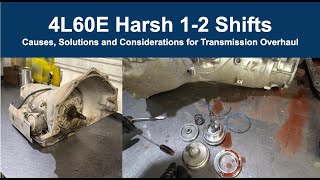
- Harsh or abrupt shifting, sometimes with a clunk. 🎬 See why your transmission might be shifting hard from 1st to 2nd.
- Vehicle enters "limp mode," often getting stuck in a single gear (usually 2nd or 3rd).
- Whining or grinding noises from the transmission.
- Reduced fuel economy.
- Replacing only the speed sensors without checking fluid condition or solenoids.
- Assuming the entire transmission has failed without first diagnosing simpler electrical or hydraulic issues.
- Performing a fluid flush on a high-mileage transmission with burnt fluid, which can sometimes dislodge debris and worsen the problem.
Most Likely Causes
- Low or Contaminated Transmission Fluid 🔴 High Probability Over time, fluid can leak from aging seals or become contaminated with clutch material, reducing hydraulic pressure needed for gear engagement. Burnt or dark fluid is a sign of internal wear.
How to confirm: Check the transmission fluid dipstick with the engine running and transmission warm. The fluid should be at the 'full' mark, bright red, and not smell burnt. Black specks indicate clutch material.
Typical fix: Perform a transmission fluid and filter change. Note: If the fluid is severely burnt, a fluid change may not solve an underlying mechanical problem.
Est. part cost: $50-$100 - Defective 1-2 Shift Solenoid 🔴 High Probability The 4L60E/4L65E transmissions in these trucks commonly experience solenoid failure due to age and heat cycles. The solenoid's internal screen can become clogged with debris, or the coil can fail electrically. The 1-2 shift solenoid is essential for engaging first gear.
How to confirm: A professional mechanic can command the solenoid on and off with a scan tool or test its electrical resistance (should be 20-30 ohms) after removing the transmission pan. Often paired with code P0751.
Typical fix: Replace the 1-2 shift solenoid (Solenoid 'A'). It is highly recommended to replace both the 1-2 ('A') and 2-3 ('B') solenoids at the same time as they are identical parts and subject to the same wear.
Est. part cost: $25-$60 per solenoid - Worn Internal Transmission Components 🟡 Medium Probability On high-mileage trucks (>150,000 miles), internal components like the forward clutch pack, seals, or the sun shell can wear out or break, causing slippage that first manifests in 1st gear. A worn 3-4 clutch pack, a very common 4L60E failure, can also shed debris that contaminates the entire system.
How to confirm: This is diagnosed after external causes are ruled out. A transmission pressure test can indicate internal hydraulic leaks. Finding significant clutch material in the pan during a fluid change points to this cause. Definitive diagnosis requires transmission disassembly.
Typical fix: Rebuild or replace the transmission.
Est. part cost: $1500-$3500 - Clogged or Faulty Valve Body ⚪ Low Probability Debris from normal wear can clog the small passages in the valve body, or the bores for valves like the TCC regulator can wear out, causing pressure loss. This prevents the proper hydraulic pressure from reaching the first gear clutch pack.
How to confirm: Requires removing the valve body for inspection and cleaning. Worn bores can be checked with a gauge. This is a job best left to a transmission specialist.
Typical fix: Clean, repair, or replace the transmission valve body. 🎬 Watch: How to inspect the valve body separator plate for wear. Aftermarket kits like the Sonnax TCC Regulator Valve Kit (77754-04K) are available to repair worn bores.
Est. part cost: $300-$800
Rare But Worth Checking
- Faulty Input or Output Speed Sensor: While less common than solenoid or fluid issues, a failing speed sensor can send incorrect data to the TCM, causing it to miscalculate the gear ratio and trigger P0731.
- Damaged Wiring or Connectors: The wiring harness leading to the transmission can become damaged from road debris or heat, causing an intermittent connection to the solenoids or sensors. The main round connector on the transmission is a common point of failure.
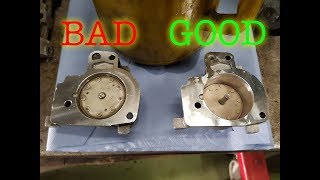
- Cracked Forward Accumulator Piston: The 4L60E uses plastic accumulator pistons from the factory which are known to become brittle and crack over time. A crack in the forward accumulator piston can cause a pressure loss that leads to slipping in first gear and a P0731 code. Upgraded aluminum pistons are available.
Diagnosis Steps
- Check the transmission fluid level and condition. Top off if low, or if it's dark and smells burnt, plan for a fluid and filter change. Look for excessive metal or clutch material in the pan.
- Use an OBD-II scanner to check for other transmission-related codes. Codes like P0751 can pinpoint a solenoid issue.
- Inspect the transmission housing and wiring harness for any visible damage, corrosion, or loose connectors, paying close attention to the main connector on the passenger side of the transmission.
- If fluid and wiring are okay, the next step is to test the shift solenoids. This involves dropping the transmission pan to access them. Test resistance with a multimeter (should be 20-30 ohms).
- A mechanic can perform a line pressure test to check for internal hydraulic leaks, which would suggest worn clutches, seals, or a weak pump.
- Inspect the valve body for sticking valves or worn bores. Specific kits are available to test and repair these.
- If all other tests pass, the issue is likely significant internal mechanical wear (e.g., forward clutch pack) requiring a transmission rebuild or replacement.
Parts You'll Likely Need
- 1-2 Shift Solenoid ('A' Solenoid)
(OEM #24230298)— This solenoid is responsible for the 1-2 shift. It's a very common failure point in the 4L60E/4L65E transmission that directly causes the P0731 code.
Trusted brands: ACDelco
OEM price range: $40-$60
Aftermarket price range: $20-$40 - 2-3 Shift Solenoid ('B' Solenoid)
(OEM #24230298)— Identical to the 1-2 solenoid. Since it is located next to the 1-2 solenoid and has the same service life, it is highly recommended to replace both at the same time to avoid a repeat repair.
Trusted brands: ACDelco
OEM price range: $40-$60
Aftermarket price range: $20-$40 - Transmission Filter and Gasket Kit — Required whenever servicing internal components like solenoids or when performing a fluid change to remove contaminants.
Trusted brands: ACDelco, ATP
OEM price range: $30-$50
Aftermarket price range: $15-$30 - Automatic Transmission Fluid — Low or degraded fluid is a primary cause
Related Codes That Often Appear With This One
- P0730 — Incorrect Gear Ratio (general), often appears with specific gear ratio codes.
- P0732 — Incorrect Gear Ratio in 2nd Gear, indicating a potential shared problem like a failing solenoid or widespread clutch wear.
- P0751 — Shift Solenoid 'A' Performance/Stuck Off. This code directly points to a problem with the 1-2 shift solenoid, a primary cause of P0731.
- P0756 — Shift Solenoid 'B' Performance/Stuck Off. Often replaced along with Solenoid A during service.
- P1870 — Transmission Component Slipping. This code is often caused by a worn TCC regulator valve bore in the valve body, which can also contribute to the pressure loss issues that trigger P0731.
Technical Service Bulletins (TSBs) & Recalls
- PIP4379K: Addresses conditions of no engagement, delayed engagement, or various transmission DTCs including P0731, suggesting a common root cause for these related symptoms.
Platform-Specific Known Issues
- Technical Service Bulletin PIP4379K notes that P0731 can be accompanied by a wide range of other transmission codes and symptoms like no engagement in drive or reverse, indicating a potential internal hydraulic or mechanical issue. [PIP4379K, 7]
Mechanic-Grade Diagnostic Values
- 1-2 ('A') and 2-3 ('B') Shift Solenoid Resistance — expected: 20-40 Ohms. A tighter, more ideal range is often cited as 20-25 Ohms.. Failure: A reading outside the 20-40 Ohm range indicates a failed solenoid. No continuity (open circuit) or very low resistance (short) means the solenoid must be replaced.
- Pressure Control (EPC) Solenoid Resistance — expected: 3.5-8.0 Ohms at 68°F.. Failure: A reading significantly outside this range points to a faulty EPC solenoid, which can cause widespread pressure and shifting issues.
- Output Speed Sensor (OSS/VSS) Resistance — expected: 1260-1540 Ohms.. Failure: An open or shorted reading indicates a failed sensor, which can directly cause incorrect gear ratio codes as the TCM cannot verify the output speed.
- 3-2 Control Solenoid Resistance — expected: 9-14 Ohms for 1996 and up models.. Failure: An incorrect resistance can cause issues with downshifts and may set other codes alongside P0731.
Scan Tool Commands That Help
- GM Tech 2 / GDS2: Adaptive Learning Reset (Transmission Adapts Reset) — This is critical after installing a new or rebuilt transmission. It resets all learned shift pressure and timing values to their factory defaults, preventing harsh shifts and premature wear on the new components.
- Professional Scan Tool (e.g., Tech 2): Solenoid Bidirectional Control — To test individual shift solenoids with the key on, engine off. A technician can command a solenoid 'On' and listen for a click from the transmission pan or check for a voltage drop on the control circuit at the PCM or transmission connector to verify wiring and solenoid function.
- Professional Scan Tool (e.g., Tech 2): Gear-Ratio Test / Hold Gear Command — Allows the technician to command the transmission to hold first gear while driving slowly. They can then monitor the input and output speed sensor PIDs to manually verify if the gear ratio is correct, confirming or denying a slip condition.
Wiring & Ground Locations
- Main Transmission Connector (C2) — On the passenger side of the transmission case, it is a large, round connector.. This is the single point for all electronic signals to the transmission. Testing can be done here without dropping the pan. For P0731, Pin A (1-2 Shift Solenoid) and Pin B (2-3 Shift Solenoid) are the key circuits to test for resistance to ground (with Pin E being 12v power).
- G103 / G104 — Bolted to the cylinder heads. Typically, one is on the front of the passenger side head (G103) and another on the rear of the passenger or driver side head (G104).. These are primary engine and PCM/ECM ground points. A loose or corroded ground at these locations can cause erratic sensor readings and incorrect voltage to the transmission solenoids, leading to false codes and unpredictable transmission behavior.
- Firewall to Engine Ground Strap — A braided strap typically running from the firewall on the passenger side to a stud on the rear of the engine block or cylinder head.. This strap ensures the chassis and engine have a common ground potential. If it's broken or corroded, the PCM and other modules can experience floating grounds, leading to a host of electrical gremlins, including transmission codes.
Real Owner Repair Stories
- Reddit user Brandoslice in r/autorepair (1996 Chevy Silverado (GMT400, but same 4L60E principle)) — Truck would not shift past 2nd gear.
✅ What actually fixed it Upon removing the valve body, the user discovered the 1-2 check ball was physically stuck in the top of the separator plate. Replacing the separator plate resolved the issue. - Jaguar Forums user (2003 Jaguar XJ (Principle applies to any vehicle with ABS)) — P0731 code and gearbox failure warning on the dash.
❌ Tried (didn't work) Replacing valve body and TCM.
✅ What actually fixed it The problem was a faulty rear passenger side ABS/wheel speed sensor sending an incorrect signal to the transmission ECU, causing it to miscalculate gear ratios. Replacing the ABS sensor fixed the transmission code. - Gears Magazine Technical Article (2007 Dodge Challenger (Principle applies to any vehicle)) — P0731 code after other repairs were made.
❌ Tried (didn't work) Resetting pinion factor, reflashing the TCM.
✅ What actually fixed it The vehicle had been in a rear-end collision, and the wrong differential with an incorrect gear ratio was installed. This caused a mismatch with what the TCM expected to see. Replacing the differential with the correct factory ratio solved the P0731 code.
"I Checked Everything" — The Actual Cause
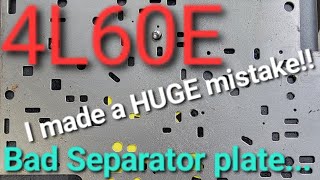
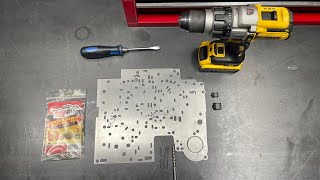
- A common scenario for P0731 is when fluid level is good and solenoids test correctly with a multimeter, yet the slip persists. A likely cause is wear on the valve body separator plate. On 4L60E transmissions, the steel check * constantly hammer against the aluminum plate, eventually wearing out the seats. The 1-2 shift check ball location is particularly prone to this. The ball can start to stick in the worn pocket or allow hydraulic pressure to leak past, causing a slip or harsh shift that triggers P0731. The fix is to replace the separator plate and use more durable Torlon check * to prevent recurrence.
- For 2001 and newer models, a design change can be the culprit. GM eliminated a two-bolt stiffener plate under the 2-3 accumulator. Without this support, the separator plate can flex upwards under normal hydraulic pressure. This flexing can cause a cross-leak between the forward and direct clutch circuits, leading to clutch drag and eventual failure that can manifest as a P0731. The cracks that sometimes appear in the plate are a symptom of this flex, not the root cause. The problem is the lack of support, which is missed in a standard diagnosis that only looks for broken parts.
OEM Part Supersession History
10478131, 24047681, 24236521→24230298— Consolidation of part numbers and potential minor revisions by the manufacturer, GM/ACDelco.
Heads up: The part 24230298 is the correct replacement for both the 1-2 (A) and 2-3 (B) shift solenoids on 4L60E/4L65E transmissions from 1993 and up, ensuring broad compatibility.
Model Year Variations Within This Range
- 2001-2005: Some trucks, particularly those with the 6.0L engine, were equipped with the 4L65E instead of the 4L60E. The 4L65E is an upgraded version with a 5-pinion planetary gear set (vs. 4-pinion in the 4L60E) for increased strength, but diagnostic procedures for P0731 are nearly identical.
- 2001-2005: Starting in 2001, GM eliminated a two-bolt stiffener plate from under the valve body separator plate. This makes these model years prone to separator plate flexing and internal cross-leaks that were not an issue on pre-2001 models.
- Late 2005: Some very late 2005 models began to feature an Input Speed Sensor (ISS) located in the pump assembly. A transmission from a truck that has ISS will work in an older truck (the sensor is ignored), but putting a non-ISS transmission into a truck that requires it will cause shifting problems and codes.
Helpful Videos


We Have This Part in Stock


The information in this article is provided for general reference and educational purposes only. Vehicle specifications, procedures, and part compatibility can vary by production date, trim level, and region. Always consult your vehicle's factory service manual and verify part numbers before purchasing or performing repairs. Safety-critical components such as airbags, seat belts, and braking systems should be installed by a qualified professional.
- Gmc SIERRA:
- 🎬 Helpful Videos
- 🛍️ Shop This Part
- What's Unique About the 2001-2005 Gmc SIERRA
- Diagnostic Flowchart
- Symptoms You May Notice
- Most Likely Causes
- Rare But Worth Checking
- Diagnosis Steps
- Parts You'll Likely Need
- Related Codes That Often Appear With This One
- Technical Service Bulletins (TSBs) & Recalls
- Platform-Specific Known Issues
- Mechanic-Grade Diagnostic Values
- Scan Tool Commands That Help
- Wiring & Ground Locations
- Real Owner Repair Stories
- "I Checked Everything" — The Actual Cause
- OEM Part Supersession History
- Model Year Variations Within This Range
- 🎟️ Get 5% Off