

P0731 on 2001-2005 Chevrolet Silverado: Incorrect 1st Gear Ratio Causes and Fixes
P0731 on a 2001-2005 Silverado indicates the transmission is slipping in first gear. The most common cause is low or dirty transmission fluid. If fluid is correct, the 1-2 shift solenoid is the next likely culprit, followed by internal transmission wear, specifically the forward clutches or accumulator piston.
- P0731 means your Silverado's transmission is slipping in first gear.
- Always check the transmission fluid level and condition first; this is the easiest and most common fix.
- If the fluid is okay, the problem is likely a bad 1-2 shift solenoid, which is a moderately difficult DIY repair.
- Do not ignore this code. Driving with a slipping transmission can quickly lead to catastrophic failure requiring a complete rebuild.
- Due to the complexity, getting a professional diagnosis is highly recommended before buying expensive parts.
What's Unique About the 2001-2005 Chevrolet SILVERADO
The 2001-2005 Silverado primarily uses the 4L60-E or its heavier-duty variant, the 4L65-E automatic transmission. While generally reliable, these transmissions are known to be sensitive to fluid condition and can develop issues with shift solenoids over time. A known weak point is the forward accumulator piston, which is made of plastic and can crack, causing a pressure loss that leads to slipping in forward gears. The P0731 code on this platform is very frequently a leading indicator of either a simple fluid problem, a failing 1-2 shift solenoid, or a cracked accumulator piston before more serious internal damage occurs.
Diagnostic Flowchart
Tap your situation to follow the diagnostic path that matches what you're seeing on this vehicle.
Symptoms You May Notice
- Check Engine Light is on.
- Delayed or no engagement into Drive. [PIP4379K]
- Vehicle hesitates or has poor acceleration from a stop.
- Transmission slipping (engine RPMs rise but speed does not).
- Engine RPMs flare up when attempting to shift from 1st to 2nd gear.
- Harsh or abrupt shifting.
- Vehicle enters 'limp mode', often stuck in 2nd or 3rd gear.
- Whining or grinding noises from the transmission.
- Replacing only the speed sensors when the issue is mechanical (solenoid or clutches).
- Assuming a full transmission rebuild is needed when only a fluid change, solenoid replacement, or new accumulator piston is required.
Most Likely Causes
- Low or Contaminated Transmission Fluid 🔴 High Probability Over time, fluid breaks down and can leak from cooler lines or seals. Dirty fluid can clog the filter and hydraulic passages, preventing proper pressure and causing slip.
How to confirm: Check the transmission fluid dipstick with the engine running and transmission warm. The fluid should be at the 'FULL' mark and bright red. If it's low, brown, black, or smells burnt, it needs service.
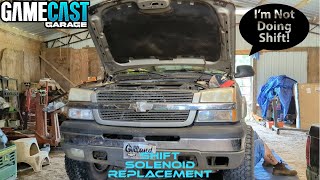
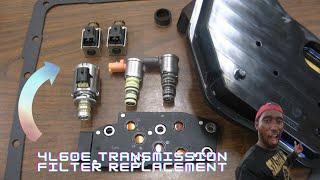
Typical fix: Perform a transmission fluid and filter change. 🎬 Watch: Step-by-step guide to changing your filter and solenoids. If the fluid is very low, the source of the leak must be found and repaired. Use DEXRON-VI fluid.
Est. part cost: $50-$100 - Defective 1-2 Shift Solenoid ('A' Solenoid) 🟡 Medium Probability The electronic solenoids that control shifting can fail electrically or become clogged with debris over many miles, a known issue in the 4L60-E/4L65-E family of transmissions.
How to confirm: A professional can test the solenoid's resistance with a multimeter after dropping the pan. The resistance for the 1-2 shift solenoid should be between 20 and 40 ohms. An open or shorted reading indicates failure.
Typical fix: Replace the 1-2 shift solenoid. 🎬 See this walkthrough on replacing shift solenoids in a Silverado. It is often recommended to replace both the 1-2 ('A') and 2-3 ('B') solenoids at the same time since they are located together and are identical parts.
Est. part cost: $20-$50 - Internal Transmission Failure (Worn Clutches/Sprag) ⚪ Low Probability High mileage and heavy use can lead to wear of the internal components. For 1st gear, this is typically the forward clutch pack or the low/reverse one-way roller clutch (sprag). If the sprag fails, it cannot hold for first gear engagement.
How to confirm: This is a diagnosis of exclusion. If the fluid, solenoids, and accumulator piston are good, the problem is likely internal. A transmission pressure test and inspection of the fluid pan for excessive clutch material can confirm this.
Typical fix: Requires a complete transmission rebuild to replace the worn components.
Est. part cost: $500-$2000+
Rare But Worth Checking
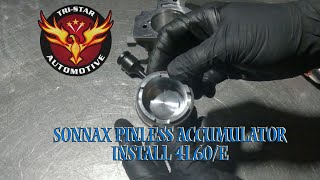
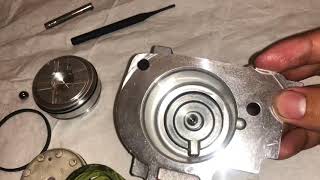
- Cracked Forward Accumulator Piston: The factory forward accumulator piston in the 4L60-E is made of plastic and is notoriously prone to cracking or wear. This causes a loss of hydraulic pressure to the forward clutch pack, resulting in slipping and a P0731 code. Upgraded aluminum pistons are available. 🎬 Watch: How to install an upgraded pinless accumulator piston.
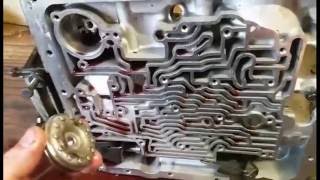
- Clogged or Faulty Valve Body: Debris from normal wear can clog the small passages in the valve body, preventing fluid from properly actuating the first gear clutches. Worn bores, especially the Actuator Feed Limit (AFL) valve bore, can also cause pressure loss.
- Faulty Input or Output Speed Sensor: While less common, a failing speed sensor can send incorrect data to the PCM, causing it to miscalculate the gear ratio and set a P0731 code. This would typically be accompanied by other speed sensor-specific codes.
- Wiring or PCM/TCM Issues: A damaged wire in the transmission harness or a fault in the Powertrain Control Module (PCM) or Transmission Control Module (TCM) could cause this code, but this is rare.
Diagnosis Steps
- Check the transmission fluid level and condition. Ensure the engine is running, the transmission is warm, and the vehicle is on a level surface.
- If the fluid is low, top it off and check for leaks. If the fluid is dark, burnt, or contains debris, perform a fluid and filter change.
- Scan for other transmission-related DTCs. Codes for specific solenoids (like P0751) or sensors can pinpoint the problem.
- If fluid and filter are good, the next step is to inspect the internal components. This requires removing the transmission oil pan.
- Inspect the pan for excessive metal shavings or clutch material, which indicates severe internal wear.
- Test the 1-2 shift solenoid ('A' solenoid) for proper resistance using a multimeter. It should read between 20-40 ohms. Check the wiring harness for any damage.
- While the pan is off, inspect the plastic forward accumulator piston for cracks or damage. It is located in the valve body.
- If the solenoid tests bad, replace it. It's common practice to replace the 2-3 solenoid ('B' solenoid) at the same time.
- If solenoids, accumulator, and wiring are good, the issue is likely a more complex mechanical problem within the valve body or clutch packs, requiring professional diagnosis and repair.
Parts You'll Likely Need
- Transmission Filter & Gasket Kit
(OEM #24208576)— A clogged filter and old fluid are the most common cause of P0731. This is the first and most crucial service step.
Trusted brands: ACDelco, Wix, ATP
OEM price range: $30-$50
Aftermarket price range: $20-$40 - 1-2 & 2-3 Shift Solenoid Kit
(OEM #24230298)— The 1-2 shift solenoid ('A') is a primary cause of P0731. The 'A' and 'B' (2-3) solenoids are identical and often replaced as a pair.
Trusted brands: ACDelco, Rostra, Delphi
OEM price range: $40-$60 (for a pair)
Aftermarket price range: $25-$50 (for a pair) - Forward Accumulator Piston
(OEM #24200126)— The OEM plastic piston is a known weak point that cracks and causes pressure loss for forward gears. Aftermarket aluminum pistons (e.g., Sonnax 77987-01K) are a common and recommended upgrade during a solenoid replacement.
Trusted brands: Sonnax, ACDelco (Plastic), TransGo
OEM price range: $5-$10
Aftermarket price range: $15-$30 (for aluminum) - DEXRON-VI Automatic Transmission Fluid — Low, incorrect, or degraded fluid is a primary cause of shifting problems. Using the correct fluid type is critical.
Trusted brands: ACDelco, Valvoline, Castrol
OEM price range: $8-$12 per quart
Aftermarket price range: $6-$10 per quart
Related Codes That Often Appear With This One
- P0751 — Shift Solenoid 'A' Performance/Stuck Off. This code directly points to a problem with the 1-2 shift solenoid, a primary cause of P0731. [PIP4379K]
- P0756 — Shift Solenoid 'B' Performance/Stuck Off. This relates to the 2-3 shift solenoid. It's common to see codes for both solenoids as they work together and often fail around the same time. [PIP4379K]
- P0894 — Transmission Component Slipping. This is a more general code indicating slip, which is the root cause of the incorrect ratio detected by P0731. [PIP4379K]
- P0700 — This is a general code that means the Transmission Control Module (TCM) has stored a fault code. It's a 'heads-up' to let you know to check for more specific codes like P0731.
Technical Service Bulletins (TSBs) & Recalls
- PIP4379K: Mentions P0731 in the context of no engagement into drive or reverse, delayed shifts, or a range inhibit, pointing towards a pattern of transmission control or hydraulic issues.
Platform-Specific Known Issues
- The provided Technical Service Bulletin (TSB) PIP4379K lists P0731 among a large group of codes related to delayed or no gear engagement, confirming this is a known issue pattern for GM vehicles of this era. [PIP4379K]
Mechanic-Grade Diagnostic Values
- 1-2 ('A') and 2-3 ('B') Shift Solenoid Resistance — expected: 20-40 Ohms (most known-good solenoids measure 20-25 Ohms).. Failure: A reading of 0 Ohms (short) or infinite/OL (open circuit).
- Pressure Control (EPC) Solenoid Resistance — expected: 3.5-8.0 Ohms.. Failure: A reading outside of this specific range indicates a faulty EPC solenoid.
- Actuator Feed Limit (AFL) Regulated Pressure — expected: Approximately 115 PSI.. Failure: Low or erratic pressure feeding the solenoids, which can be diagnosed via valve body vacuum testing or observing symptoms like slipping and wrong gear starts.
- Transmission Fluid Temperature (TFT) Sensor Resistance — expected: Varies with temperature (e.g., ~3520 Ohms at 68°F/20°C, ~333 Ohms at 176°F/80°C).. Failure: Readings that are wildly inaccurate for the current transmission temperature can cause incorrect line pressure calculations by the PCM/TCM.
Scan Tool Commands That Help
- Tech 2 / GDS2 (or equivalent professional scanner): Solenoid Control / Output Control — To individually command the 1-2 shift solenoid on and off with the engine running to listen for a 'click' from the transmission, confirming the solenoid is mechanically responding to electrical commands.
- Tech 2 / GDS2 (or equivalent professional scanner): Gear Ratio Test — To command the transmission to hold 1st gear while driving slowly. The scan tool can then display the commanded gear vs. the actual calculated gear ratio to confirm if a slip is occurring electronically.
- Tech 2 / GDS2 (or equivalent professional scanner): Transmission Pressure Test — Some advanced scan tools can activate specific hydraulic circuits. A technician can use this function with pressure gauges attached to the transmission case to identify which circuit (e.g., the forward clutch circuit) is losing pressure.
Wiring & Ground Locations
- Main Transmission Case Connector (Round, 13-pin for this era) — On the passenger side of the transmission case, above the pan.. This is the central connection for all electronic controls. Testing for voltage and resistance at its pins is a key diagnostic step. For P0731, Pin A (1-2 Shift Solenoid) and Pin E (Solenoid Power) are most relevant.
- Pin A - 1-2 Shift Solenoid ('A') — In the main case connector.. This pin is the control wire for the solenoid responsible for first gear. A continuity check from this pin to the PCM/TCM can rule out a wiring break.
- Pin E - Transmission Power Feed — In the main case connector.. This pin supplies 12V power to the shift solenoids. If there is no power on this pin with the key on, none of the shift solenoids will function, leading to multiple codes including P0731.
Real Owner Repair Stories
- Common repair narrative from multiple technical forums and articles. (2001-2005 Chevrolet Silverado with 4L60-E/4L65-E) — Check engine light with code P0731, hesitation from a stop, feeling of transmission slipping in first gear.
❌ Tried (didn't work) Performing a transmission fluid and filter change., Replacing both the 1-2 ('A') and 2-3 ('B') shift solenoids.
✅ What actually fixed it After the initial fixes failed, the valve body was removed for inspection. The plastic forward accumulator piston was found to have a hairline crack. Replacing the cracked OEM plastic piston with an upgraded aluminum piston (such as a Sonnax 77987-01K) restored hydraulic pressure to the forward clutch pack and resolved the slipping condition.
OEM Part Supersession History
10478131, 24236521→24230298— Component consolidation and design updates by GM.
Heads up: The current part number, 24230298, is the correct service replacement for the 1-2 and 2-3 shift solenoids in this vehicle range.24200126 (OEM Plastic Forward Accumulator Piston)→Sonnax 77987-01K (Aftermarket Aluminum Upgrade)— The OEM plastic piston is prone to cracking and wear, causing hydraulic leaks. The aftermarket aluminum piston is a durability upgrade.
Heads up: This is a common and highly recommended upgrade when the valve body is serviced for any reason. The Sonnax kit includes dual seals to prevent future leaks.
Model Year Variations Within This Range
- Late 2005: Around February 2005, GM introduced an Input Speed Sensor (ISS) to the 4L60-E. Transmissions from late 2005 onward will have this sensor and a 15-pin connector instead of 13. While a newer (ISS-equipped) transmission can often be used in an older truck (the sensor is ignored), putting an older (non-ISS) transmission into a late-2005 truck that requires the sensor will cause shifting problems and codes.
- 2001+: Starting in 2001, the 4L65-E (RPO M32) was introduced as a heavy-duty option alongside the 4L60-E (RPO M30). The 4L65-E features a stronger 5-pinion planetary gearset compared to the 4L60-E's 4-pinion set. For the purposes of diagnosing P0731, the solenoids, valve body, and common failure points like the accumulator piston are virtually identical between the two.
Helpful Videos
We Have This Part in Stock


The information in this article is provided for general reference and educational purposes only. Vehicle specifications, procedures, and part compatibility can vary by production date, trim level, and region. Always consult your vehicle's factory service manual and verify part numbers before purchasing or performing repairs. Safety-critical components such as airbags, seat belts, and braking systems should be installed by a qualified professional.
- Chevrolet SILVERADO:
- 🎬 Helpful Videos
- 🛍️ Shop This Part
- What's Unique About the 2001-2005 Chevrolet SILVERADO
- Diagnostic Flowchart
- Symptoms You May Notice
- Most Likely Causes
- Rare But Worth Checking
- Diagnosis Steps
- Parts You'll Likely Need
- Related Codes That Often Appear With This One
- Technical Service Bulletins (TSBs) & Recalls
- Platform-Specific Known Issues
- Mechanic-Grade Diagnostic Values
- Scan Tool Commands That Help
- Wiring & Ground Locations
- Real Owner Repair Stories
- OEM Part Supersession History
- Model Year Variations Within This Range
- 🎟️ Get 5% Off