

P0729 on 2011-2013 GMC Sierra Denali: Gear 6 Incorrect Ratio Causes and Fixes
On a 2011-2013 Sierra Denali with the 6L80 transmission, P0729 means the transmission is slipping in 6th gear. The most common cause, cited in GM TSBs, is debris from a failing torque converter clutch clogging the transmission valve body separator plate. This is a serious issue requiring professional service and often replacement of the torque converter to prevent a recurrence.
- P0729 on a 2011-2013 Sierra Denali is a serious code indicating a slip in 6th gear.
- The most likely cause is not a bad sensor but a hydraulic blockage in the transmission's valve body, as confirmed by GM service bulletins.
- The source of the blockage is often a failing torque converter shedding metallic debris.
- Do not continue to drive the vehicle, as this can lead to complete and catastrophic transmission failure.
- This is not a simple DIY fix. Professional diagnosis is required to inspect internal components and address the root cause of the debris.
What's Unique About the 2011-2013 Gmc SIERRA DENALI
For the 2011-2013 GMC Sierra Denali, equipped with the 6L80 6-speed automatic transmission, code P0729 is often more than just a sensor issue. As highlighted in GM Technical Service Bulletins (TSBs), a primary cause is internal debris clogging hydraulic passages within the transmission's valve body. This debris, often described as looking like 'coffee grounds' or a gray sludge in the transmission pan, frequently originates from a failing torque converter clutch (TCC), making the problem systemic rather than isolated to a single component. This TCC failure is a well-documented weak point in the 6L80 transmission family.
Diagnostic Flowchart
Tap your situation to follow the diagnostic path that matches what you're seeing on this vehicle.
Symptoms You May Notice
- Check Engine Light is on
- Transmission fails to shift into 6th gear
- Harsh or delayed shifting into multiple gears
- Transmission slipping (engine RPMs rise without a corresponding increase in speed)
- A 'rumble strip' shudder or vibration at highway speeds, which is a classic sign of torque converter clutch failure.
- Reduced fuel economy, especially at highway speeds
- Vehicle may enter 'limp mode,' restricting gears
- In severe cases related to the underlying cause, the vehicle may not move in forward or reverse, as noted in TSB PIP5100A.
- Replacing only the input or output speed sensors. While these sensors provide the data, they are rarely the cause of a gear ratio code. The problem is usually the slip itself, not the sensor reporting it.
- Performing only a fluid and filter change when heavy debris is present. This is a temporary fix at best, as the source of the debris (the torque converter) will continue to contaminate the new fluid and clog the system again.
Most Likely Causes
- Blocked Valve Body Separator Plate Orifices 🔴 High Probability GM TSBs #PIP5100A and #PIP5100 directly cite this as a known issue. Debris from the torque converter clutch is a common problem in the 6L80 transmission and it accumulates in the valve body, blocking critical hydraulic passages.
How to confirm: Drop the transmission pan and remove the valve body to visually inspect the separator plate orifices for blockage or debris. The presence of fine, gray, metallic sludge in the pan is a strong indicator.
Typical fix: Clean or, more commonly, replace the valve body separator plate with an updated version. Aftermarket solutions like the Sonnax Zip Kit are also popular to address known wear points and pressure losses in the valve body. The root cause (often the torque converter) must also be addressed to prevent a recurrence.
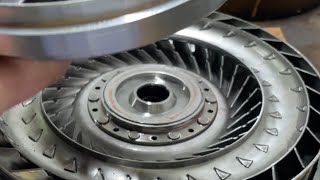
Est. part cost: $50-$250 - Failing Torque Converter 🔴 High Probability The lockup clutch (TCC) within the stock 6L80 torque converter is a widely documented failure point. The clutch material delaminates, shedding debris that contaminates the entire transmission system, leading directly to the clogged valve body and code P0729. A TCC shudder is often a precursor to this failure. 🎬 Watch: A deep dive into common 6L80 torque converter issues.
How to confirm: This is often diagnosed by finding excessive metallic debris ('gray sludge') in the transmission pan and fluid. A professional may use a scan tool to monitor torque converter clutch slip percentage, which will be high if it's failing.
Typical fix: Replacement of the torque converter and a complete flush of the transmission and cooler lines is required for a permanent fix. Simply cleaning the valve body without replacing the failing converter will result in the problem returning.
Est. part cost: $300-$800 - Low or Dirty Transmission Fluid 🟡 Medium Probability Fluid is the lifeblood for hydraulic pressure and cooling. Low levels or fluid that is burnt or heavily contaminated with clutch material will cause slipping and shifting issues.
How to confirm: Check the transmission fluid level and condition. The fluid should be red and translucent, not dark, brown, or smelling burnt. The presence of metallic particles is a red flag for internal damage.
Typical fix: Perform a transmission fluid and filter change using DEXRON-VI fluid. If the fluid is heavily contaminated, it indicates a more severe internal problem (like a failing torque converter) that a simple fluid change won't fix.
Est. part cost: $70-$150 - Faulty Shift Solenoid or TEHCM ⚪ Low Probability
How to confirm: A professional can use a scan tool to command the 6th gear solenoid and monitor its operation. Resistance can also be checked with a multimeter. However, for this specific code, debris is a more likely cause of solenoid malfunction than an electrical failure.
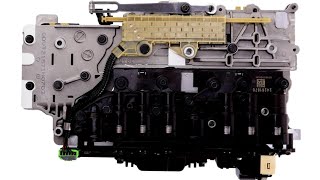
Typical fix: Replace the faulty solenoid. On the 6L80, solenoids are part of the TEHCM (Transmission Electro-Hydraulic Control Module), which is inside the transmission and often replaced as a unit. This is an expensive repair and should only be done after ruling out debris and converter issues.
Est. part cost: $300-$700
Rare But Worth Checking
- Worn 6th Gear Clutch Pack: While less common than hydraulic issues, if the fluid is clean and pressures are good, the internal clutches for the 6th gear may be worn out, requiring a transmission rebuild. This is more likely in high-mileage or heavily used vehicles.
- Faulty Transmission Control Module (TCM/TEHCM): An internal electronic failure of the TCM (or TEHCM in this transmission) can cause incorrect commands or misinterpretation of sensor data, though it's far less likely than the mechanical and hydraulic failures known to cause P0729 on this platform.
Diagnosis Steps
- Check the transmission fluid level and condition. Note any burnt smell, dark color, or visible metallic particles.
- Use a professional-grade OBD-II scanner to check for any other pending or stored transmission codes, especially P0741 or other gear ratio codes.
- With a capable scan tool, monitor live data for Torque Converter Clutch (TCC) slip RPM. A high slip value under lockup conditions points to a failing converter.
- Drop the transmission pan and inspect for excessive metal shavings or a gray, pasty sludge. This is a key indicator of TCC failure.
- If significant debris is found, follow TSB PIP5100A by removing and inspecting the valve body and separator plate for clogged orifices.
- While the valve body is accessible, consider installing a valve body upgrade kit (like a Sonnax Zip Kit) to correct known wear points and pressure leaks.
- If the valve body is clean and solenoids test good, the issue may be a worn clutch pack or an isolated torque converter failure, which requires more extensive transmission disassembly.
Parts You'll Likely Need
- Transmission Valve Body Separator Plate
(OEM #24245720 (Updated plate for 2010+ models))— As per GM TSBs, the orifices on this plate are highly prone to clogging from debris. The updated plate is thicker and more durable.
Trusted brands: ACDelco, Sonnax
OEM price range: $80-$150
Aftermarket price range: $50-$100 - Torque Converter — Often the root cause of the debris that clogs the valve body. If significant metal is found in the pan, the torque converter must be replaced to prevent a repeat failure. 🎬 See why replacing just the converter isn't enough for a fix.
Trusted brands: ACDelco, Transtar, Hays
OEM price range: $500-$800
Aftermarket price range: $300-$600 - Transmission Filter and Pan Gasket Kit
(OEM #24236517 (Filter))— This is required for any service that involves dropping the transmission pan.
Related Codes That Often Appear With This One
- P0741 — Stands for 'Torque Converter Clutch (TCC) Circuit Performance or Stuck Off'. This code is very common with P0729 as it directly points to the failing torque converter which is the source of the debris causing the gear ratio error.
- P0731, P0732, P0733, P0734, P0735 — These are incorrect gear ratio codes for other gears. When seen with P0729, it strongly points to a systemic hydraulic issue like a clogged valve body or failing torque converter affecting multiple gear circuits.
- P0751, P0756, P0761 — These are performance codes for shift solenoids A, B, and C. Debris can cause these solenoids to stick or respond slowly, triggering these codes alongside the gear ratio errors.
Technical Service Bulletins (TSBs) & Recalls
- PIP5100A: Mentions P0729 with other codes related to a no-move condition, pointing to blocked valve body separator plate orifices.
- PIP5100: An earlier version of the same bulletin with similar guidance.
Platform-Specific Known Issues
- Manufacturer TSB PIP5100A and PIP5100 directly address this code in conjunction with others. They guide technicians to inspect the valve body separator plate orifices for blockage from debris, noting it can cause a 'no move' condition.
- The torque converter clutch (TCC) is the most common point of failure. Its clutch material degrades, sending a fine gray metallic dust throughout the hydraulic system, which is abrasive and clogs small orifices, leading to pressure loss and codes like P0729.
Mechanic-Grade Diagnostic Values
- Shift Solenoid (On/Off type) resistance — expected: 20 - 40 Ohms. Failure: A reading outside this range, or an open/infinite reading, indicates a failed solenoid coil.
- Pressure Control Solenoid (PWM type) resistance — expected: 3 - 8 Ohms. Failure: A reading outside this range suggests a faulty solenoid coil.
- Shift Solenoid (On/Off type) current draw — expected: 0.3 - 0.7 Amps at 12V. Failure: Incorrect amperage indicates a failed solenoid.
- Pressure Control Solenoid (PWM type) current draw — expected: 1.5 - 4.0 Amps at 12V. Failure: Incorrect amperage points to a failed solenoid. This test is not typically recommended by the manufacturer but can be performed carefully.
- Mass Airflow (MAF) Sensor reading at idle — expected: Approximately equal to the engine displacement in liters (e.g., a 6.0L engine should read ~6.0 g/s).. Failure: An inaccurate MAF sensor can cause the TCM to calculate incorrect line pressure, leading to premature transmission wear and TCC issues.
Hidden / Shadow Codes Worth Checking
- Circuit Status Parameters (e.g., 'Shift Sol. 1 CKT Status'): While not a traditional DTC, dealer-level scanners like the GM GDS2 can access detailed circuit status information for each solenoid within the TEHCM. Instead of just a generic P-code, the scanner can display specific electrical fault states like 'Open/Short to GND' or 'Short to Volts'. (see via GM GDS2 (Global Diagnostic System 2) or equivalent professional J2534 scan tool.)
Scan Tool Commands That Help
- GM GDS2 / Tech2Win: Solenoid Cleaning Procedure — If a solenoid performance DTC is present or a solenoid fails a bench test, this automated function cycles all solenoids to flush out potential debris before resorting to replacement of the TEHCM.
- GM GDS2 / Tech2Win: Solenoid ON/OFF Command — Used in conjunction with a special test plate (J47821-1) and shop air, a technician can command individual solenoids on and off to verify the valve is physically moving and that air pressure changes accordingly on a gauge.
- GM GDS2 / Professional Scan Tool: Service Fast Learn / Reset Transmission Adapts — This is a mandatory step after replacing and reprogramming a TEHCM or overhauling the transmission. It performs a series of automated shifts to quickly establish baseline clutch volume indexes (CVIs) and prevent harsh or delayed shifts.
Wiring & Ground Locations
- G103 — On the lower left front of the engine block.. This is a primary engine block ground. A poor connection here can affect the sensor readings and control modules that the TCM relies on for proper operation.
- G104 — On the back of the left (driver's side) cylinder head.. This ground point is critical for the engine and transmission control systems. A loose or corroded connection can introduce electrical noise and cause erratic behavior.
- G110 — Located in the left rear corner of the engine compartment, often near the firewall.. This is a major body and component ground point in the engine bay. A bad ground here can affect various electronic modules, including the ECM/TCM communication.
- TEHCM Connector Pins 4 & 5 — On the main 16-pin connector at the transmission case, leading to the internal TEHCM.. Pin 4 is the main battery positive (+) feed to the TEHCM, and Pin 5 is the main ground (-). Verifying solid voltage and a clean ground path at these pins is a fundamental step in diagnosing any electronic transmission fault.
Real Owner Repair Stories
- BobIsTheOilGuy forum user (2011 GM Truck with LML engine and Allison 1000 (similar era TEHCM issue)) — Vehicle went into limp mode, PRNDL indicator on dash went out, multiple codes and check engine light illuminated.
❌ Tried (didn't work) Rebooting faults with a tuner was a temporary fix; the issue returned within 5 minutes of driving.
✅ What actually fixed it The root cause was a failed Transmission Control Module (TCM). It was replaced with a new, upgraded GM part (#19431596), which required programming (flashing) at the dealership to match the vehicle's VIN. The user reported better shifting and improved fuel economy afterward. - Tahoe Yukon Forum user (2011 Chevrolet Silverado) — Slipping during the 2-3 and 4-5 shifts, leading to transmission failure.
❌ Tried (didn't work) Initially attempted to swap in a 2017 6L80 transmission.
✅ What actually fixed it The user discovered that a 2017 transmission was not directly compatible. The final fix was installing the correct year-range transmission and swapping his original 2011 TEHCM and torque converter into the replacement unit to ensure compatibility. This highlights that the TEHCM and torque converter are model-year specific.
When the Usual Fixes Don't Work
- While the most common cause of P0729 is debris from a failing torque converter clogging the valve body, this is not always the case. In some instances, the problem is purely electronic. A documented repair for a vehicle in limp mode with multiple transmission codes was the complete failure of the Transmission Electro-Hydraulic Control Module (TEHCM) itself. The fix was not a mechanical cleaning or rebuild, but the replacement of the TEHCM with an updated part number, followed by mandatory VIN programming at a dealership. This confirms that outright electronic failure, while less common, should be considered a primary cause if classic signs of debris are absent.
Model Year Variations Within This Range
- 2011-2013: Transmissions from 2010-2013 are generally considered directly interchangeable. However, attempting to install a transmission from a significantly different year (e.g., a 2017 model into a 2011 truck) will not work directly. The TEHCM (control module) and torque converter from the original vehicle must be swapped into the newer transmission housing to maintain compatibility.
- Later vs. Earlier Models: Some newer 6L80 transmissions may feature an external thermostat on the cooler line connections which is not present on earlier models. Swapping between these designs may require modifying or replacing the cooler lines to match.
Helpful Videos
We Have This Part in Stock



The information in this article is provided for general reference and educational purposes only. Vehicle specifications, procedures, and part compatibility can vary by production date, trim level, and region. Always consult your vehicle's factory service manual and verify part numbers before purchasing or performing repairs. Safety-critical components such as airbags, seat belts, and braking systems should be installed by a qualified professional.
- Gmc SIERRA DENALI:
- 🎬 Helpful Videos
- 🛍️ Shop This Part
- What's Unique About the 2011-2013 Gmc SIERRA DENALI
- Diagnostic Flowchart
- Symptoms You May Notice
- Most Likely Causes
- Rare But Worth Checking
- Diagnosis Steps
- Parts You'll Likely Need
- Related Codes That Often Appear With This One
- Technical Service Bulletins (TSBs) & Recalls
- Platform-Specific Known Issues
- Mechanic-Grade Diagnostic Values
- Hidden / Shadow Codes Worth Checking
- Scan Tool Commands That Help
- Wiring & Ground Locations
- Real Owner Repair Stories
- When the Usual Fixes Don't Work
- Model Year Variations Within This Range
- 🎟️ Get 5% Off