

P0720 on 2011-2013 Ford Expedition: Output Speed Sensor Causes and Fixes
On a 2011-2013 Ford Expedition, code P0720 almost always points to a failed transmission molded lead frame, which contains the Output Speed Sensor. This is a known issue with the 6R80 transmission and requires dropping the transmission pan and valve body to replace. Expect to pay a professional $600-$2200 for this repair, with dealer prices being on the higher end.
- P0720 on a 2011-2013 Expedition is a very specific and common problem, almost always caused by a failed internal transmission molded lead frame.
- Symptoms are serious and create a safety risk, including sudden downshifts and stalling. Do not ignore this code.
- The repair is complex and requires removing the transmission valve body, making it a difficult job for a DIY mechanic (5/5 difficulty).
- Before paying for a repair, check if your vehicle's VIN is covered by Ford's extended warranty program (Customer Satisfaction Program 19N01) for this part.
- Do not let a shop replace the entire transmission for this code unless they can prove a catastrophic mechanical failure with metal in the pan.
What's Unique About the 2011-2013 Ford EXPEDITION

The 2011-2013 Expedition uses the Ford 6R80 automatic transmission, which has a widely documented design flaw. The Output Speed Sensor (OSS) is not a simple, externally accessible part. Instead, it is integrated into a large internal component called the "molded lead frame," which is mounted to the valve body. According to recall documents, degradation of the electrical connections in the lead frame due to thermal cycling and vibration can cause the internal circuits to crack and fail, causing a loss of signal from the OSS. This specific component failure is the most common reason for a P0720 code on this vehicle, a fact acknowledged by Ford through multiple Technical Service Bulletins (TSBs) and a customer satisfaction program.
Diagnostic Flowchart

Tap your situation to follow the diagnostic path that matches what you're seeing on this vehicle.
Symptoms You May Notice

- Check Engine Light or wrench light is illuminated.
- Harsh, erratic, or delayed shifting.
- Transmission gets stuck in one gear (limp mode).
- Sudden, unintended downshifts, sometimes into first gear at speed.
- Speedometer reads zero or behaves erratically.
- Stalling when coming to a stop.
- Odometer display shows dashes instead of mileage. 🎬 See how these symptoms look when the transmission hits limp mode.
- Inability to use manual shift mode ('Sport Mode').
- Cruise control becomes inoperative.
- Replacing an external speed sensor. The OSS on the 6R80 transmission is internal and part of the lead frame; there is no separate external sensor to replace for this code on this vehicle.
- Replacing the entire transmission. In the vast majority of cases, only the molded lead frame needs to be replaced, which is significantly less expensive than a full transmission replacement. A shop quoted one owner $4,300 for a rebuild when a $400 DIY lead frame replacement fixed it.
- Performing only a software update. While some recalls involved a PCM software update to prevent the most dangerous downshifts, this does not fix the root cause, which is the failing lead frame hardware.
Most Likely Causes

- Failed Transmission Molded Lead Frame 🔴 High Probability The 6R80 transmission's lead frame, which integrates the OSS and TSS sensors, is a known high-failure part due to internal circuit fractures from heat and vibration. Ford issued Customer Satisfaction Program 19N01 for this exact issue, extending the warranty.
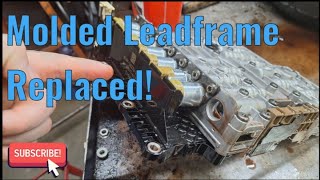
How to confirm: Use a scan tool to monitor the Output Speed Sensor (OSS) PID while driving. If the signal drops to zero intermittently or is completely absent, especially at highway speeds, and external wiring is intact, the lead frame is the culprit. 🎬 Watch this detailed DIY tutorial on replacing the lead frame yourself.
Typical fix: Replace the entire molded lead frame assembly. This requires draining the transmission fluid, dropping the pan, and removing the main control (valve body) to access the lead frame. The updated OEM part includes a foam sleeve to better protect solenoid terminals.
Est. part cost: $150-$300 - Damaged Wiring or Connector ⚪ Low Probability
How to confirm: Visually inspect the main transmission wiring harness and the large, round bulkhead connector for corrosion, pushed-out pins, or physical damage. Test for continuity between the PCM and the transmission connector. This should be done before condemning the internal lead frame.
Typical fix: Repair the damaged section of the harness or clean/replace the connector pins. The bulkhead connector sleeve seal is often replaced as a preventative measure during a lead frame service.
Est. part cost: $20-$100 - Low or Contaminated Transmission Fluid ⚪ Low Probability
How to confirm: Check the transmission fluid level and condition via the dipstick located on the side of the transmission case. The fluid should be at the correct level and appear clean and red, not dark brown, burnt-smelling, or full of metallic particles.
Typical fix: Perform a transmission fluid and filter change. This is often done as part of the lead frame replacement.
Est. part cost: $100-$150 - Faulty Powertrain Control Module (PCM) ⚪ Low Probability
How to confirm: This is a diagnosis of exclusion. The PCM should only be suspected after the lead frame and all associated wiring have been confirmed to be in good working order. Sometimes a PCM software update is attempted first, but it does not fix the underlying hardware failure of the lead frame.
Typical fix: Replace and reprogram the PCM. This must be done by a qualified shop or dealership.
Est. part cost: $500-$1000
Rare But Worth Checking
- Internal Transmission Mechanical Failure: If the transmission fluid is found to contain significant metal debris, it can stick to the magnetic speed sensors and disrupt their readings. This indicates a more severe internal problem beyond the lead frame, such as clutch or bearing failure.
Diagnosis Steps
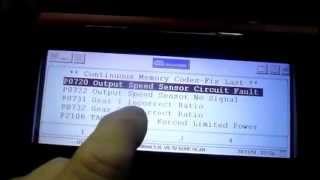
- Scan the PCM for all stored trouble codes. Note if P0722, P0731, or P1500 are present with P0720, as this strongly points to the lead frame.
- Check the transmission fluid level and condition. Ensure it is full and not burnt or contaminated. The fluid temperature should be between 206°F - 215°F for an accurate level check.
- Using a scan tool with live data capabilities, monitor the Output Speed Sensor (OSS) PID. Watch for the signal to drop to zero or become erratic during a test drive, especially at steady highway speeds.
- If the signal is faulty, raise the vehicle and inspect the main transmission electrical connector (the bulkhead connector) for damage, corrosion, or fluid intrusion. Disconnect and reconnect it to ensure a solid connection.
- If the external wiring and connector are in good condition, the cause is almost certainly the internal molded lead frame.
- Confirm if the vehicle falls under Ford's Customer Satisfaction Program 19N01, which extended the warranty for this specific part to 10 years or 150,000 miles, though this program has expired for most vehicles.
- Proceed with replacing the molded lead frame. This involves draining the fluid, removing the pan (8mm bolts), removing the valve body (T30 Torx bolts), and separating the lead frame from the valve body (T27 Torx bolts).
Parts You'll Likely Need
- Transmission Molded Lead Frame
(OEM #AL3Z-7G276-D)— This is the primary point of failure for P0720 on the 6R80 transmission. The Output Speed Sensor is integrated into this part. The 'D' revision supersedes older -A and -B parts and is the correct replacement.
Trusted brands: Motorcraft (OEM), Dorman (Aftermarket)
OEM price range: $200-$300
Aftermarket price range: $150-$250 - Transmission Fluid Filter Kit — The filter and pan gasket must be replaced any time the transmission pan is removed for service.
Trusted brands: Motorcraft
OEM price range: $40-$60
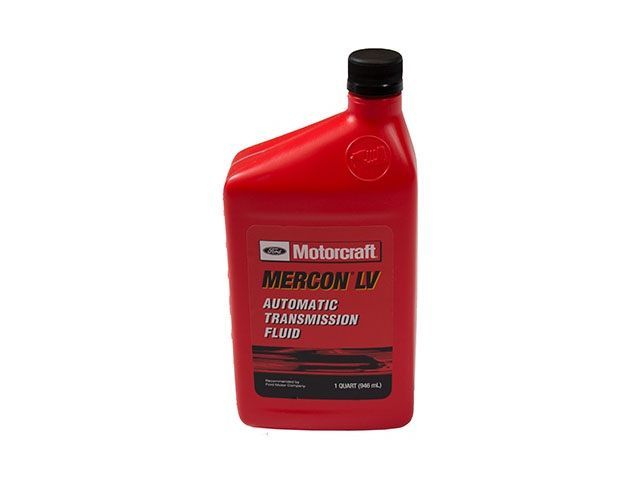
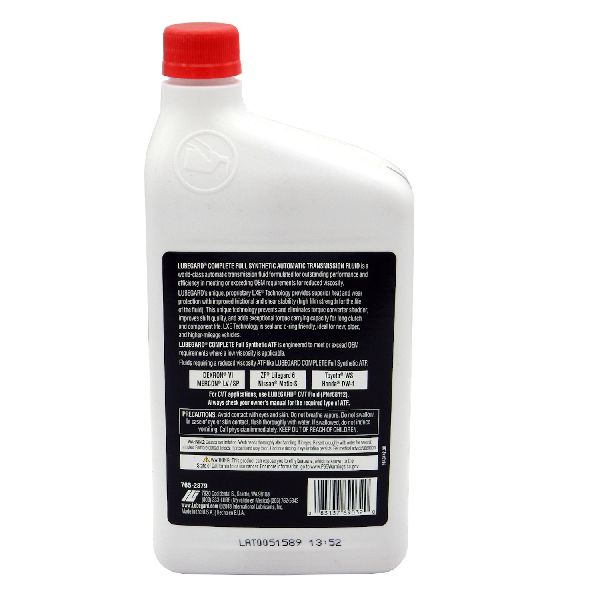
Aftermarket price range: $25-$40 - Motorcraft Mercon LV Automatic Transmission Fluid — This is the required fluid for the 6R80 transmission. A pan drop and lead frame replacement typically requires 9-10 quarts to refill.
Trusted brands: Motorcraft
OEM price range: $80-$120 - Bulkhead Connector Sleeve Seal
(OEM #AL3Z-7G276-A (part of lead frame kit))— This seal prevents fluid from leaking out of the main electrical connector. It is highly recommended to replace it when the valve body is serviced to prevent future leaks.
Trusted brands: Motorcraft
OEM price range: $15-$25
Aftermarket price range: $10-$20
Related Codes That Often Appear With This One
- P0722 — Stands for "Output Speed Sensor Circuit No Signal." This is a more specific version of P0720 and is frequently triggered by the same lead frame failure.
- P0731 — Stands for "Gear 1 Incorrect Ratio." The PCM sets this code when it can't verify the transmission is in the correct gear, often because it's getting a bad speed reading from the faulty OSS.
- P1500 — Stands for "Vehicle Speed Sensor Intermittent." This code can appear alongside P0720 as the OSS data is used in vehicle speed calculations. It was also listed in TSB 19N01.
Technical Service Bulletins (TSBs) & Recalls
- TSB 19N01 / 19N01-S3: This is the primary document for the 'Transmission Molded Lead Frame' issue, which directly addresses DTCs P0720, P0722, and P0731.
Platform-Specific Known Issues
- Ford issued Customer Satisfaction Program 19N01, extending warranty coverage for the molded lead frame on affected 2011-2013 Expeditions to 10 years or 150,000 miles due to the high failure rate causing P0720 and related codes. For vehicles that already exceeded these limits, the coverage ended on October 31, 2019. Some owners who paid for the repair before the program was announced were able to get reimbursed by Ford.
Mechanic-Grade Diagnostic Values
- Output Speed Sensor (OSS) Signal Voltage — expected: The sensor produces a digital square wave signal that varies with speed. A scan tool is the best way to monitor this.. Failure: On a live data scan tool, the OSS PID will drop to zero, become erratic, or fail to increase with vehicle speed.
- Transmission Fluid Temperature for Level Check — expected: 96.7°C - 102°C (206°F - 215°F). Failure: Checking the fluid level outside this temperature range will result in an inaccurate reading, potentially leading to over or under-filling.
Scan Tool Commands That Help
- Ford IDS / FORScan: Transmission Adaptive Tables Reset — After replacing the molded lead frame or valve body, this function should be performed to clear the old learned shift strategies. This is followed by a specific adaptive learning drive cycle to allow the TCM to learn the characteristics of the new components.
Wiring & Ground Locations
- C175T — This is one of the main connectors at the Powertrain Control Module (PCM).. This connector contains the pins for the transmission sensors. Specifically, Pin 16 is for the Output Shaft Speed (OSS) sensor signal, and Pin 19 is for the Transmission Fluid Temperature (TFT) sensor, which is also part of the lead frame assembly. Technicians can back-probe these pins to test for signal continuity from the transmission to the PCM.
- Transmission Bulkhead Connector — The large, round, 16-pin connector on the driver's side rear of the transmission case.. This is the main external connection point for all internal transmission electronics, including the lead frame. A poor connection, fluid intrusion, or damaged pins here will cause a P0720 code. It should be inspected before condemning the internal lead frame.
Real Owner Repair Stories
- Ford Expedition Forum user 'Doc94' (2015 Ford Expedition Limited, failure at ~83,000 miles) — Wrench light on the dash, vehicle went into limp mode, would be okay after a restart but the problem would return.
✅ What actually fixed it The vehicle was showing code P0722 (Output Shaft Speed Sensor Circuit No Signal). The dealer replaced the molded lead frame with an aftermarket part due to a 3-month backorder on the OEM part. This resolved the issue. The repair cost $1100.
OEM Part Supersession History
AL3Z-7G276-A→AL3Z-7G276-B, then AL3Z-7G276-D— Revisions were made to improve the durability of the internal circuits and prevent the fractures that cause OSS signal loss.
Heads up: The 'D' revision is the latest and most robust version and should be used for all repairs. While older versions may be sold, they are prone to the original failure.
Helpful Videos

We Have This Part in Stock

The information in this article is provided for general reference and educational purposes only. Vehicle specifications, procedures, and part compatibility can vary by production date, trim level, and region. Always consult your vehicle's factory service manual and verify part numbers before purchasing or performing repairs. Safety-critical components such as airbags, seat belts, and braking systems should be installed by a qualified professional.
- Ford EXPEDITION:
- 🎬 Helpful Videos
- 🛍️ Shop This Part
- What's Unique About the 2011-2013 Ford EXPEDITION
- Diagnostic Flowchart
- Symptoms You May Notice
- Most Likely Causes
- Rare But Worth Checking
- Diagnosis Steps
- Parts You'll Likely Need
- Related Codes That Often Appear With This One
- Technical Service Bulletins (TSBs) & Recalls
- Platform-Specific Known Issues
- Mechanic-Grade Diagnostic Values
- Scan Tool Commands That Help
- Wiring & Ground Locations
- Real Owner Repair Stories
- OEM Part Supersession History
- 🎟️ Get 5% Off