

P0716 on 2010-2014 Audi S4: Input Speed Sensor Causes and Fixes
On a 2010-2014 Audi S4, code P0716 almost always points to a failure of the sensor module circuit board within the 7-speed S-Tronic DL501 transmission's Mechatronics unit. The most common fix is replacing this internal circuit board with an OEM repair kit (part no. 0B5398048D), a complex and costly repair that requires specialized tools and software adaptation.
- P0716 on a B8/B8.5 S4 is not a simple sensor swap; it indicates a likely problem inside the complex Mechatronics unit.
- The most common and accepted repair is to install a Mechatronics repair kit, which includes a new sensor circuit board.
- This is a difficult and expensive job that should be performed by a qualified technician with Audi-specific tools.
- Ignoring the symptoms can lead to unsafe driving conditions and potentially damage other expensive transmission components.
- Always check for related fault codes, as P0716 rarely appears alone when the Mechatronics unit is failing.
What's Unique About the 2010-2014 Audi S4

The 2010-2014 Audi S4 uses a sophisticated 7-speed dual-clutch transmission called the DL501 S-Tronic (also known as 0B5). Unlike many transmissions where speed sensors are simple, individual parts, the input speed sensors (G612 and G632) for P0716 are integrated into a complex circuit board inside the Mechatronics unit. This entire internal module is a well-documented failure point due to heat and vibration. As a result, a P0716 code on this car is a much more involved and expensive issue than on a typical automatic transmission, as confirmed by Audi's own Technical Service Bulletins (TSBs).
Diagnostic Flowchart

Tap your situation to follow the diagnostic path that matches what you're seeing on this vehicle.
Generation note: This range covers the B8 (2010-2012) and B8.5 (2013-2014) generations of the Audi S4. Both use the same 3.0L Supercharged V6 and DL501 S-Tronic transmission, so the causes and fixes for P0716 are identical across this period. The issue is common in DL501 gearboxes produced from 2009-2013. However, some sources indicate the B8.5 models received updated transmission components that are less prone to failure.
Symptoms You May Notice
- "Gearbox malfunction: you can continue driving" message on the driver information system.
- Flashing PRNDS (gear selector) indicator light.
- Illuminated Check Engine Light and/or EPC (Electronic Power Control) light.
- Harsh, jerky, or clunking shifts, especially when coming to a stop (2nd to 1st gear) or engaging reverse.
- Transmission gets stuck in one gear (limp mode).
- Vehicle may hesitate, feel sluggish, or judder during acceleration.
- Erratic gear selection or complete loss of reverse gear.
- Replacing the entire transmission when only the Mechatronics unit requires repair.
- Changing the transmission fluid without addressing the underlying electronic failure on the sensor board.
- Replacing the wrong speed sensor. The DL501 has other sensors, like the G676, located in the rear of the transmission case for different functions, which can be confused with the P0716-related sensors inside the Mechatronics.
Most Likely Causes

- Failed Mechatronics Unit Sensor Board/Module 🔴 High Probability The input speed sensors (G612/G632) are integrated into a circuit board module (part number family 0B5927321) within the DL501 Mechatronics unit. This board is a well-documented failure point due to degradation from heat and vibration, causing sensor and connection faults. Audi TSB 2032211/2 directly addresses this failure mode.
How to confirm: A diagnostic scan with an advanced tool (like VCDS) will show P0716, often with a specific DFCC code (e.g., 8096, 8101) and other related codes like P179F or P171F. This cluster of codes is a strong indicator of internal Mechatronics failure.
Typical fix: Install an OEM Mechatronics repair kit (part no. 0B5398048D) 🎬 See these expert tips and tricks for installing the repair kit., which includes the two sensor circuit boards/harnesses. This is done by removing the Mechatronics unit from the transmission. 🎬 Watch: Step-by-step DIY guide for servicing the DL501 Mechatronics unit. In severe cases or if the repair fails, the entire Mechatronics unit must be replaced.
Est. part cost: $400-$700 for a repair kit, $2000-$4000 for a new Mechatronics unit. - Contaminated or Low Transmission Fluid 🟡 Medium Probability The DL501 has two separate fluid circuits; the circuit shared by the Mechatronics and clutches can become contaminated with metallic debris from normal clutch wear. This debris can stick to the magnetic speed sensors, causing erratic readings. Using incorrect (non-DSG specific) fluid is also a known cause of problems.
How to confirm: Check the transmission fluid level and condition. The fluid should be clean and at the correct level, checked at a specific temperature (35-45°C). Dark, burnt-smelling fluid with visible metal particles indicates a problem.
Typical fix: Perform a full transmission fluid and filter service with the correct OEM-spec fluid. However, this is often only a temporary fix if the debris is a symptom of a larger mechanical failure or if the sensor board is already damaged.
Est. part cost: $200-$400 for fluid and filters. - Damaged Wiring or Connectors ⚪ Low Probability While the sensor itself is internal, the main external wiring harness connecting the Mechatronics unit to the rest of the car can be damaged by road debris or corrosion, though this is uncommon. The internal harnesses are replaced with the repair kit.
How to confirm: Visually inspect the main round transmission connector (part number 420973716) for corrosion, pushed-out pins, or damage. Perform a continuity test on the harness if damage is suspected.
Typical fix: Repair or replace the damaged section of the external wiring harness.
Est. part cost: $50-$300 depending on the extent of the damage.
Diagnosis Steps
- Perform a full diagnostic scan of the Transmission Control Module (TCM) using an Audi-specific tool like VCDS or ODIS.
- Record all fault codes and their associated DFCC (Diagnostic Fault Code Context) numbers. Compare these with Audi TSB 2032211/2 to confirm the known failure pattern.
- Check the transmission fluid level and condition. The vehicle must be on a level surface, at a specific temperature (35-45°C), and running to check the level correctly.
- Use the scan tool to monitor live data from the input speed sensors (G612, G632) while driving. Look for signal dropouts or readings that don't logically follow engine RPM.
- If the signal is faulty and codes match the TSB, the next step is to drain the fluid and remove the transmission pan to access the Mechatronics unit.
- Remove the Mechatronics unit from the transmission. This requires disconnecting the main electrical connector and removing several mounting bolts.
- With the unit on a bench, replace the internal sensor circuit boards with an OEM repair kit (0B5398048D), including all necessary seals and gaskets.
- Before reinstalling the Mechatronics unit, ensure the four mechanical gear selectors are in the neutral position for proper alignment.
- Reinstall the Mechatronics unit, perform a full fluid and filter service using OEM-spec fluid, and run the basic settings/adaptation procedure with a scan tool to calibrate the new components. 🎬 Watch: How to perform the VCDS transmission adaptation procedure.
Parts You'll Likely Need

- Mechatronics Repair Kit
(OEM #0B5398048D (supersedes 0B5398048C))— This is the authoritative fix for P0716. It contains the two replacement sensor circuit boards and wiring harnesses needed to resolve the internal electronic fault.
Trusted brands: Audi Genuine, BorgWarner (OEM supplier)
OEM price range: $500-$700
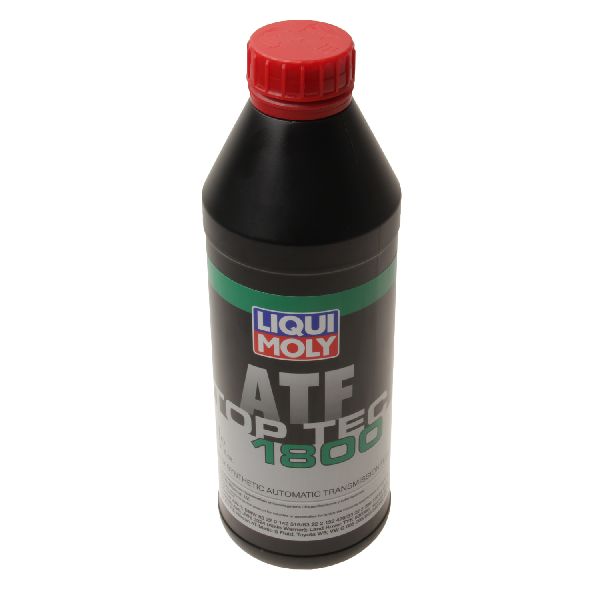
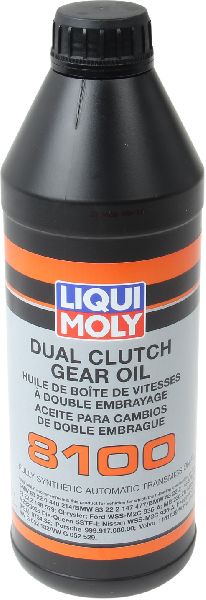
Aftermarket price range: $400-$600 - DSG Transmission Fluid and Filter Kit — This service is required any time the Mechatronics unit is removed. Using the correct dual-clutch fluid is critical for the health and performance of the repaired transmission.
Trusted brands: Audi Genuine, Liqui Moly (Top Tec MTF 5200), Motul (High-Torque DCTF)
OEM price range: $200-$300
Aftermarket price range: $150-$250
Related Codes That Often Appear With This One
- P179F — Code for 'Drive position sensor malfunction'. It is listed in the same Audi TSB (2032211) and relates to another sensor on the same internal module, indicating a broader electronic failure.
- P171F — Code for 'Transmission input speed (RPM) sensor 2 implausible signal'. This points to the second input speed sensor (G612), further confirming a fault within the Mechatronics sensor module.
- P0715 — Code for 'Input/Turbine Speed Sensor “A” Circuit'. Indicates a circuit malfunction (like an open or short) rather than a performance issue, but both point to the same sensor system and are listed in the same TSB.
- P2765 — Code for 'Input/Turbine Speed Sensor “B” Circuit'. This is also listed in TSB 2032211/2 and points to a fault in the second input speed sensor circuit, reinforcing the diagnosis of a failed sensor module.
Technical Service Bulletins (TSBs) & Recalls
- A351619 / 2032211: This TSB is the primary document for this issue. It directly links P0716 (with specific DFCCs 8096, 8101, etc.) and a host of other codes to a known fault with the sensor module inside the Mechatronics unit.
Platform-Specific Known Issues
- The DL501 S-Tronic transmission is notorious for Mechatronics failures, which manifest as a cluster of codes including P0716. Audi has issued Technical Service Bulletin 2032211/2, which details the diagnostic and repair procedure. The repair involves replacing the sensor module and its circuit boards inside the transmission, a job that requires transmission disassembly.
Mechanic-Grade Diagnostic Values
- Resistance of Clutch Solenoids (N435, N439) — expected: 16 ohm ± 0.1 ohm (for Gen 2 Valve Body). Failure: Significant deviation from the specified resistance.
- Resistance of VBS Solenoids (N471, N472) — expected: 4.2 ohm ± 0.1 ohm at 25°C. Failure: Resistance outside of the specified range, indicating a faulty solenoid coil.
- Resistance of Gear Actuator Solenoids (N433, N434, N437, N438) — expected: 4.8 ohm ± 0.1 ohm at 25°C. Failure: A reading outside this range suggests a problem with the shift fork solenoid.
- Live Data: Clutch Adaptation Point Pressure (K1 & K2) — expected: Upper: 7.6 – 7.9 bar; Lower: 2.1 – 2.95 bar. Failure: Values outside of these ranges can indicate worn clutches or hydraulic pressure issues, not necessarily a sensor fault.
Scan Tool Commands That Help
- VCDS or ODIS: Basic Settings: Erase counter for start and stop processes — This is the first step in the adaptation sequence after replacing the Mechatronics repair kit, performed with the key on and engine off.
- VCDS or ODIS: Basic Settings: Clutch valve calibration — Performed with the engine running in Park. This calibrates the pressure valves for the clutches.
- VCDS or ODIS: Basic Settings: Distance sensor calibration — Performed with the engine running in Park after clutch valve calibration. This calibrates the gear selector distance sensors, and the transmission will make audible clunking noises during this process.
- VCDS or ODIS: Basic Settings: Clutch engagement point adaptation — This is a final step where the TCM learns the 'kiss point' of the new clutches for smooth take-offs. It requires starting the car during the procedure. The car must then be driven for up to two hours, in both Drive and Sport modes, for the adaptation to fully complete.
Wiring & Ground Locations
- Main Transmission Connector — On the driver's side of the DL501 transmission housing. It is a large, round, 16-pin twist-lock connector.. This is the sole electrical interface between the car's main wiring harness and the internal Mechatronics unit. Corrosion or damage to this connector (Part No. 420973716) can cause a loss of signal from the internal speed sensors, mimicking a sensor failure.
- Chassis Ground — The primary battery ground point is located in the engine bay, near the battery under the plenum cover. Additional engine-to-chassis ground straps are typically found near the starter or on the bell housing.. A poor ground connection can introduce electrical noise or cause voltage drops, potentially leading to implausible signals from sensitive electronics like the transmission speed sensors.
Real Owner Repair Stories
- Reddit user in r/AudiS4 (2011 Audi S4) — Gearbox malfunction light, rough shifting from first to second gear.
❌ Tried (didn't work) The user initially suspected the entire Mechatronics unit might need to be sent out for a costly rebuild.
✅ What actually fixed it The user purchased and installed the Mechatronics repair kit (the internal circuit boards) themselves, which resolved the issue. The user noted that the previous owner had recently changed the transmission fluid, suggesting the fluid change did not fix the problem. - AudiWorld Forums user 'aedmon6' (2010 Audi S4 with <30,000 miles) — "TPMS + Gearbox Malfunction" message, confirmed mechatronic failure.
❌ Tried (didn't work) One Audi dealership claimed the repair kit was not available and quoted $4,000 for a full Mechatronics unit replacement.
✅ What actually fixed it The issue was resolved by having the Mechatronics repair kit installed, though the final cost varied between dealers. This story highlights that the repair kit is the correct fix, even when some dealers may push for a full unit replacement.
OEM Part Supersession History
0B5398048C→0B5398048D— The 'D' revision is an updated version of the Mechatronics repair kit, likely with improved materials or design to enhance durability and prevent the common electronic failures of the earlier parts.
Heads up: The new part 0B5398048D is a direct replacement for 0B5398048C and older versions like 0B5398009B and 0B5398009C. There are no known incompatibility issues when using the newer kit on an older transmission.
Model Year Variations Within This Range
- 2013-2014 (B8.5): The B8.5 generation S4 received mechanical updates to the DL501 DSG transmission, including revised components that are reportedly less likely to fail than those in the earlier B8 (2010-2012) models. While the P0716 fault can still occur, it is considered more common on the B8 generation.
Helpful Videos
We Have This Part in Stock


The information in this article is provided for general reference and educational purposes only. Vehicle specifications, procedures, and part compatibility can vary by production date, trim level, and region. Always consult your vehicle's factory service manual and verify part numbers before purchasing or performing repairs. Safety-critical components such as airbags, seat belts, and braking systems should be installed by a qualified professional.
- Audi S4:
- 🎬 Helpful Videos
- 🛍️ Shop This Part
- What's Unique About the 2010-2014 Audi S4
- Diagnostic Flowchart
- Symptoms You May Notice
- Most Likely Causes
- Diagnosis Steps
- Parts You'll Likely Need
- Related Codes That Often Appear With This One
- Technical Service Bulletins (TSBs) & Recalls
- Platform-Specific Known Issues
- Mechanic-Grade Diagnostic Values
- Scan Tool Commands That Help
- Wiring & Ground Locations
- Real Owner Repair Stories
- OEM Part Supersession History
- Model Year Variations Within This Range
- 🎟️ Get 5% Off