

P0716 on 2013-2014 Audi RS5: Input Speed Sensor Failure, Causes, and Fixes
On a 2013-2014 Audi RS5, code P0716 almost always indicates a failure of the input speed sensor module located inside the DL501 S-Tronic transmission's mechatronic unit. The fix is to replace the internal circuit board/sensor module, a complex job best left to professionals. This is a very common failure on this transmission.
- P0716 on a 2013-2014 RS5 is a serious code that points directly to a known failure inside the S-Tronic transmission.
- The cause is almost always a faulty sensor module on the mechatronic unit's circuit board, not a simple external sensor.
- The standard and most effective repair is to install an OEM mechatronic repair kit (part # 0B5398048D or similar).
- This is not a DIY-friendly job for most home mechanics and requires professional service with specialized tools and software.
- Do not ignore this code; it can lead to unsafe driving conditions and potentially more severe transmission damage.
What's Unique About the 2013-2014 Audi RS5
The 2013-2014 RS5 uses the 7-speed DL501 (also known as 0B5) S-Tronic dual-clutch transmission. Unlike many vehicles where the speed sensor is a simple, externally accessible part, on the DL501 it is integrated into a complex printed circuit board (PCB) module inside the transmission's mechatronic unit. This design makes the repair significantly more involved and expensive, as the mechatronic unit must be removed and partially disassembled. This issue is a well-documented failure point for this specific transmission family.
Diagnostic Flowchart
Tap your situation to follow the diagnostic path that matches what you're seeing on this vehicle.
Symptoms You May Notice
- "Gearbox malfunction: you can continue driving" message on the dashboard.
- Flashing PRNDS (gear selector) indicator light.
- Transmission gets stuck in one gear (limp mode), sometimes only even or only odd gears will work.
- Harsh, jerky, or clunking shifts, especially a noticeable clunk when downshifting from 2nd to 1st gear as the car comes to a stop.
- Hesitation, juddering, or bucking during acceleration.
- Illuminated Check Engine Light or EPC (Electronic Power Control) light.
- Complete loss of drive or reverse gears.
- Crunching or grinding noises during certain gear changes.
- Replacing the entire transmission when only the mechatronic unit's sensor board needs to be repaired. One owner reported a dealer invoice of nearly $9,500 for a full gearbox replacement for this issue.
- Replacing the entire mechatronic unit (at a cost of $2,500-$4,000+) when a less expensive repair kit ($500-$900) would suffice.
- Blaming the clutch packs for shifting issues when the root cause is electronic. While clutch wear can cause juddering, the specific electronic fault codes point directly to the mechatronic unit.
Most Likely Causes
- Failed Mechatronic Unit Sensor Board/Module 🔴 High Probability The internal printed circuit board (PCB) that houses the input speed sensors (G182) is a known high-failure item in the DL501 transmission. It degrades over time from constant thermal cycles and vibration, leading to cracked solder joints and failing electronic components. The provided TSB A351619 2032211- directly points to this type of failure by grouping P0716 with other sensor codes on the same board.
How to confirm: An advanced diagnostic scan (like VCDS) will show P0716, often accompanied by other codes like P179F, P171F, P0715, P2765, or P179E. This cluster of codes, along with specific DFCC numbers like 8096 or 8101, is a very strong indicator of this specific internal mechatronic failure.
Typical fix: Install an OEM Mechatronic repair kit (part number 0B5398048D, which supersedes 0B5398048C). This kit includes the two main circuit boards, solenoids, and seals. This requires removing the mechatronic unit from the transmission for the repair.
Est. part cost: $450-$900 - Contaminated or Low Transmission Fluid ⚪ Low Probability While not a design flaw, neglecting the 40,000-mile service interval for the S-Tronic fluid can lead to contamination. Debris can interfere with sensor readings, though it's much less likely to be the root cause than the sensor board itself.
How to confirm: Check the transmission fluid (ATF) level and condition. The DL501 has specific procedures for this, usually requiring the fluid to be at a certain temperature (35-45°C) while the engine is running. Fluid that is dark, burnt, or contains excessive metallic particles indicates a problem.
Typical fix: Perform a transmission fluid and filter change using the correct OEM fluid (G052529A2). If significant debris is found, the mechatronic failure is likely still the root cause.
Est. part cost: $150-$300
Rare But Worth Checking
- Failing Transmission Control Module (TCM): The TCM is the 'brain' integrated into the mechatronic unit. While the sensor board is the most common point of failure, the entire TCM itself can fail, causing similar codes and sometimes a total loss of communication. This is usually diagnosed after a repair kit fails to solve the issue, or if the unit is completely unresponsive. A full mechatronic replacement can cost thousands.
- Wiring Harness Damage: Damage to the main wiring harness connector at the transmission is possible due to corrosion from water ingress, but damage to the harness itself is rare as it is well-protected.
Diagnosis Steps
- Perform a full diagnostic scan with an Audi-specific tool (like VCDS or OBDeleven) to read the fault codes from the transmission control module (02-Auto Trans). Note all codes present, paying close attention to the group of codes and their DFCC (Diagnostic Fault Code Context) numbers listed in the TSB.
- Check the transmission fluid level and condition according to the factory procedure. The fluid temperature must be within a specific range (typically 35-45°C) for an accurate level check.
- If fluid is correct and multiple related mechatronic codes are present, the evidence strongly points to an internal mechatronic issue. The next step is to remove the transmission pan for access.
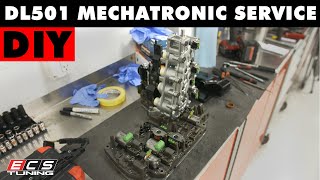
- Carefully remove the mechatronic unit from the transmission. This is a delicate procedure that should be done in a clean environment. 🎬 Watch: Step-by-step guide to removing and servicing the mechatronic unit.
- Install the appropriate mechatronic repair kit (e.g., 0B5398048D), which involves replacing the internal circuit boards and often some solenoids. 🎬 See how to install the 0B5398048D repair kit on the board.
- Reinstall the mechatronic unit, transmission pan with a new gasket, and refill with the correct specification of S-Tronic fluid (G052529A2).
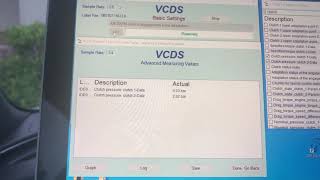
- Perform a transmission basic settings and adaptation procedure using a diagnostic tool like VCDS. This step is mandatory. It involves running routines like 'Clutch valve calibration' and 'Distance sensor calibration'. Failure to do this will result in poor shifting and potential damage. 🎬 Watch: How to perform the mandatory clutch adaptation using VCDS.
- Conduct a defined adaptation test drive, driving in various gears and modes (D and S) to allow the clutches to relearn their engagement points. This can take up to two hours of driving.
Parts You'll Likely Need
- Mechatronic Repair Kit
(OEM #0B5398048D (supersedes 0B5398048C))— This is the definitive fix. The kit contains the replacement circuit boards with the integrated input speed sensors that are the root cause of the P0716 code on this transmission.
Trusted brands: Audi Genuine, Borgwarner (OEM supplier)
OEM price range: $600-$900
Aftermarket price range: $450-$750 - S-Tronic Transmission Fluid (ATF)
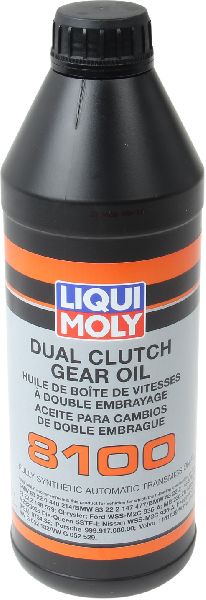
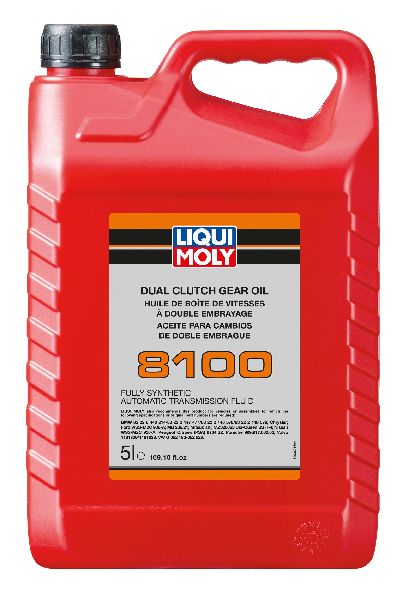
(OEM #G052529A2)— Required for the mechatronic repair job (approx. 7 liters needed). The fluid must be drained to access the unit, and it's critical to use the correct OEM-spec fluid upon refilling.
Trusted brands: Audi Genuine, Liqui Moly, Pentosin, Ravenol
OEM price range: $30-$40 per liter
Aftermarket price range: $20-$30 per liter - Transmission Pan Gasket and Filter(s) — Should always be replaced when the transmission pan is removed for the mechatronic service.
Trusted brands: Audi Genuine
OEM price range: $80-$150
Aftermarket price range: $50-$100
Related Codes That Often Appear With This One
- P179F — This code for 'Drive Position Sensor Malfunction' is cited in the same TSB (A351619 2032211) and often appears with P0716, as the sensors are part of the same failing mechatronic circuit board.
- P171F — This code for 'Transmission Input Speed Sensor 2 Implausible Signal' is also on the same circuit board and points to the same common failure.
- P0715 — This code for 'Input/Turbine Speed Sensor “A” Circuit' indicates a circuit malfunction rather than a performance issue, but is caused by the same failing component.
- P2765 — This code for 'Input/Turbine Speed Sensor “B” Circuit' is also listed in TSB 2032211/2 as part of the same group of faults originating from the mechatronic sensor module.
Technical Service Bulletins (TSBs) & Recalls
- A351619 2032211 - This Technical Service Bulletin from Audi (with multiple revisions) confirms that DTC P0716 is part of a larger group of mechatronic faults. It outlines two scenarios: one where DTC P179E is logged first, and a secon
Platform-Specific Known Issues
- The DL501 (0B5) S-Tronic transmission is well-known for this specific mechatronic failure. The issue is not a matter of 'if' but 'when' for many owners, and P0716 is one of the primary fault codes indicating the problem has begun. Owner forums are filled with accounts of this exact failure across all vehicle platforms that use this gearbox.
Mechanic-Grade Diagnostic Values
- VFS Solenoids (N436, N440) Resistance — expected: 4.8 Ω (± 0.1 Ω) at 25°C, 5.4 Ω (± 0.1 Ω) at 70°C. Failure: Readings significantly outside this range indicate a failing solenoid coil.
- VBS Solenoids (N471, N472) Resistance — expected: 4.2 Ω (± 0.1 Ω) at 25°C, 4.8 Ω (± 0.1 Ω) at 70°C. Failure: Readings outside this range point to a fault in the cooling or main pressure solenoids.
- VCDS Live Data - Transmission Input RPM (G182) — expected: A steady value that correlates with engine RPM when a gear is engaged.. Failure: Values jumping erratically between a valid RPM and 0/min indicate a failing sensor or connection.
- Transmission Fluid Temperature for Diagnostics — expected: Between 35°C and 45°C for level checks; between 40°C and 60°C for running adaptation procedures.. Failure: Performing checks or adaptations outside the specified temperature range can lead to incorrect fluid levels or failed procedures.
Hidden / Shadow Codes Worth Checking
- DFCC 8096, 8101, 18153, 20738: These are Diagnostic Fault Code Context (DFCC) numbers, also known as fault event codes, that are logged alongside the main P0716 DTC. They provide manufacturer-specific details about the failure condition. Seeing these specific numbers strongly confirms the known mechatronic board failure pattern described in Audi's TSB. (see via Advanced diagnostic tools like VCDS or ODIS will display these context numbers when reading fault codes from the transmission control module.)
Scan Tool Commands That Help
- VCDS (VAG-COM): 02-Auto Trans -> Basic Settings -> Erase counter for start and stop processes — This is the first step in the adaptation sequence, performed with the ignition on and engine off, to clear old values before calibration.
- VCDS (VAG-COM): 02-Auto Trans -> Basic Settings -> Clutch valve calibration — Performed with the engine running after replacing the mechatronic unit or repair kit. This calibrates the main pressure valves.
- VCDS (VAG-COM): 02-Auto Trans -> Basic Settings -> Distance sensor calibration — Performed with the engine running. This calibrates the sensors that track the position of the gear selectors. You will hear the transmission making noises during this process.
- VCDS (VAG-COM): 02-Auto Trans -> Basic Settings -> Clutch engagement point adaptation — This is a final calibration step, performed with the engine running, to teach the TCM the initial clutch bite points after all other calibrations are complete.
- VCDS (VAG-COM): 02-Auto Trans -> Adv. Measuring Values -> 'Adaptation status of the engagement point 1/2' — Used to monitor the progress of the adaptation test drive after the static basic settings are complete. The status will change once the clutches have fully adapted during real-world driving.
Wiring & Ground Locations
- 16-Pin Main Transmission Connector — External connector on the DL501 transmission housing where the main vehicle harness connects to the mechatronic unit.. This is the primary electrical interface for the entire mechatronic unit, including the input speed sensors. Corrosion or damage to the pins in this connector (part number sometimes referenced as 420973716) can cause P0716 and other transmission communication errors.
- TCM Ground Connection — The ground path for the Transmission Control Module (TCM) is critical. While specific ground point locations require a factory wiring diagram, a poor ground can cause erratic sensor readings and trigger range/performance codes like P0716.. If a new sensor/repair kit doesn't fix the code, checking the TCM ground integrity is a crucial next step, as a faulty ground can mimic sensor failure.
Real Owner Repair Stories
- Ross-Tech Forums user (2003 Audi A4 3.0L with CVT (Note: Different transmission but demonstrates identical G182 sensor failure pattern)) — Check Engine Light, codes P0730 (Incorrect Gear Ratio), P0716 (Input Speed Sensor Implausible Signal), and P0722 (Output Speed Sensor No Signal).
❌ Tried (didn't work) Initially sent the TCM for repair. The repair company suggested also replacing the sender wheels inside the transmission.
✅ What actually fixed it After reinstalling the repaired TCM and new sender wheels, a new code P0717 (G182 No Signal) appeared. Live data showed the input RPM (G182) jumping between correct values and zero. This confirms the root cause is an intermittent electrical fault in the G182 input speed sensor circuit, which is the classic failure mode addressed by the mechatronic repair kit in the DL501.
OEM Part Supersession History
0B5398048A, 0B5398048B, 0B5398048C→0B5398048D— Revisions to improve the reliability of the circuit boards and integrated sensors to address the common failure pattern that causes P0716 and related codes. Earlier versions are more prone to failure from heat and vibration.
Heads up: While older versions may physically fit, installing the latest 'D' revision is highly recommended for long-term reliability.
Model Year Variations Within This Range
- 2013 vs 2014/2015: The 2013 model was the first year of the facelift in North America. Later 2014/2015 models had minor MMI hardware and software updates and made some options like the Sport Edition package available. However, there were no significant mechanical changes to the 4.2L V8 or the DL501 transmission that would alter the cause or diagnosis of code P0716.
Helpful Videos
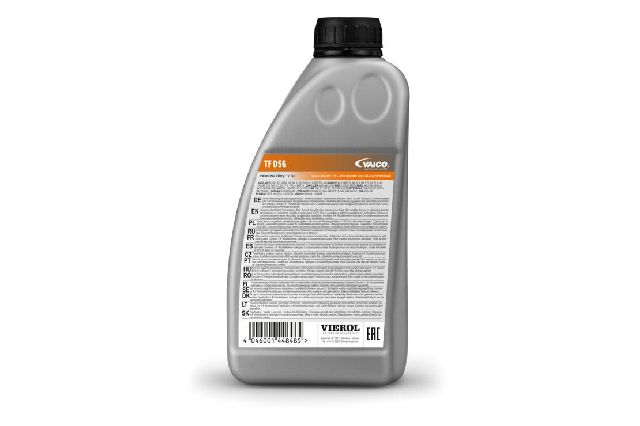
We Have This Part in Stock



The information in this article is provided for general reference and educational purposes only. Vehicle specifications, procedures, and part compatibility can vary by production date, trim level, and region. Always consult your vehicle's factory service manual and verify part numbers before purchasing or performing repairs. Safety-critical components such as airbags, seat belts, and braking systems should be installed by a qualified professional.
- Audi RS5:
- 🎬 Helpful Videos
- 🛍️ Shop This Part
- What's Unique About the 2013-2014 Audi RS5
- Diagnostic Flowchart
- Symptoms You May Notice
- Most Likely Causes
- Rare But Worth Checking
- Diagnosis Steps
- Parts You'll Likely Need
- Related Codes That Often Appear With This One
- Technical Service Bulletins (TSBs) & Recalls
- Platform-Specific Known Issues
- Mechanic-Grade Diagnostic Values
- Hidden / Shadow Codes Worth Checking
- Scan Tool Commands That Help
- Wiring & Ground Locations
- Real Owner Repair Stories
- OEM Part Supersession History
- Model Year Variations Within This Range
- 🎟️ Get 5% Off