

P0713 on 2006-2010 Hyundai Sonata: Transmission Temperature Sensor Circuit High Causes and Fixes
This code indicates a high voltage signal from the transmission fluid temperature sensor, usually due to a failed sensor or a wiring issue. The most common fix is replacing the sensor itself, which is located inside the transmission on the valve body and requires removing the side cover. This is a well-documented issue on the A5CF2 5-speed automatic transmission used in these Sonatas.
- P0713 on a 2006-2010 Sonata points to an electrical problem with the transmission temperature sensor, not an overheating transmission.
- The most likely cause is a failed sensor located inside the transmission pan.
- Ignoring this code will lead to poor drivability, harsh shifting, and can cause long-term damage to the transmission.
- Repair is moderately difficult for a DIYer due to the need to work inside the transmission, but it is a manageable job that avoids costly transmission replacement.
- Always use the correct specification of transmission fluid (Hyundai SP-IV or equivalent) when refilling.
What's Unique About the 2006-2010 Hyundai Sonata
For the fifth-generation (NF) Sonata, this code is frequently tied directly to the failure of the transmission fluid temperature sensor itself, a known issue on the A5CF2 5-speed automatic transmission. Hyundai issued a Technical Service Bulletin (TSB 14-AT-010) covering these models, which advises against replacing the entire transaxle for this code. Instead, the bulletin points toward replacing the temperature sensor. Accessing this sensor requires draining the transmission fluid and removing the side-mounted valve body cover, which is more involved than a simple pan drop.
Symptoms You May Notice
- Check Engine Light is on
- Harsh, delayed, or erratic shifting, often described as 'shift shock'.
- Symptoms are often worse when the vehicle is cold and may seem to improve as it warms up.
- Vehicle enters 'limp mode' (stuck in one gear, typically 3rd gear)
- Torque converter clutch fails to engage at highway speeds, causing high RPMs
- Hard engagement when shifting from Park into Drive or Reverse.
- Replacing the entire transmission. A specific TSB (14-AT-010) warns against this, as the issue is almost always the sensor or wiring.
- Replacing shift solenoids. While symptoms can seem similar, P0713 points specifically to the temperature sensor circuit, not solenoid function.
Most Likely Causes
- Failed Transmission Fluid Temperature (TFT) Sensor 🔴 High Probability The sensor is a very common failure point, as acknowledged by Hyundai TSB 14-AT-010. The internal thermistor fails, creating an open circuit that results in a maximum voltage signal being sent to the TCM.
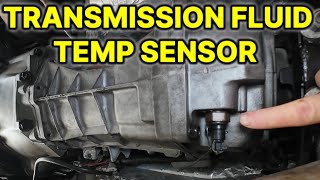
How to confirm: Use a scan tool to monitor the transmission fluid temperature data. If it shows a fixed, nonsensical value (like -40°F/-40°C) or the circuit voltage is stuck high (above 4.5V), the sensor or its circuit is faulty. The sensor can also be tested with a multimeter for resistance. For example, at 20°C (68°F), the resistance should be around 8.1 kΩ. An infinite resistance (OL) reading indicates a failed, open sensor. 🎬 See how to test and replace the sensor yourself
Typical fix: Replace the transmission fluid temperature sensor. This involves draining the fluid, removing the transmission side valve body cover, unbolting the old sensor from the valve body, and installing the new one. The internal wiring harness is often replaced at the same time.
Est. part cost: $20-$60 - Damaged Wiring or Connectors 🟡 Medium Probability The wiring harness leading to and inside the transmission can become damaged over time from heat and vibration, causing an open or short circuit. The internal harness is subjected to constant immersion in hot ATF.
How to confirm: Visually inspect the external wiring harness and the main transmission connector for any signs of damage, corrosion, or pushed-out pins. Perform a continuity test on the wires between the TCM and the transmission connector. If external wiring is good, the fault is likely in the internal harness or sensor.
Typical fix: Repair the damaged section of the external wiring harness. If the damage is internal to the transmission, the internal harness assembly must be replaced, which is often done along with the sensor.
Est. part cost: $5-$150 - Low or Degraded Transmission Fluid ⚪ Low Probability While less likely to cause a 'circuit high' code, which is electrical, extremely low or burnt fluid can cause overheating and erratic behavior that may be misdiagnosed or coincide with sensor failure. The A5CF2 transmission can be hard on its fluid.
How to confirm: Check the transmission fluid level and condition according to the manufacturer's procedure. The fluid should be at the correct level and not appear dark brown or smell burnt.
Typical fix: Perform a transmission fluid drain and fill using a compatible fluid. For this generation Sonata with the A5CF2 transmission, Hyundai SP-III is the specified fluid.
Est. part cost: $60-$120
Rare But Worth Checking
- Faulty Transmission Control Module (TCM): This is very rare and should only be considered a last resort. The TCM should only be suspected after the sensor and all wiring have been thoroughly tested and confirmed to be good.
Diagnosis Steps
- Connect an OBD-II scanner and confirm P0713 is the active code. Note any other transmission-related codes like P0711 or P0712.
- Using the scanner's live data function, view the Transmission Fluid Temperature. If it reads an extremely low, fixed value (like -40°F) or the circuit voltage is stuck above 4.5V, it confirms a circuit high fault.
- Inspect the external wiring harness and the main round connector at the transmission for any visible damage, corrosion, or loose connections.
- If external wiring looks good, check for 5V reference and ground at the connector to confirm the TCM is providing correct power.
- If external checks pass, prepare to access the internal components. Drain the transmission fluid and remove the side-mounted valve body cover.
- Visually inspect the internal wiring harness and the sensor for any obvious damage, such as broken wires or a cracked sensor housing.
- Disconnect the sensor and test its resistance with a multimeter. Compare the reading to the manufacturer's specifications. For example, resistance should be ~8.1 kΩ at 68°F (20°C) and ~1.08 kΩ at 176°F (80°C). An Open Loop (OL) reading indicates a failed sensor.
- If the sensor tests good, the problem lies in the internal or external wiring harness or, rarely, the TCM.
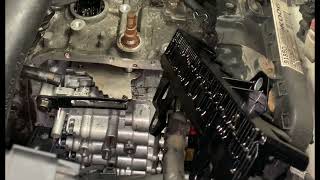
- Replace the faulty component (usually the sensor and often the internal harness as a preventative measure), reinstall the valve body cover with a new gasket, and refill the transmission 🎬 Watch: A step-by-step walkthrough of the sensor replacement procedure with the correct type (Hyundai SP-III) and amount of fluid.
- Clear the trouble codes and perform a test drive of at least two drive cycles (key-on to key-off) to ensure the transmission shifts smoothly and the code does not return.
Parts You'll Likely Need
- Automatic Transmission Fluid Temperature Sensor
(OEM #46386-3A050 (supersedes 46386-39050))— This sensor is the most common point of failure for the P0713 code on this vehicle.
Trusted brands: Standard Motor Products, Hyundai OE
OEM price range: $40-$60
Aftermarket price range: $20-$40 - Transmission Valve Body Cover Gasket
(OEM #46325-3A000)— The gasket must be replaced anytime the valve body cover is removed to prevent leaks.
Trusted brands: Hyundai OE
OEM price range: $20-$30
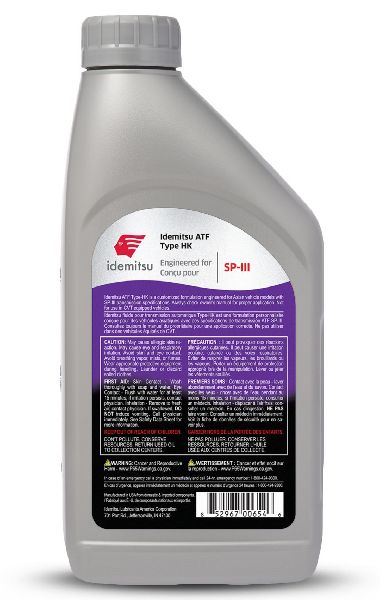
Aftermarket price range: $15-$25 - Automatic Transmission Fluid (ATF) — The fluid must be drained to access the sensor and refilled. The A5CF2 transmission in the NF Sonata specifies Hyundai Genuine ATF SP-III. Using a universal or incorrect fluid type can cause shifting problems.
Trusted brands: Hyundai Genuine ATF SP-III, Valvoline MaxLife ATF (SP-III compatible)
OEM price range: $15-$25 per quart
Aftermarket price range: $8-$15 per quart
Related Codes That Often Appear With This One
- P0711 — This code indicates 'Transmission Fluid Temperature Sensor 'A' Circuit Range/Performance', suggesting the sensor's readings are irrational, which can occur along with a circuit high fault.
- P0712 — This code means 'Circuit Low Input', the opposite of P0713. Seeing both may indicate an intermittent wiring problem that is shorting to ground and also opening up.
Technical Service Bulletins (TSBs) & Recalls
- TSB 14-AT-010: Addresses codes P0711, P0712, and P0713 on various Hyundai models including the Sonata, advising replacement of the oil temperature sensor/harness instead of the entire transaxle. It notes that on models from March 2013 onward, the sensor is integrated into the harness.
- TSB 13-AT-012: An earlier version of the TSB for the same issue, later superseded by 14-AT-010 to include more models.
Platform-Specific Known Issues
- Owner Experience with P0713: On Hyundai-Forums.com, a user described their car throwing codes P0711 and P0713, with symptoms of 'shifting harder when it's cold' and revving up slightly. The shifting would become normal after the car warmed up. This is a classic presentation of the temperature sensor failing and sending a bad reading when cold.
Mechanic-Grade Diagnostic Values
- Transmission Fluid Temperature Sensor Resistance — expected: A table of values includes: -40°C (-40°F) = 139.5 kΩ; 0°C (32°F) = 18.6 kΩ; 20°C (68°F) = 8.1 kΩ; 80°C (176°F) = 1.08 kΩ; 120°C (248°F) = 0.38 kΩ.. Failure: An infinite resistance (Open Loop) reading indicates a failed sensor. A reading that doesn't decrease as the fluid warms up also indicates failure.
- TFT Sensor Circuit Voltage at TCM — expected: The TCM supplies a 5V reference. The return signal voltage should vary with temperature. A P0713 code is typically set if the voltage is stuck high (e.g., >4.8V).. Failure: A constant high voltage reading that does not change as the engine warms up points to an open circuit in the wiring or a failed sensor.
Scan Tool Commands That Help
- Hyundai GDS (Global Diagnostic System): Flight Record / Mobile Data-recording Function — This function is useful for diagnosing intermittent wiring faults that may cause the P0713 code to appear and disappear. It records sensor data over a drive cycle, which can be reviewed later to spot momentary opens or shorts in the circuit that might not be present during a static test.
- Hyundai GDS (Global Diagnostic System): Data Analysis (Current Data) — Used to monitor the live 'Fluid Temperature Sensor' value. A static reading of -40°C or a fixed high temperature confirms the fault condition. The GDS can also link the DTC directly to relevant TSBs and repair information within the software.
Wiring & Ground Locations
- Transmission Connector (Harness Side) — The main round connector on the outside of the transmission case.. This is the primary point for testing the external wiring harness. You can back-probe the pins for the TFT sensor signal and ground to check for continuity back to the TCM without opening the transmission. A TSB suggests checking for damaged pins or pins not fully inserted into this connector.
- TCM Connector Pins (TFT Sensor) — At the Transmission Control Module (TCM). The exact pin numbers can vary, requiring a model-year specific wiring diagram. For example, on some diagrams, the sensor signal is on pin 2I and ground is on 2J.. Testing at the TCM connector is the final step to confirm if a wiring fault exists between the module and the transmission, or if the TCM itself is the issue (which is rare).
Real Owner Repair Stories
- YouTube user 'The mech a nic' (Hyundai Elantra (similar A4CF transmission family, procedure is analogous)) — Check engine light with codes P0711 and P0713, very hard shifting, and harsh engagement into Drive or Reverse.
❌ Tried (didn't work) The owner had been driving with the codes for some time before seeking repair.
✅ What actually fixed it The transmission fluid temperature sensor was replaced. The repair involved draining the fluid, removing the vertical side pan/cover of the transmission, unbolting the old sensor from the valve body area, and installing the new sensor. The fluid was then refilled. - NHTSA ODI #11329064 — An owner reported that while changing gears, the engine would shake badly. A diagnosis revealed code P0713 for a bad transmission temperature sensor.
OEM Part Supersession History
46386-39050→46386-3A050— Updated part design for improved reliability.
Heads up: The new part number (46386-3A050) is the correct replacement for the original and is fully compatible with the 2006-2010 Sonata.
Model Year Variations Within This Range
- 2006-2008: Four-cylinder models were equipped with a 4-speed automatic transmission. The P0713 code on these models would relate to the sensor in that specific transmission, though the diagnostic principles are similar.
- 2009-2010: For the 2009 model year refresh, the four-cylinder models were upgraded to the same A5CF2 5-speed automatic transmission used in the V6 models. Therefore, the repair procedure and parts are identical for both 4-cylinder and V6 Sonatas in these two years.
Diagnostic Flowchart
Other Known Issues on This Vehicle
Issues unrelated to this code that are worth knowing about as an owner of this generation:
- Rear Subframe Corrosion 🔴 High — Very common in 'Salt Belt' states, can occur after 80,000+ miles. Can lead to suspension component detachment. (Ref: Recall 113 (NHTSA Campaign 13V113000) was issued for inspection and replacement/rust-proofing in affected states.)
- Failing/Drooping Sun Visors 🟡 Low — Extremely common across all model years. The internal mechanism breaks, causing the visor to not stay up. (Ref: Recall 076 (NHTSA Campaign 06V234000) was for the warning label, but the visor assembly was often replaced. A class action lawsuit also addressed the issue.)
- Airbag Warning Light On 🟠 Medium — Commonly reported, often caused by a failure in the passenger seat Occupant Classification System (OCS) sensor mat. (Ref: There was a recall for the OCS sensor on some models, but failures are still common outside the recall scope.)
- Theta II 2.4L Engine Issues 🔴 High — While more prominent in the 2011+ models with GDI, the earlier MPI Theta II engines in the NF Sonata can still suffer from issues like oil consumption and timing chain tensioner noise on startup. (Ref: Multiple large-scale recalls and a lifetime warranty were issued for later Theta II GDI engines, but the NF Sonata's MPI version is less covered.)
- Parking Lights Staying On 🟡 Low — A known electrical issue where the parking lights remain illuminated even when the car is off, draining the battery. It is caused by an internal short in the in-cabin fuse box (Junction Block).
Used vs. New Parts: Buying Guide for This Vehicle
When a used part is the smart pick: For this specific repair, buying used parts is generally not recommended. The primary failure is the electronic sensor itself, which has a known high failure rate. A used sensor from a junkyard has an unknown history and may fail soon after installation. A used internal wiring harness might be acceptable if it is in excellent physical condition with no brittle wires or cracked connectors, but the cost savings are often minimal compared to the labor involved.
Donor-vehicle mileage cap: roughly under 50000 miles for the part to have meaningful remaining life.
What to inspect on the donor part:
- For a wiring harness, check for flexibility; avoid any that are stiff or brittle.
- Inspect all connector pins to ensure they are straight, clean, and free of corrosion.
- Verify the plastic connector housings are not cracked or broken.
- Avoid any parts from a vehicle that shows signs of flood or fire damage.
OEM-only on this vehicle (don't cheap out):
- Transmission Fluid Temperature Sensor: Given the high failure rate and the critical role it plays, using a Genuine Hyundai (OEM) sensor (part #46386-3A050) is strongly advised to ensure correct calibration and longevity.
- Valve Body Cover Gasket: Always use a new OEM gasket to prevent leaks, as the cost is low and the labor to fix a leak is high.
Aftermarket brands forum-validated for this vehicle:
- Standard Motor Products (SMP) is a reputable aftermarket manufacturer for sensors and connectors.
Brands owners have reported issues with on this vehicle:
- Avoid unbranded, no-name sensors from online marketplaces. The calibration can be incorrect, leading to persistent shifting issues even if the code is resolved.
Real Owner Stories
Aggregated from forums and TSBs cited above. Mileages and costs reflect what owners reported in those sources.
Hyundai Sonata (2006-2010)
Symptoms: The car was 'shifting harder when it's cold' and would rev up slightly. The shifting performance would become normal after the car warmed up.
What fixed it: This was identified as a classic presentation of a failing temperature sensor. The recommended repair, per TSB 14-AT-010, is the replacement of the oil temperature sensor and/or harness.
Source hint: Hyundai-Forums.com, as described in the 'Owner Experience with P0713' section of the article context.
Hyundai Sonata
Symptoms: An owner reported that while changing gears, the engine would shake badly. Additionally, the check engine light came on.
What fixed it: A diagnosis revealed code P0713 for a bad transmission temperature sensor (NHTSA ODI #11329064).
Related OBD-II Codes
Frequently Asked Questions
My 2008 Sonata is shifting very hard when it's cold but seems fine after it warms up. Is this related to code P0713?
What does Hyundai recommend for fixing a P0713 code on this Sonata?
My scan tool shows the transmission temperature is stuck at -40°F. Does this confirm the sensor is bad?
What kind of transmission fluid should I use when replacing the sensor on my 2006-2010 Sonata?
Can I test the transmission temperature sensor myself before buying a new one?
Are other vehicles like the Kia Optima affected by this same P0713 sensor problem?
Helpful Videos
We Have This Part in Stock


The information in this article is provided for general reference and educational purposes only. Vehicle specifications, procedures, and part compatibility can vary by production date, trim level, and region. Always consult your vehicle's factory service manual and verify part numbers before purchasing or performing repairs. Safety-critical components such as airbags, seat belts, and braking systems should be installed by a qualified professional.
- Hyundai Sonata:
- 🎬 Helpful Videos
- 🛍️ Shop This Part
- What's Unique About the 2006-2010 Hyundai Sonata
- Symptoms You May Notice
- Most Likely Causes
- Rare But Worth Checking
- Diagnosis Steps
- Parts You'll Likely Need
- Related Codes That Often Appear With This One
- Technical Service Bulletins (TSBs) & Recalls
- Platform-Specific Known Issues
- Mechanic-Grade Diagnostic Values
- Scan Tool Commands That Help
- Wiring & Ground Locations
- Real Owner Repair Stories
- OEM Part Supersession History
- Model Year Variations Within This Range
- Diagnostic Flowchart
- Other Known Issues on This Vehicle
- Used vs. New Parts: Buying Guide for This Vehicle
- Real Owner Stories
- Hyundai Sonata (2006-2010)
- Hyundai Sonata
- Related OBD-II Codes
- Frequently Asked Questions
- 🎟️ Get 5% Off