

P0708 on 2010-2017 Hyundai Tucson: Transmission Range Sensor Causes and Fixes
On a 2010-2017 Tucson, code P0708 is almost always caused by a faulty transmission range sensor, also known as an inhibitor switch. This can cause the vehicle to enter a 'limp mode' or fail to start. Expect to pay $30-$60 for an aftermarket sensor, with DIY repair being moderately difficult due to the need to remove the battery and airbox for access.
- P0708 on a 2010-2017 Tucson points directly to a problem with the transmission range sensor (inhibitor switch).
- Key symptoms include the check engine light, the transmission being stuck in 'limp mode', and potentially a no-start condition.
- The most common fix is to replace the sensor, which is located on top of the transmission and requires some disassembly to access.
- Before replacing the sensor, always check its electrical connector and wiring for corrosion or damage, as this can cause the same code.
- Due to the fail-safe mode impacting drivability, this issue should be addressed promptly for safety.
What's Unique About the 2010-2017 Hyundai TUCSON
The transmission range sensor (inhibitor switch) is a well-documented, high-failure part on this generation of Hyundai Tucson and its platform mates, as evidenced by multiple Technical Service Bulletins (TSBs) issued by the manufacturer. While the part itself is not unique, its tendency to fail on this platform is notable, with many owners reporting the issue in forums. The switch is located on top of the transmission, and accessing it requires removing the battery, battery tray, and air filter housing, which is consistent across the 2010-2017 model years.
Diagnostic Flowchart
Tap your situation to follow the diagnostic path that matches what you're seeing on this vehicle.
Generation note: This range covers the second generation (LM, 2010-2015) and the start of the third generation (TL, 2016-2017) Tucson. The cause of P0708, the location of the inhibitor switch (on the A6MF1/A6LF1 transmission), and the repair procedure are consistent across these models.
Symptoms You May Notice
- Check Engine Light is on
- Transmission is stuck in a single gear (fail-safe or 'limp' mode), often 4th gear.
- Gear position indicator on the dashboard is blank, incorrect, or all positions are lit up.
- Vehicle will not start, or only starts in Neutral.
- Harsh, erratic, or delayed shifting.
- Reduced engine power.
- Reverse lights do not illuminate when in Reverse.
- Replacing the entire transmission when only the external range sensor is faulty.
- Replacing the PCM/TCM before thoroughly testing the sensor, wiring, and adjustment.
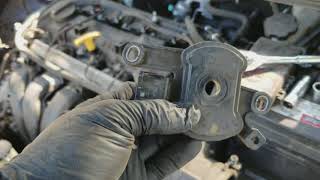
- Replacing the starter when a no-crank symptom is caused by the inhibitor switch not sending the correct Park/Neutral signal. 🎬 Watch: How this sensor causes intermittent starting issues.
Most Likely Causes
- Faulty Transmission Range Sensor (Inhibitor Switch) 🔴 High Probability This is a known high-failure item for this platform, as documented in Hyundai TSB #19-AT-024H. Owners in forums frequently report this specific part failing, sometimes intermittently at first.
How to confirm: Use a scan tool to monitor live data from the sensor while shifting gears. If the display shows invalid data or multiple gears selected at once, the sensor is bad. Alternatively, test the sensor's output pins with a multimeter for correct voltage/continuity for each gear position, comparing against the service manual.
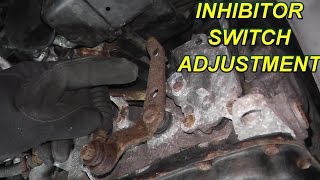
Typical fix: Replace the transmission range sensor. This requires removing the battery, battery tray, and air intake assembly to access the switch on top of the transmission. 🎬 See this walkthrough on replacing the sensor without special tools. After replacement, the new switch must be correctly aligned by placing the shifter in Neutral and inserting a 5mm bolt or alignment pin (SST 09480-A3800) into the alignment hole before tightening the lever nut. 🎬 Watch: A quick guide on how to adjust the inhibitor switch.
Est. part cost: $30-$95 - Damaged Wiring or Connector 🟡 Medium Probability The sensor's location can expose its wiring to engine bay heat and potential fluid contamination from other leaks, which can degrade the connector and wires over time, causing corrosion or short circuits.
How to confirm: Visually inspect the wiring harness and connector going to the inhibitor switch for signs of corrosion, melted plastic, or broken wires. Perform a continuity test on the wires if no visible damage is found.
Typical fix: Repair the damaged section of the wiring harness or clean/replace the connector. Ensure the connector is free of moisture and debris.
Est. part cost: $5-$50 - Misadjusted Inhibitor Switch or Shift Cable ⚪ Low Probability This is most likely to occur after a transmission repair or if the shift linkage has been disturbed. It can also happen if the switch's mounting bolts loosen over time.
How to confirm: Verify that the gear selected by the driver matches the position of the lever on the transmission and the reading on the scan tool. Check if the vehicle starts in Park and Neutral only. An adjustment is needed if it starts in other gears or not at all in P/N.
Typical fix: Place the shifter in Neutral. Loosen the mounting bolts for the inhibitor switch or the locknut on the shift cable. Align the switch by inserting a 5mm pin or bolt through the alignment hole on the switch and the lever. Tighten the mounting bolts/nuts to specification.
Est. part cost: $0
Rare But Worth Checking
- Faulty Powertrain Control Module (PCM) or Transmission Control Module (TCM): This is very rare. All other possibilities, especially the sensor and its wiring, must be exhaustively ruled out before condemning the control module. A faulty module may also set other codes.
Diagnosis Steps
- Connect an OBD-II scanner and confirm P0708 is present. Note any other transmission-related codes (P0705, P0706, P0707 are common companions).
- Access the inhibitor switch on top of the transmission. This will require removing the air intake assembly, battery, and battery tray.
- Visually inspect the switch, its electrical connector, and the nearby wiring for any obvious signs of damage, corrosion, or fluid contamination.
- With a scan tool capable of live data, monitor the Transmission Range Sensor parameter. Slowly move the gear shifter through P, R, N, and D. The reading should be clear and correspond to each gear position. If it shows 'Invalid' or multiple gears at once, the sensor has failed.
- If no advanced scan tool is available, disconnect the sensor. Use a multimeter to test the continuity and voltage at the sensor's pins for each gear position, following the vehicle's service manual specifications.
- If the sensor and wiring test good, check the shift cable linkage to ensure it is not loose or misadjusted. Ensure the manual lever on the transmission moves fully into each detent.
- After replacing the sensor, it MUST be adjusted. Place the shifter in Neutral, install the new switch, and insert a 5mm bolt or alignment pin through the switch's guide hole to align it before tightening the lever nut.
- If the sensor, wiring, and adjustment are all confirmed to be good, the final step is to investigate a rare fault in the Transmission Control Module (TCM).
Parts You'll Likely Need
- Transmission Range Sensor / Inhibitor Switch
(OEM #42700-3B010 (This part number supersedes 42700-3B000))— This is the most common point of failure for code P0708 on this vehicle, as confirmed by manufacturer TSBs and extensive owner reports.
Trusted brands: Hyundai (Genuine OEM), Dorman, Standard Motor Products (SMP), Beck/Arnley
OEM price range: $80-$130
Aftermarket price range: $30-$80
Related Codes That Often Appear With This One
- P0705 — This code indicates a general circuit malfunction for the range sensor and often appears with more specific codes like P0708.
- P0706 — This code indicates a range/performance issue with the sensor, which can be caused by the same underlying faults as P0708.
- P0707 — This code for 'Circuit Low Input' is the opposite of P0708 but points to the same component and wiring harness as the source of the problem.
Technical Service Bulletins (TSBs) & Recalls
- 19-AT-024H: The most comprehensive TSB, superseding 17-AT-005. It lists P0708 as 'Range switch - short circuit or multiple inputs' and details symptoms including MIL light, 4th gear fail-safe, no gear indication, and intermittent no-start. It provides the full diagnostic and replacement procedure, including the crucial alignment step.
- 5NP-V3F8T-09: An earlier TSB containing identical diagnostic information, confirming the long-standing nature of this known issue.
Platform-Specific Known Issues
- Hyundai issued Technical Service Bulletin #19-AT-024H, which supersedes earlier versions and directly addresses DTCs P0705, P0706, P0707, and P0708. It covers a wide range of Hyundai and Kia vehicles, including the Tucson, and lists the inhibitor switch as the cause for symptoms like MIL illumination, 4th gear fail-safe mode, and no-start conditions.
- A video from a 2012 Tucson owner demonstrates the entire replacement process, confirming the location and steps required, and mentions that the OEM part number has been updated by the manufacturer, indicating a possible revision to address the defect.
Mechanic-Grade Diagnostic Values
- Inhibitor Switch Power Supply Voltage — expected: Battery Voltage (approx. 12V). Failure: If no voltage is present at the power supply pin (Pin 3), there is an issue with the wiring or a fuse upstream from the sensor.
- Inhibitor Switch Signal Voltage (per gear) — expected: When a gear is selected, its corresponding signal pin should read Battery Voltage (approx. 12V) while all other signal pins read 0V.. Failure: If multiple signal pins show voltage simultaneously, or if the correct pin does not show voltage when a gear is selected, the switch is faulty.
- Rear Combination Lamp Ground Voltage Drop — expected: Less than 0.2 V. Failure: Voltage greater than 0.2V indicates a poor ground connection that must be cleaned and tightened. A bad ground in this circuit can cause electrical feedback that triggers P0708.
Scan Tool Commands That Help
- Hyundai GDS (or equivalent advanced scanner): Live Data Monitoring for 'Current Gear Shift Lever Switch' — This is the primary scan tool diagnostic step. While moving the shifter through each gear (P, R, N, D), the scan tool display should show the corresponding gear. If the display is blank, shows 'Invalid', or jumps between gears, it confirms a fault in the sensor or its circuit.
Wiring & Ground Locations
- Inhibitor Switch Connector — On top of the transmission, connected to the inhibitor switch.. This connector is the primary interface for the sensor. Pin 3 (Pink wire) is the 12V power supply. Other pins (e.g., Pin 8, a Brown wire) correspond to specific gear signals. Testing voltage at these pins is key to diagnosis.
- TCU and TCU2 Fuses — In the junction box in the engine compartment.. A blown fuse for the Transmission Control Unit will cut power to the system and can cause this and other transmission codes. This should be checked early in the diagnosis.
- Rear Combination Lamp Ground — Near the rear tail light assembly.. A Hyundai TSB specifically calls out checking this ground for tightness (Torque: 7~9 lb-ft). A poor ground here can cause voltage to back-feed through shared circuits, confusing the TCM and triggering a P0708 code.
Real Owner Repair Stories
- iCarsoft CR MAX BT Customer Review (2017 Hyundai Tucson) — Vehicle would not start in Park or Neutral, check engine light with code P0708.
❌ Tried (didn't work) Received a shop quote for $600 for transmission repairs.
✅ What actually fixed it The owner found a corroded connector on the transmission range sensor. Cleaning the connector with electrical contact cleaner and clearing the code resolved all symptoms.
When the Usual Fixes Don't Work
- While P0708 is overwhelmingly caused by a faulty inhibitor switch or its direct wiring, there are documented edge cases where the root cause is entirely different. A Hyundai TSB directs technicians to check the ground for the rear combination lamp, as a poor ground can cause electrical feedback and trigger this code. In one documented case on a 2005 Tucson, a faulty tail light was the confirmed cause of a P0708 code, which was resolved by fixing the lighting circuit. This demonstrates that if standard diagnosis of the sensor and its wiring does not reveal a fault, technicians should investigate seemingly unrelated circuits that may share a ground or power source with the transmission control system.
OEM Part Supersession History
42700-3B000→42700-3B010— Likely an internal revision by the manufacturer to improve reliability, as this is a known high-failure part.
Heads up: This part number series is primarily for the 2nd Generation (LM) Tucson (approx. 2010-2015).
Model Year Variations Within This Range
- 2010-2015 (LM Generation): These models typically use inhibitor switch part number 42700-3B010 (which supersedes 42700-3B000).
- 2016-2017 (TL Generation): These models use a different inhibitor switch. Common part numbers include 42700-3B700 or 42700-23000 depending on the specific build. It is critical to verify the part number with a VIN before ordering for these years.
Helpful Videos

Used OEM Parts in Stock


New Aftermarket Parts Available


The information in this article is provided for general reference and educational purposes only. Vehicle specifications, procedures, and part compatibility can vary by production date, trim level, and region. Always consult your vehicle's factory service manual and verify part numbers before purchasing or performing repairs. Safety-critical components such as airbags, seat belts, and braking systems should be installed by a qualified professional.
- Hyundai TUCSON:
- 🎬 Helpful Videos
- 🛍️ Shop This Part
- What's Unique About the 2010-2017 Hyundai TUCSON
- Diagnostic Flowchart
- Symptoms You May Notice
- Most Likely Causes
- Rare But Worth Checking
- Diagnosis Steps
- Parts You'll Likely Need
- Related Codes That Often Appear With This One
- Technical Service Bulletins (TSBs) & Recalls
- Platform-Specific Known Issues
- Mechanic-Grade Diagnostic Values
- Scan Tool Commands That Help
- Wiring & Ground Locations
- Real Owner Repair Stories
- When the Usual Fixes Don't Work
- OEM Part Supersession History
- Model Year Variations Within This Range
- 🎟️ Get 5% Off