

P0707 on 2010-2017 Hyundai TUCSON: Inhibitor Switch Causes and Fixes
P0707 on a 2010-2017 Hyundai Tucson almost always points to a faulty transmission range sensor, also known as an inhibitor switch. This part fails frequently on Hyundai's 6-speed automatic transmissions. The failure can cause a no-start condition, incorrect gear display, erratic shifting, or the vehicle entering 'limp mode'. Expect to pay $150-$350 for a repair, which involves replacing the sensor located on the exterior of the transmission.
- P0707 on your Tucson means the computer has lost the signal from the gear selector switch, which can prevent the car from starting or cause serious shifting problems.
- The most likely culprit is a failed inhibitor switch (also called a transmission range sensor), a known issue for this vehicle.
- Before replacing the switch, ensure the problem isn't a simpler fix like a blown fuse, a corroded connector, or a misadjusted shift cable.
- This is not a DIY-friendly repair for beginners due to the electrical diagnosis required. A misdiagnosis can be costly.
- Always use your vehicle's VIN to confirm the correct OEM part number for the inhibitor switch, as several versions exist.
What's Unique About the 2010-2017 Hyundai TUCSON

For this era of Hyundai Tucson, equipped with the A6MF1 or A6MF2 6-speed automatic transmission, the inhibitor switch is a well-documented, high-failure-rate item. The problem is so common that Hyundai has issued multiple TSBs, such as 17-AT-005, that cover this exact code for both the second (LM) and third (TL) generation Tucsons, acknowledging it as a known issue. While the repair is straightforward, proper diagnosis is key, as wiring issues or a misadjusted shift cable can sometimes mimic a failed switch, a point often raised in owner forums.
Diagnostic Flowchart
Tap your situation to follow the diagnostic path that matches what you're seeing on this vehicle.
Generation note: This guide covers two Tucson generations: the second generation (LM, 2010-2015) and the early third generation (TL, 2016-2017). The P0707 code and its primary cause, the inhibitor switch, are common to both generations, as confirmed by Hyundai TSB 17-AT-005 which applies to both 'LM' and 'TL' models. Both generations use a variant of the 6-speed A6 automatic transmission where this switch is a known weak point. Specific part numbers for the switch may vary, so confirming with a VIN is essential.
Symptoms You May Notice
- Check Engine Light is on.
- Engine will not crank or start, or only starts in 'N' (Neutral).
- Gear indicator on the dashboard is incorrect, does not display, or does not show 'P' when in Park.
- Harsh, delayed, or erratic shifting between gears.
- Vehicle enters 'fail-safe' or 'limp mode' (often stuck in 4th gear).
- Reverse lights do not turn on when in Reverse.
- Slight engine stumble when shifting into Park after a long drive.
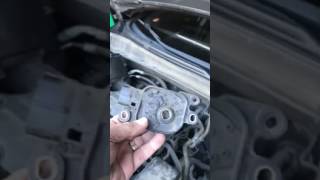
- Replacing the inhibitor switch when the actual problem is a misadjusted shift cable, a corroded connector, or a blown fuse. 🎬 Watch this before you buy a new inhibitor switch.
- Replacing the battery or starter when the root cause of the no-start condition is the P0707 code from a faulty inhibitor switch.
Most Likely Causes

- Failed Inhibitor Switch (Transmission Range Sensor) 🔴 High Probability This is a widely documented failure point for many Hyundai and Kia models of this era using the 6-speed automatic transmission, as evidenced by multiple TSBs (e.g., 17-AT-005, SA317A). Forum discussions are filled with owners who have had to replace this part, sometimes multiple times.
How to confirm: A technician can monitor the sensor's output data with a scan tool while shifting gears. If the 'Shift Lever Switch' data does not show the correct gear position, the switch is likely faulty, assuming wiring is intact. The TSB procedure involves this step.
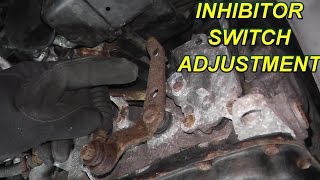
Typical fix: Replace the inhibitor switch on the transmission housing. The new switch must be correctly aligned during installation, often by inserting a 5mm bolt or alignment tool before tightening the lever nut. 🎬 Watch: How to properly align and adjust the inhibitor switch.
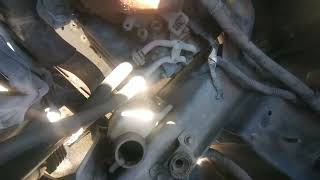
Est. part cost: $80-$130 - Damaged Wiring or Corroded Connector 🟡 Medium Probability The sensor and its wiring are located on the front/top of the transmission, 🎬 See this video to locate and remove the range sensor. exposing them to moisture, road salt, and debris, which can lead to corrosion or damage over time. Water ingress into the connector is a common cause of low voltage signals.
How to confirm: Visually inspect the wiring harness and connector for signs of corrosion (green crust), chafing, or broken wires. TSB 17-AT-005 advises checking for damaged or improperly seated pins in the connector. A continuity test with a multimeter from the sensor connector to the TCM can check for an open circuit.
Typical fix: Clean the connector terminals with electrical contact cleaner or repair/replace the damaged section of the wiring harness. In some cases, the connector pigtail may need to be replaced.
Est. part cost: $5-$50 - Misadjusted or Stretched Shift Cable ⚪ Low Probability Over time, the mechanical linkage between the gear shifter and the transmission can stretch or go out of adjustment. This causes a mismatch between the selected gear and the sensor's rotational position, leading the TCM to see an invalid input.
How to confirm: Check if the gear indicator on the dash accurately reflects the shifter position. A technician can verify the cable's adjustment at the transmission's manual control lever. The adjustment procedure is detailed in forum posts and service manuals.
Typical fix: Adjust the shift cable linkage according to the service manual procedure. This is often checked before replacing the switch.
Est. part cost: $0
Rare But Worth Checking
- Blown Fuse: A simple blown fuse for the transmission controls (often labeled TCU or TCU2 in the engine bay junction box) can cause a P0707 code by cutting power to the circuit. TSB 17-AT-005 includes a step to check these fuses before proceeding with more complex diagnostics.
- Faulty Powertrain/Transmission Control Module (PCM/TCM): In rare cases, the module itself may fail to correctly read the signal from a perfectly good sensor and circuit. TSB 17-AT-005 lists replacing the PCM/TCM as the final step if all other diagnostics fail and the code returns after wiring repairs. This is an expensive last resort.
Diagnosis Steps
- Read the fault codes with an OBD-II scanner and check for any other related transmission codes (P0705, P0706, P0708).
- Use a scan tool with live data to monitor the 'Shift Lever Switch' parameter while moving the shifter through all gears (P, R, N, D). Confirm if the displayed gear matches the lever position. An incorrect or absent reading points to the sensor/circuit.
- Inspect the 'TCU' and 'TCU2' fuses in the engine compartment fuse box. Ensure they are not blown and fit tightly.
- Visually inspect the inhibitor switch connector and wiring harness on the transmission for any obvious signs of damage, corrosion, or loose connections. Disconnect and check for bent or corroded pins.
- Check the adjustment of the shift cable. Ensure the manual control lever on the transmission is being fully engaged in each gear position.
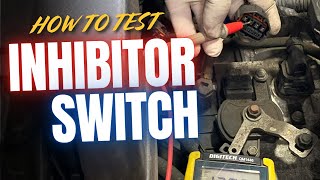
- If wiring and adjustment are good, test the switch itself. This involves checking for voltage and ground at the connector per the service manual. An open circuit within the switch will confirm it has failed.
- If a new switch is installed, ensure it is properly aligned. TSB 17-AT-005 describes installing a 5mm bolt or guide pin (SST 09480-A3800) to align the switch before tightening the manual control lever nut.
- If the code returns after replacing the switch, perform a continuity test on the wiring harness between the switch and the TCM. If the wiring is confirmed good, the final step is to diagnose the Transmission Control Module (TCM).
Parts You'll Likely Need

- Inhibitor Switch (Transmission Range Sensor)
(OEM #42700-26700)— This is the most common component to fail, causing the P0707 code. Part number 42700-26700 is the latest revision and supersedes older numbers like 42700-26500, 42700-26000, 42700-3B100, 42700-3B500, and 42700-3B710. Always verify the correct part for your vehicle's VIN.
Trusted brands: Hyundai (Genuine), Kia (Genuine), Dorman, Standard Motor Products (SMP)
OEM price range: $80-$130
Aftermarket price range: $55-$90
Related Codes That Often Appear With This One
- P0705 — This code indicates a general circuit malfunction for the range sensor and often appears alongside more specific codes like P0707. Multiple TSBs group these codes together as having the same root cause.
- P0706 — This code indicates a range/performance issue with the sensor, which can be caused by the same underlying electrical faults or adjustment issues as P0707.
- P0708 — This code indicates a 'short circuit or multiple inputs,' the opposite of P0707's 'open circuit.' Seeing them together could point to an intermittent wiring problem or internal failure of the switch.
Technical Service Bulletins (TSBs) & Recalls
- 17-AT-005: The most comprehensive TSB for this issue, covering 2010-2017 Tucson models. It provides full diagnostic steps for P0705, P0706, P0707, and P0708, including symptoms like '4th gear fail-safe' and 'No gear indication in cluster'.
- 12-AT-022-1: A TSB for various
Platform-Specific Known Issues
- Hyundai TSB 17-AT-005 provides a detailed diagnostic procedure for codes P0705-P0708 on 2010-2015 (LM) and 2016-2017 (TL) Tucson models, acknowledging this as a known issue. The TSB outlines steps from checking live data to switch alignment.
- A user on Tsikot.com, a Philippines car forum, described their 2010 Tucson having prominent shifting problems (N to R, P to R) and confirmed the inhibitor switch was the known cause. They noted the dealer had previously just tried an ECU update under warranty, which did not fix the intermittent issue.
Mechanic-Grade Diagnostic Values
- Inhibitor Switch Power Supply Voltage — expected: 12V (Battery Voltage) with ignition on. Failure: 0V or significantly lower voltage indicates a problem with the fuse or power supply wire.
- Inhibitor Switch Signal Voltage (Live Data) — expected: Varies by gear, should be stable. Failure: A reading below 0.5V on the 'TRS A Voltage' PID confirms a low circuit condition.
- Inhibitor Switch Internal Resistance — expected: Continuity (near 0 Ohms) between specific pins depending on gear position.. Failure: Infinite resistance or 'OL' (Open Loop) on a multimeter when testing between the specified pins for a selected gear indicates an internal failure of the switch.
Scan Tool Commands That Help
- Hyundai GDS (Global Diagnostic System): Vehicle S/W Management — Used to check for and apply any available software updates to the TCM, which could potentially resolve logic errors related to the P0707 code, though it is less common than a hardware fault.
- Hyundai GDS (Global Diagnostic System): Actuation Test / Guided Diagnostics — The OEM scan tool provides guided troubleshooting procedures and allows for actuation tests, which can help a technician systematically verify the integrity of the entire circuit, from the TCM to the sensor.
- Hyundai GDS (Global Diagnostic System): TCM Relearn/Reset — After replacing a major component like the inhibitor switch or TCM, a relearn or reset procedure may be necessary to clear adaptive values and ensure the new component is recognized correctly.
Wiring & Ground Locations

- Inhibitor Switch Connector Pinout — On the inhibitor switch itself, located on the top/front of the 6-speed automatic transmission.. Knowing the specific pin functions allows for precise testing. Pin 3 is the 12V power supply. Pins 1 and 2 are for the starter circuit (Park/Neutral). Pins 4, 7, 8, and 9 are the individual signal wires for Reverse, Neutral, Park, and Drive respectively, which tell the TCM the gear position. A low signal on one of these can trigger P0707.
Real Owner Repair Stories
- YouTube user 'Fix it Angel' (2012 Hyundai Tucson) — Vehicle would not start; engine would not crank or roll over.
❌ Tried (didn't work) Checked all fuses.
✅ What actually fixed it Replacing the inhibitor switch (neutral safety switch) on top of the transmission. The video shows the old part was visibly worn internally compared to the new part. - YouTube user 'jaysT4R' (2010-2013 Hyundai Elantra (uses same part #42700-26700)) — Intermittent no-start condition. Sometimes the car would start, other times it would not.
✅ What actually fixed it Replacing the inhibitor switch with a genuine Hyundai part (42700-26700), which cost the owner approximately $46. The repair was straightforward and solved the intermittent starting problem.
OEM Part Supersession History
42700-26000, 42700-26500→42700-26700— Component revision and improvement by the manufacturer.
Heads up: The newer part number 42700-26700 is listed as a direct replacement for the older numbers on models within the specified range.
Model Year Variations Within This Range
- 2016-2017: The third-generation (TL) Tucson introduced an optional 1.6L turbocharged engine paired with a 7-speed dual-clutch transmission (DCT). This guide and the common P0707 fault primarily apply to the more common 2.0L and 2.4L engines equipped with the 6-speed conventional automatic transmission. The 7-speed DCT uses a different gear selection mechanism and may not be susceptible to this specific inhibitor switch failure.
Helpful Videos
Used OEM Parts in Stock


New Aftermarket Parts Available





The information in this article is provided for general reference and educational purposes only. Vehicle specifications, procedures, and part compatibility can vary by production date, trim level, and region. Always consult your vehicle's factory service manual and verify part numbers before purchasing or performing repairs. Safety-critical components such as airbags, seat belts, and braking systems should be installed by a qualified professional.
- Hyundai TUCSON:
- 🎬 Helpful Videos
- 🛍️ Shop This Part
- What's Unique About the 2010-2017 Hyundai TUCSON
- Diagnostic Flowchart
- Symptoms You May Notice
- Most Likely Causes
- Rare But Worth Checking
- Diagnosis Steps
- Parts You'll Likely Need
- Related Codes That Often Appear With This One
- Technical Service Bulletins (TSBs) & Recalls
- Platform-Specific Known Issues
- Mechanic-Grade Diagnostic Values
- Scan Tool Commands That Help
- Wiring & Ground Locations
- Real Owner Repair Stories
- OEM Part Supersession History
- Model Year Variations Within This Range
- 🎟️ Get 5% Off