

P0705 on 2000-2005 Mercury Sable: Transmission Range Sensor Failure Causes and Fixes
P0705 on a 2000-2005 Sable most often means the Transmission Range Sensor (TRS) has failed. This can cause a no-start, harsh shifting, or an incorrect gear display. The sensor itself is the most likely culprit, but wiring issues and corrosion are also common. The sensor is mounted externally on the 4F50N transmission, making it vulnerable.
- P0705 on your Sable points to a problem with the system that tells the car's computer which gear is selected.
- The most common cause is the Transmission Range Sensor (TRS) itself failing due to its exposed location on the side of the transmission.
- Symptoms often include the car not starting in Park (but possibly starting in Neutral), a flashing O/D light, and harsh shifting.
- Before replacing the sensor, always inspect the wiring harness for corrosion or damage, as this is another frequent cause.
- The correct OEM replacement part is Motorcraft SW-5978.
- In rare cases, after the sensor and wiring are confirmed good, the fault can be within the Powertrain Control Module (PCM).
What's Unique About the 2000-2005 Mercury Sable
The 2000-2005 Mercury Sable and its twin, the Ford Taurus, use the 4F50N (an evolution of the AX4N) automatic transmission. On this platform, the Transmission Range Sensor is mounted on the outside of the transmission case, where it is exposed to road salt, water, and debris. This leads to a high failure rate from corrosion of the sensor's internal contacts and its electrical connector. While the sensor itself is the most frequent failure point, these vehicles can also suffer from wiring harness issues where the harness chafes against the engine or transmission, or in rarer cases, a failure of the PCM driver circuit for the sensor.
Symptoms You May Notice
- Check Engine Light is on
- Flashing "Check Transaxle" or O/D (Overdrive) light
- Vehicle will not start, or only starts in Neutral instead of Park.
- Harsh or delayed gear engagement, especially a "buck" or "clunk" when shifting into Reverse or Drive.
- Gear indicator on the dashboard is incorrect, does not display at all, or flashes.
- Reverse lights do not turn on when in Reverse.
- Transmission enters 'limp mode,' often stuck in 2nd or 3rd gear.
- Replacing the Transmission Range Sensor without checking the wiring. A forum user with a 2001 Sable replaced the sensor, but the problem persisted because the issue was likely in the wiring or PCM.
- Mistaking a vacuum leak for a transmission issue. On some Ford vehicles, a significant vacuum leak (like from a deteriorated PCV elbow) can cause 🎬 Watch: Check this common vacuum leak before buying any parts. rough idle and may coincidentally trigger a P0705 code, leading to diagnostic confusion.
Most Likely Causes
- Failed Transmission Range Sensor (TRS) 🔴 High Probability The sensor is mounted externally on the transmission, making it highly susceptible to corrosion and water intrusion from road spray, especially in regions that use road salt.
How to confirm: Perform a 'wiggle test': if the car starts in Neutral but not Park, try wiggling the shifter while holding the key in the 'start' position. If it starts, the sensor is likely misaligned or failing. A more definitive test involves using a multimeter to check the sensor's output signals for each gear position against the service manual's specifications. An incorrect or missing signal indicates a bad sensor.
Typical fix: Replace the Transmission Range Sensor. This involves disconnecting the electrical connector and shift linkage, unbolting the old sensor, and installing a new one. The new sensor must be properly aligned, often by placing the transmission in Neutral and lining up marks on the sensor body. 🎬 See a walkthrough of the sensor replacement and alignment process.
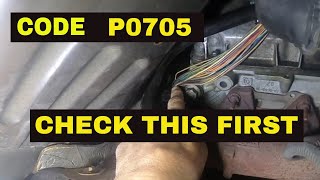
Est. part cost: $40-$80 - Damaged Wiring or Corroded Connector 🟡 Medium Probability The wiring harness leading to the TRS is exposed to the elements, engine heat, and vibration. Wires can chafe against the cylinder head or transmission brackets, causing a short. The connector pins are also prone to water intrusion and corrosion.
How to confirm: Visually inspect the entire wiring harness from the sensor to the firewall. Check for green or white corrosion inside the connector. Look for chaffed insulation or broken wires, particularly where the harness runs close to the engine. Perform a continuity test on each wire between the sensor and the PCM.
Typical fix: Clean the connector terminals with an electrical contact cleaner and apply dielectric grease. If corrosion is severe, the connector pigtail may need to be replaced. Repair any broken or damaged wires using heat-shrink butt connectors.
Est. part cost: $10-$60 - Misadjusted Shift Linkage ⚪ Low Probability Over time, the cable connecting the gear shifter inside the car to the manual lever on the transmission can stretch or become misaligned, causing a mismatch between the selected gear and what the sensor reports.
How to confirm: Ensure that when the shifter is in a specific gear (e.g., Neutral), the manual lever on the transmission and the alignment marks on the TRS are also perfectly in the Neutral position.
Typical fix: Adjust the shift linkage cable according to the manufacturer's procedure. This usually involves loosening a lock nut on the cable and repositioning it.
Est. part cost: $0
Rare But Worth Checking
- Faulty Powertrain Control Module (PCM): A diagnostic video for a 2000 Ford Taurus with P0705 and P1702 showed that after confirming the sensor and wiring were good, the internal driver circuit in the PCM was the actual cause of the failure. The technician diagnosed this by back-probing the PCM connector and finding one of the sensor input circuits was shorted to ground internally. This should be considered a last resort after all other possibilities have been ruled out.
Diagnosis Steps
- Scan for all diagnostic trouble codes. Note if any other codes, like the Ford-specific P1702, are present.
- Check the transmission fluid level and condition. Low or dirty fluid can cause shifting issues, though it's less likely to be the primary cause of a P0705.
- Perform a 'wiggle test'. Try to start the engine in Neutral. If it starts, try starting in Park while moving the shifter slightly. If it starts, this points towards a faulty or misaligned sensor.
- Visually inspect the Transmission Range Sensor, its electrical connector (C167), and the wiring harness for any obvious signs of damage, corrosion, or loose connections. Pay close attention to where the harness may rub against other components.
- Verify shift linkage alignment. Ensure the gear selected on the shifter matches the position of the lever on the transmission.
- Using a scan tool, observe the live data for the gear position (PRNDL input) that the PCM is seeing. If the data is erratic or doesn't match the shifter position, the fault is active.
- Test the TRS output. This involves using a multimeter to check for correct voltage or resistance signals at the sensor's connector for each gear position. Compare these readings to the vehicle's service manual.
- If the sensor tests bad, replace it. The Motorcraft OEM part is SW-5978. Ensure the new one is correctly aligned during installation.
- If the sensor tests good, perform a continuity and short-to-ground/power test on the wiring between the TRS connector and the PCM. Repair any faults found.
- If the sensor and wiring are both confirmed to be good, the issue may be with the Powertrain Control Module (PCM) itself, which is a rare but possible failure.
Parts You'll Likely Need
- Transmission Range Sensor
(OEM #F5TZ-7A247-AA (Motorcraft SW-5978))— This is the most common component to fail for this code due to its exposed location and constant use. Corrosion is the primary killer of this part.
Trusted brands: Motorcraft (OEM), Standard Motor Products (SMP), Dorman
OEM price range: $70-$100
Aftermarket price range: $40-$80
Related Codes That Often Appear With This One
- P1702 — This is a Ford-specific code that indicates an intermittent failure in the Transmission Range Sensor circuit. It often appears alongside P0705, reinforcing that the TRS system is the source of the problem.
- P1705 — This Ford-specific code indicates the Manual Lever Position Sensor was out of self-test range during the Key On Engine Off (KOEO) test, pointing directly to a problem with the sensor or its adjustment at startup.
Platform-Specific Known Issues
- Successful DIY Replacement on a 2001 Taurus: A user on TaurusClub.com with a 2001 Ford Taurus (Sable twin) experienced a no-start in Park, but the car would start in Neutral, a classic P0705 symptom. They successfully replaced the Transmission Range Sensor (MLPS) themselves. The process involved removing the air cleaner assembly for access, disconnecting the shift cable and electrical connector, removing two bolts, and swapping the sensor. They noted the importance of aligning the new sensor correctly in the Neutral position. The repair completely solved their starting issue.
Mechanic-Grade Diagnostic Values
- TRS Resistance (Ohms) between signal and signal return pins — expected: Park: ~3769-4608 Ω, Reverse: ~1303-1594 Ω, Neutral: ~660-807 Ω, Drive: ~361-442 Ω, 2nd: ~190-232 Ω, 1st: ~80-95 Ω. Failure: Readings are open (infinite resistance), shorted (zero resistance), or significantly outside the specified range for a given gear.
- Scan Tool Live Data PID: TR_DC (Duty Cycle) — expected: Park: 8.0-25.8%, Reverse: 30.5-39.3%, Neutral: 40.5-52.5%, Drive: 54.3-71.2%. Failure: The duty cycle percentage does not match the selected gear or is erratic while wiggling the harness.
- Scan Tool Live Data PID: TR_FREQ (Frequency) — expected: 100-150 Hz. Failure: The frequency is outside of this range or is unstable.
Hidden / Shadow Codes Worth Checking
- P1705: Manual Lever Position Sensor Out of Self-Test Range. This code indicates the sensor's reading was not within the expected range for Park or Neutral during the Key On Engine Off (KOEO) self-test. (see via Ford-capable scan tool (like Ford IDS) that can run a KOEO self-test.)
Scan Tool Commands That Help
- Ford IDS (or equivalent professional scanner): Live Data PID Monitoring (TR, TR1, TR2, TR3, TR4, TR_DC, TR_FREQ) — This is the primary method for diagnosing the TRS circuit electronically without manual probing. The technician can watch the gear position reported by the PCM in real-time while moving the shifter. Wiggling the harness while observing these PIDs can quickly identify intermittent connection issues.
Wiring & Ground Locations
- C167 — The electrical connector on the Transmission Range Sensor (TRS) itself, located on the driver's side exterior of the 4F50N transmission case.. This is the primary connection point to test the sensor and the harness. It is highly exposed to road spray and debris, making corrosion on its pins a very common cause of P0705.
- G101 — On the left side of the engine, above the starter motor.. This is a major engine ground point. While not directly for the TRS, a poor engine ground can cause a variety of electrical issues and erratic sensor readings. Verifying this ground is clean and tight is a good practice when diagnosing any electrical fault in the engine bay.
Real Owner Repair Stories
- TaurusClub.com Forum (2001 Ford Taurus (Mercury Sable twin)) — No start in Park, but would start in Neutral. Flashing O/D light.
❌ Tried (didn't work) Initially, the owner was unsure of the cause.
✅ What actually fixed it The owner replaced the Manual Lever Position Sensor (MLPS/TRS). The process required removing the air filter housing for access. After replacing and correctly aligning the new sensor in Neutral, all symptoms were resolved, and the car started normally in Park.
Diagnostic Flowchart
Other Known Issues on This Vehicle
Issues unrelated to this code that are worth knowing about as an owner of this generation:
- Catastrophic Transmission Failure 🔴 High — Common across the platform. Many owners report transmission failure or needing a rebuild well under 150,000 miles. A common failure point is the torque converter splines stripping out, causing a sudden loss of all forward and reverse gears.
- Camshaft Synchronizer Failure (3.0L Vulcan V6) 🔴 High — A well-documented issue on the 3.0L OHV Vulcan engine. The synchronizer, which replaced the distributor, wears out and begins to chirp or squeak. If ignored, it can fail completely, which also stops the oil pump, leading to catastrophic engine failure.
- Cracked/Broken Coil Springs 🟠 Medium — Front and rear coil springs are known to crack or break, especially in regions with road salt usage. This can cause a sudden drop in ride height, noise over bumps, and unsafe handling.
- Valve Recession / Head Gasket Leaks (3.0L Vulcan V6) 🟠 Medium — Early models were prone to head gasket failures. Later models (approx. 2004-2006) could have cylinder heads made with soft metal, leading to valve recession, loss of compression, and misfires. (Ref: Ford issued a technical bulletin regarding defective cylinder heads for 2004-2006 3.0L engines.)
- Harsh Shifting (1-2 Shift) 🟡 Low — The 4F50N/AX4N transmission can develop a harsh or banging shift from 1st to 2nd gear. This can be caused by a variety of valve body issues, including a missing check ball or an incorrectly installed 1-2 capacity modulator valve.
Used vs. New Parts: Buying Guide for This Vehicle
When a used part is the smart pick: For this specific repair, a used part from a junkyard is NOT recommended. The failure is due to wear and corrosion, and a used sensor has unknown remaining life. The labor involved in replacement is significant enough that installing a new part with a warranty is the most cost-effective and reliable choice.
What to inspect on the donor part:
- Not applicable as used parts are not advised.
OEM-only on this vehicle (don't cheap out):
- While not strictly 'OEM-only', using a quality new part is critical. Avoid used sensors.
Aftermarket brands forum-validated for this vehicle:
- Motorcraft (OEM)
- Standard Motor Products (SMP)
- Dorman
Brands owners have reported issues with on this vehicle:
- No-name, unbranded parts from online marketplaces should be avoided due to potential issues with incorrect internal resistance values and poor weather sealing, which could lead to a repeat failure.
Real Owner Stories
Aggregated from forums and TSBs cited above. Mileages and costs reflect what owners reported in those sources.
2001 Ford Taurus
Symptoms: The car would not start when in Park, but it would start when shifted into Neutral.
What fixed it: The owner performed a DIY replacement of the Transmission Range Sensor (also called MLPS). Correctly aligning the new sensor in the Neutral position completely solved the starting issue.
Source hint: TaurusClub.com: 'MLPS replacement write-up'
2000 Ford Taurus
Symptoms: Vehicle set codes P0705 and P1702 after diagnosis showed the sensor and wiring were good.
What fixed it: The ultimate fault was determined to be an internal short in the Powertrain Control Module (PCM), which required replacement.
Source hint: YouTube - '2000 Ford Taurus TR Sensor Problem P0705, P1702'
Related OBD-II Codes
Frequently Asked Questions
My 2002 Sable won't start in Park but starts fine in Neutral. Is this the P0705 issue?
Why does the Transmission Range Sensor fail so often on the Mercury Sable?
I'm getting a flashing 'Check Transaxle' light and the gear indicator on my dash is wrong. Is this also a P0705 symptom?
I need to replace the TRS on my Sable. Is there a specific part number I should look for?
My friend has a 2001 Ford Taurus with the same P0705 code. Can I follow the same repair steps?
My reverse lights stopped working around the same time the check engine light came on. Are these related?
The sensor and wiring seem okay. What's the worst-case scenario for a P0705 code?
Helpful Videos

We Have This Part in Stock

The information in this article is provided for general reference and educational purposes only. Vehicle specifications, procedures, and part compatibility can vary by production date, trim level, and region. Always consult your vehicle's factory service manual and verify part numbers before purchasing or performing repairs. Safety-critical components such as airbags, seat belts, and braking systems should be installed by a qualified professional.
- Mercury Sable:
- 🎬 Helpful Videos
- 🛍️ Shop This Part
- What's Unique About the 2000-2005 Mercury Sable
- Symptoms You May Notice
- Most Likely Causes
- Rare But Worth Checking
- Diagnosis Steps
- Parts You'll Likely Need
- Related Codes That Often Appear With This One
- Platform-Specific Known Issues
- Mechanic-Grade Diagnostic Values
- Hidden / Shadow Codes Worth Checking
- Scan Tool Commands That Help
- Wiring & Ground Locations
- Real Owner Repair Stories
- Diagnostic Flowchart
- Other Known Issues on This Vehicle
- Used vs. New Parts: Buying Guide for This Vehicle
- Real Owner Stories
- 2001 Ford Taurus
- 2000 Ford Taurus
- Related OBD-II Codes
- Frequently Asked Questions
- 🎟️ Get 5% Off