

OBD-II Code P0703: Brake Switch 'B' Circuit Malfunction
What P0703 means, why it triggers, and how to fix it
- A faulty or misadjusted brake light switch on the pedal arm causes over 70% of P0703 codes and costs under $75 in parts to replace.
- Driving with P0703 is a severe safety hazard because it disables your brake lights, risking rear-end collisions and traffic fines of $75 or more.
- Beyond inoperative brake lights, P0703 disables cruise control, locks the gear shifter in Park, and causes the engine to stall when stopping.
- Before replacing parts, verify the 10-15 amp stop lamp fuse is intact and remove any recently installed aftermarket LED brake bulbs.
What Does P0703 Mean?

The P0703 code means your car's main computer, the Powertrain Control Module (PCM), detected an electrical malfunction in the brake light switch 'B' circuit. This critical communication line tells the computer when you press the brake pedal. The signal operates the brake lights, deactivates cruise control, and signals the automatic transmission to unlock the torque converter.
Technical definition: The official SAE/OBD-II definition is "Torque Converter/Brake Switch B Circuit Malfunction". This indicates the Powertrain Control Module (PCM) or Transmission Control Module (TCM) registered a voltage or resistance reading from the brake lamp circuit outside the manufacturer's expected range. The signal often relays through the ABS controller or Body Control Module (BCM) before reaching the PCM/TCM, adding potential points of failure.
Can I Drive With P0703?
No — Do Not Drive. Driving is not recommended. The immediate risk is inoperative brake lights, a major safety hazard that causes rear-end collisions and traffic fines of $75 or more. If the code affects torque converter lock-up, prolonged driving overheats the transmission, reduces fuel economy by 5-15%, and causes premature transmission failure costing thousands.
Common Causes

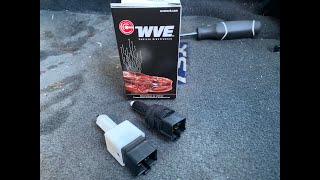
- Faulty or misadjusted brake light switch (Very Common) — This is the most frequent cause. 🎬 Watch: Step-by-step guide to replacing your brake light switch. The switch, located on the brake pedal arm, fails internally, suffers a broken plastic plunger, or gets knocked out of alignment, sending an incorrect or missing signal.
- Blown brake light fuse (Common) — A blown fuse interrupts the circuit and triggers the code immediately. Fuses sometimes appear fine visually but fail under load, requiring a multimeter test.
- Aftermarket LED brake light bulbs (Common) — Aftermarket LED bulbs have a lower electrical resistance than original incandescent bulbs. The vehicle's computer misinterprets this change as a circuit fault, triggering P0703.
- Wiring, connector, or ground issues (Common) — Wires in the circuit short, break, or corrode. The connector at the brake switch is a frequent failure point due to foot traffic under the dash. A corroded ground strap also creates incorrect voltage readings.
- Burnt-out brake light bulbs or faulty sockets (Less Common) — In specific vehicle designs, a failed brake light bulb or a melted bulb socket alters the circuit's resistance enough to trigger the code.
- Faulty Torque Converter Clutch (TCC) Solenoid (Rare) — A malfunctioning TCC solenoid causes erratic torque converter behavior that the PCM misinterprets as a brake switch fault, especially alongside other transmission codes.
- Faulty Control Module (BCM or PCM) (Very Rare) — A fault within the Body Control Module or Powertrain Control Module causes it to send or receive invalid signals. This requires ruling out all wiring and switch issues first.
Symptoms

- Brake lights do not work or stay on constantly — This primary symptom is a serious safety risk, preventing trailing drivers from knowing you are slowing down.
- Cannot shift out of Park — Vehicles require a confirmed brake pedal signal to release the shift interlock solenoid. P0703 disables this function.
- Cruise control does not work — The system deactivates cruise control for safety when it cannot confirm the brake pedal's status.
- Engine stalls when coming to a stop — The torque converter fails to disengage when braking, stalling the engine exactly like stopping a manual transmission without pressing the clutch.
- ABS, Traction Control, or Stability Control light is on — These safety systems rely on the brake switch signal. A fault disables them and triggers their warning lights.
- Check Engine Light is on — The PCM illuminates the Malfunction Indicator Lamp (MIL) to alert the driver of the fault.
- Decreased fuel economy (also visible on scanner) — If the torque converter fails to lock up at highway speeds, the engine runs at a higher RPM, wasting fuel.
Diagnostic Flowchart
Tap your situation to follow the diagnostic path that matches what you're seeing on this code.
Common Fixes & Costs
- Replace Brake Light Switch — Parts: $20-$75, Labor: $100-$200 (includes diagnostic time), ~0.8 hr book time (DIY)
- Replace Blown Fuse — Parts: $1-$5, Labor: $0-$50, ~0.1 hr book time (DIY)
- Remove Aftermarket LED Bulbs — Parts: $10-$30 (for new incandescent bulbs), Labor: $0 (DIY)
- Repair Wiring or Connector — Parts: $10-$80, Labor: $150-$450, ~2.5 hr book time (Intermediate)
- Reprogram or Replace PCM/BCM — Parts: $600-$1500+, Labor: $150-$300, ~1.5 hr book time (Professional)
Used vs. New Parts: Buying Guide
When a used part is worth it: It never makes sense to buy a used brake light switch. The labor to install it exceeds the part's low cost, making a new part mandatory.
Donor-vehicle mileage cap: roughly under 10000 miles for the part to have meaningful remaining life.
Donor quality checklist:
- Avoid parts from high-mileage vehicles or regions with high humidity/road salt.
- OEM or reputable aftermarket new parts are strongly preferred over unknown brands.
Decision logic:
- If The part costs less than $100 new. → Always buy new. The risk of a used electrical switch failing is too high.
- If The vehicle is critical for daily use. → Buy a new OEM part to ensure reliability and avoid repeat repairs.
Warranty tradeoff: Used salvage parts offer a 30-day warranty. New aftermarket parts offer 1-year to lifetime warranties. OEM parts guarantee exact fitment.
Worst-case if a used part fails: $150-$300 in repeat labor costs if a used switch fails.
What Happens If You Wait — Timeline
- Immediate: Code sets. Brake lights fail or stick on, disabling cruise control and shift interlock. Major safety hazard present. (MPG impact: 0-5%% · Added cost: $0-$75+ (Traffic fine))
- 1 to 3 months: Torque converter lock-up disables. Engine RPMs run higher at highway speeds, reducing fuel economy and increasing transmission fluid temperatures. (MPG impact: 5-15%% · Added cost: $50-$150 (Wasted fuel))
- 3 to 6 months: Sustained high temperatures oxidize the automatic transmission fluid (ATF), accelerating wear on internal components. (MPG impact: 5-15%% · Added cost: $200-$450 (Wasted fuel plus transmission fluid flush))
- 6+ months: Internal clutch packs and seals fail from excessive heat. The transmission slips or refuses to engage gears, requiring a rebuild. (MPG impact: 10-20%% · Added cost: $2,000-$5,000+ (Transmission rebuild))
Cost of Not Fixing It
- Immediate: Brake lights fail or stick on, creating a severe safety hazard. Cruise control and shift interlock fail. (Added cost: $75+ (Traffic fine))
- 0-3 months: Torque converter lock-up disables, dropping fuel economy by 5-15%. The engine stalls when stopping. (Added cost: $50-$150 (Wasted fuel))
- 3+ months: Driving with an unlocked torque converter overheats the transmission, degrading fluid and destroying internal clutches. (Added cost: $2000-$5000+ (Transmission rebuild))
Diagnosis Steps

- Check the Brake Lights
Have an assistant stand behind the car while you press and release the brake pedal. Observe if the lights work correctly, fail entirely, or stay on constantly. This dictates the rest of your diagnosis.
Tools: An assistant (Beginner) - Inspect the Brake Light Fuse
Locate the fuse box and pull the stop lamp fuse. Visually inspect the metal strip inside. If broken, replace it with the exact same amperage. Test the fuse with a multimeter for continuity to catch invisible breaks.
Tools: Fuse puller, Multimeter (Beginner) - Visually Inspect the Brake Light Switch
Look under the dashboard at the top of the brake pedal arm. Check if the switch looks damaged, if its plastic plunger is broken, if the connector is loose, or if the wiring is frayed.
Tools: Flashlight (Beginner) - [PRO TIP] Check Live Data with a Scan Tool
Connect an OBD-II scan tool and view the live data stream for the PCM or BCM. Find the 'Brake Switch' or 'BPP Status' PID. Press the pedal; the reading must change from 'Off' to 'On'. On advanced tools, monitor both 'Switch A' and 'Switch B' PIDs to ensure they change state in unison. A non-responsive PID confirms a switch or circuit fault.
Tools: Advanced OBD-II Scan Tool (Intermediate) - Test the Brake Light Switch for Continuity
Remove the brake light switch. Set your multimeter to Ohms. Test the switch's terminals while pressing and releasing the plunger. The reading must change from an open circuit (OL) to a closed circuit (less than 1 ohm).
Tools: Multimeter, basic hand tools (Intermediate) - Test the Brake Light Switch Circuit for Voltage
Disconnect the switch connector. Use a multimeter set to DC Volts. Check the input wire for battery voltage (or a 5V reference). Check the output wire; voltage must toggle between 0V and input voltage as the pedal moves. Use a wiring diagram to identify the 'B' circuit wire.
Tools: Multimeter, Vehicle-specific wiring diagram (Intermediate) - Inspect Wiring and Perform Voltage Drop Test
Inspect the harness from the switch to the PCM/BCM for chafing or corrosion. For intermittent issues, perform a voltage drop test. Connect the multimeter positive lead to the battery positive and negative lead to the switch input wire; a reading above 0.5V indicates excessive resistance. Test the ground wire similarly against the battery negative; readings above 0.2V indicate a bad ground.
Tools: Multimeter, Flashlight (Advanced)
When This Code Triggers (Freeze-Frame Conditions)
- Engine Coolant Temp: 170-220°F (The engine is at normal operating temperature.)
- RPM: 1500-2500 (The code sets during steady-state cruise when the PCM expects the torque converter to lock/unlock via brake application.)
- Engine Load: 20-50% (Light to moderate load, typical of highway cruising.)
- Vehicle Speed: 35-65 mph (The fault is detected at highway speeds where torque converter lock-up and cruise control are active.)
Related Codes
- P0700 — P0700 is a general request from the TCM to turn on the Check Engine Light. You must scan the TCM to find the specific P0703 code hiding underneath.
- P0571 — Indicates a fault in 'Brake Switch A Circuit'. P0703 is for the 'B' circuit. A completely failed switch triggers both codes simultaneously.
- P0504 — Indicates 'Brake Switch A/B Correlation' error. This sets when the two circuits disagree (e.g., 'A' says pressed, 'B' says released), confirming an internal switch failure.
- C-prefix codes (e.g., C1234) — Chassis codes stored in the ABS module. Seeing ABS codes alongside P0703 strongly confirms the brake switch is the root culprit affecting multiple systems.
Climate & Environmental Factors
- Moisture and Corrosion: Water ingress into the brake light switch connector causes internal shorts. In regions using winter road salt, under-vehicle wiring and ground connections suffer accelerated corrosion, altering circuit resistance and triggering P0703.
- Extreme Cold: Freezing temperatures make the plastic components of the brake light switch, specifically the plunger, brittle and highly susceptible to snapping off during normal pedal use.
How to Talk to a Mechanic About This Code
Say this: "I have a P0703 code and my symptoms are [e.g., 'car won't shift out of park']. I'd like a diagnostic that starts with testing the brake light switch, its connector, and the fuse before exploring complex transmission issues."
This directs the technician to start with the cheapest fixes (fuse, switch replacement) rather than immediately suspecting a major transmission or computer issue.
Avoid saying:
- 'Just fix my check engine light.' (Invites an expensive, wide-ranging diagnosis.)
- 'I think my transmission is failing.' (Leads the mechanic to focus on expensive components instead of the simple switch.)
Questions to ask before authorizing the repair:
- Did you test the brake switch with a scan tool's live data or a multimeter?
- Did you check the fuse for the brake light circuit?
- If the switch and fuse are good, what is your plan for diagnosing the wiring, and what is the estimated cost?
Where to Take It: Dealer vs Independent vs Chain
- Dealer:
Best for: Vehicles under powertrain warranty., Known manufacturer issues involving the BCM or PCM requiring proprietary software.
Downsides: Labor rates are 20-40% higher than independent shops., May default to expensive module replacement over simple wiring repair. (Typical cost: +40% vs. baseline) - Independent Shop:
Best fit for most P0703 scenarios. Competent independent shops diagnose and fix this routine electrical issue efficiently.
Best for: Out-of-warranty vehicles needing routine electrical repair (switch, fuse, wiring)., Cost-conscious owners seeking reliable repair.
Downsides: May lack specific tools to reprogram a control module if that is the rare cause. (Typical cost: +0% vs. baseline) - Chain Shop:
Acceptable for basic checks. AVOID for complex wiring or module diagnosis.
Best for: Simple, visible fixes like replacing a blown fuse or bulbs.
Downsides: Lacks advanced diagnostic tools for tracing wiring faults., Pressures customers into unnecessary services. (Typical cost: -10% vs. baseline)
When to Walk Away From the Repair
If the total estimated repair cost exceeds 50% of your car's current private-party market value, consider selling or scrapping the vehicle.
- Car worth $4000, fix is $150: Fix it. This low-cost repair restores critical safety functions.
- Car worth $3000, fix is $1800: Walk away. The fault is likely a rare module failure representing 60% of the car's value.
What Scan Tool You Need for This Code
Minimum: A scanner that reads live data for the brake pedal position switch.
A basic $20 code reader cannot show the live 'On/Off' status of the brake switch. Without live data, you cannot confirm if the switch circuit is functioning.
Budget: Ancel BD310 or Motopower MP69033 (~$50) — Displays live data, including brake switch status, sufficient for a DIYer to confirm the most common cause.
Mid-range: Foxwell NT510 Elite (~$180) — Reads manufacturer-specific codes from the ABS and Body Control Modules, critical if the problem extends beyond the switch.
Professional: Autel MaxiCOM MK808 / Innova 5610 (~$450-600) — Provides full system diagnostics, advanced live data graphing, and bi-directional controls for module calibrations.
Rent vs buy: For a one-time diagnosis, use a free loaner tool from AutoZone or O'Reilly Auto Parts. Buy a scanner only if you perform diagnostics regularly.
How to Clear the Code After You Fix It
- Use an OBD-II scan tool to clear the diagnostic trouble code.
- Perform a complete drive cycle to allow the readiness monitors to run.
Drive cycle (~30 minutes): Start with a cold engine. Idle for 2-3 minutes. Drive for 15-20 minutes with mixed city and highway speeds (steady cruise at 55 mph for 5-10 minutes). Allow the vehicle to coast down from highway speed without braking.
Readiness monitors affected: Comprehensive Component Monitor, Catalyst Monitor, Oxygen Sensor Monitor
Before emissions retest: drive at least 50 miles to fully set monitors.
Watch out for:
- Disconnecting the battery clears the code but resets all readiness monitors, causing an automatic emissions test failure.
- The code returns immediately if the root cause (e.g., faulty switch, bad ground) remains unaddressed.
Will This Fail Emissions / State Inspection?
Yes — this code typically fails an OBD-II emissions inspection.
- California: An active P0703 code causes an automatic smog check failure. All required OBD readiness monitors must be 'Ready'.
- New York: The NYS DMV inspection includes an OBD-II scan. An illuminated check engine light due to P0703 is an automatic failure.
- Texas: In emissions-testing counties, an active P0703 code results in inspection failure. Readiness monitors must be complete.
Most Commonly Affected Vehicles
- Dodge/Ram Ram 1500 (2011-2012) — Brake switch failures disable cruise control and trigger the traction control light. Some models use two separate switches: one for lights, one for the PCM/TCM signal.
- Honda Accord, Civic, CR-V (2011-2023) — A faulty brake pedal position switch affects the idle-stop system and cruise control. The plastic 'pedal stopper' pad frequently breaks, causing the switch to remain activated.
- Ford Focus, Mondeo, Kuga (2008-2018) — A broken plastic plunger on the brake switch is a known issue, causing P0703 and locking the gear selector in Park.
- Jeep Grand Cherokee (WJ, WK) (1999-2010) — Frequently cited for brake switch circuit issues, often appearing alongside code P0702. Checking the engine bay fuse is the required first step.
- Mercedes-Benz C-Class, E-Class, ML-Class (2007-2017) — Highly sensitive to brake switch failures. P0703 quickly forces the vehicle into limp mode, severely restricting speed and performance.
- Chevrolet/GMC Suburban, Silverado, Optra (2007-2020) — The Body Control Module (BCM) relays the brake signal to the engine computer. A BCM issue or GMLAN data bus error causes P0703 even with a perfect switch.
- Hyundai Santa Fe, Accent, Tucson (2002-2012) — Subject to a massive recall for stop lamp switches that caused P0703, failed brake lights, and stuck shifters.
- Volkswagen Golf, Passat, Tiguan (2005-2015) — Frequently cited for brake light switch circuit issues that trigger P0703 and disable the ESP/traction control system.
Manufacturer-Specific Notes
- Dodge/Ram: Some models utilize two separate brake switches. A failure of the secondary switch causes P0703 even if the primary brake lights function perfectly.
- General Motors (Chevrolet/GMC): The BCM reads the brake switch and messages the ECM over the GMLAN network. An invalid BCM message triggers P0703. Diagnosis must include scanning for BCM codes.
- Hyundai/Kia: NHTSA Campaign 13V113000 recalled millions of 2007-2011 models for malfunctioning stop lamp switches. Campaign 15V759000 recalled Sonatas for deteriorating pedal stopper pads.
- Mercedes-Benz: Extremely sensitive to brake switch signals. A P0703 fault immediately triggers a transmission 'limp mode' to protect the drivetrain.
Real Owner Stories
2012 Ram 1500 at 110K miles - The Easy Fix
Check Engine Light and traction control light illuminated. Cruise control failed. Brake lights worked intermittently.
What they tried:
- Scanned codes and found P0703.
- Visually inspected the brake light switch under the dash.
Outcome: Replaced the $25 brake light switch on the pedal arm. Twisting the new switch into place and reconnecting the plug cleared the P0703 code, turned off the traction light, and restored cruise control.
Lesson: A combination of a traction control light, no cruise control, and P0703 points directly to a faulty brake switch, even if brake lights occasionally work.
2017 Ford Focus at 75K miles - The Misdiagnosis
Vehicle stuck in Park. Check Engine Light on.
What they tried:
- Owner suspected a bad shift interlock solenoid or internal transmission failure.
- A shop scanned code P0703 and viewed live data, showing the brake switch status stuck 'OFF'.
Outcome: Inspection revealed the plastic plunger on the brake light switch had snapped off. Replacing the $15 switch fixed the problem entirely.
Lesson: Symptoms like being stuck in Park are usually caused by an inexpensive electrical switch failure, not a major transmission problem. Always diagnose P0703 first.
2014 Honda CR-V at 95K miles - The Unusual Cause
Brake lights stuck on, draining the battery. P0703 code present.
What they tried:
- Replaced the brake light switch and bulbs, but the lights remained on.
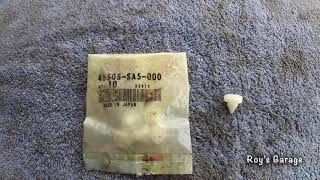
Outcome: The owner found a disintegrated blue plastic 'pedal stopper' pad on the floorboard. Without this pad, the pedal arm could not press the switch plunger. Inserting a new $5 stopper pad fixed the issue.
Lesson: On Honda and Hyundai/Kia vehicles, 'brake lights stuck on' is frequently caused by a shattered plastic stopper pad on the pedal arm, not the switch itself.
How to Prevent This Code From Triggering
- Lubricate brake pedal pivot points. (Every 30,000 miles or if squeaking occurs.) — Greasing the pedal's moving parts prevents binding, reducing mechanical stress on the brake light switch plunger.
- Apply dielectric grease to the brake switch connector. (When replacing the switch.) — Seals the connector against moisture and salt, preventing high-resistance corrosion faults that trigger P0703.
- Use OEM-specification brake light bulbs. (Whenever replacing bulbs.) — Avoids resistance issues caused by cheap aftermarket LED bulbs, keeping the circuit within the computer's expected range.
Frequently Asked Questions
What does the 'B' circuit mean in P0703?
Modern brake switches contain multiple independent electrical circuits for redundancy. The 'A' circuit controls the brake lights, while the 'B' circuit sends a dedicated signal to the PCM/TCM for cruise control and torque converter lock-up. P0703 specifically points to a failure in that secondary 'B' circuit.
Can P0703 cause transmission damage?
Yes. If the fault prevents torque converter lock-up, the transmission runs hotter than normal, accelerating fluid breakdown and internal wear.
My brake lights work perfectly. Can the brake switch still be the cause of P0703?
Yes. Because the switch contains multiple circuits, the circuit operating the brake lights often works fine while the separate 'B' circuit fails. This partial failure is exactly what triggers P0703.
Can aftermarket LED lights cause a P0703 code?
Yes. Swapping factory incandescent bulbs for aftermarket LEDs alters the circuit's electrical resistance. The computer misinterprets this lower resistance as a circuit malfunction, triggering P0703.
I replaced the brake light switch, but the code came back. What now?
If a new switch didn't fix it, inspect the fuse and all related wiring for damage, especially near the firewall. Perform a voltage drop test to check for a bad ground connection. Only after ruling out wiring and aftermarket LED bulbs should you suspect a faulty control module.
Why did P0703 appear after changing my car battery?
The brake switch or its connector was likely bumped during the battery replacement process. Control modules also recalibrate after losing power, sometimes triggering latent codes. Clear the code and inspect the switch connector if it returns.
What is the most common misdiagnosis for P0703?
Mechanics frequently misdiagnose P0703 as a major internal transmission failure, especially if shifting symptoms are present. Always diagnose and fix the inexpensive brake switch circuit first, as it causes the transmission symptoms.
Key Takeaways
- A faulty or misadjusted brake light switch on the pedal arm causes over 70% of P0703 codes and costs under $75 in parts to replace.
- Driving with P0703 is a severe safety hazard because it disables your brake lights, risking rear-end collisions and traffic fines of $75 or more.
- Beyond inoperative brake lights, P0703 disables cruise control, locks the gear shifter in Park, and causes the engine to stall when stopping.
- Before replacing parts, verify the 10-15 amp stop lamp fuse is intact and remove any recently installed aftermarket LED brake bulbs.
Helpful Videos

The information in this article is provided for general reference and educational purposes only. Vehicle specifications, procedures, and part compatibility can vary by production date, trim level, and region. Always consult your vehicle's factory service manual and verify part numbers before purchasing or performing repairs. Safety-critical components such as airbags, seat belts, and braking systems should be installed by a qualified professional.
- 🎬 Helpful Videos
- What Does P0703 Mean?
- Can I Drive With P0703?
- Common Causes
- Symptoms
- Diagnostic Flowchart
- Common Fixes & Costs
- Used vs. New Parts: Buying Guide
- What Happens If You Wait — Timeline
- Cost of Not Fixing It
- Diagnosis Steps
- When This Code Triggers (Freeze-Frame Conditions)
- Related Codes
- Climate & Environmental Factors
- How to Talk to a Mechanic About This Code
- Where to Take It: Dealer vs Independent vs Chain
- When to Walk Away From the Repair
- What Scan Tool You Need for This Code
- How to Clear the Code After You Fix It
- Will This Fail Emissions / State Inspection?
- Most Commonly Affected Vehicles
- Manufacturer-Specific Notes
- Real Owner Stories
- 2012 Ram 1500 at 110K miles - The Easy Fix
- 2017 Ford Focus at 75K miles - The Misdiagnosis
- 2014 Honda CR-V at 95K miles - The Unusual Cause
- How to Prevent This Code From Triggering
- Frequently Asked Questions
- What does the 'B' circuit mean in P0703?
- Can P0703 cause transmission damage?
- My brake lights work perfectly. Can the brake switch still be the cause of P0703?
- Can aftermarket LED lights cause a P0703 code?
- I replaced the brake light switch, but the code came back. What now?
- Why did P0703 appear after changing my car battery?
- What is the most common misdiagnosis for P0703?
- Key Takeaways
- 🎟️ Get 5% Off