

P0701 on 2003-2007 GMC Sierra Denali: Transmission Control System Fault Causes & Fixes
P0701 on a 2003-2007 GMC Sierra Denali means the Transmission Control Module (TCM) has detected a problem and asked the main computer to turn on the Check Engine Light. The actual issue is stored as a more specific code in the TCM. Common causes include low transmission fluid, faulty shift solenoids, a bad Transmission Range Sensor, or internal transmission wear.
- P0701 is a general warning; the real fault code is stored in the Transmission Control Module (TCM).
- You MUST use a scanner that can read TCM codes to properly diagnose the problem.
- The most common causes on a 2003-2007 Sierra Denali are low transmission fluid, failing shift solenoids, or internal transmission wear.
- Do not drive the vehicle with this code, as you risk catastrophic transmission failure.
- Referencing GM TSB #PIP4379M is crucial, as it directly links P0701 to common symptoms like delayed gear engagement on these trucks.
What's Unique About the 2003-2007 Gmc SIERRA DENALI
The 2003-2007 GMC Sierra Denali primarily uses the heavy-duty 4L65E automatic transmission, an upgraded version of the 4L60E designed for vehicles with higher torque engines like the 6.0L V8. While generally durable, these transmissions are known for specific failure points that can trigger a P0701 code. 🎬 Watch: A complete diagnosis and repair guide for P0701 codes. A key document, GM Technical Service Bulletin #PIP4379M, directly links P0701 to symptoms like delayed or no gear engagement, especially on cold starts, pointing towards issues with low transmission fluid causing a loss of prime in the pump. This makes checking the fluid level and for other transmission-specific codes absolutely critical on these trucks.
Diagnostic Flowchart
Tap your situation to follow the diagnostic path that matches what you're seeing on this vehicle.
Generation note: This range covers two generations of the GMC Sierra: the first-generation (GMT800) from 2003-2006 (and 2007 'Classic'), and the second-generation (GMT900) which launched in 2007. Both generations can experience this code. GMT800 Denalis typically use the 4L65E. Some 2007 GMT900 trucks began using the newer 4L70E or 6L80, but the underlying diagnostic principles for a P0701 code remain very similar.
Symptoms You May Notice
- Check Engine Light is on
- Delayed or no engagement into Drive or Reverse.
- Harsh, erratic, or jerky shifting.
- Transmission slipping between gears.
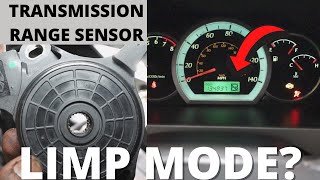
- Vehicle stuck in 'limp mode' (usually in 2nd or 3rd gear).
- Reduced power and acceleration.
- Increased fuel consumption.
- Transmission overheating.
- Failure of backup lights to illuminate.
- Replacing the Engine Control Module (ECM) without checking for TCM codes.
- Replacing random transmission sensors without a specific fault code pointing to them.
- Condemning the entire transmission for a rebuild when the fault is a simple external component like the Transmission Range Sensor or a wiring issue.
Most Likely Causes
- Low or Contaminated Transmission Fluid 🔴 High Probability Leaks can develop over time from pan gaskets, cooler lines, or seals. Low fluid is a primary cause of low hydraulic pressure, leading to the symptoms described in GM's TSB PIP4379M, such as loss of pump prime.
How to confirm: Check the transmission fluid level and condition using the dipstick when the transmission is hot (around 175°F) and the engine is running in Park. The fluid should be at the top of the hot mark and bright red, not brown, black, or burnt-smelling.
Typical fix: Top off the fluid with DEXRON-VI automatic transmission fluid. If the fluid is dirty or has metal particles, a transmission fluid and filter change is necessary. Address any leaks found.
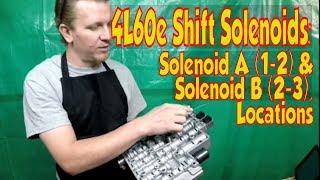
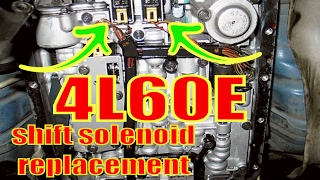
Est. part cost: $50-$150 - Failed Transmission Shift Solenoid(s) 🟡 Medium Probability The A/B shift solenoids in the 4L60E/4L65E are a known failure point. TSB PIP4379M specifically lists solenoid-related DTCs (e.g., P0751, P0756) that appear with P0701, indicating they are a common root cause.
How to confirm: Scan the TCM for specific solenoid fault codes (e.g., P0751 for Shift Solenoid 'A' Performance). A mechanic can also test solenoid resistance with a multimeter after dropping the transmission pan. The expected resistance is between 20-30 ohms.
Typical fix: Replace the faulty solenoid or the full solenoid kit. This is done by dropping the transmission pan and valve body. The common ACDelco shift solenoid part number is 24230298 (interchangeable with 10478131).
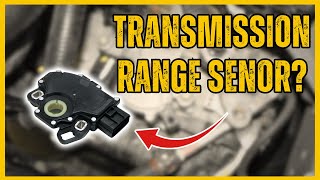
Est. part cost: $40-$200 - Faulty Transmission Range Sensor (Neutral Safety Switch) 🟡 Medium Probability This sensor is mounted externally on the transmission and is exposed to the elements, making it prone to failure from corrosion or moisture intrusion. It tells the TCM the driver's selected gear (P, R, N, D).
How to confirm: A P0705 code is almost always stored alongside P0701 when this sensor fails. Symptoms include the truck not starting, backup lights not working, or the gear indicator on the dash being incorrect. A mechanic can test the sensor by checking for correct voltage changes on its output wires as the gear selector is moved.
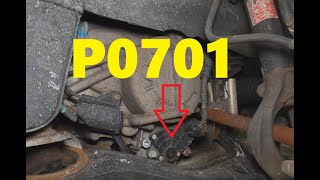
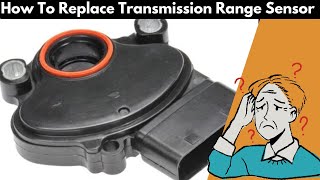
Typical fix: Replace the Transmission Range Sensor. This is an external part held on by bolts and can be replaced without opening the transmission. An example part is ACDelco 88962315.
Est. part cost: $40 - $150 - Internal Mechanical Transmission Failure 🟡 Medium Probability High mileage can lead to wear on internal components like clutch packs, the sun shell, or the torque converter, causing gear ratio errors (P0731-P0734) mentioned in TSB PIP4379M.
How to confirm: Diagnosed by a transmission specialist after other causes are ruled out. A significant amount of metal shavings or clutch material in the transmission pan is a strong indicator of severe internal wear.
Typical fix: Requires a partial or complete transmission rebuild or replacement.
Est. part cost: $1800-$4500+ - Faulty Transmission Control Module (TCM) ⚪ Low Probability While less common, electronic modules can fail due to heat, vibration, or internal circuit board issues like solder joint fatigue. On GMT800 trucks (2003-2007 Classic), the TCM is a separate unit located under the hood on the passenger side near the firewall.
How to confirm: A diagnostic scan tool will show a loss of communication with the TCM, or specific internal fault codes for the module itself. All wiring, power, and ground connections must be verified first before condemning the module. Check for steady battery voltage (12.0-14.5V) at the TCM connector and ground resistance below 0.1 Ω.
Typical fix: Replace and reprogram the TCM. The new module must be programmed with the vehicle's specific VIN and software.
Est. part cost: $200-$600
Rare But Worth Checking
- Damaged Wiring or Connectors: Corrosion or physical damage to the wiring harness between the TCM and the transmission can cause intermittent communication issues, triggering a P0701. Always inspect the harness where it may be exposed to heat from the exhaust or road debris.
- Faulty Ignition Switch: A failing ignition switch can cause intermittent voltage drops to the TCM and transmission solenoids. This can lead to a cluster of seemingly unrelated codes, including P0701, and erratic transmission behavior. One owner forum discusses how tapping the fuse box temporarily resolved symptoms, pointing to an electrical issue ultimately traced to the ignition switch harness.
- Poor Ground Connections: A corroded or loose ground strap for the engine or transmission can cause a wide range of electrical issues, including confusing the TCM and setting a P0701. Checking and cleaning main ground points is a valid diagnostic step when other causes are not apparent. Key grounds are on the engine block, firewall, and frame rails.
Diagnosis Steps
- Obtain a full diagnostic scan. Use a scanner capable of reading codes from the Transmission Control Module (TCM), not just the standard engine codes.
- Record all codes from the TCM. These codes (e.g., P0751, P0705, P0732) are the key to the actual problem.
- Check the transmission fluid level and condition. Ensure the fluid is at the correct level on the dipstick when hot and running. Note the color and smell; it should be reddish and not smell burnt.
- If P0705 is present, diagnose the Transmission Range Sensor circuit. Check for correct operation of the gear indicator and backup lights.
- Inspect the main transmission wiring harness and connectors for any visible damage, corrosion, or loose connections, paying close attention to areas near the exhaust.
- Follow the specific diagnostic procedures for any codes found in the TCM. For example, a P0751 code would lead to testing the 'A' shift solenoid circuit.
- If multiple seemingly unrelated codes are present, investigate common power and ground sources, including the ignition switch circuit, as a faulty switch can cause widespread voltage issues.
- If no other codes are present, test the power and ground circuits for the TCM to ensure it is functioning correctly.
- If all wiring and external components test good, drop the transmission pan to inspect for metal debris. The presence of significant debris points to an internal mechanical or hydraulic fault requiring professional inspection.
Parts You'll Likely Need
- Transmission Fluid and Filter Kit — Often the first step in addressing transmission issues and is required if the pan is dropped for any other service.
- Shift Solenoid A/B
(OEM #24230298)— A very common failure point in the 4L60E/4L65E transmission leading to shift problems. - Transmission Range Sensor
(OEM #88962315)— This external sensor is prone to failure and will almost always set a P0705 code along with P0701. - Ignition Switch — A known edge-case cause for various electrical issues, including erratic TCM behavior, due to intermittent power loss.
Related Codes That Often Appear With This One
- P0700 — P0700 is the most common companion code. Both P0700 and P0701 are generic codes set by the ECM to indicate a fault request from the TCM. They serve the same basic purpose.
- P0705 — This code specifically indicates a fault in the Transmission Range Sensor (Neutral Safety Switch) circuit. If you see P0705 with P0701, the range sensor is the most likely culprit.
- P0731, P0732, P0733, P0734 — These codes indicate incorrect gear ratios, pointing to internal slipping or mechanical problems within the transmission, as cited in TSB PIP4379M.
- P0751, P0756, P0761 — These codes point to failures in specific shift solenoids, a common cause for shifting problems on these trucks and also cited in TSB PIP4379M.
Technical Service Bulletins (TSBs) & Recalls
- PIP4379M: Addresses delayed or no engagement into drive/reverse, range inhibit, and links P0701 to numerous other transmission codes (P0731-P0734, P0751, P0756, etc.). It points to low pump pressure from a loss of prime as a potential cause, emphasizing the importance of a correct fluid level check.
Platform-Specific Known Issues
- GM Technical Service Bulletin #PIP4379M directly addresses P0701 on these trucks. It highlights symptoms of delayed or no engagement into drive or reverse and lists a wide array of transmission DTCs that can accompany P0701, often stemming from low pump pressure due to a loss of prime. The bulletin advises checking the fluid level properly as a first step.
- A thread on GMTNation.com titled 'Multiple codes on gmc sierra' details an owner's experience with a cascade of electrical and transmission codes. The solution was not in the transmission itself, but a faulty ignition switch causing voltage irregularities to the TCM and other components, highlighting the importance of checking the electrical system.
Mechanic-Grade Diagnostic Values
- 1-2 (A) and 2-3 (B) Shift Solenoid Resistance — expected: 20 to 30 Ohms (more typically 20-25 Ohms).. Failure: A reading outside of the 19-31 Ohm range indicates a faulty solenoid.
- Pressure Control (PC) Solenoid Resistance — expected: 3.5 to 8.0 Ohms.. Failure: A reading outside this range suggests the PC solenoid is faulty.
- TCM Power Supply Voltage — expected: 12.0V to 14.5V with ignition on.. Failure: Unstable or low voltage can cause erratic TCM behavior and trigger various codes.
- TCM Ground Resistance — expected: Below 0.1 Ω.. Failure: Higher resistance indicates a poor ground connection, which can cause a floating voltage reference and unpredictable module behavior.
Scan Tool Commands That Help
- GM Tech 2 / GDS2: Transmission Adaptive Learning Reset — This function should be used after replacing a transmission or major internal components like the valve body. It resets the learned shift timing and pressure values in the PCM/TCM to their factory defaults, which is critical for the longevity and performance of the new parts.
- GM Tech 2 / GDS2: Solenoid Activation Test — Allows a technician to command individual shift solenoids on and off while the vehicle is stationary. This bidirectional control helps confirm if a solenoid is mechanically stuck or if the wiring circuit is intact without having to drop the transmission pan first.
- Bluetooth OBD2 Scanner with advanced app (e.g., Dash Command): Live Data Monitoring (Commanded Gear vs. Actual Gear) — For DIY diagnosis, monitoring the commanded gear from the TCM versus the actual gear ratio can help identify slipping or delayed shifts. It can show how long a shift takes to occur after being commanded, pointing towards a hydraulic or mechanical issue.
Wiring & Ground Locations
- G102 / G103 — G102 is on the left (driver's) side of the engine block. G103 is on the right rear of the engine block.. These are primary engine-to-chassis grounds. A poor connection at these points can cause significant electrical noise and voltage drops, affecting the PCM, TCM, and all engine/transmission sensors.
- G104 — Located on the left rear of the engine block.. Another critical engine block ground. On some GMT800 trucks, a braided ground strap runs from a bolt near here to the firewall, providing a key ground path for dashboard components and modules. A corroded strap here is a common source of electrical gremlins.
- TCM Location (GMT800) — On 2003-2007 'Classic' models with the 4L60E/4L65E, the TCM is a separate module located under the hood on the passenger side, near the firewall and HVAC blower motor housing.. Knowing this location is essential for visually inspecting the module and its connector for corrosion or damage, and for performing voltage/ground tests directly at the TCM pins.
- Transmission Case Connector — The main round electrical connector on the passenger side of the transmission case.. This is the single point of failure for all electronic communication to the transmission's internal components. The pins for the shift solenoids (A, B), TCC solenoid, and pressure control solenoid can be tested for resistance here without dropping the pan.
Real Owner Repair Stories
- GMTNation Forum (GMC Envoy (similar GMT360 platform with 4L60E)) — Hard 1-2 shift and a P1870 code (Component Slipping), which is often seen with P0701/P0700.
❌ Tried (didn't work) Transmission was rebuilt, but the problem persisted.
✅ What actually fixed it The issue was traced to a faulty vehicle speed sensor (VSS). The faulty VSS signal caused the computer to command incorrect line pressures, leading to the hard shift and slipping code. Manually commanding the TCC lockup with a Tech 2 scanner helped point towards a sensor input issue rather than an internal transmission fault.
OEM Part Supersession History
10478131→24230298— Part has been updated by GM over the years for improved reliability.
Heads up: The part number 24230298 is the current OEM replacement for the 1-2 and 3-4 shift solenoids in the 4L60E/4L65E transmission and is a direct fit for the original.
Model Year Variations Within This Range
- 2003-2007 (GMT800 'Classic'): These models use the 4L65E transmission with an external, standalone Transmission Control Module (TCM) located under the hood on the passenger side firewall.
- 2007 (GMT900): New body style 2007 models could be equipped with the 6-speed 6L80 transmission. On these, the TCM is integrated with the valve body and solenoids into a single unit called a TEHCM (Transmission Electro-Hydraulic Control Module) located inside the transmission oil pan. Diagnosis and replacement are significantly different.
Helpful Videos

We Have This Part in Stock



The information in this article is provided for general reference and educational purposes only. Vehicle specifications, procedures, and part compatibility can vary by production date, trim level, and region. Always consult your vehicle's factory service manual and verify part numbers before purchasing or performing repairs. Safety-critical components such as airbags, seat belts, and braking systems should be installed by a qualified professional.
- Gmc SIERRA DENALI:
- 🎬 Helpful Videos
- 🛍️ Shop This Part
- What's Unique About the 2003-2007 Gmc SIERRA DENALI
- Diagnostic Flowchart
- Symptoms You May Notice
- Most Likely Causes
- Rare But Worth Checking
- Diagnosis Steps
- Parts You'll Likely Need
- Related Codes That Often Appear With This One
- Technical Service Bulletins (TSBs) & Recalls
- Platform-Specific Known Issues
- Mechanic-Grade Diagnostic Values
- Scan Tool Commands That Help
- Wiring & Ground Locations
- Real Owner Repair Stories
- OEM Part Supersession History
- Model Year Variations Within This Range
- 🎟️ Get 5% Off