

P0701 on 2006-2010 GMC Sierra: Transmission Control System Malfunction Guide
P0701 on a GMC Sierra means the transmission has a problem. It's a general code, so you must use a scanner to find other, more specific transmission codes. The most common underlying issues are faulty sensors, bad solenoids, or a failing Transmission Control Module (TCM), especially the internally-mounted TEHCM on 6-speed models.
- P0701 is a general code; the real problem is indicated by other codes stored in the Transmission Control Module (TCM).
- You MUST use a scanner that can read transmission codes to properly diagnose the issue.
- For 2007-2010 models with a 6-speed transmission, a faulty TEHCM (internal computer) is a very common cause.
- Always check the transmission fluid level and condition first, as low or dirty fluid is a simple but common cause of transmission problems.
What's Unique About the 2006-2010 Gmc SIERRA
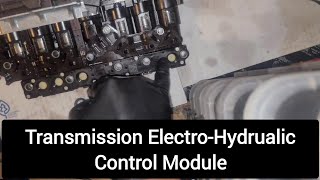
The 2006-2010 GMC Sierra spans two distinct generations: the GMT800 (2006 and 2007 'Classic') and the GMT900 (2007-2010). This is critical because they use different primary transmissions. GMT800 models typically use the 4-speed 4L60E/4L65E, where individual solenoids can be replaced. The newer GMT900 trucks introduced the 6-speed 6L80/6L90, which is known for issues with its internal Transmission Electro-Hydraulic Control Module (TEHCM). The TEHCM combines the TCM, valve body solenoids, and pressure switches into one unit inside the transmission pan. TEHCM failure is a common cause of P0701 on these 6-speed models and is a more complex and expensive repair.
Diagnostic Flowchart
Tap your situation to follow the diagnostic path that matches what you're seeing on this vehicle.
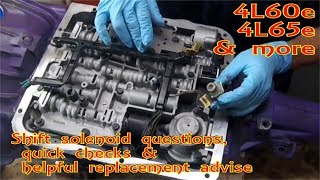
Generation note: This range covers the end of the first generation GMT800 platform (sold as the 'Classic' in 2007) and the beginning of the second generation GMT900 platform (starting in 2007). The GMT800s primarily used 4-speed transmissions (4L60E/4L65E), while the GMT900s introduced the 6-speed 6L80/6L90. The causes and fixes can differ significantly between these transmissions, with 6L80 issues often pointing to the TEHCM and 4L60E issues often related to individual solenoids.
Symptoms You May Notice
- Check Engine Light is on
- Harsh, jerky, or delayed shifts.
- Transmission slipping between gears.
- Failure to engage Drive or Reverse.
- Vehicle enters 'limp mode' (stuck in one gear).
- Decreased fuel efficiency.
- Transmission temperature warning light may illuminate
- Engine may stall when coming to a stop.
- Replacing the Engine Control Module (ECM). The P0701 code is stored in the ECM, but the fault originates in the transmission system.
- Attempting to 'fix' only the P0701 code. This code is informational; the root cause is always another code 🎬 Watch: Understanding how the P0700 and P0701 codes work together. or issue within the transmission itself.
- Replacing the entire transmission when only a TEHCM or solenoid is at fault. Proper diagnosis of the secondary codes is crucial to avoid unnecessary expense.
Most Likely Causes
- Other Specific Transmission Codes Stored 🔴 High Probability P0701 is a generic request code; the actual fault is stored as a different, more specific code in the TCM. This is by design across all models.
How to confirm: Use a scan tool that can read manufacturer-specific codes from the Transmission Control Module (TCM). P0701 is just the starting point.
Typical fix: Diagnose and repair the other stored transmission codes first. Clearing the underlying code will resolve the P0701.
Est. part cost: $0 - Faulty Transmission Control Module (TCM/TEHCM) 🔴 High Probability On GMT900 models with the 6L80/6L90 transmission, the internal TEHCM is a widely documented failure point. Internal pressure switch membranes can crack, solenoids can stick, or the circuit board can short out from fluid intrusion, causing a variety of shifting and communication errors.
How to confirm: After ruling out all other causes, and if communication with the TCM is intermittent or codes point to an internal controller fault (e.g., P0796, P0877), the TEHCM is suspect. Diagnosis often involves monitoring pressure switch data 🎬 See how to test and rebuild the 6L80 TEHCM circuits. with a high-level scan tool; incorrect or erratic readings point to TEHCM failure.
Typical fix: Replacement of the TEHCM. This part is inside the transmission and requires programming to the vehicle's VIN using GM's TIS2Web or a similar J2534 pass-thru device.
Est. part cost: $400-$1000 - Low or Dirty Transmission Fluid 🟡 Medium Probability Leaks or extended service intervals can lead to low or degraded fluid, causing hydraulic pressure issues, overheating, and shifting problems.
How to confirm: Check the transmission fluid level and condition according to the owner's manual procedure. The fluid should be at the correct level, pink/red in color, and not smell burnt. For 6-speed models, the correct fluid is DEXRON-VI.
Typical fix: Top off the fluid with the correct type (DEXRON-VI for 6-speeds) or perform a fluid and filter change.
Est. part cost: $50-$150 - Faulty Shift Solenoid or Valve Body 🟡 Medium Probability More common on the 4L60E transmission in GMT800 models. Debris in the fluid or simple electronic failure can cause a solenoid to stick or fail, leading to specific gear engagement problems.
How to confirm: A specific solenoid-related code (e.g., P0751, P0756) will usually accompany P0701. Solenoids can be tested for resistance with a multimeter.
Typical fix: Replace the faulty solenoid or, in some cases, the entire valve body. On 6L80 transmissions, the solenoids are an integral part of the TEHCM and are not replaced individually.
Est. part cost: $50-$300 per solenoid
Rare But Worth Checking
- Wiring Harness Damage: The wiring harness leading to the transmission can be damaged by road debris, heat from the exhaust, or corrosion. On some GM trucks, there are known chafe points near the ECM/TCM bracket, upper control arm, and shock tower that can cause shorts. A visual inspection is always a good idea.
- Cracked Internal Transmission Filter: As mentioned in TSB PIP4379K, a cracked suction filter can cause fluid starvation issues, especially on cold starts, leading to engagement problems and setting this code. This can mimic more serious internal failures.
- Faulty Transmission Range Sensor (Neutral Safety Switch): This sensor tells the computer which gear is selected (P, R, N, D). If it provides incorrect information, it can trigger a P0701 code, often accompanied by a P0705 code. This can cause no-start conditions or erratic gear display.
Diagnosis Steps
- Scan for Codes: Use an OBD-II scanner capable of reading codes from the Transmission Control Module (TCM). Record all codes present, not just P0701.
- Check Transmission Fluid: Verify the transmission fluid is at the correct level and in good condition (not burnt or dirty). Use DEXRON-VI for 6-speed models. Follow the manufacturer's specific procedure (hot or cold check).
- Prioritize Other Codes: Begin diagnosis for any other transmission-related codes you found in step 1. These codes will lead you to the root cause. For example, a P0751 points to a shift solenoid, while a P0877 points to a pressure switch (likely within the TEHCM on a 6L80).
- Inspect Wiring: Visually inspect the transmission wiring harness and connectors for any signs of damage, corrosion, or loose connections. Pay close attention to known chafe points near the control arm and ECM bracket.
- Follow TSB Guidance: If symptoms match (like delayed engagement), follow the advice in TSB #PIP4379K, which suggests checking fluid level meticulously and inspecting the internal filter for cracks if the issue persists after a cold start.
- Test TCM/TEHCM: If no other cause is found, and especially on 6L80/6L90 models, professional testing of the Transmission Control Module may be necessary. This often involves monitoring live data from pressure switches and solenoids to check for erratic behavior.
Parts You'll Likely Need
- Transmission Fluid & Filter
(OEM #ACDelco 10-9244 (DEXRON-VI Fluid, 1 Gal), ACDelco 24224781 (6L80 Pan Gasket))— Often the first step and can sometimes resolve issues if the fluid is low or degraded. A fluid and filter change is required for most internal transmission repairs. DEXRON-VI is required for 6L80/6L90 transmissions.
Trusted brands: ACDelco
OEM price range: $80-$150
Aftermarket price range: $50-$100 - Transmission Electro-Hydraulic Control Module (TEHCM)
(OEM #Varies by VIN, examples include 24256861, 24275873. Must be matched to vehicle.)— A common failure on 2007-2010 models with the 6L80/6L90 transmission. This unit contains the TCM, solenoids, and pressure switches. A replacement is often the only fix for internal electronic faults.
Trusted brands: ACDelco, Sonnax (Remanufactured)
OEM price range: $600-$1000
Aftermarket price range: $400-$700
Related Codes That Often Appear With This One
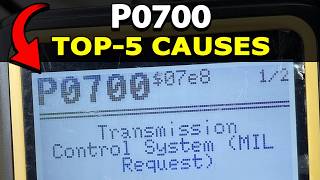
- P0700 — Very similar to P0701, it's a generic code indicating a fault in the transmission control system. They are often used interchangeably by manufacturers.
- P0731-P0736 — These codes indicate incorrect gear ratios for specific gears, pointing to internal slipping or solenoid issues. (Cited in TSB PIP4379K)
- P0751, P0756, P0761, P0776 — These are codes for specific shift solenoid performance issues. (Cited in TSB PIP4379K)
- P0843, P0848, P0873, P0877 — These codes relate to faults in the transmission fluid pressure sensor circuits. (Cited in TSB PIP4379K) On 6L80 transmissions, these often point directly to a failed TEHCM.
Technical Service Bulletins (TSBs) & Recalls
- PIP4379K: Addresses delayed or no engagement into Drive or Reverse, often on a cold start, which can set P0701. The TSB points towards checking for a cracked internal transmission filter causing fluid aeration and starvation.
Platform-Specific Known Issues
- On GMT900 trucks (2007-2010) with the 6L80 transmission, failure of the internal TEHCM is a widely documented problem that can cause P0701 along with numerous other codes. Owners report symptoms like harsh 1-2 shifts, getting stuck in gear when hot, and complete loss of communication with the module.
- A Reddit user with a 2012 Sierra (similar 6L80 platform) described a scenario where the truck would go into limp mode at a specific temperature (163°F), accompanied by P0700 and U0101 (Lost Communication with TCM). Unplugging and replugging the transmission connector provided a temporary fix, pointing to a heat-related failure in the TEHCM.
- For the GMT800 trucks with the 4L60E, a common owner experience involves a specific solenoid failing, such as the 1-2 shift solenoid, leading to a P0751 or P0756 code alongside the P0701. The fix is often a relatively inexpensive replacement of the individual solenoid inside the transmission pan.
Mechanic-Grade Diagnostic Values
- 6L80/6L90 On/Off Shift Solenoid Resistance — expected: 20 - 40 Ohms. Failure: A reading outside this range indicates a failed solenoid, requiring TEHCM replacement.
- 6L80/6L90 PWM Solenoid Resistance (Line Pressure, Clutch Pressure) — expected: 3 - 8 Ohms (some sources state 5-6 Ohms). Failure: A reading outside this range indicates a failed solenoid, requiring TEHCM replacement.
- 4L60E 1-2 & 2-3 Shift Solenoid Resistance — expected: 20 - 40 Ohms. Failure: Resistance outside this range points to a faulty solenoid.
- 4L60E Electronic Pressure Control (EPC) Solenoid Resistance — expected: 3.5 - 8.0 Ohms at 68°F. Failure: An out-of-spec reading indicates a bad EPC solenoid.
- 6L80/6L90 TEHCM Pressure Switch Test — expected: Reads near OL (Open Line / infinite resistance) with no pressure applied.. Failure: When the switch membrane is gently pressed with a pencil eraser, the reading should drop to ~10 Ohms. If it does not change or reads incorrectly, the TEHCM is faulty.
Scan Tool Commands That Help
- GM Tech 2 / GDS2: Transmission Output Controls > Solenoid Controls — This function allows a technician to individually command each shift solenoid on and off to verify its mechanical operation (listening for a click) and its effect on the system, helping to isolate a single failed solenoid within the valve body or TEHCM.
- GM Tech 2 / GDS2 / J2534 Pass-Thru: Service Programming System (SPS/SPS2) — This is not a diagnostic command, but a mandatory programming function. When a new TEHCM is installed in a 6L80/6L90 transmission, it must be programmed with the vehicle's specific VIN and calibration file from GM's servers. The vehicle will not start or shift correctly until this is performed.
- GM Tech 2 / GDS2 / High-End Aftermarket Scanners: Transmission Fast Learn / Service Fast Learn Adapts — After a TEHCM replacement and programming, or any major transmission repair, this stationary procedure must be run. It allows the TCM to quickly learn the hydraulic characteristics and clutch apply volumes, which is critical for proper shift quality. Skipping this can result in harsh shifts or premature wear.
Wiring & Ground Locations
- G103 — On the front of the passenger-side cylinder head.. This is a primary ground point for the Engine Control Module (ECM) and by extension, the TCM's communication network. Corrosion or a loose connection here can cause a host of intermittent electronic issues, including erratic shifting, communication codes, and limp mode, mimicking internal transmission or TEHCM failure.
- G104 — On the rear of the passenger-side cylinder head, often sharing a stud with a body ground strap.. This ground serves the Vehicle Control Module, fuel pump relay trigger, and other critical systems. A failure here can cause unpredictable behavior that may be misdiagnosed as a transmission fault.
- TCM Connector (GMT900) — The main 49-pin connector on the external TCM (for 4-speed models) or the case connector leading to the internal TEHCM (for 6-speed models).. This is the nexus for all transmission signals. Specific pins are used for the High Speed GMLAN data bus (Pins 6 & 7), shift solenoid controls (e.g., Pin 2 for SS1, Pin 20 for SS2), and TCC controls (Pin 1, Pin 25). Testing for voltage, ground, and data signals at these pins can confirm if the fault is in the wiring or the module itself.
- Radiator Core Support Grounds (G100/G101) — Located on the lower left (G100) and lower right (G101) of the radiator core support.. These are major chassis ground points. While not directly for the TCM, poor grounding here can increase electrical noise throughout the vehicle and contribute to intermittent communication faults between modules.
Real Owner Repair Stories
- YouTube video by 'ScannerDanner' (2009 Chevrolet Silverado 2500HD with 6.6L Duramax and Allison Transmission (similar control logic to Sierra with 6L80)) — Towed in for no engagement in Drive or Reverse. 'Shift Inhibited Select Neutral to Reset' message on the dash. PRNDL indicator would flash. Code P0701 was present.
❌ Tried (didn't work) The internal mode switch (NSBU switch) had been replaced four months prior, but the problem returned.
✅ What actually fixed it Live scan data showed that the transmission pressure switches were reading correctly at startup but would all go invalid after about one minute of engine run time. This pointed to an internal module failure. The fix was replacing the Transmission Control Module (TCM), GM Part Number 24256861, and programming the new module to the vehicle using GM's Service Programming System (SPS). After programming, the pressure switches read correctly and the transmission engaged properly.
OEM Part Supersession History
24256861→19435614— GM regularly updates electronic components to improve reliability and address known failure points. Later revisions often feature improved internal components or logic.
Heads up: Crucially, TEHCMs are NOT backward or forward compatible across major design changes. A 'Gen 1' TEHCM from a 2007-2009 Sierra cannot be used in a 2010+ model, and vice-versa. The Tag ID and part number must be matched to the vehicle's year and calibration. Using the wrong year TEHCM will result in immediate limp mode or a no-start condition.
Model Year Variations Within This Range
- 2007-2009 (GMT900): These early 6L80/6L90 transmissions used a 'Gen 1' TEHCM. This generation is particularly known for frequent failures of the internal pressure switches, where the laminate discs crack or delaminate, causing pressure-switch-related DTCs (like P0877) that trigger the P0701 code.
- 2010: Starting in 2010, GM introduced an updated TEHCM (e.g., PN 24256861). These modules featured improved solenoids and an updated pressure manifold gasket to enhance durability and address some of the known failure points of the earlier 'Gen 1' design.
Helpful Videos

We Have This Part in Stock




The information in this article is provided for general reference and educational purposes only. Vehicle specifications, procedures, and part compatibility can vary by production date, trim level, and region. Always consult your vehicle's factory service manual and verify part numbers before purchasing or performing repairs. Safety-critical components such as airbags, seat belts, and braking systems should be installed by a qualified professional.
- Gmc SIERRA:
- 🎬 Helpful Videos
- 🛍️ Shop This Part
- What's Unique About the 2006-2010 Gmc SIERRA
- Diagnostic Flowchart
- Symptoms You May Notice
- Most Likely Causes
- Rare But Worth Checking
- Diagnosis Steps
- Parts You'll Likely Need
- Related Codes That Often Appear With This One
- Technical Service Bulletins (TSBs) & Recalls
- Platform-Specific Known Issues
- Mechanic-Grade Diagnostic Values
- Scan Tool Commands That Help
- Wiring & Ground Locations
- Real Owner Repair Stories
- OEM Part Supersession History
- Model Year Variations Within This Range
- 🎟️ Get 5% Off