

P0701 on 2006-2010 Chevrolet Silverado: Transmission Control System Performance Guide
P0701 on a 2006-2010 Silverado means the transmission computer (TCM) has detected a fault and asked the engine computer to turn on the check engine light. The actual problem requires scanning the TCM for more specific codes (like those for solenoids or pressure switches). Common causes include low transmission fluid or a faulty Transmission Control Module (TCM), particularly the internal TEHCM on 6-speed models.
- P0701 is a general alert from the transmission; it is not a diagnosis in itself.
- You MUST use a scanner that can read transmission-specific codes to find the actual problem.
- The first and easiest check is the transmission fluid level and condition.
- On 2007-2010 models with the 6-speed automatic, a faulty Transmission Electro-Hydraulic Control Module (TEHCM) is a very common cause.
- Do not replace the transmission without a full diagnosis of the specific codes stored in the TCM.
What's Unique About the 2006-2010 Chevrolet SILVERADO
This era of Silverado (2006-2010) spans two truck generations and a major transmission technology shift. Earlier models often use the 4-speed 4L60-E, while the newer GMT900 platform (introduced in 2007) heavily features the 6-speed 6L80 transmission. The 6L80 is known for issues with its internal Transmission Electro-Hydraulic Control Module (TEHCM), which combines the TCM and valve body solenoids into one unit. TEHCM failure is a very common cause for a P0701 and other transmission codes on these trucks, often due to internal circuit fatigue from heat and vibration or debris contamination.
Diagnostic Flowchart
Tap your situation to follow the diagnostic path that matches what you're seeing on this vehicle.
Generation note: The 2006 model year was a crossover, with both the older GMT800 ('Classic') and the new GMT900 body styles available. 2007-2010 models are all GMT900. GMT800s primarily use 4-speed transmissions (like the 4L60-E), while GMT900s introduced the 6-speed 6L80, which has different common failure points, most notably the internal control module (TEHCM). TSB 01-07-30-002E addresses issues on the 4-speed transmissions where a loss of voltage can cause the transmission to default to 2nd or 3rd gear and set multiple codes.
Symptoms You May Notice
- Check Engine Light is on
- Transmission warning message on the driver information center, such as "Shift Inhibited Select Neutral to Reset 🎬 See how to fix the 'Range Shift Inhibited' message like a pro.".
- Harsh, erratic, or delayed shifting.
- Vehicle stuck in one gear (limp mode), often 3rd gear.
- Failure to engage Drive or Reverse. [Bulletin #PIP4379K]
- PRNDL indicator on the dash flashing or disappearing when shifting.
- Transmission slipping between gears.
- Reduced fuel efficiency.
- Replacing the entire transmission when only a solenoid or the TCM/TEHCM was faulty. It is critical to get specific codes from the TCM before condemning the entire unit.
- Replacing the TCM/TEHCM without first verifying proper fluid level and checking for external wiring issues.
Most Likely Causes
- Low or Burnt Transmission Fluid 🔴 High Probability Leaks from pan gaskets, cooler lines, or seals can lead to a low fluid condition. TSB PIP4379K specifically notes that low fluid can cause a loss of pump prime, especially during a cold start, triggering P0701 and other DTCs.
How to confirm: Check the transmission fluid level and condition using the dipstick (if equipped) following the 'Hot Check Procedure' outlined by GM. The fluid should be at the correct level, pinkish-red, and not smell burnt.
Typical fix: Top off the fluid with the correct type (ACDelco DEXRON-VI) and repair any leaks. If the fluid is very dirty, a fluid and filter change is recommended.
Est. part cost: $10-$20 per quart - Faulty Transmission Control Module (TCM/TEHCM) 🔴 High Probability On 6L80-equipped trucks, the internal TEHCM is a known high-failure item due to its location inside the hot transmission, leading to solder joint fatigue and electronic failure. Aftermarket replacements like the Dorman 609-000 sometimes use upgraded PEEK plastic to better resist heat and debris.
How to confirm: A professional scan tool can monitor live data from the transmission pressure switches. In a documented 2009 Silverado repair 🎬 Watch: Real-world diagnosis of a Silverado that won't move., the pressure switch readings would change erratically on their own after about a minute of idling, indicating an internal TEHCM failure. If fluid is correct and no other codes point to specific external sensors/wiring, the TEHCM is the likely culprit.
Typical fix: Replace the TEHCM, which is located inside the transmission oil pan. This part must be programmed to the vehicle's VIN using manufacturer software.
Est. part cost: $250-$600 - Faulty Shift Solenoid or Pressure Switch 🟡 Medium Probability Solenoids inside the transmission can fail electrically or become stuck due to debris in the fluid. On 6L80 models, these are integrated into the TEHCM, so a single solenoid failure requires replacing the entire TEHCM assembly.
How to confirm: Scan the TCM for specific solenoid codes (e.g., P0751, P0756) or pressure switch codes (e.g., P2715) that accompany P0701. [Bulletin #PIP4379K] Resistance for 6L80 on/off shift solenoids should be 20-40 ohms, while PWM solenoids should be 3-8 ohms.
Typical fix: For 4-speed transmissions, replace the specific solenoid. For 6-speed 6L80/6L90 transmissions, the entire TEHCM assembly must be replaced. This requires removing the transmission oil pan.
Est. part cost: $50-$300 (for individual solenoids); $250-$600 (for TEHCM) - Wiring or Connector Issues ⚪ Low Probability The main transmission harness connector can become contaminated with fluid or dirt, and wiring can be damaged from road debris or heat. TSB 01-07-30-002E points to a loss of voltage in the transmission solenoid power supply circuit as a cause for limp mode and multiple DTCs. A poor ground at G101 can also affect TCM operation.
How to confirm: Visually inspect the wiring harness and connectors going to the transmission and TCM for corrosion, bent pins, or damage. Check for voltage at the transmission solenoid power supply circuit and ensure ground resistance is below 0.1 Ω.
Typical fix: Clean the connectors with electrical contact cleaner or repair the damaged section of the harness.
Est. part cost: $5-$50
Rare But Worth Checking
- Internal Mechanical Failure: If codes for incorrect gear ratios (P0731-P0736) are present, it may indicate a severe internal problem. GM TSB 09-07-30-004J notes that a cracked 1-2-3-4 / 3-5-R clutch housing on 6L80 transmissions can cause slips, delayed engagement, and set codes like P0776, which would trigger a P0701.
- Cracked Internal Transmission Filter: TSB PIP4379N suggests that if DTCs reset after a cold start even with correct fluid level, the internal suction filter may have a crack, allowing air to be drawn into the hydraulic system and causing a loss of pump prime.
Diagnosis Steps
- Check the transmission fluid level and condition using the proper 'Hot Check' procedure. Correct as needed.
- Use a professional-grade scan tool to read codes from the Transmission Control Module (TCM), not just the Engine Control Module (ECM).
- Document all transmission-specific codes (e.g., P07xx, P08xx, P27xx).
- Diagnose the specific codes found in the TCM first. For example, if a P0751 (Shift Solenoid 'A' Performance) is present, focus diagnosis on that circuit.
- If no other codes are present or if pressure switch codes are found, use the scan tool to monitor live data from the transmission pressure switches while the engine is running. Watch for erratic or illogical readings, which strongly suggest an internal TEHCM fault.
- If fluid and live data are inconclusive, inspect the main wiring harness and connectors between the TCM and the transmission for any signs of damage, corrosion, or loose connections.
- If fluid and wiring are good and no specific component codes are stored, the fault is likely with the Transmission Control Module (TCM/TEHCM) itself.
Parts You'll Likely Need
- Transmission Control Module (TCM/TEHCM)
(OEM #24256861)— This is a very common failure point on GMT900 trucks with the 6L80 transmission, causing a wide range of faults that trigger a P0701. This part is located inside the transmission and requires programming to the vehicle's VIN upon installation.
Trusted brands: ACDelco, Dorman
OEM price range: $400-$600
Aftermarket price range: $250-$450 - Automatic Transmission Fluid — Low or degraded fluid is a frequent and simple cause for this code, often leading to a loss of pump prime.
Trusted brands: ACDelco DEXRON-VI
OEM price range: $10-$20 per quart
Aftermarket price range: $8-$15 per quart - Shift Solenoid — A specific solenoid failing is a common internal issue that the TCM will report by setting a P0701 in the ECM. On 6L80 models, this is part of the TEHCM.
Trusted brands: ACDelco, Bosch
OEM price range: $60-$120
Aftermarket price range: $30-$80
Related Codes That Often Appear With This One
- P0700 — P0700 is a nearly identical code, also indicating a generic transmission fault has been requested by the TCM. They often appear together.
- P0731-P0736 — These codes indicate incorrect gear ratios, which are specific faults detected by the TCM that trigger the general P0701 code. They often point to internal slipping or hydraulic issues, such as a loss of pump prime. [Bulletin #PIP4379K]
- P0751, P0756, P0761, P0776 — These codes point to faults with specific shift solenoids. The TCM requests a P0701 when it detects these solenoid faults. [Bulletin #PIP4379K]
Technical Service Bulletins (TSBs) & Recalls
- PIP4379K: Addresses vehicles with no or delayed transmission engagement, range inhibit messages, and lists P0701 as one of many possible DTCs. Points to loss of pump prime from low fluid or cracked filter as a potential cause.
- 09-07-30-004J: Details issues like slips in reverse/3rd, delayed engagement, and harsh shifts on 6L80/6L90 transmissions caused by a cracked 1-2-3-4 / 3-5-R clutch housing.
- 01-07-30-002E: For 4-speed transmissions, addresses the transmission being stuck in 2nd or 3rd gear due to a loss of voltage to the transmission solenoid power supply circuit.
Platform-Specific Known Issues
- The NHTSA Technical Service Bulletin #PIP4379K (and its revisions like PIP4379N) directly links P0701 with a wide range of other transmission codes and symptoms like no engagement or delayed shifts, often pointing to hydraulic prime issues.
Mechanic-Grade Diagnostic Values
- 4L60-E Shift Solenoid (A or B) Resistance — expected: 20-30 Ohms (more typically 20-25 Ohms). Failure: A reading outside this range indicates a faulty solenoid.
- 6L80 On/Off Shift Solenoid Resistance — expected: 20-40 Ohms (typically 20-24 Ohms). Failure: Resistance outside this range points to a failed solenoid within the TEHCM.
- 6L80 PWM Pressure Control Solenoid Resistance — expected: 3-8 Ohms (typically 5-6 Ohms). Failure: An out-of-spec reading indicates a failed solenoid, requiring TEHCM replacement.
- TCM Power Supply Voltage (Ignition On) — expected: 12.0V - 14.5V. Failure: Unstable or low voltage suggests a wiring or power supply issue, not necessarily a faulty TCM.
- TCM Ground Circuit Resistance — expected: Below 0.1 Ω. Failure: Higher resistance indicates a poor ground connection, which can cause erratic TCM behavior.
Scan Tool Commands That Help
- GDS2 (GM Diagnostic Software): Transmission Service Fast Learn / Transmission Adaptive Values Learn — This stationary procedure should be performed after replacing the TEHCM, valve body, or entire transmission. It allows the TCM to quickly learn the hydraulic characteristics and clutch fill volumes to ensure proper shift quality without a lengthy road test. The procedure requires the transmission fluid temperature to be between 167°F and 185°F.
- GDS2 (GM Diagnostic Software): Solenoid Cleaning Process — If a solenoid performance DTC is present, a technician can use the scan tool to cycle all solenoids to try and flush out minor debris that may be causing it to stick. If the code returns after cleaning, the TEHCM likely needs replacement.
Wiring & Ground Locations
- G101 — Located at the left front of the engine, on the lower block.. This ground point serves the Engine Control Module and the Transmission Control Module. A poor connection here can cause communication errors and a P0701 code.
- G103 — On GMT900 trucks, this is located on the front of the passenger side cylinder head.. While primarily for body modules, poor grounds can introduce electrical noise that affects various systems. On older GMT800s, it's on the cowl above the brake booster and grounds the DLC, which can affect scanner communication.
- G104 — On the rear of the left (driver's side) cylinder head.. This is a primary engine ground. A loose or corroded connection here can cause a host of sensor and module issues, including those that would lead the TCM to request a P0701.
- Transmission Main Connector — The large, round connector on the passenger side of the transmission case.. This is the single point of communication and power for the entire transmission. Check for fluid intrusion from a leaking internal harness seal, corrosion on pins, or damage to the harness from road debris or exhaust heat.
Real Owner Repair Stories
- YouTube channel 'DiagnoseDan' (2009 Chevrolet Silverado 2500HD with 6.6L Duramax and Allison Transmission (6-speed)) — Transmission would not engage Drive or Reverse. 'Shift Inhibited Select Neutral to Reset' message on the dash. PRNDL indicator would flash and then disappear. Code P0701 was present.
❌ Tried (didn't work) The internal mode switch (IMS) had been replaced four months prior for a similar issue, but the problem returned.
✅ What actually fixed it Live data showed the transmission pressure switches reading correctly at first, but then changing to erratic, illogical states about one minute after the engine started. This pointed to an internal failure of the control module. Replacing the Transmission Control Module (TEHCM, GM Part #24256861) and programming it with GM's software resolved all symptoms.
OEM Part Supersession History
24256861→19435614, then 19434978— Revisions to address common failure modes and improve reliability. The newer parts are typically remanufactured units with updated components.
Heads up: While the parts are physically interchangeable for many 2009+ models, they must be programmed with the correct VIN-specific calibration upon installation. Failure to program will result in a no-start or limp-mode condition.24287420→24041956— Part update/revision by GM.
Heads up: Part 24287420 is listed for different GM vehicles (like Equinox, Cruze, Malibu) and is not the correct TEHCM for the Silverado's 6L80 transmission, despite being a GM TEHCM. Using the wrong TEHCM family will not work.
Model Year Variations Within This Range
- 2006-2009 (approx.): Early 6L80 TEHCMs (Gen 1) are known to be more prone to pressure switch failures and issues related to heat.
- 2010+: Later 6L80 TEHCMs feature improved solenoids and updated logic for better thermal tolerance and reliability. However, they are still a common failure item. Programming becomes even more critical, as software calibrations were updated.
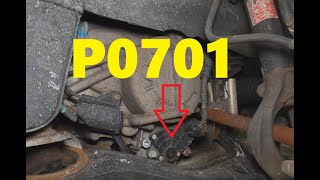
Helpful Videos


We Have This Part in Stock



The information in this article is provided for general reference and educational purposes only. Vehicle specifications, procedures, and part compatibility can vary by production date, trim level, and region. Always consult your vehicle's factory service manual and verify part numbers before purchasing or performing repairs. Safety-critical components such as airbags, seat belts, and braking systems should be installed by a qualified professional.
- Chevrolet SILVERADO:
- 🎬 Helpful Videos
- 🛍️ Shop This Part
- What's Unique About the 2006-2010 Chevrolet SILVERADO
- Diagnostic Flowchart
- Symptoms You May Notice
- Most Likely Causes
- Rare But Worth Checking
- Diagnosis Steps
- Parts You'll Likely Need
- Related Codes That Often Appear With This One
- Technical Service Bulletins (TSBs) & Recalls
- Platform-Specific Known Issues
- Mechanic-Grade Diagnostic Values
- Scan Tool Commands That Help
- Wiring & Ground Locations
- Real Owner Repair Stories
- OEM Part Supersession History
- Model Year Variations Within This Range
- 🎟️ Get 5% Off