

P0700 on 2013-2019 Subaru Outback: Transmission Control System Fault Guide
The P0700 code on a 2013-2019 Subaru Outback is a general alert from the transmission, not a specific diagnosis. It almost always points to a fault within the CVT, most commonly a failing valve body or torque converter lock-up solenoid. A proper diagnosis requires a scanner that can read transmission-specific codes (like P2764), and the most frequent fix is replacing the entire CVT valve body assembly, a costly repair that is well-documented in owner forums and covered by multiple Subaru TSBs.
- P0700 is a general alert. You MUST use a scanner that can read transmission codes to find the real problem.
- The most likely cause on a 2013-2019 Outback is a faulty CVT valve body, which is an expensive repair.
- Check with a Subaru dealer for any open recalls or CVT warranty extensions for your specific VIN before paying for repairs.
- Do not ignore this code. Driving with a serious transmission fault can lead to a breakdown and more costly damage.
- This is not a DIY-friendly repair. The complexity of the CVT requires professional service.
What's Unique About the 2013-2019 Subaru Outback

For the 2013-2019 Outback, which uses a Lineartronic CVT (TR580 for 2.5L, TR690 for 3.6L), the P0700 code is very frequently a precursor to diagnosing a failed CVT valve body or one of its integrated solenoids. Unlike many other vehicles where P0700 could point to a wide range of external sensors or wiring issues, on this platform, the issue is very often internal to the transmission assembly. Subaru has issued multiple Technical Service Bulletins (TSBs) related to the CVT valve body and its solenoids, acknowledging issues that can lead to this code. The problem is so common that Subaru extended the CVT warranty for many of these vehicles to 10 years/100,000 miles.
Generation note: This range covers the end of the 4th generation (2013-2014) and the 5th generation (2015-2019). Both generations use a Lineartronic CVT (primarily the TR580 in 2.5L models and the TR690 in 3.6L models) and are known to experience similar valve body issues leading to a P0700 code. TSBs like 16-156-25 and the CVT warranty extension cover models across both generations, confirming the shared nature of the problem. Manufacturer service bulletin #06-93-25 further notes that ECM updates have been developed to address P0700 and related transmission relay circuit codes across various Subaru platforms.
Symptoms You May Notice

- Check Engine Light is on.
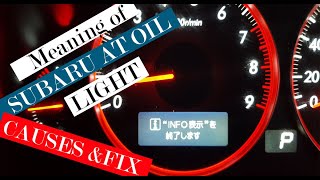
- Flashing 'AT OIL TEMP' light on the dashboard. 🎬 Learn more about what a flashing AT Oil Temp light means
- Solid 'Brake' light indicator is on.
- Cruise control is disabled and the indicator may flash.
- Vehicle may hesitate, shudder, or surge during acceleration or deceleration.
- Car may feel like it's in neutral or have delayed engagement when shifting into Drive or Reverse.
- Vehicle may enter 'limp mode' with significantly reduced power. NHTSA ODI #11723218 describes a vehicle locked in limp mode that could barely climb a small ramp, making it unsafe in traffic.
- Stalling when coming to a stop, especially abruptly.
- Clearing the P0700 code without reading the underlying TCM codes. The P0700 is just an indicator; the real problem is the code stored in the transmission module (e.g., P2764).
- Replacing the entire transmission when only the valve body is needed. A valve body replacement is a major repair, but significantly less expensive than a full transmission swap, and is the correct fix for the common solenoid failure. However, NHTSA ODI #11265402 notes instances where dealerships may recommend a whole new transmission rather than just fixing the torque converter components.
- Using an aftermarket or rebuilt valve body. Many owner and technician accounts report that these parts often fail quickly, leading to a repeat repair. Sticking to a new OEM part is critical for a lasting fix.
Most Likely Causes

- Faulty CVT Valve Body / Solenoid 🔴 High Probability The solenoids, particularly the torque converter lock-up duty solenoid, are a well-documented failure point on the TR580/TR690 CVTs used in these Outbacks. Subaru does not sell the solenoids individually, requiring the replacement of the entire valve body assembly. TSB 16-156-25 announces a design change to the valve body with an enhanced valve sleeve to improve durability against this specific failure.
How to confirm: Scan the TCM for specific codes like P2762, P2763, or P2764 ('Torque Converter Clutch Pressure Control Solenoid Control Circuit Low/High'). These codes directly point to a solenoid or circuit failure within the valve body assembly.
Typical fix: Replace the entire CVT valve body assembly with the updated OEM part. This must be followed by a specific CVT fluid fill and a computer-driven 'relearn' procedure which can be performed with advanced scan tools like Autel MaxiSys. 🎬 Watch: How to perform a CVT relearn procedure Using aftermarket or rebuilt valve bodies is strongly discouraged due to high rates of premature failure.
Est. part cost: $790-$1200 for an OEM part. - Low or Degraded CVT Fluid 🟡 Medium Probability While Subaru marketed the CVT fluid as 'lifetime' in the US, this has been a point of contention. Fluid can break down over time, especially under severe use, or leak. Degraded fluid can cause pressure and performance issues that the TCM detects as a fault. Many experts and even service schedules in other markets (like Canada) recommend fluid changes around 60,000 miles (100,000 km). NHTSA ODI #11723189 documents a case where a pressure sensor was leaking oil, leading to multiple transmission codes including P0700 and P0841.
How to confirm: Check the CVT fluid level and condition. This is not as simple as checking engine oil and has a specific procedure that must be followed while the vehicle is running and at a specific temperature. The fluid should be green and translucent, not black or burnt-smelling.
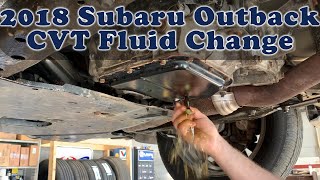
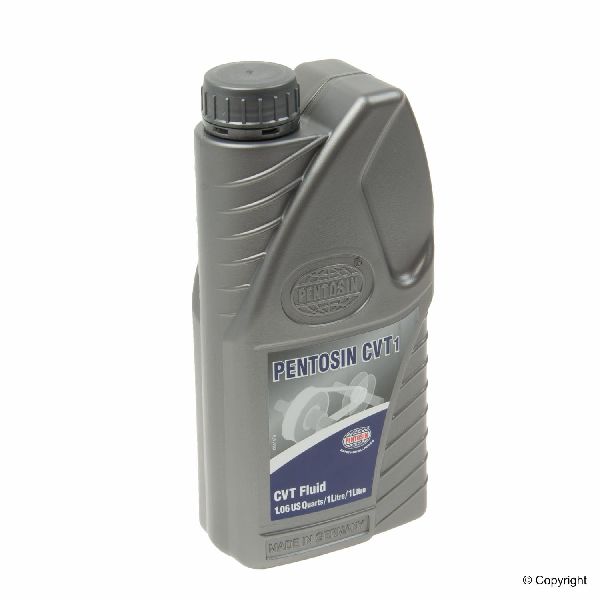
Typical fix: If low, top off with the correct Subaru High Torque CVT fluid (CVTF-II). If dirty or degraded, perform a drain and fill. 🎬 See this step-by-step CVT fluid change walkthrough A full flush is sometimes debated on high-mileage units, but a drain and fill is considered safe preventative maintenance.
Est. part cost: $120-$200 for 6-8 quarts of fluid. - Faulty Transmission Speed Sensor ⚪ Low Probability
How to confirm: A specific TCM code, such as P2746 (Intermediate Shaft Speed Sensor), will be present along with P0700. The sensor's wiring and signal can be checked with a multimeter and oscilloscope.
Typical fix: Replace the faulty speed sensor. These are typically located on the outside of the transmission case, making them more accessible than internal components.
Est. part cost: $50-$150
Rare But Worth Checking
- Wiring Harness Damage: Rodents can chew on the soy-based wiring insulation used in modern cars, causing short circuits. Also check for corrosion or loose connections at the main transmission harness connector and TCM. TSB 16-102-16R provides extensive wiring check procedures for related code P0841.
- Faulty Transmission Control Module (TCM): While rare, the TCM itself can fail. This is usually diagnosed after all other possibilities (sensors, wiring, valve body) have been exhaustively eliminated. Sometimes moisture intrusion can be a cause.
- Weak or Failing Battery: Low system voltage can cause communication errors between modules, including the TCM and ECM, triggering a P0700 code. Subarus of this era are known for having batteries that may not last long, so this should be an early check.
Diagnosis Steps

- Connect an OBD-II scanner to confirm the P0700 code in the Engine Control Module (ECM).
- Use an advanced scan tool (e.g., Autel, Snap-on, or Subaru Select Monitor) capable of communicating with the Transmission Control Module (TCM) to retrieve all transmission-specific codes. This is the most critical step.
- Document the specific TCM codes (e.g., P2764, P2762, P0841). These will guide the rest of your diagnosis.
- Check for any applicable warranty extensions. Many 2013-2019 models had their CVT warranty extended to 10 years/100,000 miles. A dealer can check this with your VIN.
- Check the transmission fluid level and condition according to the factory service procedure. The vehicle must be at a specific temperature (40-65°C) and running.
- Inspect the main wiring harness and connectors going to the transmission for any visible damage, corrosion, or looseness, paying close attention to the main connector on top of the transmission.
- If codes point to a specific solenoid (like P2764), the diagnosis will almost certainly lead to confirming the failure of the valve body assembly, as the solenoid itself is not serviceable.
- If codes point to a sensor (like P0841), follow the diagnostic flowchart in the relevant TSB (e.g., 16-102-16R) which includes wiring checks and pressure tests.
- Test the battery and charging system to rule out low voltage as a source of communication errors.
Parts You'll Likely Need
- CVT Control Valve Body Assembly
(OEM #31825AA055)— This is the most common failure point for P0700 accompanied by solenoid codes (P2764, etc.). The solenoids are integrated and not sold separately by Subaru. Using a new OEM part is critical.
Trusted brands: Subaru (OEM)
OEM price range: $790-$1200
Aftermarket price range: $250-$400 (Not Recommended)
Related Codes That Often Appear With This One
- P2764 — This code points specifically to a 'Torque Converter Clutch Pressure Control Solenoid Control Circuit Low' fault, a very common cause for valve body replacement in these Outbacks. NHTSA ODI #11505856 notes this code appearing alongside P0700 at high mileages, signaling CVT failure.
- P2762 — Indicates 'Lock-Up Duty Solenoid Malfunction', another code directly related to the known valve body solenoid issue and mentioned in TSB 16-156-25.
- P2757 — Indicates 'Torque Converter Clutch Pressure Control Solenoid Control Circuit Performance/Stuck Off', also directly related to the valve body solenoid issue.
- P0841 — This code for 'Secondary Oil Pressure Sensor Performance' is also common and has multiple TSBs (like 16-102-16R) dedicated to its diagnosis, which can be related to internal pressure regulation issues or wiring problems.
Technical Service Bulletins (TSBs) & Recalls
- 16-156-25: Announces a design change to the CVT Control Valve Body with an 'enhanced valve sleeve' to improve durability and prevent codes like P2757 and P2762. Affects 2013-19 Legacy/Outback 2.5L, among others.
- 16-102-16R: Provides an extensive diagnostic flowchart for troubleshooting DTC P0841 (Secondary Oil Pressure Sensor Performance), which often appears with P0700. Includes detailed wiring and pressure testing steps.
- 16-107-17R: Details the CVT Warranty Extension program, extending coverage to 10 years / 100,000 miles for many models including the 2013-2015 Outback.
- Bulletin #06-93-25: Outlines ECM software developments to address P0700 and P0890 (TCM Power Relay Sense Circuit Low) codes.
Platform-Specific Known Issues
- Subaru extended the CVT warranty under TSB 16-107-17R (and others) for many 2010-2018 models to 10 years or 100,000 miles, whichever comes first, due to these known issues. Owners should always check with a Subaru dealer to see if their vehicle's VIN is covered.
- The 'lifetime' CVT fluid claim by Subaru of America is widely disputed. Proactive fluid changes every 30,000 (severe duty) to 60,000 miles are recommended by many independent experts and are part of the scheduled maintenance in other countries.
- A recall (WRK-21 / NHTSA 21V-955) was issued for some 2020 Outbacks (and other models) for an improper TCM program that could cause the CVT chain to slip or break. While this is for a slightly newer model, it highlights the sensitivity of the TCM programming.
Mechanic-Grade Diagnostic Values
- Torque Converter Lock-Up Duty Solenoid Resistance — expected: 10 - 13.5 Ohms (Ω). Failure: A reading significantly outside this range, either low (e.g., 2.5 Ω) or very high/open circuit (e.g., 41 kΩ), indicates a failed solenoid.
- ATF Temperature for Fluid Level Check / Relearn Procedure Start — expected: 95°F - 113°F (35°C - 45°C) or 40°C - 65°C depending on source/procedure.. Failure: Performing the check or relearn outside of this temperature window can lead to incorrect fluid levels or failed adaptation.
Hidden / Shadow Codes Worth Checking
- Flashing 'AT OIL TEMP' Light: This is not an OBD-II code but a critical dashboard indicator that signals a fault within the automatic transmission system, often related to temperature or component failure. When P0700 is present, this light is almost always flashing as well. (see via Visible on the vehicle's instrument cluster.)
Scan Tool Commands That Help
- Subaru Select Monitor, Autel MaxiSys, Xtool D8, etc.: Clear AT Learning Value — This function must be performed after replacing the valve body or transmission. It erases the adaptive memory the TCM has stored for the old component.
- Subaru Select Monitor, Autel MaxiSys, Xtool D8, etc.: AT Learning Mode (or CVT Relearn) — After clearing the old values, this guided procedure must be run to allow the TCM to calibrate itself to the new valve body solenoids. It involves lifting the vehicle, starting the engine, and following on-screen prompts to shift between D, N, and R. Skipping this can result in poor shift quality and drivability issues.
Wiring & Ground Locations
- Transmission Harness Connector (T22) — On top of the transmission case, under the air intake and throttle body assembly.. This is the primary connector for all transmission solenoids. The lock-up solenoid can be resistance-tested here without removing the transmission cover. One source identifies the pin as being on the bottom row, third from the left, for testing against a ground.
- AT Oil Temperature Sensor — Inside the transmission, mounted near the valve body with its sensor tip protruding into the fluid pan area.. While typically reliable, its function can be compromised by physical damage. A dented transmission pan from improper jacking can push into the sensor, causing it to ground out and trigger a constant 'AT OIL TEMP' flashing light, mimicking a more severe electronic failure.
Real Owner Repair Stories
- Reddit user on r/subaru (2012 Impreza (uses same TR580 transmission)) — Dashboard lights on, codes P0700 and P2764.
❌ Tried (didn't work) Replaced only the individual lock-up solenoid.
✅ What actually fixed it The single solenoid fix only lasted for one week before the same codes and symptoms returned. The user then concluded they needed to replace the entire valve body assembly, reinforcing the common wisdom that individual solenoid replacement is unreliable. - YouTube video by user 'i Perform' (2014 Forester XT with 197,310 miles (uses TR690-variant CVT)) — Codes P2762 and P0700, hard 'shifts' and rough engagement at low speeds.
❌ Tried (didn't work) Driving the car after the repair without performing the relearn procedure resulted in 'off' and unsmooth throttle feel.
✅ What actually fixed it The owner replaced the TCC (lock-up) solenoid themselves. Afterwards, they used a scan tool to perform the 'CVT Relearn' procedure. This made a 'VERY noticeable difference in driveability' and is highly recommended after the repair. - NHTSA ODI #11265402 — An owner reported that after codes P0700 and P2764 appeared, the dealership claimed the vehicle needed a whole new transmission because fixing only the torque converter components was insufficient.
OEM Part Supersession History
31705AA6xx series (e.g., 31705AA683)→N/A— N/A
Heads up: CRITICAL: Part numbers beginning with 31705AA6xx are for the older 5-speed (5EAT) automatic transmission, NOT the CVT. While they may appear in searches for 'Subaru valve body', they are incorrect for this repair and will not fit or function in a Lineartronic CVT.
Model Year Variations Within This Range
- 2013-2014: The 3.6R models from these two years were equipped with a conventional 5-speed automatic transmission (5EAT), not a CVT. The common P0700 causes related to the CVT valve body do not apply to these vehicles. The 2.5i models in this range did use the Lineartronic CVT.
- 2015-2019: During this generation, both the 2.5L (TR580 CVT) and 3.6R (TR690 High-Torque CVT) models used a Lineartronic CVT. The valve body failure is common to both, though part numbers may differ.
Diagnostic Flowchart
Used vs. New Parts: Buying Guide for This Vehicle
When a used part is the smart pick: For this specific repair, sourcing a used part is highly discouraged. The failure rate of the valve body is high, and a used part from a donor vehicle carries a significant risk of having the same defect or a very short remaining service life.
Donor-vehicle mileage cap: roughly under 80000 miles for the part to have meaningful remaining life.
What to inspect on the donor part:
- If considering a used part against advice, verify the donor vehicle's VIN to check its service history for any prior transmission work.
- Avoid parts from vehicles with salvage titles, especially those with front-end damage that could have impacted the transmission.
OEM-only on this vehicle (don't cheap out):
- CVT Control Valve Body Assembly
Brands owners have reported issues with on this vehicle:
- Unbranded/generic valve bodies and individual solenoids from eBay/Amazon. Forum and technician consensus is that these parts have an extremely high rate of premature failure, often within weeks or a few thousand miles.
- Dorman (for individual solenoids): While a known brand, user reports are mixed. Some have success, while many others report the solenoid failing shortly after installation, necessitating a full valve body replacement anyway. It is considered a high-risk, temporary fix at best.
Real Owner Stories
Aggregated from forums and TSBs cited above. Mileages and costs reflect what owners reported in those sources.
2013 Outback — 150000 miles
Symptoms: After heavy use including towing, the vehicle displayed codes P0700 and P2764.
What fixed it: Diagnosed as a classic valve body failure requiring replacement of the entire assembly.
Source hint: Reddit: r/subaru - 2013 Outback with P0700 and P2764
2014 Outback — 145000 miles
Symptoms: Vehicle threw codes P0700, P2764, and P0841. After an attempted repair and clearing codes, the car began shaking severely, leading to total transmission failure.
What fixed it: An attempt to replace only a single solenoid failed, and the issue returned, highlighting the risk of incomplete repairs. The transmission ultimately failed completely.
Source hint: Reddit: r/subaruoutback - 'Rest in Peace' - 2014 Outback Transmission Failure Story
2013 Outback
Symptoms: Sudden onset of all classic symptoms: flashing dashboard lights ('AT OIL TEMP', 'Brake'), disabled cruise control, stalling after a restart, and no acceleration from a stop. Codes P0700 and P2764 were present.
What fixed it: The issue was identified as a failure of the torque converter clutch solenoid, which necessitates a full valve body replacement.
Source hint: Reddit: r/askcarguys - P0700 and P2764 codes on Subaru Outback
2011 Outback (TR690 CVT) — 200000 miles
Symptoms: Vehicle presented with codes P0700 and P2764. During repair, the 200k-mile 'lifetime' fluid was observed to be black and severely degraded.
What fixed it: The problem was resolved by performing a complete CVT valve body replacement and refilling with fresh fluid.
Source hint: YouTube: MrSubaru1387 - Subaru TR690 CVT Valve Body Replacement: P0700 & P2764
Documented NHTSA Reports
- An owner reported in NHTSA ODI #11505856 that their vehicle experienced CVT failure at 150,000 miles with a Check Engine Light, AT Oil Temp warning, and codes P0700 and P2764.
- According to NHTSA ODI #11723218, a technician confirmed a valve body failure after the vehicle was stored with codes P0841, P0700, and C1431, resulting in a dangerous limp mode condition.
- NHTSA ODI #11723189 describes a diagnostic scan identifying multiple transmission codes including P0700 and P0841, where the root cause was documented as a pressure sensor leaking oil.
Related OBD-II Codes
Frequently Asked Questions
My 2014 Outback has 95,000 miles and is showing a P0700 code. Is the CVT repair covered by any special warranty?
My mechanic says I need a new valve body. Is there an updated part I should ask for?
I was told my CVT fluid is 'lifetime' fluid. Should I really have it changed?
My scanner only shows P0700. What is the most important next step for my Outback?
Can I just replace the faulty torque converter lock-up solenoid instead of the entire expensive valve body?
What specific CVT fluid should I use if I'm doing a drain and fill on my 2016 Outback?
Helpful Videos
We Have This Part in Stock

The information in this article is provided for general reference and educational purposes only. Vehicle specifications, procedures, and part compatibility can vary by production date, trim level, and region. Always consult your vehicle's factory service manual and verify part numbers before purchasing or performing repairs. Safety-critical components such as airbags, seat belts, and braking systems should be installed by a qualified professional.
- Subaru Outback:
- 🎬 Helpful Videos
- 🛍️ Shop This Part
- What's Unique About the 2013-2019 Subaru Outback
- Symptoms You May Notice
- Most Likely Causes
- Rare But Worth Checking
- Diagnosis Steps
- Parts You'll Likely Need
- Related Codes That Often Appear With This One
- Technical Service Bulletins (TSBs) & Recalls
- Platform-Specific Known Issues
- Mechanic-Grade Diagnostic Values
- Hidden / Shadow Codes Worth Checking
- Scan Tool Commands That Help
- Wiring & Ground Locations
- Real Owner Repair Stories
- OEM Part Supersession History
- Model Year Variations Within This Range
- Diagnostic Flowchart
- Used vs. New Parts: Buying Guide for This Vehicle
- Real Owner Stories
- 2013 Outback — 150000 miles
- 2014 Outback — 145000 miles
- 2013 Outback
- 2011 Outback (TR690 CVT) — 200000 miles
- Documented NHTSA Reports
- Related OBD-II Codes
- Frequently Asked Questions
- 🎟️ Get 5% Off