

P0700 on 2012-2019 Subaru Impreza: Transmission Fault Guide
P0700 means your Impreza's transmission has a fault. It's almost always caused by a failing torque converter lock-up solenoid inside the CVT valve body, which also triggers a code like P2764. The fix is a valve body replacement, which may be covered by Subaru's 10-year/100,000-mile CVT warranty extension. For PZEV-rated vehicles in certain states, this may be covered for 15 years/150,000 miles.
- P0700 is a generic alert; the real fault code is stored in the Transmission Control Module (TCM).
- The most likely cause on a 2012-2019 Impreza is a failed torque converter lock-up solenoid within the CVT valve body.
- Symptoms often include a dashboard lit up with multiple warnings: Check Engine, flashing AT OIL TEMP, ABS, and traction control.
- Before paying for any repairs, check with a Subaru dealer. Your vehicle may be covered by an extended CVT warranty (10 years/100,000 miles).
- The standard fix is replacing the entire valve body, which is a job best left to a professional mechanic.
What's Unique About the 2012-2019 Subaru Impreza

For this generation of Impreza and its platform mates with the TR580 CVT, the P0700 code is very frequently a prelude to discovering a P2764 or P2762 code, pointing to a faulty torque converter lock-up solenoid. This is a widely-known issue where the solenoid's internal circuit shorts, causing a low resistance reading. In response to widespread customer complaints, Subaru of America issued a significant warranty extension for the CVT (detailed in TSBs 16-107-17 and 16-115-18), covering many of these vehicles for up to 10 years or 100,000 miles, which often covers the cost of this specific repair.
Generation note: This guide covers the fourth generation (2012-2016) and the fifth generation (2017-2019) Impreza. Both generations use a TR580 CVT and are known to suffer from the same common valve body/solenoid failure that triggers the P0700 code. The valve body for the TR580 is located on top of the transmission. Subaru's CVT warranty extension and related TSBs apply to vehicles in both generations.
Symptoms You May Notice
- Check Engine Light is on
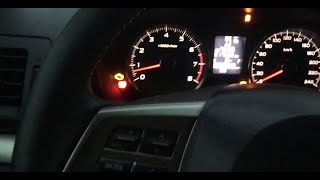
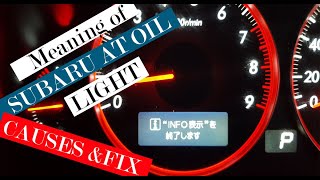
- Flashing 'AT OIL TEMP' light on the dashboard 🎬 Watch: What a flashing AT Oil Temp light means for your Subaru.
- ABS and Vehicle Dynamics Control (traction control) lights may also turn on
- Blinking cruise control light
- Hesitation or shuddering when accelerating from a stop
- Jerky or rough shifting behavior
- Vehicle may feel like it's losing power or stalling
- In some cases, the engine may be prevented from starting until codes are cleared
- Replacing only the transmission fluid. If the solenoid has failed electrically, a fluid change will not fix the root cause.
- Clearing the code without further diagnosis. The code will almost certainly return until the underlying hardware fault in the transmission is addressed.
- Replacing the entire CVT assembly. Many dealerships may recommend replacing the entire transmission, which is often unnecessary. The issue is typically isolated to the externally-accessible valve body, and replacing only that component is the correct and more cost-effective repair.
Most Likely Causes

- Faulty Torque Converter Lock-Up Solenoid / CVT Valve Body 🔴 High Probability The lock-up duty solenoid within the TR580 CVT's valve body is a well-documented weak point. The solenoid's internal circuit fails, typically shorting to ground, which leads to an incorrect low resistance reading by the TCM. This is an electronic failure of the solenoid itself, not a mechanical issue with the valve body. Subaru does not sell the solenoid separately, making a full valve body replacement the official repair.
How to confirm: A professional scan tool is needed to pull codes from the TCM. Look for P2764, P2763, or P2762. A technician can confirm the failure by testing the resistance of the solenoid circuit. This is done at the transmission connector on top of the CVT. The correct resistance should be approximately 10-13.5 ohms. A reading significantly lower, often in the 0-7 ohm range, confirms a failed solenoid.
Typical fix: The official Subaru repair is to replace the entire CVT valve body assembly. The repair involves draining some CVT fluid, removing the air intake to access the transmission's top cover, and replacing the valve body. After replacement, a CVT re-learn procedure must be performed with a capable scan tool. The repair may be covered under Subaru's extended CVT warranty (10 years/100,000 miles) or the PZEV emissions warranty (15 years/150,000 miles) in certain states.
Est. part cost: $700-$1000 for an OEM valve body.
Rare But Worth Checking
- Low or Degraded CVT Fluid: While less common than solenoid failure, low or dirty fluid can cause a variety of transmission issues, including overheating and erratic pressure, which can trigger a P0700. Checking the fluid level and condition is a wise first step, though these models lack a dipstick, requiring a specific service procedure to check. 🎬 Watch this to understand the risks of driving with a flashing light.
- Wiring Harness Damage: Damage to the wiring harness between the TCM and the transmission can cause communication errors or incorrect sensor readings. This could be from chafing, corrosion, or rodent damage. A diagnostic flowchart would involve checking for a short to ground in the harness before condemning the valve body.
- Faulty Transmission Control Module (TCM): Complete failure of the TCM itself is rare but possible. This should only be considered after all other possibilities, such as the valve body, fluid, and wiring, have been thoroughly ruled out. Manufacturer Bulletin #06-93-25 notes that updates for the Engine Control Module (ECM) were developed specifically to address P0700 and P0890 codes.
Diagnosis Steps
- Connect an OBD-II scanner capable of reading transmission codes to the vehicle's diagnostic port.
- Confirm the presence of P0700 in the Engine Control Module (ECM).
- Access the Transmission Control Module (TCM) and read the specific transmission codes. Expect to find codes like P2764, P2762, or P2763.
- If a lock-up solenoid code is present, check your vehicle's VIN against Subaru's CVT warranty extension program (10 years / 100,000 miles). If covered, contact a Subaru dealership for repair.
- Also check if your vehicle is a PZEV model and registered in a state with the 15-year/150,000-mile emissions component warranty (e.g., CA, CT, ME, MA, NY, VT).
- If not under warranty, a technician will confirm the failure by testing the resistance of the lock-up solenoid circuit. This is done by disconnecting the transmission harness connector on top of the CVT and measuring between the specific pin for the solenoid and chassis ground. A reading of ~10-13.5 ohms is normal, while a low reading (e.g., <7 ohms) confirms a failed solenoid.
- If the resistance test passes, inspect the wiring harness for damage or shorts. NHTSA ODI #11723189 describes a case where transmission codes including P0700 and P0841 were triggered by a pressure sensor leaking oil.
- If all other components test correctly, the TCM itself may be suspect, but this is the least likely cause.
Parts You'll Likely Need
- CVT Control Valve Body
(OEM #31825AA055 (supersedes 31825AA052))— This is the complete assembly that contains the failing solenoid. Subaru's official repair procedure is to replace the entire unit. The part number has been updated several times.
Trusted brands: Subaru (OEM)
OEM price range: $750-$1000
Aftermarket price range: $250-$500 (Remanufactured) - Torque Converter Lock-Up Solenoid — For those attempting a non-standard repair, replacing just the failed solenoid is possible. Subaru does not sell this part individually, but aftermarket options exist. This is a more advanced, DIY-centric repair that saves on parts cost but requires careful work inside the valve body.
Trusted brands: Dorman, Rostra
OEM price range: N/A
Aftermarket price range: $80-$150 - CVT Valve Body Cover Gasket
(OEM #31338AA020)— This gasket is a one-time-use part and must be replaced anytime the valve body cover is removed for service.
Trusted brands: Subaru (OEM)
OEM price range: $20-$40
Aftermarket price range: $15-$30
Related Codes That Often Appear With This One
- P2764 — This is the most common specific code for 'Torque Converter Clutch Pressure Control Solenoid Control Circuit Low'. It directly indicates the failure of the lock-up solenoid that prompts the P0700.
- P2762 — This code for 'Torque Converter Clutch Pressure Control Solenoid Control Circuit Range/Performance' also points to the same solenoid failure and is frequently seen with P0700.
- P2763 — Similar to P2764, this code points to a 'high' circuit reading for the lock-up solenoid, also indicating a fault within the valve body. This can happen if the solenoid fails open, especially when hot.
Technical Service Bulletins (TSBs) & Recalls
- 16-107-17: Details the CVT warranty extension for 2012-15 Impreza and other models to 10 years/100,000 miles.
- 16-115-18: Details the CVT warranty extension for 2016-17 Impreza and other models to 10 years/100,000 miles.
- 16-102-16R: Provides diagnostic flow charts for CVT issues, though it primarily focuses on DTC P0841, the methods are relevant.
- 16-103-16R: While not directly for P0700, this TSB addresses common CVT fluid seepa
- Bulletin #06-93-25: Outlines Engine Control Module (ECM) updates developed to address Diagnostic Trouble Codes P0700 and P0890.
Platform-Specific Known Issues
- Subaru extended the warranty on the CVT for many 2012-2017 models to 10 years or 100,000 miles due to known issues, including the one that causes P0700. This was announced in TSBs like 16-107-17 and 16-115-18. Owners should always check with a Subaru dealer to see if their vehicle is covered before paying for repairs.
- In some states with California Emissions standards (PZEV), the warranty on the valve body may be even longer—15 years or 150,000 miles—as it is considered an emissions-related component. States known to honor this include California, Connecticut, Maine, Massachusetts, New York, and Vermont. Owners have successfully received free dealer repairs under this warranty even after the 10/100k extension expired.
Mechanic-Grade Diagnostic Values

- Torque Converter Lock-Up Solenoid Resistance (Cold) — expected: ~12-13 Ohms. Failure: A low reading, typically < 7 Ohms, indicates a shorted solenoid (triggers P2764). An open circuit (Megaohms) indicates an open winding (triggers P2763).
- Torque Converter Lock-Up Solenoid Resistance (Hot) — expected: Slightly higher than cold reading (e.g., ~16 Ohms).. Failure: Resistance may read normal when cold but go to an open circuit (Megaohms) when the transmission is at operating temperature. This indicates an internal break in the solenoid winding that separates when heated.
- Valve Body to Case Bolt Torque — expected: 6.5 ft-lbs (80 in-lbs or 9 Nm). Failure: N/A
- Valve Body Cover Bolt Torque — expected: 6 ft-lbs (72 in-lbs or 8 Nm). Failure: N/A
Scan Tool Commands That Help
- Subaru Select Monitor (or equivalent professional scanner): Clear AT learning value — This must be performed first, before the relearn procedure, after replacing the valve body or transmission.
- Subaru Select Monitor (or equivalent professional scanner): AT learning mode / Compulsory learning mode — This is the mandatory relearn procedure required after replacing the CVT valve body. The vehicle must be lifted, and ATF temperature must be between 104-149°F (40-65°C). The 'AT OIL TEMP' light will flash at 2Hz during the process.
Wiring & Ground Locations
- TCM Connector B54 — Under the driver's side dashboard, above the brake pedal. It is a long, green connector.. The lock-up solenoid control wire is at Pin 26 on this connector. This is a point for testing the harness for shorts to ground between the TCM and the transmission.
- Transmission Connector B11 / T4 — On top of the CVT assembly, under the air intake duct. It is a gray connector.. This is the primary location to test the solenoid's resistance directly. The lock-up solenoid pin corresponds to the red and white wire. This test isolates the valve body from the main vehicle harness.
- Main Engine Ground — A strap that bolts to the top starter motor bolt on the transmission bell housing.. A poor main engine/transmission ground can cause a host of electrical issues and incorrect sensor readings. Ensuring this connection is clean and tight is a fundamental step in any electrical diagnosis.
- ECU Grounds — The ECU grounds are located on the top of the intake manifold.. While not directly for the TCM, a poor ground at this location can cause unpredictable behavior in the engine control system, which communicates directly with the TCM. This is especially critical if TGV deletes or spacers have been installed, as they can interrupt this ground path.
Real Owner Repair Stories
- Reddit user in r/subaru (2012 Impreza) — Dashboard lit up with P0700 and P2764.
❌ Tried (didn't work) Replaced only the lock-up solenoid with an aftermarket part.
✅ What actually fixed it The aftermarket solenoid failed again after one week. The user concluded they needed to replace the entire OEM valve body assembly. This highlights the potential risk and poor reliability of using aftermarket-only solenoids instead of a complete, new OEM valve body. - MrSubaru1387 on YouTube (2013 Subaru Impreza Sport, 192,819 miles) — All dashboard lights on (Check Engine, flashing AT Temp, VDC), jerky drivability. Codes P0700 and P2764 were stored.
❌ Tried (didn't work) Initial check showed no lights, car drove normally, highlighting the intermittent nature of the fault.
✅ What actually fixed it A detailed diagnostic process confirmed a failed lock-up solenoid. The resistance measured at the transmission connector was only 1.4-1.5 ohms, far below the ~13 ohm spec. The fix is to replace the entire valve body assembly.
OEM Part Supersession History
31825AA052→31825AA055— Internal revisions and improvements by Subaru to address reliability issues.
Heads up: Using an older part number, even if new-old-stock, means you will not have the latest factory updates.N/A (Solenoid not sold by Subaru)→Dorman 926-408 (Solenoid only)— Aftermarket solution to avoid replacing the entire valve body.
Heads up: This is an aftermarket-only repair. Forum reports suggest the long-term reliability of replacing only the solenoid can be questionable compared to a full OEM valve body replacement.
Model Year Variations Within This Range
- 2012-2019: All Imprezas in this range use the TR580 CVT, which has the valve body located on top of the transmission, accessible from the engine bay. This is distinct from the TR690 CVT found in larger Subarus (like some Foresters and Outbacks) where the valve body is in the bottom pan. The repair procedure is consistent across the 2012-2019 Impreza model years.
Diagnostic Flowchart
Used vs. New Parts: Buying Guide for This Vehicle
When a used part is the smart pick: A used valve body assembly is a significant gamble due to the high failure rate of the integrated solenoid. It should only be considered if it is from a verified, very low-mileage donor vehicle (e.g., a rear-end collision) and the price reflects the risk. A new aftermarket solenoid is often a cheaper, but still risky, alternative to a complete used assembly.
Donor-vehicle mileage cap: roughly under 50000 miles for the part to have meaningful remaining life.
What to inspect on the donor part:
- Verify the donor vehicle's VIN to check its history.
- If possible, test the resistance of the lock-up solenoid on the donor part before purchase.
- Look for the 'TOSOK' marking on the original solenoids, as this indicates an OEM component rather than a potentially lower-quality aftermarket replacement.
OEM-only on this vehicle (don't cheap out):
- CVT Control Valve Body Assembly: For maximum reliability and to get the latest factory revisions, a new OEM unit from Subaru is the most recommended path.
Aftermarket brands forum-validated for this vehicle:
- Dorman (Part 926-408 for solenoid)
- Rostra (Solenoid only)
Brands owners have reported issues with on this vehicle:
- Unbranded, generic solenoids from online marketplaces are frequently reported on forums as having a high rate of premature failure.
Real Owner Stories
Aggregated from forums and TSBs cited above. Mileages and costs reflect what owners reported in those sources.
2013 Subaru Impreza — 145000 miles
Symptoms: P0700, followed by P2764. Car was 'jolting in all gears and struggling in 1st'.
What fixed it: Owner concluded a valve body replacement was needed.
Source hint: Reddit r/MechanicAdvice
2012 Impreza — 80000 miles
Symptoms: Owner received a P2764 code.
What fixed it: The valve body replacement was fully covered for free under the 15-year/150,000-mile PZEV emissions warranty in California after an initial dealer quote of $1700.
Source hint: Reddit r/subaru - 2012 Impreza PZEV Warranty Success Story
2013 Crosstrek — 198000 miles
Symptoms: Owner received the 'dreaded' P2764 code.
What fixed it: Owner successfully replaced the valve body themselves in about 3 hours by following YouTube guides and performing a CVT re-learn procedure.
Cost: $1350-$1350
Source hint: Reddit r/Crosstrek - DIY Repair Story
2014 Impreza — 144000 miles
Symptoms: Required a valve body replacement.
What fixed it: The valve body replacement was fully covered under the PZEV warranty in Maine.
Source hint: Reddit r/subaruimpreza - PZEV Warranty Confirmation
2013 Impreza
Symptoms: Owner received a P2764 code.
What fixed it: Owner was quoted $2,503 for a valve body replacement.
Cost: $2503-$2503
Source hint: Reddit r/MechanicAdvice - Cost Quote Inquiry
Documented NHTSA Reports
NHTSA ODI #11505856
Symptoms: An owner reported check engine lights, an AT Oil Temp warning, and codes P0700 and P2764 (Torque Converter Clutch Pressure Control Solenoid Control Circuit Low).
NHTSA ODI #11265402
Symptoms: A report notes that CVT codes P0700 and P2764 came on, and the dealership stated the vehicle required a whole new transmission rather than just a torque converter fix.
NHTSA ODI #11723218
Symptoms: An owner described the vehicle being locked in limp mode and barely able to climb a small ramp, with codes P0841, P0700, and C1431 stored. A technician confirmed the valve body likely failed.
Related OBD-II Codes
Frequently Asked Questions
Is the P0700 code and required valve body replacement covered by any warranty on my 2012-2019 Impreza?
What other codes should I look for in the Transmission Control Module (TCM) when I have a P0700?
What dashboard lights typically come on with a P0700 on this Impreza?
My mechanic confirmed the lock-up solenoid failed. Can I just replace the solenoid instead of the whole valve body?
How can a technician definitively confirm the torque converter lock-up solenoid is the cause?
Will this P0700 issue prevent my Impreza from starting?
Helpful Videos

Used OEM Parts in Stock

New Aftermarket Parts Available



The information in this article is provided for general reference and educational purposes only. Vehicle specifications, procedures, and part compatibility can vary by production date, trim level, and region. Always consult your vehicle's factory service manual and verify part numbers before purchasing or performing repairs. Safety-critical components such as airbags, seat belts, and braking systems should be installed by a qualified professional.
- Subaru Impreza:
- 🎬 Helpful Videos
- 🛍️ Shop This Part
- What's Unique About the 2012-2019 Subaru Impreza
- Symptoms You May Notice
- Most Likely Causes
- Rare But Worth Checking
- Diagnosis Steps
- Parts You'll Likely Need
- Related Codes That Often Appear With This One
- Technical Service Bulletins (TSBs) & Recalls
- Platform-Specific Known Issues
- Mechanic-Grade Diagnostic Values
- Scan Tool Commands That Help
- Wiring & Ground Locations
- Real Owner Repair Stories
- OEM Part Supersession History
- Model Year Variations Within This Range
- Diagnostic Flowchart
- Used vs. New Parts: Buying Guide for This Vehicle
- Real Owner Stories
- 2013 Subaru Impreza — 145000 miles
- 2012 Impreza — 80000 miles
- 2013 Crosstrek — 198000 miles
- 2014 Impreza — 144000 miles
- 2013 Impreza
- Documented NHTSA Reports
- NHTSA ODI #11505856
- NHTSA ODI #11265402
- NHTSA ODI #11723218
- Related OBD-II Codes
- Frequently Asked Questions
- 🎟️ Get 5% Off