

P0700 on 2014-2020 Subaru Forester: Transmission Control System Malfunction Guide
The P0700 code on a 2014-2020 Subaru Forester is a general alert from the transmission. It means the Transmission Control Module (TCM) has detected a fault and has asked the main computer to turn on the Check Engine Light. The most common cause is a faulty CVT valve body, which can cost between $1,500 and $2,600 to replace. The specific transmission code must be read from the TCM to properly diagnose the issue.
- P0700 is just a messenger code. The real problem is identified by a secondary code stored in the Transmission Control Module (TCM).
- You MUST use a scan tool that can read transmission codes to properly diagnose the issue.
- The most common cause for a P0700 on a 2014-2020 Forester is a faulty CVT valve body, which is an expensive repair.
- Check if your vehicle is covered by Subaru's CVT warranty extension before paying for repairs, as it could save you thousands.
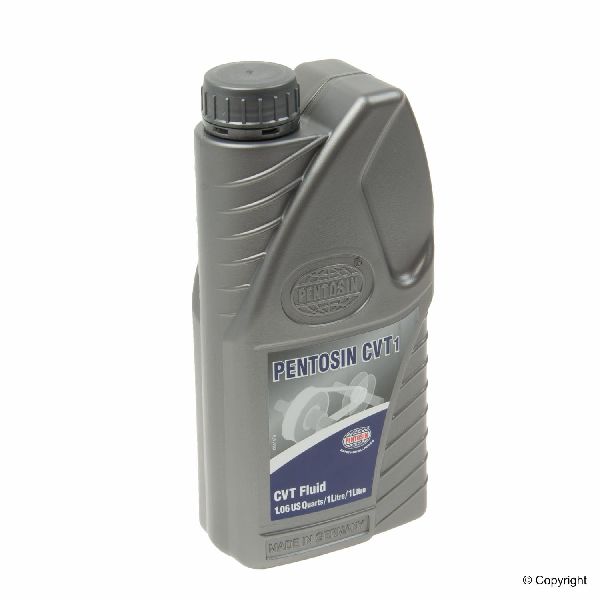
- Always use genuine Subaru High Torque CVTF fluid when servicing the transmission.
What's Unique About the 2014-2020 Subaru Forester

The 2014-2020 Subaru Forester uses a Lineartronic TR580 Continuously Variable Transmission (CVT) paired with its naturally aspirated engines. While CVTs offer smooth acceleration and efficiency, the TR580 in this generation has a well-documented history of issues. The code P0700 frequently precedes a more specific code pointing to the CVT's valve body or, more specifically, the torque converter lock-up solenoid housed within it. This failure is so common that Subaru has acknowledged the issue by issuing Technical Service Bulletins (TSBs), extending the CVT warranty for many model years to 10 years or 100,000 miles, and releasing updated valve body parts.
Generation note: This range covers the fourth generation (SJ, 2014-2018) and the beginning of the fifth generation (SK, 2019-2020). Both generations use a Lineartronic TR580 CVT with the 2.5L naturally aspirated engine and are known to experience similar issues related to the valve body and its solenoids, which can trigger a P0700 code.
Symptoms You May Notice

- Check Engine Light is on
- Flashing 'AT OIL TEMP' light on the dashboard
- Vehicle enters 'limp mode' with significantly reduced power
- Hesitation or shuddering during acceleration or deceleration
- Erratic or harsh shifting behavior
- Cruise control system is disabled
- EyeSight driver assist system is disabled
- Vehicle may stall when coming to a stop
- Replacing the entire CVT assembly when only the valve body is faulty. A full replacement can cost over $7,000, while a valve body is significantly less.
- Clearing the P0700 code without reading the underlying, specific code from the TCM, leading to the problem recurring.
- Replacing other transmission components before confirming the common valve body solenoid failure via resistance check.
Most Likely Causes

- Faulty CVT Valve Body or Solenoid 🔴 High Probability This is a widely documented failure point on Subaru's TR580 Lineartronic CVTs. The solenoids, particularly the torque converter lock-up solenoid, are integrated into the valve body and often fail due to electrical issues (circuit low/high) or getting stuck. Subaru does not sell the solenoids individually, so the official repair is to replace the entire valve body assembly. Subaru has released updated valve body designs to improve durability.
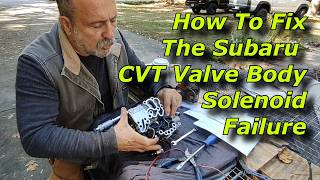
How to confirm: A professional-grade scan tool is needed to pull the specific transmission codes. Codes like P2762, P2763, P2764, or P2757 often 🎬 Watch: How to diagnose and fix these specific solenoid codes. point directly to a valve body or solenoid issue. A mechanic can also test the resistance of the specific solenoid at the transmission connector; for the lock-up solenoid, it should be between 10-13.5 Ohms. A reading significantly outside this range, such as 2-3 Ohms, confirms a bad solenoid.
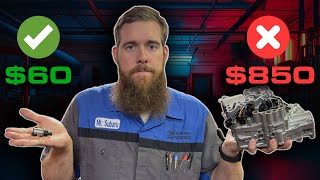
Typical fix: Official Fix: Replacement of the entire CVT valve body assembly with a new or remanufactured OEM part. After replacement, a CVT relearn procedure must be performed with a compatible scan tool. DIY/Alternative: Some owners and independent shops replace only the failed solenoid with an aftermarket part (e.g., from Dorman) to save money, though this is not the Subaru-approved method and may have longevity risks.
Est. part cost: $800-$1200 for OEM Valve Body, $60-$100 for aftermarket solenoid - Low or Degraded CVT Fluid 🟡 Medium Probability While Subaru has marketed the CVT fluid as 'lifetime,' it degrades over time with heat and mileage. Low, contaminated, or burnt fluid can cause pressure issues, overheating, and shuddering, leading to various fault codes. TSB 16-102-16R for code P0841 begins its diagnostic tree with a fluid condition check. NHTSA ODI #11723189 describes a technician identifying a pressure sensor leaking oil as a root cause for multiple codes including P0700 and P0841.
How to confirm: Check the CVT fluid level and condition. This is complex as there is no dipstick. It requires the vehicle to be level, at a specific temperature (monitored via scan tool), and using fill and overflow plugs. The fluid should be the correct color (typically green for CVTF-II) and not smell burnt.
Typical fix: Perform a CVT fluid drain and fill using the correct Subaru High Torque CVTF (or CVTF-II). A full flush is generally not recommended on higher-mileage vehicles where it hasn't been done regularly. This is often done as part of a valve body replacement.
Est. part cost: $100-$250 - Damaged Wiring Harness or Connectors ⚪ Low Probability The wiring harness leading to the transmission can be susceptible to damage from road debris, heat, or corrosion over time, causing intermittent communication issues. The main connectors are on top of the CVT case.
How to confirm: Visually inspect the wiring harness and connectors going to the transmission for any signs of damage, corrosion, or loose connections. A multimeter can be used to check for continuity and resistance between the TCM and the transmission connectors to rule out a wiring fault before condemning the valve body.
Typical fix: Repair the damaged section of wiring or replace the affected connector. Cleaning the connectors and applying dielectric grease can sometimes resolve intermittent issues.
Est. part cost: $20-$100
Rare But Worth Checking
- Failed Transmission Control Module (TCM): While possible, a faulty TCM is rare. On these models, the TCM is located behind the glove box assembly. All other possibilities, such as sensor, wiring, and mechanical faults, should be exhausted before considering TCM replacement. Manufacturer Bulletin #06-93-25 notes that updated Engine Control Module (ECM) software was developed to address P0700 and TCM power relay circuit issues.
- Internal CVT Mechanical Failure: In some cases, particularly if accompanied by whining noises or severe drivability issues, the P0700 code could be triggered by a more serious internal failure requiring a full transmission replacement. TSB 16-102-16R notes that burnt fluid found during diagnosis may mandate a transmission replacement. NHTSA ODI #11265402 reports an instance where a dealership recommended a whole new transmission for codes P0700 and P2764.
Diagnosis Steps
- Connect an OBD-II scanner capable of communicating with the Transmission Control Module (TCM). A basic scanner may only show P0700 from the ECM.
- Confirm the presence of the P0700 code in the Engine Control Module (ECM).
- Scan the TCM for any specific, stored transmission codes (e.g., P276x, P08xx). This is the most critical step.
- If a torque converter solenoid code (P2762, P2763, P2764) is present, test the resistance of the solenoid circuit at the transmission connector. A reading outside of the 10-13.5 Ohm specification strongly indicates a failed solenoid.
- Follow the specific diagnostic procedure for any other codes found in the TCM, such as the flow chart in TSB 16-102-16R for P0841.
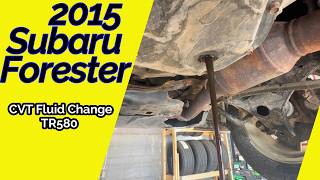
- Check the CVT fluid level and condition according to the manufacturer's procedure. This requires specific tools and temperature monitoring. 🎬 Watch this walkthrough on how to correctly change TR580 fluid.
- Inspect all wiring and connectors between the ECM, TCM, and the transmission assembly for damage or corrosion.
- If a solenoid failure is confirmed, the diagnosis leads to replacing the valve body (OEM procedure) or the individual solenoid (DIY/aftermarket approach).
Parts You'll Likely Need

- CVT Valve Body Assembly
(OEM #31825AA052 (Original), 31825AA055 (Superseded/Updated Part))— This is the most frequent cause of P0700-related transmission codes in this Forester. The solenoids are integrated, and Subaru's official repair is to replace the entire assembly. The part has been updated to improve durability.
Trusted brands: Subaru (OEM)
OEM price range: $800-$1200
Aftermarket price range: $170-$400 (Remanufactured, use with caution) - Subaru High Torque CVTF (CVTF-II)
(OEM #SOA427V1660 (Formerly SOA427V1500))— This specific fluid is required for any service that involves opening the transmission, such as a valve body replacement. Using incorrect fluid can cause severe damage.
Related Codes That Often Appear With This One
- P2762 — This code points to a performance issue with the Torque Converter Clutch Pressure Control Solenoid, which is a very common failure on these CVTs and is located within the valve body.
- P2764 — Indicates a circuit low issue with the Torque Converter Clutch Pressure Control Solenoid, also pointing to a valve body problem. This is one of the most frequently cited codes alongside P0700.
- P2763 — Indicates a circuit high issue with the Torque Converter Clutch Pressure Control Solenoid, another common variant pointing to the same component failure.
- P0841 — This code relates to the secondary fluid pressure sensor's performance. Subaru has issued a detailed TSB (16-102-16R) for diagnosing this code, which can be caused by electrical issues, fluid problems, or internal faults.
- P2757 — A code for Torque Converter Clutch Pressure Control Solenoid Control Circuit Performance/Stuck Off. A newer TSB (16-156-25) specifically mentions this code as a reason for the redesigned valve body.
Technical Service Bulletins (TSBs) & Recalls
- TSB 16-107-17 / 16-115-18: Announce the CVT warranty extension to 10 years/100,000 miles for 2014-2018 Foresters, among other models.
- TSB 16-155-25: Announces a similar CVT warranty extension for 2019-2020 Foresters.
- TSB 16-102-16R: Provides updated diagnostic procedures for DTC P0841 (Secondary Oil Pressure Sensor Performance), which is often seen with P0700 on these vehicles.
- TSB 16-156-25: Announces a design change to the CVT valve body to improve durability and prevent codes like P2762 and P2757.
- TSB 16-90-13R: Details a torque converter design change to address stalling/low RPM when stopping, a symptom sometimes associated with CVT issues.
- Bulletin #06-93-25: Outlines ECM software updates developed to address P0700 and P0890 (TCM Power Relay Sense Circuit Low).
Platform-Specific Known Issues
- Subaru of America extended the CVT warranty for many models, including the 2014-2018 Forester, to 10 years or 100,000 miles. This was documented in TSBs like 16-107-17 and 16-115-18. A separate extension for 2019-2020 models was issued under TSB 16-155-25. Owners experiencing P0700 should check with a dealer to see if their vehicle is covered, as a valve body replacement could be free.
- Even if outside the extended warranty mileage, some owners have reported success in getting Subaru of America (SOA) to cover all or part of the repair cost as a 'goodwill' gesture, especially if the vehicle has a consistent service history with Subaru dealers.
Mechanic-Grade Diagnostic Values

- Torque Converter Lock-Up (TCC) Solenoid Resistance — expected: 10 - 13.5 Ohms when measured at the transmission connector.. Failure: A reading significantly lower than the specification, often around 2-3 Ohms, indicates a shorted solenoid which is a common failure mode.
- Other Valve Body Solenoids (Primary Up/Down) Resistance — expected: ~13 Ohms. Failure: A reading significantly different from the ~13 Ohm specification would indicate a failure in that specific solenoid.
Scan Tool Commands That Help
- Subaru Select Monitor (SSM) or compatible aftermarket tool (e.g., Autel, OTOFIX): Clear AT Learning Value — This function must be used before performing the relearn procedure. It erases the old adaptive shift data from the TCM.
- Subaru Select Monitor (SSM) or compatible aftermarket tool (e.g., Autel, OTOFIX): AT Learning Mode / Compulsory Learning Mode — This is the main function required after replacing the valve body or the entire transmission. The tool guides the technician through a series of steps (shifting to D, R, N, etc.) with the vehicle lifted to allow the TCM to learn the characteristics of the new components. Failure to perform this can result in harsh shifting or persistent codes.
- Subaru Select Monitor (SSM): AWD ON/OFF Switching Mode — This is a diagnostic function within the 'Work Support' menu that allows a technician to temporarily switch the vehicle to Front-Wheel Drive (FWD) mode. This can be useful for isolating noises or vibrations related to the AWD system, though it is not a primary step for the P0700 code.
Wiring & Ground Locations
- Transmission Control Module (TCM) — On 2014-2018 Forester models, the TCM is located behind the glove box assembly, to the left of the lower heater assembly.. While TCM failure is rare, knowing its location is critical for advanced diagnostics, such as checking for power, ground, and CAN bus signals at the module itself if wiring issues are suspected.
- Main Transmission Connectors (to Valve Body) — On top of the CVT case, near the firewall. There are typically two main connectors (one gray, one brown) that connect the main harness to the valve body harness.. This is the primary access point for testing the resistance of the internal transmission solenoids without removing the valve body. A bad reading here confirms an internal transmission problem.
- Main Chassis/Engine Grounds — Key grounding points for Subarus include the chassis where the negative battery cable connects, the top of the intake manifold, the engine block itself, and the alternator housing.. A poor ground connection can cause a host of bizarre electrical issues, including erratic behavior from the TCM and transmission solenoids, potentially triggering a P0700 code. Ensuring all grounds are clean and tight is a crucial, though sometimes overlooked, diagnostic step.
Real Owner Repair Stories
- Reddit user /u/SuperSirLink (2014 Forester Premium 2.5L with 185,000 miles) — Initially P0700 and P2764. Car drove normally.
❌ Tried (didn't work) Replaced only the single failed solenoid. The code returned about a month later, this time as P0700 and P2762., Cleaning the main CVT connectors and applying dielectric grease did not resolve the issue.
✅ What actually fixed it Replacing the entire CVT valve body assembly with a new OEM part from Subaru finally resolved the issue. - Reddit user /u/LameBicycle (2016 Subaru with TR580 CVT, ~175k miles) — Solenoid failure.
❌ Tried (didn't work) The owner noted they had neglected fluid changes, with the first one at 90k miles and the second not until the failure at 175k miles.
✅ What actually fixed it The owner performed the solenoid replacement themselves and reported no issues since the repair. This demonstrates a successful DIY repair by replacing only the solenoid. - YouTube channel 'Doing Stuff With Dylan' (Subaru with TR580 CVT) — P2763 (Torque Converter Clutch Duty Cycle Solenoid)
❌ Tried (didn't work) N/A, went straight to diagnosis and repair.
✅ What actually fixed it The video documents the successful replacement of only the failed TCC solenoid with an aftermarket part, resolving the code. This is another example of a successful DIY solenoid-only replacement. - NHTSA ODI #11505856 — An owner reported that their vehicle experienced CVT failure at 150,000 miles, exhibiting a Check Engine Light and AT Oil Temp warning with codes P0700 and P2764.
- NHTSA ODI #11723218 — A report describes a vehicle that was barely able to climb a small ramp and was locked in limp mode, making it unsafe to operate. Diagnostic codes P0841, P0700, and C1431 were stored, and a technician stated the valve body likely failed.
OEM Part Supersession History
31825AA050, 31825AA051, 31825AA052, 31825AA053, 31825AA054→31825AA055— Subaru has released multiple updated versions of the TR580 valve body to address the common solenoid failures. The latest part number is intended to be more durable.
Heads up: While all listed part numbers are for the same component, it is always recommended to install the latest available version (31825AA055) to get the most recent design improvements.
Diagnostic Flowchart
Used vs. New Parts: Buying Guide for This Vehicle
When a used part is the smart pick: For this specific failure, a used part is highly discouraged. Given that the valve body is a known high-failure item, a used assembly from a junkyard has a high probability of failing again shortly. The labor involved makes it a poor gamble. The only scenario where it might be considered is for a DIYer on a very tight budget who is willing to risk doing the job twice.
Donor-vehicle mileage cap: roughly under 50000 miles for the part to have meaningful remaining life.
What to inspect on the donor part:
- Verify the donor vehicle's mileage; lower is always better.
- If possible, check the CVT fluid from the donor car. If it's dark, burnt, or contains metal, avoid the part.
- Ask for a warranty from the salvage yard, even if it's only 30-60 days.
OEM-only on this vehicle (don't cheap out):
- CVT Valve Body Assembly
Aftermarket brands forum-validated for this vehicle:
- Dorman (for individual solenoid replacement, P/N 926-408 for TCC solenoid). Multiple owners report success with this part as a budget-friendly alternative to a full valve body, though its long-term reliability compared to a new OEM valve body is debated.
Brands owners have reported issues with on this vehicle:
- Unbranded, low-cost remanufactured valve bodies from online marketplaces like eBay and Amazon. Forum users express skepticism, suggesting they are likely rebuilt with cheap, unreliable solenoids.
Real Owner Stories
Aggregated from forums and TSBs cited above. Mileages and costs reflect what owners reported in those sources.
2015 Forester — 108000 miles
Symptoms: Owner received codes P0700 and P2764, which confirmed a valve body failure.
What fixed it: The required repair was a CVT valve body replacement.
Source hint: subaruforester.org thread titled 'CVT Valve Body finally needs to be replaced...'
2015 Forester Touring — 117000 miles
Symptoms: Owner's vehicle displayed codes P0700 and P2763.
What fixed it: A valve body replacement was quoted by the dealer; the owner was advised to contact Subaru of America for 'goodwill' assistance to cover the cost.
Cost: $2200-$2600
Source hint: r/SubaruForester (Reddit) thread titled '2015 Subaru Forester Touring P2763 and P0700'
2015 Forester XT
Symptoms: Vehicle presented with an issue requiring the same repair as another owner with code P2762, indicating a valve body failure.
What fixed it: The owner paid for a valve body replacement.
Cost: $2200-$2200
Source hint: r/subaru (Reddit) thread titled '3200_cvt_replacement_plus_500_for_fluid_drain'
2014 Forester
Symptoms: Owner diagnosed and solved a P2762 code.
What fixed it: The issue was resolved with a valve body replacement.
Source hint: subaruforester.org thread titled '2014 cvt issue code p2762 solved'
Related OBD-II Codes
Frequently Asked Questions
Is the CVT failure on my 2015 Forester covered by a warranty?
My Forester is over 100,000 miles. Do I have to pay for the entire valve body replacement myself?
The dealer wants to replace the whole valve body, but I see cheaper solenoids online. Can I just replace the solenoid?
What specific transmission codes should I look for besides the generic P0700?
Is there a special procedure required after replacing the CVT valve body?
My Forester is stalling when I come to a stop. Is this related to the P0700 code?
Helpful Videos
Used OEM Parts in Stock

New Aftermarket Parts Available

The information in this article is provided for general reference and educational purposes only. Vehicle specifications, procedures, and part compatibility can vary by production date, trim level, and region. Always consult your vehicle's factory service manual and verify part numbers before purchasing or performing repairs. Safety-critical components such as airbags, seat belts, and braking systems should be installed by a qualified professional.
- Subaru Forester:
- 🎬 Helpful Videos
- 🛍️ Shop This Part
- What's Unique About the 2014-2020 Subaru Forester
- Symptoms You May Notice
- Most Likely Causes
- Rare But Worth Checking
- Diagnosis Steps
- Parts You'll Likely Need
- Related Codes That Often Appear With This One
- Technical Service Bulletins (TSBs) & Recalls
- Platform-Specific Known Issues
- Mechanic-Grade Diagnostic Values
- Scan Tool Commands That Help
- Wiring & Ground Locations
- Real Owner Repair Stories
- OEM Part Supersession History
- Diagnostic Flowchart
- Used vs. New Parts: Buying Guide for This Vehicle
- Real Owner Stories
- 2015 Forester — 108000 miles
- 2015 Forester Touring — 117000 miles
- 2015 Forester XT
- 2014 Forester
- Related OBD-II Codes
- Frequently Asked Questions
- 🎟️ Get 5% Off