

P0700 on 2006-2011 Cadillac STS: Transmission Control System Malfunction Causes and Fixes
This code means the transmission control module (TCM) has detected a fault. On the Cadillac STS, this is often triggered by other transmission codes or, notably, by wiring issues. You must scan the TCM for specific codes to diagnose the actual problem.
- P0700 is a general code; you must scan the Transmission Control Module (TCM) for more specific codes to find the root cause.
- For the 2006-2011 STS, the most likely culprit is a wiring issue at the main transmission connector (X1), as documented in TSB PIC4740E.
- Do not immediately assume a major transmission failure. The issue is frequently electrical and much cheaper to fix than a full replacement.
- Checking transmission fluid level and condition is a critical first step in diagnosis.
What's Unique About the 2006-2011 Cadillac STS
For the 2006-2011 Cadillac STS, the P0700 code is frequently accompanied by a host of other communication and module codes. A GM Technical Service Bulletin (PIC4740E) points specifically to unseated pins or chafing in the transmission wiring harness as a potential cause for P0700 and other codes. This makes wiring inspection a critical diagnostic step for this vehicle, as the issue may not be an internal transmission component but rather a communication breakdown between modules. The STS models in this range used either a 5L40 or 6L50 automatic transmission, both of which can be susceptible to these electrical issues.
Diagnostic Flowchart
Tap your situation to follow the diagnostic path that matches what you're seeing on this vehicle.
Symptoms You May Notice
- Check Engine Light illuminated
- Harsh or erratic shifting
- Hesitation during acceleration
- Vehicle may enter a 'fail-safe' or 'limp' mode with limited gear availability
- Decreased fuel economy
- Stalling
- Shuddering or vibration from the transmission area
- Flashing gear indicator (PRNDL) on the dash
- Inability to shift into or out of Park
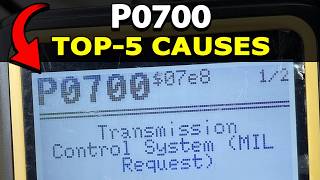
- Replacing the Engine Control Module (ECM). A GM document explicitly states that a P0700 code should not, by itself, lead to an ECM replacement, as the fault originates in the transmission system. 🎬 Watch: Understanding the P0700 code and its common fixes.
- Replacing the transmission without a full diagnosis. The problem is often electrical (wiring, sensors, solenoids) and does not require a full transmission replacement.
Most Likely Causes
- Faulty Wiring or Unseated Connector Pins 🔴 High Probability A GM Technical Service Bulletin (PIC4740E) specifically calls out unseated pins in the transmission connector (X1) and potential harness chafing as a cause for P0700 and numerous other communication codes on this platform. The bulletin mentions that even a side load on the wires can cause a false positive lock on the pins.
How to confirm: Visually inspect the transmission wiring harness for damage, especially where it might rub against the engine block or securing brackets. Disconnect the main transmission connector (X1) and carefully tug on each individual wire to ensure the pins are fully seated and not corroded. Use a multimeter to check for continuity and shorts in the harness if visual inspection is inconclusive.
Typical fix: Repairing the damaged wiring or properly seating the connector pins. This may involve using a specific terminal repair kit (like GM's J-38125) to extract and reseat pins. In some cases, a section of the harness or the connector pigtail itself may need to be replaced. The connector position assurance (CPA) lock must be properly re-engaged.
Est. part cost: $10-$150 - Other Transmission-Specific DTCs 🔴 High Probability
How to confirm: Use a scan tool capable of reading codes from the Transmission Control Module (TCM). The P0700 is just a request for the check engine light; the real problem is identified by other codes (e.g., for solenoids, sensors, or pressure). For example, a P0711 often accompanies P0700 and points to a faulty transmission fluid temperature sensor.
Typical fix: Diagnose and repair the issue indicated by the specific DTC found in the TCM. This could range from replacing a shift solenoid to a speed sensor or the internal wiring harness which often includes the temperature sensor.
Est. part cost: $50-$500 - Low or Dirty Transmission Fluid 🟡 Medium Probability
How to confirm: Check the transmission fluid level and condition. The fluid should be at the correct level and bright red. Dark, burnt-smelling fluid indicates a problem and can cause the TCM to detect abnormal hydraulic pressures. Note that some later models may not have a dipstick, requiring a check at the service plug.
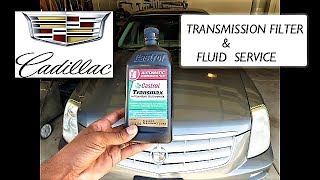
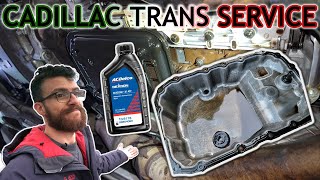
Typical fix: Top off the fluid if low. If the fluid is dirty or burnt, a fluid and filter change is required. Note that burnt fluid often points to a more serious internal issue. On very high-mileage transmissions with no service history, a full fluid flush can sometimes cause new problems, so a filter change and partial fluid replacement might be safer. 🎬 See this walkthrough for a full STS transmission service.
Est. part cost: $50-$250 - Faulty Transmission Control Module (TCM) ⚪ Low Probability
How to confirm: This is typically a last resort after all other possibilities (wiring, sensors, solenoids, fluid) have been ruled out. If the TCM does not communicate with a scan tool, or if P0700 returns immediately after a reset with no other codes present, the TCM may be faulty. Checking for stable power and ground at the TCM is a critical step before condemning the module.
Typical fix: Replacement and programming of the TCM. Part numbers vary by year and engine; for example, a 2006 3.6L model may use part number 24240285. A 2004-2007 model might use 24232170. Programming to the vehicle's VIN is required.
Est. part cost: $400-$1000
Rare But Worth Checking
- Internal Transmission Mechanical Failure: If the transmission fluid contains metal shavings, it's a strong indicator of serious internal wear, such as failing clutches or other mechanical components. This is a severe issue requiring a rebuild or replacement. A user on a Reddit forum described a total loss of drive in their 2006 STS at 150k miles, which points to a catastrophic internal failure.
- Failed Driveshaft Center Support or Differential Bushings: While not a direct cause of P0700, owners have reported that failed driveshaft or differential bushings can cause severe shuddering and clunking that is often misdiagnosed as an internal transmission problem. If you experience these symptoms along with a P0700, these components are worth inspecting.
Diagnosis Steps
- Connect a scan tool capable of communicating with the Transmission Control Module (TCM). Basic OBD-II readers may only show P0700.
- Record and prioritize any specific codes (P07xx, Uxxxx) stored in the TCM. These codes are the key to the actual fault.
- Check the level and condition of the automatic transmission fluid. Note any signs of burning, contamination, or metal shavings.
- Thoroughly inspect the transmission wiring harness and the main X1 connector as specified in TSB PIC4740E. Disconnect the connector, check for corrosion or backed-out pins, and tug gently on each wire to confirm it is secure.
- Based on the specific DTCs found in step 2, follow the factory service manual to diagnose the corresponding component. This may involve testing sensor resistance, checking for voltage at solenoids, or verifying wiring continuity with a multimeter.
- If communication (U-prefix) codes are present, focus heavily on the harness inspection, including checking for chafing near the bell housing bracket.
- If no other codes are present and wiring is intact, test the power and ground connections to the TCM. As a final step, consider a TCM reset by disconnecting the battery overnight before condemning the module.
- If all other diagnostics fail, the TCM itself may be the issue, but this is rare.
Parts You'll Likely Need
- Transmission Wiring Harness Repair Supplies
(OEM #88988938 (Example Connector))— Due to the known issue of unseated pins and chafing documented in TSB PIC4740E, wiring repair is a common fix. This could be as simple as reseating a pin or require a new connector pigtail.
Trusted brands: ACDelco
OEM price range: $20-$100
Aftermarket price range: $10-$50 - Transmission Control Module (TCM)
(OEM #24240285 (For 2006 3.6L), 24232170 (For 2004-2007))— If diagnostics confirm the module itself has failed, it will need replacement. This is a less common cause. Must be programmed to the vehicle.
Trusted brands: ACDelco, Flagship One
OEM price range: $500-$900
Aftermarket price range: $300-$600 - Transmission Shift Solenoid — Shift solenoids are a common failure point in automatic transmissions that can trigger a specific DTC (like P0746) and the general P0700 code.
Trusted brands: ACDelco, Bosch
OEM price range: $60-$150
Aftermarket price range: $40-$100 - Internal Transmission Wiring Harness — Often, the transmission fluid temp
Related Codes That Often Appear With This One
- U0073, U0100, U0121, etc. — These are communication codes. The TSB PIC4740E for the Cadillac STS lists a large number of U-codes that can appear with P0700, strongly suggesting a wiring harness or connector issue is interrupting communication between modules.
- P07xx (e.g., P0711, P0746, P0721) — These are transmission-specific codes. P0700 is the general alert, while codes like P0711 (Transmission Fluid Temperature Sensor), P0746 (Pressure Control Solenoid), or P0721 (Output Speed Sensor) point to the specific component or circuit that has failed.
Technical Service Bulletins (TSBs) & Recalls
- PIC4740E: Addresses a no-communication condition with the TCM/ECM and a host of DTCs, including P0700, pointing to an unseated pin in the transmission connector.
Platform-Specific Known Issues
- TSB PIC4740E documents an issue where unseated pins in the transmission X1 connector or a chafed wiring harness can cause P0700 along with multiple communication (U-prefix) codes. The bulletin advises technicians to inspect this specific connector and harness area thoroughly.
- On AWD models, rust damage on the transmission output shaft and transfer case input shaft splines due to lack of lubrication can cause a grinding noise and no gear engagement, which could be preceded by transmission-related codes.
Mechanic-Grade Diagnostic Values
- Transmission Shift Solenoid Resistance — expected: Generally 5 to 30 ohms. On/off solenoids are typically around 10-25 ohms, while PWM solenoids are closer to 5 ohms. A common GM 4L60E solenoid is 20-25 ohms.. Failure: A reading of infinite resistance (open circuit) or zero ohms (short circuit) indicates a failed solenoid coil.
- 6L50 Clutch Pack Travel — expected: 1.65-2.33 mm (0.065-0.092 in). Failure: Travel outside of this specification indicates excessive wear on the clutch components, requiring internal transmission repair.
Scan Tool Commands That Help
- GM Tech2 / GDS2: Transmission Adaptive Pressure (TAP) Reset — This is a critical procedure after replacing the transmission or valve body. The TCM stores learned values to compensate for wear in the old transmission; failing to reset these values can cause harsh shifting, incorrect shift timing, and damage to the new transmission.
- GM Tech2 / GDS2: Solenoid Activation / Bidirectional Test — After retrieving a specific solenoid code (e.g., P0751), this function allows the technician to command the solenoid on and off to verify its electrical operation and listen for an audible click, helping to distinguish between a bad solenoid, wiring issue, or mechanical blockage.
Wiring & Ground Locations
- G101 — Located at the front of the engine, lower block area. GM uses a 'G1xx' designation for grounds located in the engine compartment, forward of the firewall.. This ground point serves the Engine Control Module (ECM) and the Transmission Control Module (TCM). A poor connection here can cause communication codes (U-codes) and trigger a P0700.
- Main Engine Block Ground Strap — A large cable connecting the engine block to the vehicle's frame/chassis.. The STS has its battery in the rear of the vehicle. The starter and alternator are grounded through the engine block. If the main block-to-chassis ground is corroded or loose, modules on the engine (like the ECM) can have a different ground potential than modules in the cabin, causing massive voltage drops and communication errors that can log P0700 and various U-codes.
- Transmission Connector X1 — The main 16-pin or 23-pin electrical connector on the transmission case.. This is the primary point of failure identified in TSB PIC4740E. It carries all power, ground, and communication signals between the TCM and the rest of the vehicle. Inspecting the pins and wires at this specific connector is the highest priority diagnostic step for P0700 with communication codes.
Real Owner Repair Stories
- LS1TECH Forum User (2016 Cadillac CTS-V (Similar GM CAN bus architecture)) — Intermittent transmission locking in one gear, Stabilitrak/steering alerts, tachometer flickering, various warning lights, and codes U0073, U0100, U0101, and P0700.
❌ Tried (didn't work) Initial diagnosis was inconclusive due to the intermittent nature of the problem.
✅ What actually fixed it The owner pulled the TCM harness connector, used a welder tip cleaning tool to gently rough up the female terminals to ensure a better connection, sprayed the connector with electrical contact cleaner, and reconnected it. The problem was resolved for over 800 miles of driving.
Model Year Variations Within This Range
- 2006-2007: Early models in this range primarily used the 5-speed Hydra-Matic 5L40-E (V6) or 5L50-E (V8) transmission. These transmissions have unique operating characteristics, such as more noticeable engine braking, designed to feel more like a manual transmission.
- 2007-2011: Starting in 2007, GM began phasing in the 6-speed Hydra-Matic 6L50 for both V6 and V8 models. By 2008, the 6-speed was more common. Diagnostic procedures and internal components (solenoids, valve body) are different between the 5-speed and 6-speed units. It is critical to identify which transmission is in the vehicle before ordering parts.
Helpful Videos

We Have This Part in Stock


The information in this article is provided for general reference and educational purposes only. Vehicle specifications, procedures, and part compatibility can vary by production date, trim level, and region. Always consult your vehicle's factory service manual and verify part numbers before purchasing or performing repairs. Safety-critical components such as airbags, seat belts, and braking systems should be installed by a qualified professional.
- Cadillac STS:
- 🎬 Helpful Videos
- 🛍️ Shop This Part
- What's Unique About the 2006-2011 Cadillac STS
- Diagnostic Flowchart
- Symptoms You May Notice
- Most Likely Causes
- Rare But Worth Checking
- Diagnosis Steps
- Parts You'll Likely Need
- Related Codes That Often Appear With This One
- Technical Service Bulletins (TSBs) & Recalls
- Platform-Specific Known Issues
- Mechanic-Grade Diagnostic Values
- Scan Tool Commands That Help
- Wiring & Ground Locations
- Real Owner Repair Stories
- Model Year Variations Within This Range
- 🎟️ Get 5% Off