

P0700 on 2010-2014 Audi S4: Transmission Control System Malfunction Guide
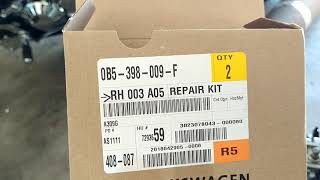
P0700 on a 2010-2014 Audi S4 is a general alert from the transmission, almost always pointing to a problem with the S-Tronic (DL501/0B5) mechatronic unit. Expect a "Gearbox Malfunction" message. The fix often requires a specialized mechatronic repair kit (P/N: 0B5398009F or its successor 0B5398048D) or a full unit replacement, which is a complex and costly repair frequently discussed in owner forums.
- P0700 is just a messenger code; the real problem is found by scanning the Transmission Control Module (TCM).
- On the 2010-2014 S4, this code almost always points to a fault in the DL501 S-Tronic mechatronic unit.
- Look for specific codes like P179E and P179F, which confirm a sensor/circuit board failure inside the transmission.
- The most common repair is a mechatronic repair kit (p/n 0B5398009F), which is less expensive than a full mechatronic unit replacement.
- This is not a DIY-friendly repair and requires a professional shop with Audi-specific diagnostic tools and experience.
What's Unique About the 2010-2014 Audi S4

The 2010-2014 Audi S4 (B8 and B8.5 generations) uses a 7-speed S-Tronic dual-clutch transmission, also known as the DL501 or 0B5. This advanced gearbox is known for specific issues, most notably the failure of its mechatronic unit—the complex module that houses the transmission's electronic brain (TCU) and hydraulic controls. Therefore, a P0700 code on this specific vehicle is very frequently a precursor to finding codes related to mechatronic circuit board, sensor, or solenoid failures, a well-documented issue in enthusiast communities.
Diagnostic Flowchart

Tap your situation to follow the diagnostic path that matches what you're seeing on this vehicle.
Generation note: This range covers the B8 (2010-2012) and B8.5 (2013-2014) generations of the Audi S4. Both use the same 3.0L TFSI engine and DL501 (0B5) S-Tronic transmission. While some owners hope the B8.5 is less prone to mechatronic issues, failures are still reported across the entire 2010-2016 B8/B8.5 platform, with some forum users suggesting to specifically avoid early B8 models with the DSG.
Symptoms You May Notice
- "Gearbox malfunction: you can continue driving" message on the driver information system. 🎬 Watch: See what the gearbox malfunction warning looks like.
- Flashing PRNDS gear indicator light.
- Vehicle enters 'limp mode,' often restricting to odd (1,3,5,7) or even (2,4,6) gears.
- Harsh, erratic, or clunky gear shifts, especially a lurch when coming to a stop or between 1st and 2nd gear.
- Failure to engage Drive or Reverse, especially when the vehicle is warm.
- Juddering or slipping when accelerating from a stop.
- Inability to shift into certain gears (e.g., no reverse, or no gears above 1st).
- Engine RPMs drop suddenly when shifting between D and R.
- Replacing the entire transmission when only the mechatronic unit or a repair kit is needed. A full transmission replacement is often unnecessary unless there is severe internal mechanical damage (e.g., gear or clutch failure). Some owners have been quoted for a full transmission by dealers, only to have the issue resolved by an independent shop with a mechatronic repair kit.
Most Likely Causes

- Mechatronic Unit Failure (Circuit Board / Sensors) 🔴 High Probability The DL501 transmission's mechatronic unit is a known high-failure item. Internal circuit boards can develop poor contact points or cracks, and the integrated gear position and speed sensors (G676) can fail due to heat and vibration, leading to a host of transmission problems. This is the subject of multiple Audi TSBs.
How to confirm: Scan the TCM for specific codes like P179E (Drive Position Sensor Electrical Error), P179F (Drive Position Sensor Malfunction), or other P17xx codes pointing to sensor or valve body electrical faults. The TSB outlines specific scenarios and associated fault codes that confirm this diagnosis.
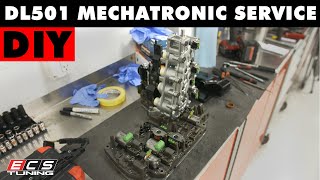
Typical fix: Install a mechatronic repair kit, which includes the circuit board, wiring harness, and sensors. In severe cases, or if the board connectors are damaged during repair, the entire mechatronic unit may need to be replaced. 🎬 Watch: Step-by-step guide to servicing the DL501 mechatronic unit.
Est. part cost: $250-$700 for a repair kit, $1500-$4000+ for a complete mechatronic unit. - Failing Mechatronic Shift Solenoids or Valve Body 🟡 Medium Probability The solenoids within the mechatronic unit control hydraulic pressure to engage clutches and shift gears. They can fail electrically or become clogged with contaminated fluid. Common culprits are the pressure regulation solenoids (e.g., N436, N440) or clutch cooling valve solenoid.
How to confirm: TCM fault codes will point to specific solenoids or valves (e.g., P174A, P174B, P174C, P179D). A technician can perform electronic tests and pressure checks. One owner on AudiWorld reported resolving a high-pressure error by replacing all solenoids.
Typical fix: Replacement of the individual faulty solenoids or a complete solenoid set, which is often done when the mechatronic unit is removed for other service.
Est. part cost: $50-$150 per solenoid, or $300-$500 for a complete set. - Low or Contaminated Transmission Fluid ⚪ Low Probability While less common as a root cause, incorrect fluid levels or fluid that is old and contaminated with metallic clutch debris can cause the mechatronic unit to malfunction, overheat, and trigger faults. One owner noted their rebuilt transmission was caked in metallic goo.
How to confirm: Check the transmission fluid level and condition using the correct procedure for the DL501 transmission (requires a scan tool to monitor temperature, typically 35-45°C). The fluid should be clean and at the proper level. A burnt smell or visible metal particles in the fluid indicates a more serious mechanical problem.
Typical fix: Perform a transmission fluid and filter service with the correct specification fluid (e.g., G052529A2). This may resolve minor issues but often will not fix an already-damaged mechatronic unit.
Est. part cost: $150-$300 for fluid and filter.
Rare But Worth Checking
- Worn Clutch Packs:
Diagnosis Steps
- Connect an advanced OBD-II scanner (such as VCDS by Ross-Tech or OBDeleven) capable of communicating with the Transmission Control Module (TCM).
- Confirm the presence of P0700 in the Engine Control Module (ECM, Address 01).
- Access the TCM (Address 02) and retrieve all stored fault codes. Document these codes and their accompanying DFCC (Diagnostic Fault Code Context) numbers carefully.
- Analyze the specific TCM codes. Cross-reference the codes and DFCCs with Audi TSB 2032211/2 to see if they match one of the known failure scenarios.
- Check the transmission fluid level and condition. The vehicle must be level and the fluid at a specific temperature (typically 35-45°C), monitored via the scan tool. A small trickle from the fill plug indicates a correct level.
- If codes and symptoms point to a mechatronic fault per the TSB, the next step is to remove the transmission pan and mechatronic unit to install a repair kit.
- During repair, carefully inspect the old fluid and pan magnets for excessive metal debris, which would indicate a more severe mechanical failure beyond the mechatronic unit.
- After repair, a basic settings and adaptation procedure must be performed with a diagnostic tool to calibrate the new components. 🎬 Watch: How to perform the critical DSG adaptation procedure.
Parts You'll Likely Need
- Mechatronic Repair Kit
(OEM #0B5398009F (superseded by 0B5398048D))— This is the most common fix, addressing the high-failure-rate circuit board and sensors within the mechatronic unit. It is a targeted repair that avoids replacing the entire expensive unit.
Trusted brands: Genuine Audi
OEM price range: $500-$700
Aftermarket price range: $250-$450 - Mechatronic Unit (Complete)
(OEM #0B5927156K (example, varies by specific vehicle))— If the valve body is damaged, the circuit board connectors are broken during repair, or the issue is internal to the hydraulics, a complete (new or remanufactured) mechatronic unit is required.
Trusted brands: Genuine Audi
OEM price range: $2500-$4000
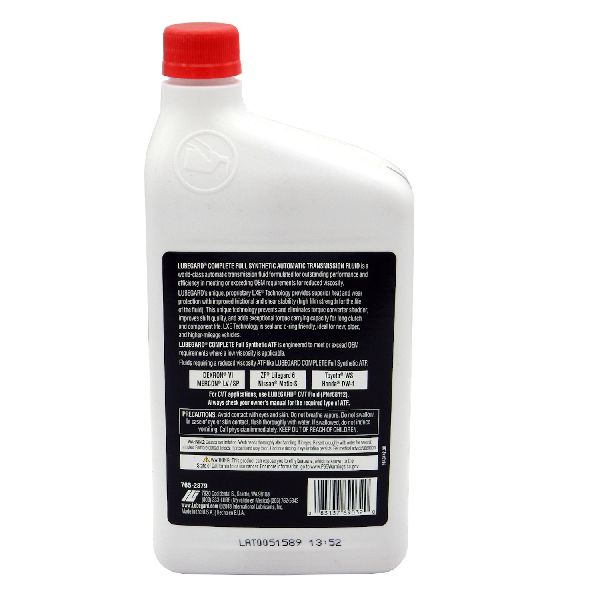
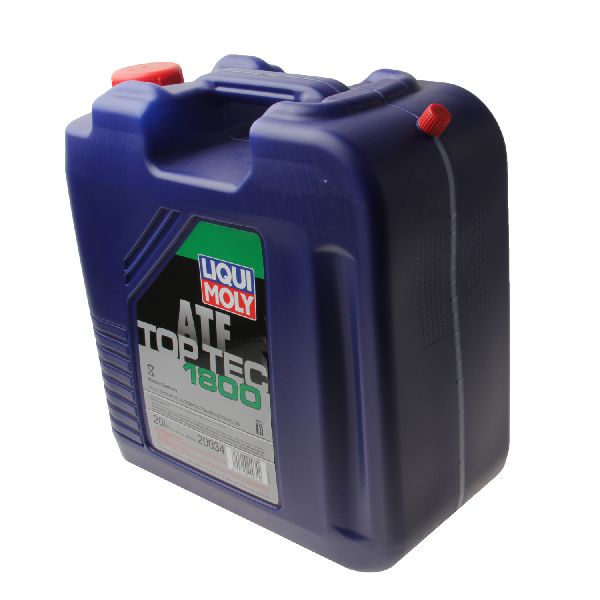
Aftermarket price range: $1200-$2200 - S-Tronic Transmission Fluid and Filter
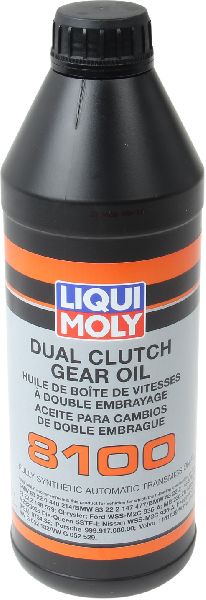
(OEM #G052529A2 (Fluid))— Required for any repair involving the removal of the mechatronic unit. Using the correct fluid is critical for the proper function and longevity of the S-Tronic transmission.
Trusted brands: Genuine Audi, Motul, Liqui Moly
OEM price range: $20-$30 per liter
Aftermarket price range: $15-$25 per liter
Related Codes That Often Appear With This One
- P179E00 — This code for 'Drive Position Sensor Electrical Error' is a very common companion to P0700 and directly points to a fault within the mechatronic unit's sensor assembly, as detailed in Audi's TSB.
- P179F00 — Meaning 'Drive Position Sensor Malfunction,' this code also indicates a failure of the sensor module inside the transmission, often requiring the mechatronic repair kit.
- P060A — This code for 'Internal Control Module Monitoring Processor Performance' can be logged alongside P0700, indicating the TCM itself has detected an internal processing error, further strengthening the case for mechatronic circuit board failure.
- P17xx codes — A wide range of P17xx codes can be present, indicating various electrical faults with valves, solenoids (P174A, P174B, P179D), and sensors (P0716, P171F) within the transmission.
Technical Service Bulletins (TSBs) & Recalls
- A351619 / 2032211/4: Gearbox warning light on (DTCs P179E00, P179F00, P0700, P060A). Details scenarios where these faults point to a failure of the G676 sensor module and circuit board.
- A351315 / 2031399/3: Gearbox malfunction message in cluster (DTCs P17D800, P179D00, P174A, etc.). Points to a poor internal contact area on the circuit board as the cause.
Platform-Specific Known Issues
- A specific Technical Service Bulletin (TSB #2032211, with multiple revisions) was issued for the 'Gearbox warning light on' condition. It details two primary scenarios involving DTCs P179E, P179F, P0700, and P060A, directly linking them to a failure of the G676 sensor module and requiring the installation of the mechatronic repair kit.
- Another TSB (#2031399) addresses other electrical faults (P174B, P174F, P179C, etc.) caused by a poor internal contact on the mechatronic circuit board, also leading to the 'Gearbox Malfunction' message and recommending circuit board replacement.
Mechanic-Grade Diagnostic Values
- Resistance of VFS Clutch Solenoids (N436, N440) — expected: 4.8 ohm ± 0.1 ohm at 25°C (77°F). Failure: Readings significantly outside this range indicate a failing solenoid coil.
- Resistance of Main Pressure Solenoid (N472) and Cooling Solenoid (N471) — expected: 4.2 ohm ± 0.1 ohm at 25°C (77°F). Failure: An open circuit (infinite resistance) or a reading far from the specification suggests the solenoid has failed.
- Resistance of Gear Actuator/Shift Fork Solenoids (N433, N434, N437, N438) — expected: 4.8 ohm ± 0.1 ohm at 25°C (77°F). Failure: Values outside the expected range point to an electrical fault in the shift fork solenoid.
- Resistance of Transmission Temperature Sensor (G509) — expected: ~1.13K ohm at 30°C (86°F). Failure: An implausible resistance reading can cause incorrect fluid temperature calculations, affecting shift quality and potentially triggering limp mode.
Hidden / Shadow Codes Worth Checking
- DFCC (Diagnostic Fault Code Context): This is a 4-6 digit code listed before the main fault code in a VCDS or ODIS scan. For P179E, a DFCC of 8050, 8051, 8052, or 8053 specifically points to the drive range sensor issue covered by TSB 2032211. Matching these codes is critical for confirming the TSB applies. (see via An advanced diagnostic tool like Ross-Tech VCDS or Audi's ODIS software is required to view these context codes.)
Scan Tool Commands That Help
- VCDS (Ross-Tech): Basic Settings: Erase counter for start stop procedures — This is one of the first steps in the adaptation sequence after a mechatronic repair or replacement, performed with the key on and engine off.
- VCDS (Ross-Tech): Basic Settings: Calibration of clutch valves — Performed with the engine on, this step calibrates the new clutch control solenoids. The engine RPM will typically rise during this procedure.
- VCDS (Ross-Tech): Basic Settings: Distance Sensor Calibration — This calibrates the newly installed gear position sensor module (part of the repair kit). It is a critical step to ensure the TCM knows the exact position of the shift forks.
- VCDS (Ross-Tech): Basic Settings: Clutch engagement point adaptation — This is the final step, which requires a test drive to allow the transmission to learn the clutch bite points for smooth engagement.
Wiring & Ground Locations
- Transmission Main Electrical Connector — On the driver's side of the transmission housing. It is a round connector with a twist-lock mechanism.. This is the primary connection between the vehicle's wiring harness and the mechatronic unit. A damaged connector, corroded pins, or fluid intrusion from a coolant leak can cause a loss of communication or electrical faults, mimicking an internal mechatronic failure.
- G11 / G26 Ground Points — G11 is located in the plenum chamber, to the right of the battery. G26 is on the left side of the engine compartment.. The Transmission Control Module (TCM) relies on clean and secure ground connections. A corroded or loose ground at these primary locations can cause erratic behavior, communication errors, and implausible signals, potentially triggering a P0700 code.
- Mechatronic Unit Internal Ground — Within the mechatronic unit itself, grounding is handled through the wiring harness and circuit boards.. Failures of the internal circuit board, which is the most common cause of P0700-related codes, are essentially internal grounding or continuity failures on the PCB.
Real Owner Repair Stories
- Ross-Tech Forums user 'audis4chris' (2011 Audi S4 (B8), 55k miles) — "Gearbox malfunction can keep driving" message, car enters limp mode when at operating temperature.
❌ Tried (didn't work) A repair shop replaced the selector lever sensor module and harness (the standard TSB repair kit) two separate times, believing the first replacement part was faulty.
✅ What actually fixed it The user suspected an incorrect installation or a different underlying issue, as the standard fix did not work. A red flag was raised that the shop may have used non-OEM equivalent fluid (Motul DCTF instead of Genuine Audi fluid). The final resolution was not posted in the thread, but the story highlights that even the correct parts can fail to fix the issue if other details like fluid type or installation procedure are incorrect. - AudiWorld Forums user 'Chris' (2010 Audi S4 (B8), 57k miles) — Intermittent "Gearbox Malfunction: You Can Continue Driving" warning. Fault codes P179E and P179F were present.
❌ Tried (didn't work) Dealer refused to perform the TSB repair (replace G676 sensor module) because other required fault codes were not present, and instead quoted a $14,000 full transmission replacement.
✅ What actually fixed it An independent shop correctly identified the G676 sensor module as the likely culprit despite the missing codes required by the dealer's interpretation of the TSB. The story illustrates a common conflict where dealers rigidly follow TSB requirements, while independent specialists may diagnose based on pattern failures. The owner was advised to pursue the sensor module replacement.
OEM Part Supersession History
0B5398009A / B / C / D / E→0B5398009F— Progressive updates by Audi to improve the reliability of the circuit board and sensors within the mechatronic unit.0B5398009F→0B5398048D— This is the latest revision of the repair kit, intended to be a more robust and durable solution to the known sensor and circuit board failures.
Heads up: 0B5398048D is the current, correct part to use for this repair and is fully compatible with vehicles that originally used the '009F' or earlier kits.
Model Year Variations Within This Range
- 2010-2012 (B8) vs 2013-2014 (B8.5): While both generations use the DL501 transmission, the B8 models are considered more prone to mechatronic failure. Some forum users report that even early B8.5 models (e.g., 2013) can still exhibit the same mechatronic issues before later revisions were fully implemented. Additionally, aftermarket TCU tunes may offer different features, like faster paddle response times, specifically for the Gen 2/B8.5 models.
Helpful Videos


We Have This Part in Stock




The information in this article is provided for general reference and educational purposes only. Vehicle specifications, procedures, and part compatibility can vary by production date, trim level, and region. Always consult your vehicle's factory service manual and verify part numbers before purchasing or performing repairs. Safety-critical components such as airbags, seat belts, and braking systems should be installed by a qualified professional.
- Audi S4:
- 🎬 Helpful Videos
- 🛍️ Shop This Part
- What's Unique About the 2010-2014 Audi S4
- Diagnostic Flowchart
- Symptoms You May Notice
- Most Likely Causes
- Rare But Worth Checking
- Diagnosis Steps
- Parts You'll Likely Need
- Related Codes That Often Appear With This One
- Technical Service Bulletins (TSBs) & Recalls
- Platform-Specific Known Issues
- Mechanic-Grade Diagnostic Values
- Hidden / Shadow Codes Worth Checking
- Scan Tool Commands That Help
- Wiring & Ground Locations
- Real Owner Repair Stories
- OEM Part Supersession History
- Model Year Variations Within This Range
- 🎟️ Get 5% Off