

P0700 on 2013-2014 Audi RS5: Transmission System Malfunction Guide
P0700 on a 2013-2014 Audi RS5 indicates a fault stored in the Transmission Control Module (TCM). It's almost always caused by a failure within the DL501 S-Tronic mechatronics unit, requiring a specialized repair kit or full unit replacement. This is a complex, professional-level repair. Scanning the TCM is mandatory to find the true fault.
- P0700 is a general code; the real, actionable fault codes are stored in the Transmission Control Module (TCM).
- On the 2013-2014 RS5, this code almost always points to a problem with the S-Tronic mechatronics unit.
- Look for specific TCM codes like P179E00, P179F00, and P060A to confirm a mechatronics failure.
- This is not a DIY-friendly repair. It requires specialized tools and expertise and should be handled by a qualified shop.
- The most common solution is a mechatronics repair kit, which is less expensive than replacing the entire unit.
What's Unique About the 2013-2014 Audi RS5
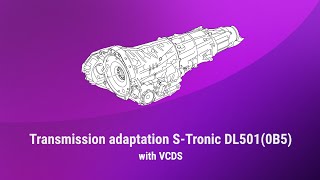
The 2013-2014 RS5 uses the 7-speed DL501 (also known as 0B5) S-Tronic dual-clutch transmission. This gearbox is notoriously prone to issues with its mechatronics unit, which is the electro-hydraulic control center. Failures of the internal circuit boards, integrated sensors, or solenoids are extremely common and will trigger a P0700 code in the ECM, along with more specific codes in the TCM. Audi has issued multiple revisions of Technical Service Bulletins (TSBs) related to these failures, confirming the widespread nature of the problem.
Diagnostic Flowchart
Tap your situation to follow the diagnostic path that matches what you're seeing on this vehicle.
Symptoms You May Notice
- "Gearbox Malfunction" message on the driver information system.
- Flashing PRNDS (gear selector) indicator on the dashboard.
- Vehicle enters 'limp mode', often stuck in a single gear or only odd/even gears.
- Harsh, jerky, or unpredictable gear shifts, especially a clunk when shifting from 2nd to 1st.
- Inability to select Drive or Reverse.
- Check Engine Light is illuminated.
- Delayed engagement when selecting Drive or Reverse.
- Replacing the entire transmission when only the mechatronics unit is faulty. A dealer quote for a new transmission can be upwards of $20,000.
- Clearing the P0700 code without scanning the TCM for the specific underlying faults. The P0700 is just a messenger code.
- Replacing only the solenoids when the circuit board is the actual point of failure.
Most Likely Causes
- Mechatronics Internal Circuit Board/Sensor Failure 🔴 High Probability This is the most well-documented failure point on the DL501 transmission. The internal printed circuit boards (PCBs) and integrated sensors (like the gear position sensor) are known to fail, causing electrical faults. The provided TSB A351619 2032211 specifically addresses this, mentioning codes P179E00 (Drive position sensor electrical error) and P060A (Internal control module monitoring processor performance).
How to confirm: Scan the TCM for codes like P179E00, P179F00, P060A, P0715, or P0716. The presence of these codes, especially in the combinations outlined in TSB A351619, strongly indicates this failure. The TSB specifies that for certain scenarios, the DFCC (a 4-6 digit code before the fault) must also match exactly.
Typical fix: Install a mechatronics repair kit, which includes the replacement circuit boards, wiring harness, and sometimes solenoids. In severe cases, a complete remanufactured or new mechatronics unit is required.
Est. part cost: $600-$1200 for a repair kit, $1500-$3000 for a remanufactured mechatronics unit. - Mechatronics Solenoid Failure 🟡 Medium Probability The solenoids within the mechatronics unit control hydraulic pressure for clutch operation and gear shifting. They can become clogged with metallic debris from normal wear or fail electronically, leading to pressure control faults.
How to confirm: TCM fault codes will point to specific solenoids or pressure regulation faults (e.g., P17D800 - Torque limitation due to clutch temperature, P174C00 - Valve 1 in gearbox 2, electrical fault). A technician can perform resistance tests on individual solenoids using a multimeter.
Typical fix: Replace the faulty solenoids. This is often done as part of a comprehensive mechatronics repair kit installation which includes the main pressure and clutch valves.
Est. part cost: $200-$500 for a solenoid kit. - Low or Contaminated Transmission Fluid (ATF) ⚪ Low Probability While not usually the root cause of the specific electrical fault codes, incorrect fluid levels or contaminated fluid can cause overheating, erratic shifting, and accelerated wear on all components, including the electronics. It can exacerbate existing issues and lead to premature failure.
How to confirm: Check the transmission fluid level and condition using the correct procedure (requires a scan tool to monitor temperature). The fluid should be clean and at the correct level. Metal particles in the pan are a sign of a severe mechanical issue.
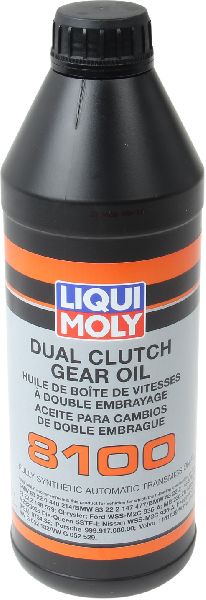
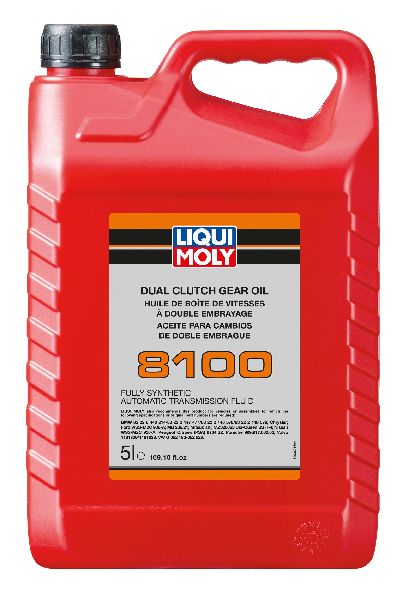
Typical fix: Perform a full fluid and filter service with the correct Audi-specified fluid (G052529A2). This is mandatory when performing any mechatronics repair.
Est. part cost: $150-$300 for fluid and filter.
Rare But Worth Checking
- Wiring Harness Damage: The external wiring harness to the transmission can be damaged by road debris or corrosion, leading to communication errors. The owner complaint ODI #11339626 mentions P1758 (Terminal 15 Voltage Supply Open Circuit), which could indicate a wiring issue external to the unit. The main 16-pin connector to the mechatronic unit is a key point to inspect for corrosion or damage.
- Failed Shift Fork or Mechanical Binding: In rare cases, a mechanical issue with the shift forks themselves can prevent movement, which the mechatronics unit will report as a fault. One owner on a forum noted that even after replacing mechatronics boards, the issue persisted because the forks were physically stuck.
Diagnosis Steps
- Connect an Audi-compatible diagnostic scan tool (like VCDS or OBDeleven) to the vehicle.
- Ignore the P0700 code in the Engine Control Module (ECM) initially.
- Access the Transmission Control Module (TCM) at address.
- Read and record all stored fault codes and their associated DFCC numbers from the TCM. These are the codes that identify the specific problem.
- Analyze the TCM codes. Compare them against known TSBs, such as A351619 2032211-, to confirm a known issue like a mechatronics sensor/board failure. Pay close attention to the sequence of codes and the DFCC numbers as specified in the TSB.
- Check the transmission fluid level and condition according to the factory procedure, which requires the vehicle to be level and the fluid at a specific temperature.
- Inspect the transmission's main electrical connector and wiring harness for any visible damage, corrosion, or loose connections.
- Based on the specific TCM codes, proceed with the recommended repair, which is most commonly the mechatronics repair kit or unit replacement.
Parts You'll Likely Need
- Mechatronics Repair Kit
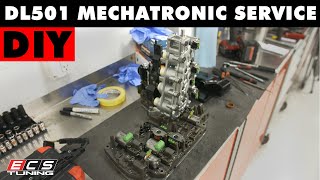
(OEM #0B5398048D (supercedes 0B5398048C))🎬 See this walkthrough on installing the mechatronics repair kit. — This is the most common fix for the typical electronic failures within the DL501 mechatronics unit, addressing the faulty circuit boards and sensors that trigger P0700. It typically includes the two PCBs and associated hardware.
Trusted brands: Audi Genuine, BorgWarner
OEM price range: $700-$1200
Aftermarket price range: $500-$800 - Mechatronics Unit (Remanufactured or New)
(OEM #Varies by specific model/year, e.g., 0B5927156K)— Required if the circuit boards cannot be repaired or if the main valve body is damaged. A complete unit replaces all solenoids, sensors, and boards. Note that a new unit will require programming/cloning.
Trusted brands: Audi Genuine, Various remanufacturers like ECU Testing
OEM price range: $3000-$5000
Aftermarket price range: $1500-$2500 - S-Tronic Transmission Fluid and Filter Kit
(OEM #G052529A2 (Fluid))— Fluid and filters must be replaced any time the mechatronics unit is serviced. The DL501 has two separate fluid reservoirs (ATF and MTF), both of which should be serviced.
Trusted brands: Audi Genuine, Motul, Liqui Moly
OEM price range: $200-$300
Aftermarket price range: $150-$250
Related Codes That Often Appear With This One
- P179E00 — Indicates an electrical error with the drive position sensor inside the mechatronics unit. This is a hallmark code for this failure.
- P179F00 — Indicates a general malfunction of the drive position sensor, often appearing with P179E.
- P060A — Points to an internal processor performance error within the control module, strongly suggesting a mechatronics circuit board failure.
- P1758 — Indicates an open circuit in the voltage supply, pointing to an electrical issue that could be internal or external to the transmission. [, 1, 25]
- P0716 — Input/Turbine Speed Sensor 'A' Circuit Range/Performance, another sensor integrated into the mechatronics that can fail.
Technical Service Bulletins (TSBs) & Recalls
- A351619 2032211- (Multiple Revisions): Gearbox warning light on (DTCs P179E00, P179F00, P0700, P060A). Details the diagnosis and repair procedure for a faulty driving mode sensor module within the mechatronics unit. It specifies two different scenarios and requires matching DFCC codes for the TSB to apply. It also mandates that technicians complete a specific training course before attempting the repair.
Platform-Specific Known Issues
- The DL501 (0B5) S-Tronic transmission is widely known for mechatronics failures, particularly the internal printed circuit boards (PCBs) and the associated position/speed sensors.
- Audi TSB #A351619 2032211- directly links the 'gearbox malfunction' warning and code P0700 to internal mechatronics faults (P179E00, P060A) on this platform.
Mechanic-Grade Diagnostic Values
- Resistance of Clutch Solenoids (N436, N440) — expected: 4.8 ohm ± 0.1 ohm at 25°C (77°F). Failure: Significant deviation from the expected resistance, or an open/short circuit.
- Resistance of Clutch Oil Pressure Solenoids (N435, N439) — expected: 14.2 ohm ± 0.1 ohm at 25°C (77°F) for Gen 2 valve bodies. Failure: Significant deviation from the expected resistance. Note that Gen 1 valve bodies have a different spec (16 ohm).
- Resistance of Main Pressure (N472) and Cooling (N471) Solenoids — expected: 4.2 ohm ± 0.1 ohm at 25°C (77°F). Failure: Significant deviation from the expected resistance, or an open/short circuit.
- Resistance of Gear Actuator Solenoids (N433, N434, N437, N438) — expected: 4.8 ohm ± 0.1 ohm at 25°C (77°F). Failure: Significant deviation from the expected resistance, or an open/short circuit.
- Transmission Fluid Temperature for Basic Settings — expected: Between 40°C and 100°C (some procedures require below 60°C). Failure: Attempting adaptation outside this temperature range will cause the procedure to fail.
Hidden / Shadow Codes Worth Checking
- DFCC (Diagnostic Fault Code C): This is a 4-6 digit manufacturer-specific code that provides more detail on a generic P-code. For a P0700, the TSB lists a DFCC of 20196. For P060A, it lists 8126 or 8345. These codes must match the TSB exactly for the prescribed repair to be valid. (see via Advanced Audi-compatible scan tools like VCDS or ODIS will display the DFCC alongside the primary fault code in the TCM.)
Scan Tool Commands That Help
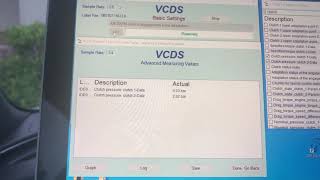
- VCDS, OBDeleven, G-Scan: Basic Settings: Erase counter for start and stop processes — This is the first step in the adaptation sequence after a mechatronic repair or replacement to clear old learned values.
- VCDS, OBDeleven, G-Scan: Basic Settings: Clutch valve calibration — Performed with the engine running to calibrate the hydraulic pressure limits for the clutch valves.
- VCDS, OBDeleven, G-Scan: Basic Settings: Distance sensor calibration — Performed with the engine running to adapt the newly installed gear position sensors. The transmission will make audible clunking noises during this process.
- VCDS, OBDeleven, G-Scan: Basic Settings: Clutch engagement point adaptation — This is a final step where the TCM learns the 'kiss point' of the clutches for smooth take-offs. It is followed by a specific test drive procedure.
Wiring & Ground Locations
- Main Transmission Connector — External plug on the transmission housing, typically a 16-pin connector for the DL501.. This is the primary communication and power link to the mechatronics unit. Corrosion, bent pins, or harness damage here can cause a variety of electrical faults, including the P1758 (Terminal 15 Voltage Supply Open Circuit) code sometimes seen with P0700.
- TCM Ground — The ground connection for the Transmission Control Module (TCM) is integrated into the transmission wiring harness and grounds through the transmission housing itself.. A poor ground connection can cause erratic behavior and communication faults within the TCM, leading to codes like P060A and P0700.
- A-Pillar Ground Points — Behind the lower A-pillar trim on both the driver and passenger sides.. While not directly for the TCM, these are major chassis ground points. Corrosion or looseness at these locations can cause widespread, difficult-to-diagnose electrical issues in a vehicle.
Real Owner Repair Stories
- Audi Technical Service Bulletin (TSB) #A351619 2032211- (2010-2012 Audi S4/S5 (Applies directly to RS5 with same DL501 transmission)) — Dashboard message 'gearbox malfunction: you can continue driving'.
❌ Tried (didn't work) Standard diagnosis if the specific combination of fault codes and DFCC codes are not present.
✅ What actually fixed it For vehicles presenting with P0700 in combination with P179E, P060A, and other specific codes/DFCCs, the official fix is to replace the G676 sensor module (the circuit boards) and its wiring loom inside the mechatronic unit. This requires transmission disassembly. - ECS Tuning DIY Video (Audi B8 S4 with DL501 (same procedure for RS5)) — Lurching from a stop, hard/unpredictable shifts, 'Transmission error!' message.
❌ Tried (didn't work) Not applicable, video demonstrates the direct repair.
✅ What actually fixed it The problem was resolved by removing the mechatronic unit, replacing the two internal circuit boards and protection insulators using the 0B5398048D repair kit, reinstalling the unit with correct alignment, and performing the basic settings/adaptation with a scan tool.
OEM Part Supersession History
0B5398048C→0B5398048D— Revision and improvement of the mechatronic repair kit components.
Heads up: The newer 'D' revision is the correct and preferred part for all repairs.0B5927321F→Repair Kit 0B5398048D— This is the part number for the original factory-installed sensor module wiring. It is not sold separately for repair; it is replaced by the full repair kit.
Model Year Variations Within This Range
- All: A manufacturing date split exists for the mechatronic unit itself, identified by an ID number on the unit. For units with ID number up to L31B1137, a gear selector alignment measurement is 28mm. For units manufactured after L31B1137, the measurement is 32mm. This is a critical step during reassembly.
- 2013 vs 2014: There are no significant mechanical differences in the DL501 transmission or its control system between the 2013 and 2014 model years for the RS5. Changes were primarily cosmetic or related to the MMI infotainment system and option packages.
Helpful Videos
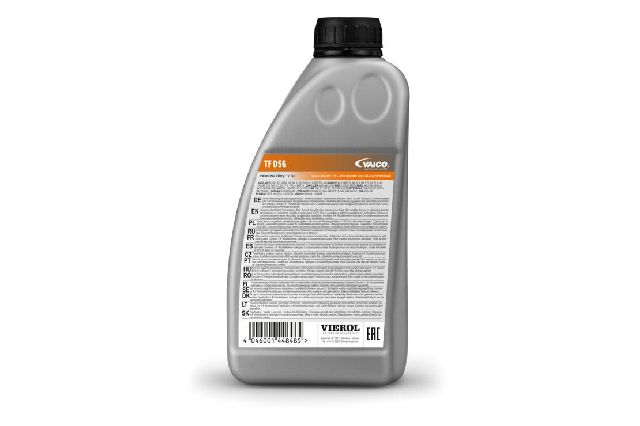
We Have This Part in Stock



The information in this article is provided for general reference and educational purposes only. Vehicle specifications, procedures, and part compatibility can vary by production date, trim level, and region. Always consult your vehicle's factory service manual and verify part numbers before purchasing or performing repairs. Safety-critical components such as airbags, seat belts, and braking systems should be installed by a qualified professional.
- Audi RS5:
- 🎬 Helpful Videos
- 🛍️ Shop This Part
- What's Unique About the 2013-2014 Audi RS5
- Diagnostic Flowchart
- Symptoms You May Notice
- Most Likely Causes
- Rare But Worth Checking
- Diagnosis Steps
- Parts You'll Likely Need
- Related Codes That Often Appear With This One
- Technical Service Bulletins (TSBs) & Recalls
- Platform-Specific Known Issues
- Mechanic-Grade Diagnostic Values
- Hidden / Shadow Codes Worth Checking
- Scan Tool Commands That Help
- Wiring & Ground Locations
- Real Owner Repair Stories
- OEM Part Supersession History
- Model Year Variations Within This Range
- 🎟️ Get 5% Off