

OBD-II Code P0697: Sensor Reference Voltage 'C' Circuit/Open
An Expert Guide to What P0697 Means, Why It Triggers, and How to Fix It for Good
- Code P0697 indicates the Powertrain Control Module (PCM) lost the 5-volt reference signal to the 'C' sensor circuit.
- Never replace a sensor without first using a multimeter to verify the 5-volt signal is missing at the connector.
- Obtain a vehicle-specific wiring diagram to identify exactly which 3 to 5 sensors share the 'C' circuit on your specific model.
- Unplug sensors on the 'C' circuit one by one; if the 5-volt signal returns, the last unplugged sensor is internally shorted and requires replacement.
What Does P0697 Mean?

The Powertrain Control Module (PCM) sends a 5-volt reference signal to power various engine and transmission sensors. Code P0697 means the PCM detects a complete loss of this 5-volt signal on the 'C' circuit. Think of this like a tripped circuit breaker in your home—a specific group of sensors lost power. This circuit typically powers critical automatic transmission, fuel system, or differential sensors, causing immediate drivability issues.
Technical definition: The official SAE/ISO definition for P0697 is "Sensor Reference Voltage 'C' Circuit/Open". The PCM detects a loss of the 5-volt reference signal on the 'C' circuit, which denotes a specific group of sensors sharing a single power feed.
Can I Drive With P0697?
Yes, But With Caution. You can drive the vehicle briefly, but extended driving is highly discouraged. Depending on the affected sensors, you will experience reduced power, erratic shifting, or stalling. Continuing to drive with harsh shifting causes premature transmission wear, adding over $1,500 to the final repair cost. If the vehicle enters 'limp mode,' tow it or drive directly to a shop to prevent severe mechanical damage.
Common Causes

- Damaged wiring, connectors, or grounds (Very Common) — Wires rub through insulation from vibration, road debris severs connections, or moisture corrodes pins, creating an open circuit or a short to ground.
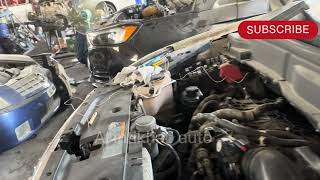
- Shorted sensor on the 'C' circuit (Common) — A sensor powered by the 'C' circuit shorts internally, pulling the entire circuit's voltage to zero. 🎬 See how a shorted sensor affects your reference voltage The PCM interprets this voltage drop as an open circuit.
- Blown sensor circuit fuse (Less Common) — A fuse protecting the sensor circuit blows due to a sudden short. Fuses sometimes look intact visually but fail under electrical load.
- Software anomaly / PCM update needed (Less Common) — Certain GM and Jeep models falsely trigger this code due to software glitches. A PCM update 🎬 Watch: Diagnosing P0697 and reduced power on GM trucks resolves the issue if P0697 appears without other codes.
- Internal PCM failure (Rare) — The internal 5V voltage regulator inside the PCM fails from overheating or a short circuit, permanently cutting power to the 'C' circuit.
- Low system voltage (Rare) — A failing battery or alternator drops overall system voltage below the threshold required to maintain the 5V reference signal.
Symptoms

- Check Engine Light illuminated — The PCM detects the voltage drop and immediately illuminates the malfunction indicator lamp.
- Transmission shifting problems — The transmission shifts harshly, gets stuck in one gear, or fails to switch drive modes.
- Engine runs poorly or stalls — The engine idles roughly, misfires, hesitates during acceleration, or lacks power entirely.
- Vehicle won't start — If the 'C' circuit powers the crankshaft position sensor, the engine cranks but refuses to start.
- Erratic gauge behavior — The speedometer or odometer jumps erratically or drops to zero if the circuit powers the vehicle speed sensor.
Diagnostic Flowchart

Tap your situation to follow the diagnostic path that matches what you're seeing on this code.
Common Fixes & Costs
- Repair damaged wiring harness — Parts: $10-$50, Labor: $150-$300, ~1.5 hr book time (Intermediate)
- Replace shorted sensor
— Parts: $50-$150, Labor: $100-$200, ~1.0 hr book time
(DIY)
Chevrolet Malibu/Cruze/Equinox (APP Sensor): OEM ACDelco 22741018 (Alt: Dorman 699-204, Standard Motor Products APS159)
Ford F-150/Explorer (Fuel Tank Pressure Sensor): OEM Motorcraft 4U5Z-9C968-BA (Alt: Bosch 0261230169, Walker Products 245-1121)
GMC Acadia/Terrain (Crankshaft Position Sensor): OEM ACDelco 12615626 (Alt: Delphi SS10819, NTK EH0376) - Replace blown fuse — Parts: $1-$5, Labor: $0-$50, ~0.2 hr book time (DIY)
- Reprogram PCM (Software Update) — Parts: $0, Labor: $150-$250, ~1.0 hr book time (Professional)
- Replace Powertrain Control Module (PCM)
— Parts: $500-$900, Labor: $150-$300, ~1.5 hr book time
(Professional)
Chevrolet Equinox (2015 2.4L): OEM ACDelco 12653998 (Alt: Cardone 79-8510V, Flagship One (Programmed))
Ford F-150 (2016 5.0L): OEM Motorcraft GL3Z-12A650-B (Alt: Cardone 78-9005F, FS1 (Programmed))
Used vs. New Parts: Buying Guide
When a used part is worth it: A remanufactured PCM offers significant savings for older vehicles where new OEM modules are cost-prohibitive. For sensors, buy new aftermarket parts for DIY repairs, but use OEM for hard-to-access locations.
Donor-vehicle mileage cap: roughly under 100000 miles for the part to have meaningful remaining life.
Donor quality checklist:
- Verify the PCM supplier offers a warranty and VIN programming service.
- Stick to well-known aftermarket brands or OEM parts for sensors.
- Avoid electronic parts from flood-damaged vehicles.
Decision logic:
- If The faulty part is a hard-to-access sensor → buy a new OEM part to minimize the risk of repeat labor.
- If The vehicle is over 10 years old → a warrantied remanufactured PCM is a budget-friendly choice.
- If A software update is a known fix for your model → perform the update at a dealer before replacing any hardware.
Warranty tradeoff: Used parts carry 30-90 day warranties. New aftermarket parts offer 1-year to lifetime warranties. New OEM parts provide 1-2 year warranties.
Worst-case if a used part fails: $300-800 if a cheap sensor fails, requiring repeat labor and a second part purchase.
What Happens If You Wait — Timeline
- 0-1 month: Check Engine Light illuminates. You experience intermittent harsh shifting, hesitation, or limp mode. (MPG impact: 5-10%% · Added cost: $0-75 in wasted fuel)
- 1-3 months: Shifting problems become severe. The vehicle stays in limp mode, making acceleration difficult. Stalling occurs. (MPG impact: 10-20%% · Added cost: $75-200 in wasted fuel)
- 3-6 months: Sustained harsh shifting causes mechanical wear on internal transmission clutch packs and solenoids. (MPG impact: 15-25%% · Added cost: $1500-3500 for transmission rebuild)
- 6+ months: A persistent short circuit destroys the PCM's internal voltage regulator, requiring complete module replacement. (MPG impact: 20-30%+% · Added cost: $2000-4500+ for combined repairs)
Cost of Not Fixing It
- 0-1 month: Erratic transmission shifting, poor engine performance, and potential stalling. High risk of being stranded. (Added cost: $0-75 in wasted fuel)
- 1-3 months: Continued harsh shifting causes premature wear on internal transmission components like clutches and bands. (Added cost: $1500-3500 for transmission repairs)
- 3+ months: A persistent short circuit damages the PCM's internal voltage regulator, requiring complete module replacement. (Added cost: $2000-4500+ for combined transmission and PCM replacement)
Diagnosis Steps
- Scan Codes and Review Freeze Frame Data
Use an OBD-II scanner to confirm P0697. Document any other codes, as a code for a specific sensor (e.g., transmission range sensor) pinpoints the exact problem area. Review freeze-frame data to see the conditions when the code set.
Tools: OBD-II Scanner (Beginner) - Identify the 'C' Circuit Sensors
Obtain a vehicle-specific wiring diagram to identify the exact sensors on the 'C' reference circuit. Common components include the accelerator pedal position (APP) or transmission range sensors. You cannot diagnose this code without this diagram.
Tools: Vehicle-specific wiring diagram (Intermediate) - Inspect Wiring, Connectors, and Fuses
Inspect the engine wiring harness near the transmission and exhaust for frayed or melted wires. Check all accessible connectors for corrosion or bent pins. Verify the sensor circuit fuses in the fuse box are intact.
Tools: Flashlight, Multimeter (Beginner) - Test for 5-Volt Reference at the Easiest Sensor
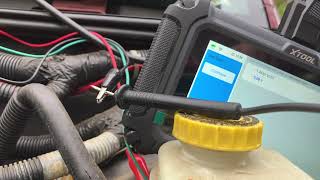
With the key on and engine off, unplug the most accessible 'C' circuit sensor. Measure voltage between the 5V reference wire and ground at the connector. A healthy circuit reads 4.8V to 5.2V. If missing, the problem is upstream.
Tools: Digital Multimeter (Intermediate) - Isolate the Faulty Sensor via Disconnection
If the 5V reference is missing, disconnect all 'C' circuit sensors one by one. Re-check the voltage at a connector after each unplug. If the 5 volts return, the last unplugged sensor is internally shorted and requires replacement.
Tools: Digital Multimeter (Advanced) - Analyze Live Data PIDs
Monitor live data for the 'C' circuit sensors using an advanced scan tool. Look for erratic readings or values stuck at defaults (e.g., -40°F for a temp sensor) to pinpoint a failing sensor without manual probing.
Tools: Advanced OBD-II Scanner (Advanced) - Perform a Harness Wiggle Test
If voltage remains missing with all sensors unplugged, have a helper watch the multimeter while you manipulate the wiring harness from the PCM to the sensors. Flickering voltage pinpoints the exact location of a break or short.
Tools: Digital Multimeter (Advanced) - Conduct a Ground Voltage Drop Test
Place one multimeter lead on the negative battery terminal and the other on a sensor's ground pin. With the key on, readings above 0.1 volts indicate high resistance in the ground circuit requiring repair.
Tools: Digital Multimeter (Advanced) - Verify PCM Output
If the harness tests good, check the 5V reference directly at the PCM output pin for the 'C' circuit. If the PCM outputs 0V despite having good power and ground inputs, the PCM requires replacement.
Tools: Digital Multimeter, PCM pinout diagram (Professional)
When This Code Triggers (Freeze-Frame Conditions)
- Engine RPM: 0 - 800 RPM (Key-On, Engine-Off or immediately after starting.)
- Vehicle Speed: 0 mph (Vehicle is stationary during the PCM self-test.)
- Engine Coolant Temp: Ambient Temperature (During a cold start before the engine warms up.)
- Engine Load: 0-20% (No load on the engine, as the fault detects during initial startup.)
Related Codes
- P0698 — Indicates the 'C' circuit voltage is too low. While P0697 means an open circuit (no voltage), P0698 points to a short to ground pulling the voltage down.
- P0699 — Indicates the 'C' circuit voltage is too high. This means a wire in the 'C' circuit shorted to a higher voltage source, like the 12V battery feed.
- P0641 — An identical fault (Circuit/Open) for the 'A' sensor reference circuit. Seeing both indicates a wider electrical problem or a faulty PCM.
- P0651 — The same fault for the 'B' sensor reference circuit. Multiple reference voltage codes present simultaneously strongly suggest a failing PCM or main ground supply.
Climate & Environmental Factors
- High Humidity / Road Salt: Moisture and salt accelerate corrosion on wiring connectors and ground points, creating open circuits that trigger P0697. Applying dielectric grease prevents this.
- Extreme Cold: Plastic wire insulation becomes brittle and cracks in sub-zero temperatures, leading to shorts. Cold weather also drops battery voltage, contributing to reference voltage codes.
- Snow/Ice Conditions (Jeep Specific): Driving 2021-2023 Jeep Wranglers in snow with traction control disabled falsely triggers P0697 due to a software sensitivity issue addressed in TSB 08-029-23.
How to Talk to a Mechanic About This Code
Say this: "I have a P0697 code indicating an open in the 'C' sensor reference voltage circuit. Please test for a 5-volt signal at the sensors and inspect the wiring harness for shorts before replacing any parts."
This proves you understand the code is electrical. It directs the technician to test circuits rather than blindly swapping expensive sensors.
Avoid saying:
- 'My check engine light is on, can you fix it?'
- 'I think I need a new transmission sensor.'
- 'Just do whatever it takes to get the light off.'
Questions to ask before authorizing the repair:
- Did you find a short in the wiring, or did a specific sensor short out?
- Can you show me the damaged wiring or the faulty sensor reading on your meter?
- Are you using an OEM or a quality aftermarket part for the replacement?
- What is the warranty on both the parts and the labor for this electrical repair?
Where to Take It: Dealer vs Independent vs Chain
- Dealer:
Best for: Vehicles under warranty, Known software issues or TSBs (like Jeep Wranglers), Complex electrical issues requiring factory-specific diagnostic tools
Downsides: Higher labor rates ($150-$250/hr)., Dealers often replace entire harnesses rather than performing cheaper wire repairs. (Typical cost: +50% vs. baseline) - Independent Shop:
Best fit for out-of-warranty vehicles. A shop willing to repair a broken wire rather than replace an entire harness saves you hundreds of dollars.
Best for: Out-of-warranty vehicles., Shops specializing in electrical diagnostics., Common wiring failures on popular models.
Downsides: Expertise varies widely; you must vet the shop's electrical diagnostic skills., May lack the latest manufacturer-specific software updates. (Typical cost: +0% vs. baseline) - Chain Shop:
AVOID for initial diagnosis. This code requires methodical electrical testing beyond the scope of a typical chain shop.
Best for: Simple fixes like replacing a blown fuse or an easily accessible sensor.
Downsides: Technicians lack specialized training for in-depth electrical circuit diagnosis., Incentivized to replace parts rather than perform time-consuming diagnostics. (Typical cost: -10% vs. baseline)
When to Walk Away From the Repair
If the estimated repair cost for the P0697 fault exceeds 50% of your car's private-party value, consider selling or trading it in.
- Car worth $5000, fix is $2800: Walk away. The repair cost exceeds half the car's value.
- Car worth $15000, fix is $1200: Fix it. This repair is well within a reasonable cost for the vehicle's value.
- Car worth $3000, fix is $1600: Walk away. The repair cost is not a sound financial decision.
What Scan Tool You Need for This Code
Minimum: An OBD-II scanner that reads codes, shows freeze-frame data, and displays live sensor data streams.
A $20 code reader only provides the P0697 code. It cannot show live data from affected sensors, which is crucial to see if a sensor is dead or erratic.
Budget: BlueDriver Pro Scan Tool (~$120) — Connects via Bluetooth and provides live data graphing for multiple sensors, allowing you to watch voltage drops in real-time.
Mid-range: Innova 5610 (~$350) — Offers OEM-specific live data and manufacturer-specific codes that provide more detail than the generic P0697.
Professional: Autel MaxiCOM MK808 (~$500) — Offers bidirectional control, allowing you to command modules and test circuits directly from the tool.
Rent vs buy: Buy. Proper diagnosis requires viewing live data, making a tool like the BlueDriver a necessary investment for DIY repair.
How to Clear the Code After You Fix It
- Use an OBD-II scan tool to erase the diagnostic trouble codes.
- Perform a complete drive cycle to allow the vehicle's readiness monitors to run.
- Rescan for codes to ensure the P0697 fault does not return.
Drive cycle (~20 minutes): Start the engine cold and idle for 3 minutes. Drive in stop-and-go traffic for 10 minutes. Drive at a steady 60 mph for 10 minutes. Cool down and repeat.
Readiness monitors affected: Fuel System Monitor, Catalyst Monitor, O2 Sensor Monitor
Before emissions retest: drive at least 50 miles to fully set monitors.
Watch out for:
- The code returns immediately if the electrical fault remains.
- Disconnecting the battery resets all readiness monitors to 'Not Ready' and fails emissions tests.
Will This Fail Emissions / State Inspection?
Yes — this code typically fails an OBD-II emissions inspection.
- California: An active P0697 code results in an automatic smog check failure. The Check Engine Light must be off.
- New York: An illuminated Check Engine Light from P0697 causes an immediate failure of the NYS DMV OBD-II inspection.
- Texas: Vehicles with an active P0697 code fail the OBD-II test in emissions-required counties.
Most Commonly Affected Vehicles
- Chevrolet Malibu, Cruze, Equinox (2008-2016) — Wiring harness chafing on engine brackets near the transmission or throttle body is a frequent failure point.
- Ford Explorer, F-150 (2011-2017) — Triggered by faulty wheel speed sensors or wiring harness damage in the wheel wells and along frame rails.
- Buick LaCrosse, Regal (2010-2016) — Issues with crankshaft or camshaft position sensors set this code. A weak battery also triggers this code on these models.
- GMC Acadia, Terrain (2010-2017) — Associated with wiring failures to the accelerator pedal position (APP) sensor or the transmission range sensor.
- Jeep Wrangler (JL) (2021-2023) — A software sensitivity issue triggers this code when driving in snow with traction control off. TSB 08-029-23 requires a PCM update.
- Hyundai Sonata, Elantra (2011-2019) — Related to throttle position sensor or oil pressure sensor failures and their respective wiring harnesses.
- Nissan Altima, Sentra (2007-2018) — Caused by a faulty crankshaft position sensor or wiring harness damage near the exhaust manifold due to extreme heat.
- SAAB 9-5 (2010-2011) — The ECM enters Reduced Engine Power mode immediately if it detects voltage outside the 4.5V to 5.5V range for more than 0.5 seconds.
Manufacturer-Specific Notes
- General Motors (Chevrolet, GMC, Buick): GM vehicles utilize multiple 5-volt reference circuits. TSB 16-NA-180 addresses a software anomaly causing P0697 on 2016 models, requiring an ECM update. TSB PIP5344 notes a pinched harness near the left IP junction block causes P0697 on 2016 trucks.
- Ford: This code frequently relates to sensors in the transmission or transfer case, causing immediate 4WD or shifting failures. Water intrusion into external transmission connectors is the primary culprit.
- Jeep: For 2021-2023 Wranglers, TSB 08-029-23 addresses a software sensitivity issue falsely triggering P0697 in icy conditions with traction control disabled. A dealership software update is the required fix.
- SAAB: On the 2010-2011 9-5, the ECM is hyper-sensitive to voltage fluctuations. Detecting voltage outside the 4.5V-5.5V range for just 0.5 seconds sets the code and forces Reduced Engine Power mode.
Real Owner Stories
2012 GMC Acadia at 111K miles
Check Engine Light illuminated with 'reduced engine power' warnings. The vehicle ran in 'limp mode'.
What they tried:
- A shop replaced the Brake Pedal sensor, but the code and symptoms returned the next day.
Outcome: The initial misdiagnosis proved that replacing the first related sensor without testing the circuit fails to resolve the issue.
Lesson: Never assume a simple sensor replacement fixes a reference voltage code. Demand proper electrical diagnosis.
Fiat Ducato Motorhome (2013 2.3L)
Code P0697 appeared after long drives, causing the A/C to stop working and the temp gauge to drop.
What they tried:
- Sprayed contact cleaner in connectors with no success.
Outcome: The owner systematically disconnected sensors and found the A/C pressure switch was shorted. Disconnecting it cleared the code permanently.
Lesson: If multiple unrelated symptoms appear, a shared sensor is shorted. Isolating sensors one-by-one is highly effective.
2021 Jeep Wrangler JL Diesel
Vehicle displayed communication errors for every module and stored 19 DTCs, including P0697.
What they tried:
- Took the vehicle directly to the dealership.
Outcome: The technician found the Transmission Control Module harness melted against the exhaust. Repairing the harness resolved all codes.
Lesson: Visual inspection of wiring near heat sources is critical. One melted harness creates a cascade of error codes.
MINI Cooper after DIY repair
After replacing the valve cover, the engine cranked but wouldn't start, and P0697 appeared.
What they tried:
- The owner broke a ground wire during the repair and attempted a poor fix with a spade terminal.
Outcome: Properly re-attaching the coil ground to the valve cover resolved the P0697 code immediately.
Lesson: If P0697 appears immediately after a repair, re-inspect all connectors and ground wires in your work area.
How to Prevent This Code From Triggering
- Apply dielectric grease to exposed connectors (During any repair or maintenance) — Prevents moisture and road salt from causing corrosion on connector pins, stopping open circuits.
- Secure and protect wiring harnesses (Annually) — Use zip ties or loom to secure harnesses away from sharp edges and hot exhaust, preventing chafing and melting.
- Perform regular battery and ground checks (Every 6 months) — Clean, tight battery terminals and chassis grounds prevent system-wide low voltage drops.
- Avoid high-pressure washing in the engine bay (Always) — Pressure washing forces water past weather seals on connectors, causing corrosion and short circuits.
Frequently Asked Questions
What sensors are on the 'C' circuit?
It varies by manufacturer, but typically includes the Accelerator Pedal Position (APP) sensor, Fuel Tank Pressure (FTP) sensor, or transmission sensors. You must consult a vehicle-specific wiring diagram to identify them.
Can a bad battery cause a P0697 code?
Yes. A failing battery or alternator drops overall system voltage, triggering reference voltage codes. Ensure battery voltage exceeds 12.6V with the engine off and 13.5V while running.
Is it expensive to fix code P0697?
Costs range from $5 for a blown fuse to over $1,200 for a PCM replacement. Most repairs involve fixing a broken wire ($150-$400) or replacing a shorted sensor ($150-$500).
Can I fix this code myself?
You can diagnose and fix this if you know how to use a multimeter and read wiring diagrams. Take the vehicle to a professional shop if you lack these tools to avoid damaging the PCM.
Will clearing the code make it go away?
No. P0697 indicates a hard electrical fault, so the code returns immediately once the PCM runs its self-test. You must repair the underlying short or open circuit.
What are the most common diagnostic mistakes?
The biggest mistake is replacing sensors without verifying the 5-volt reference signal is present at the connector. Failing to consult a wiring diagram to identify shared circuit components also leads to misdiagnosis.
I just had my car repaired and now I have P0697, what happened?
The mechanic likely disturbed a wiring harness, failed to seat a connector fully, or broke a ground wire. Inspect the exact area where the recent repair occurred for disconnected or pinched wires.
Key Takeaways
- Code P0697 indicates the Powertrain Control Module (PCM) lost the 5-volt reference signal to the 'C' sensor circuit.
- Never replace a sensor without first using a multimeter to verify the 5-volt signal is missing at the connector.
- Obtain a vehicle-specific wiring diagram to identify exactly which 3 to 5 sensors share the 'C' circuit on your specific model.
- Unplug sensors on the 'C' circuit one by one; if the 5-volt signal returns, the last unplugged sensor is internally shorted and requires replacement.
Helpful Videos


The information in this article is provided for general reference and educational purposes only. Vehicle specifications, procedures, and part compatibility can vary by production date, trim level, and region. Always consult your vehicle's factory service manual and verify part numbers before purchasing or performing repairs. Safety-critical components such as airbags, seat belts, and braking systems should be installed by a qualified professional.
- 🎬 Helpful Videos
- What Does P0697 Mean?
- Can I Drive With P0697?
- Common Causes
- Symptoms
- Diagnostic Flowchart
- Common Fixes & Costs
- Used vs. New Parts: Buying Guide
- What Happens If You Wait — Timeline
- Cost of Not Fixing It
- Diagnosis Steps
- When This Code Triggers (Freeze-Frame Conditions)
- Related Codes
- Climate & Environmental Factors
- How to Talk to a Mechanic About This Code
- Where to Take It: Dealer vs Independent vs Chain
- When to Walk Away From the Repair
- What Scan Tool You Need for This Code
- How to Clear the Code After You Fix It
- Will This Fail Emissions / State Inspection?
- Most Commonly Affected Vehicles
- Manufacturer-Specific Notes
- Real Owner Stories
- 2012 GMC Acadia at 111K miles
- Fiat Ducato Motorhome (2013 2.3L)
- 2021 Jeep Wrangler JL Diesel
- MINI Cooper after DIY repair
- How to Prevent This Code From Triggering
- Frequently Asked Questions
- What sensors are on the 'C' circuit?
- Can a bad battery cause a P0697 code?
- Is it expensive to fix code P0697?
- Can I fix this code myself?
- Will clearing the code make it go away?
- What are the most common diagnostic mistakes?
- I just had my car repaired and now I have P0697, what happened?
- Key Takeaways
- 🎟️ Get 5% Off