

OBD-II Code P0696: Fan 3 Control Circuit High
What P0696 means, why it triggers, and how to fix it
- P0696 indicates a short-to-power in the cooling fan control circuit, preventing the fan from activating and causing rapid engine overheating.
- Swap the cooling fan relay with an identical non-critical relay (like the horn) as your first diagnostic step; this fixes the issue in over 30% of cases.
- Never replace the $600+ Powertrain Control Module (PCM) without first using a multimeter to rule out a shorted wire in the $50 wiring harness.
- Driving with an active P0696 code risks catastrophic engine damage, turning a $20 relay replacement into a $3,000 head gasket repair.
What Does P0696 Mean?
The Powertrain Control Module (PCM) detected that the voltage in the 'Fan 3' control circuit is higher than the manufacturer's specified limit. This high-voltage condition (typically a short-to-power) prevents the fan from activating, causing rapid engine overheating and disabling the air conditioning.
Technical definition: SAE/OBD-II defines P0696 as "Fan 3 Control Circuit High". This indicates the PCM registered actual voltage on the third cooling fan's control circuit persistently higher than the commanded voltage. This fault points directly to an electrical issue—specifically a short to power—rather than a mechanical fan failure.
Can I Drive With P0696?
yes_but_not_recommended. Yes, but it is highly risky. Driving with P0696 means a critical cooling system component is compromised. Continued driving in traffic or warm weather causes severe engine overheating. Ignoring this warning for even a few miles causes catastrophic damage, such as a warped cylinder head or blown head gasket, turning a minor repair into a $2,400 to $6,000 engine replacement.
Common Causes
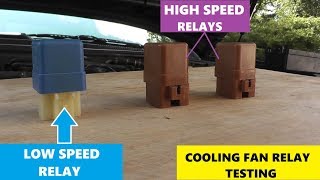
- Faulty cooling fan relay (Very Common) — The relay directs high-current power to the fan motor. It frequently fails internally or sticks closed, causing continuous power flow to the control circuit and a high voltage reading.
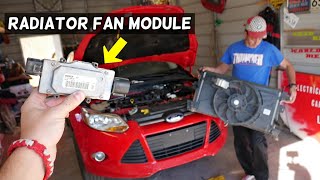
- Defective cooling fan control module (Common) — Modern vehicles use a separate module to regulate fan speed. When this module fails, it sends a constant high-voltage signal back to the PCM. This is a primary failure point on Ford, Mazda, and GM models. 🎬 See how to locate and replace the fan control module.
- Wiring or connector short-to-power (Common) — Exposed to extreme engine heat and vibration, the wiring harness insulation melts or chafes. A short-to-power occurs when the control wire touches a 12V source, instantly triggering P0696.
- Failed cooling fan motor (Common) — The electric fan motor develops an internal short circuit over time. This short feeds excessive voltage back into the control circuit.
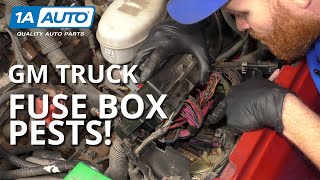
- Internal Fuse Block Failure (Less Common) — On specific vehicles (like 2014-2018 GM trucks), the under-hood 🎬 Watch this to diagnose common internal fuse block failures. fuse block contains complex internal circuits. An internal short creates a high-voltage condition on the fan circuit, even with a perfect relay and wiring.
- Faulty Powertrain Control Module (PCM) (Rare) — The PCM's internal driver circuit responsible for controlling the fan relay shorts out. Only consider this after exhaustively testing the relay, wiring, and fan motor.
Symptoms
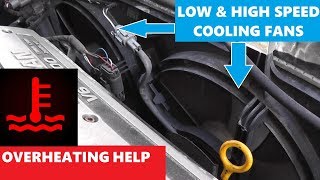
- Engine overheating — Without fan operation, the engine cannot cool itself at low speeds. The temperature gauge rises into the red zone rapidly in traffic.
- A/C system blows warm air — The A/C condenser requires airflow from the cooling fan. The PCM automatically disables the A/C compressor to prevent system damage.
- Cooling fan does not turn on — The cooling fan never activates, even when the engine temperature is critically high or the A/C is turned on.
- Cooling fan runs continuously — If the relay is stuck closed or there is a direct short to power, the fan runs constantly, even with the engine off, draining the battery.
- Check Engine Light is on (also visible on scanner) — The Malfunction Indicator Lamp (MIL) illuminates, signaling the PCM stored a fault code.
Diagnostic Flowchart
Tap your situation to follow the diagnostic path that matches what you're seeing on this code.
Common Fixes & Costs
- Replace cooling fan relay — Parts: $15-$40, Labor: $40-$60, ~0.5 hr book time (DIY)
- Replace cooling fan control module — Parts: $100-$300, Labor: $80-$150, ~1.0 hr book time (DIY)
- Replace cooling fan assembly — Parts: $150-$450, Labor: $120-$250, ~1.5 hr book time (Intermediate)
- Repair wiring or connector — Parts: $5-$50, Labor: $100-$250, ~1.5 hr book time (Intermediate)
- Replace Powertrain Control Module (PCM) — Parts: $600-$1200, Labor: $200-$300, ~2.5 hr book time (Professional)
DIY vs Professional
- Replace cooling fan relay — Beginner: Yes
Tools: None, or relay puller pliers. - Replace cooling fan control module — Beginner: Yes
Tools: Basic hand tools (socket set, screwdrivers). - Replace cooling fan assembly — Beginner: No
Tools: Socket set, wrenches, trim removal tools, drain pan for coolant. - Repair wiring or connector — Beginner: No
Tools: Multimeter, wire strippers, soldering iron, heat shrink tubing. - Replace Powertrain Control Module (PCM) — Beginner: No
Tools: Basic hand tools, professional scan tool for programming.
Used vs. New Parts: Buying Guide
When a used part is worth it: For a complete cooling fan assembly, a used part from a low-mileage vehicle is cost-effective. Used relays are never recommended due to their low cost new. Used control modules are risky without a warranty.
Donor-vehicle mileage cap: roughly under 75000 miles for the part to have meaningful remaining life.
Donor quality checklist:
- Verify the donor vehicle was not scrapped due to overheating or front-end electrical fire.
- Inspect the part for melted plastic on connectors or excessive pin corrosion.
- Match the part number exactly, ensuring blade count and shroud design are identical.
Decision logic:
- If The failed part is a simple relay → Always buy new; the cost savings are negligible.
- If The vehicle is over 10 years old and the budget is tight → A used fan assembly from a reputable salvage yard with a 90-day warranty is an acceptable risk.
- If The part is a known high-failure item (e.g., Ford fan control modules) → Favor a new aftermarket or OEM part with a warranty, as used units are prone to the same failure.
Warranty tradeoff: Used parts typically come with a 30-90 day warranty on the part only. New aftermarket parts carry a 1-year to limited lifetime warranty.
Worst-case if a used part fails: $300-$600 if a used fan assembly fails after installation, requiring repeat labor costs.
What Happens If You Wait — Timeline
- 0-1 week: Code is set, MIL is on. Fan fails to activate in traffic. A/C performance drops. Engine temperature gauge climbs above normal during idle. (MPG impact: 0-5%% · Added cost: $0, but risk of a $150+ tow if overheating occurs.)
- 1 week - 1 month: First instance of engine overheating. Coolant boils over. The engine is under significant thermal stress. (MPG impact: 5-10%% · Added cost: $200-$500 for a tow, diagnosis, and replacement of a failed thermostat or plastic coolant housing.)
- 1-3 months: Repeated overheating causes serious damage. The cylinder head starts to warp, and the head gasket is at high risk of failure. Oil degrades quickly. (MPG impact: 10-15%% · Added cost: $800-$1,500 for replacing heat-damaged components like hoses, seals, and the water pump.)
- 3+ months: Catastrophic engine failure. A severely warped cylinder head or blown head gasket occurs. Coolant and oil mix, leading to a loss of compression. (MPG impact: 15-25%+% · Added cost: $2,500-$6,000+ for cylinder head replacement or a complete used engine.)
Cost of Not Fixing It
- Immediate (0-1 month): Engine overheating in traffic, leading to coolant boiling over and roadside breakdowns. A/C system becomes inoperative. (Added cost: $150-$300 for a tow and diagnostic fee.)
- Short Term (1-3 months): Repeated overheating causes thermal stress, warping plastic cooling system components and failing seals. (Added cost: $400-$1,000 for replacing the radiator, thermostat housing, or water pump.)
- Long Term (3+ months): Catastrophic engine damage from severe overheating, including a blown head gasket or cracked engine block. (Added cost: $2,400-$6,000+ for head gasket replacement or a rebuilt engine.)
Diagnosis Steps
- Read Codes and Freeze Frame Data
Use an OBD-II scanner to confirm P0696 is active. Analyze the freeze-frame data to see the exact engine conditions (coolant temperature, vehicle speed, A/C status) when the fault triggered.
Tools: OBD-II Scanner (Beginner) - Swap the Cooling Fan Relay
Locate the cooling fan relay in the under-hood fuse box. Swap it with an identical relay for a non-critical system (like the horn). Clear the codes and run the engine. If the fan works, the original relay was faulty.
Tools: Relay puller pliers (optional) (Beginner) - Visually Inspect the Wiring Harness
Inspect the entire cooling fan circuit. Look for burnt connectors, melted insulation, and chafed wiring around the fan connector, relay socket, and exhaust manifold.
Tools: Flashlight (Beginner) - Test the Fan Motor Directly
Disconnect the fan's electrical connector. Use fused jumper wires to apply 12V power directly from the battery to the fan motor's terminals. If it doesn't spin or sparks excessively, the motor failed.
Tools: Fused Jumper Wires (Intermediate) - [PRO TIP] Test Control Circuit for a Short-to-Voltage
Disconnect the cooling fan relay. Turn the ignition on. Set a multimeter to DC Volts, ground the black lead, and probe the relay socket terminal for the PCM control circuit. With the fan commanded OFF, it should read 0V. A 12V reading confirms a short-to-power in the wiring harness.
Tools: Multimeter, Vehicle-Specific Wiring Diagram (Advanced) - [PRO TIP] Use a Scan Tool for Active Diagnosis
Use a bi-directional scan tool to command the fan on and off. Monitor the voltage at the PCM's fan-control output pin with a multimeter. If the voltage remains high regardless of the command, and wiring shorts are ruled out, the PCM driver is faulty.
Tools: Bi-Directional Scan Tool, Multimeter (Advanced) - Check for Technical Service Bulletins (TSBs)
Before replacing expensive parts like the PCM or fuse block, check for manufacturer TSBs related to P0696. Manufacturers frequently release updated parts or software flashes for known fan control issues.
Tools: Online Repair Database Access (Professional)
When This Code Triggers (Freeze-Frame Conditions)
- Engine Coolant Temp: 210-235°F (99-113°C) (At or above normal operating temperature, when the fan is commanded on.)
- A/C System Status: On (The fault triggers when the A/C is turned on, placing immediate demand on the cooling fan.)
- Vehicle Speed: 0-20 mph (Fault registers at low speeds or idle when there is no natural airflow through the radiator.)
- Engine RPM: 600-1200 RPM (Occurs at idle or low RPMs, consistent with stop-and-go traffic.)
- Engine Load: 15-40% (Low to moderate engine load, typical for idling or light city driving.)
Related Codes
- P0695 — This is 'Fan 3 Control Circuit Low', the direct opposite of P0696. P0695 indicates a short to ground or open circuit, while P0696 indicates a short to power.
- P0691 — This is 'Fan 1 Control Circuit Low'. If you have both P0691 and P0696, suspect a component common to both circuits, like the PCM or a shared power/ground source.
- P0692 — This is 'Fan 1 Control Circuit High'. Seeing this with P0696 points towards a widespread electrical issue or a failing control module affecting multiple fan circuits.
- P0480 — This is a generic code for 'Cooling Fan 1 Control Circuit Malfunction'. P0696 gives a more precise starting point: a 'high' voltage condition.
Climate & Environmental Factors
- Hot Climates: Vehicles in hot regions put a higher demand on the cooling fan system. Increased runtime accelerates wear on the fan motor, control module, and relay.
- Cold Climates / Road Salt: Salt spray and moisture infiltrate wiring harnesses and connectors, causing high resistance or shorts that trigger a P0696 code.
- High Humidity: Humid environments accelerate corrosion on electrical connectors and relay terminals, increasing circuit resistance and leading to component failure.
How to Talk to a Mechanic About This Code
Say this: "I have a P0696 code and my engine is starting to overheat in traffic. I'd like to schedule a diagnostic for the cooling fan control circuit. Please test the fan relay, fan motor, and check the wiring for a short-to-power before recommending a full assembly replacement."
This signals you've researched the common, inexpensive causes and want a proper electrical diagnosis, not just a quick parts replacement. It directs the technician to follow a logical diagnostic path.
Avoid saying:
- 'My car is overheating, can you fix it?'
- 'My check engine light is on, I don't know why.'
- 'Just replace the cooling fan.'
Questions to ask before authorizing the repair:
- Did you test the fan relay and motor separately, and what were the results?
- Did you find a short-to-power on the control circuit, or was the voltage normal?
- If you are recommending a fan assembly or control module, can you confirm it's a common failure point for this specific model?
- What is the warranty on the recommended parts and labor?
Where to Take It: Dealer vs Independent vs Chain
- Dealer:
Best for: Vehicles still under powertrain warranty., Known, complex manufacturer-specific issues (e.g., internal fuse block failure on GM trucks)., If the final diagnosis requires PCM replacement and programming.
Downsides: Higher labor rates, often 1.5x to 2x more than independent shops., May default to replacing a whole assembly rather than repairing a wire. (Typical cost: +50% vs. baseline) - Independent Shop:
Best fit for most cases. A reputable independent shop with strong electrical diagnostic skills efficiently solves P0696 by testing individual components.
Best for: Out-of-warranty vehicles where cost is a factor., Diagnosing and repairing common electrical faults like relays, motors, and wiring shorts.
Downsides: Diagnostic skill for complex electrical issues varies greatly; vet the shop's reputation., May lack access to manufacturer-specific programming tools for PCM replacement. (Typical cost: +0% vs. baseline) - Chain Shop:
Use with caution. Acceptable for a simple relay swap, but AVOID for initial diagnosis of P0696, as it requires true electrical troubleshooting.
Best for: Simple part swaps like a confirmed bad relay if you don't want to do it yourself.
Downsides: Technician skill varies dramatically; they are rarely equipped for in-depth electrical diagnostics., High pressure to upsell leads to recommendations for full fan assembly replacements without proper testing. (Typical cost: -10% vs. baseline)
When to Walk Away From the Repair
If the estimated repair cost exceeds 40-50% of the car's private-party value, seriously consider selling the car instead of fixing it.
- Car worth $4000, fix is $750: Fix it. The repair cost is well below the 50% threshold and significantly less than replacing the vehicle.
- Car worth $12000, fix is $1500: Fix it. This is a significant repair but makes economic sense relative to the car's higher value.
- Car worth $2500, fix is $1500: Walk away. The repair cost is 60% of the car's value. You risk discovering other issues after sinking money into this one.
What Scan Tool You Need for This Code
Minimum: A basic OBD-II reader that can show codes, clear them, and display live data (like Engine Coolant Temperature).
A basic code reader cannot perform bi-directional tests. Bi-directional control allows you to command the fan on and off directly from the scan tool, instantly confirming if the PCM, wiring, and relay are working correctly.
Budget: BlueDriver Pro (~$120) — Pairs with your smartphone and provides freeze-frame data, live data graphing for coolant temp, and repair reports based on a database of verified fixes.
Mid-range: Foxwell NT510 Elite / XTOOL D7 (~$150-350) — Offers bi-directional control, allowing you to command the cooling fan on/off directly to test the entire circuit. This is a critical function for accurately diagnosing P0696.
Professional: Autel MaxiCOM MK808S (~$400-500) — Provides full bi-directional control to activate the fan, view extensive live data, and access manufacturer-specific codes and functions, mirroring what a professional shop uses.
Rent vs buy: For a one-time code read, auto parts stores scan codes for free. To properly diagnose P0696 using bi-directional controls, purchase a mid-range or better scanner, as rental tools are typically basic readers.
How to Clear the Code After You Fix It
- Reconnect the battery if it was disconnected.
- Use an OBD-II scan tool to clear the P0696 code from the PCM's memory.
- Perform a complete drive cycle to allow readiness monitors to run and confirm the fix.
Drive cycle (~30 minutes): Start with a cold engine. Idle for 3 minutes with A/C on. Drive in stop-and-go city traffic for 15 minutes. Drive at a steady highway speed (55 mph) for 10 minutes. Allow the vehicle to cool down completely.
Readiness monitors affected: Comprehensive Component Monitor (CCM), Catalyst (CAT) Monitor, Evaporative (EVAP) System Monitor
Before emissions retest: drive at least 100 miles to fully set monitors.
Watch out for:
- Disconnecting the battery clears the code but resets all readiness monitors to 'Not Ready', causing an automatic emissions test failure.
- The code returns immediately if the underlying short-to-power has not been repaired.
- Failing to let the engine cool down completely prevents the EVAP monitor from running.
Will This Fail Emissions / State Inspection?
Yes — this code typically fails an OBD-II emissions inspection.
- California: An active P0696 code causes an automatic smog check failure. A complete drive cycle must be performed to set all readiness monitors before a retest.
- New York: The NYS DMV inspection includes an OBD-II scan. An illuminated Check Engine Light and stored P0696 code results in immediate failure.
- Texas: In emissions-testing counties, an active P0696 code is an automatic failure. You must drive 50-100 miles after clearing the code to ensure readiness monitors are set.
Most Commonly Affected Vehicles
- Chevrolet Cruze (2011-2016) — Commonly caused by a failed cooling fan assembly where the integrated control module shorts out.
- GMC Sierra (2014-2018) — Linked to complex electrical issues within the under-hood fuse block. Internal shorts are a known issue on these models.
- Cadillac CTS (2008-2013) — Issues frequently trace to the dedicated cooling fan control module or its wiring harness suffering from heat degradation.
- Ford Focus, Fusion, Escape (2012-2018) — The cooling fan control module is a high-failure item. It is frequently bolted directly to the fan shroud.
- Kia Cerato (2010-2013) — Noted in repair manuals for experiencing P0696, often pointing directly to the fan relay or motor.
- Land Rover Range Rover (2010-2015) — Frequently reported on these models, pointing to the fan assembly itself or the control module.
- Mazda Mazda 3, Mazda 5, Mazda 6 (2007-2014) — Commonly caused by a faulty fan control module, which is a frequent point of failure across these years.
- Volkswagen Jetta, Golf (2010-2016) — VW fan control modules are a known failure point, causing erratic fan behavior and triggering circuit codes.
Manufacturer-Specific Notes
- General Motors (Chevrolet, GMC, Cadillac): On many 2014-2018 GM trucks, the under-hood fuse block is a multi-layered, non-serviceable unit. Internal circuit failure causes a P0696 code even with a good relay. Replacement of the entire block is the only remedy.
- Ford: On the Focus, Fusion, and Escape, the cooling fan control module is the most common failure point. It is often bolted to the fan shroud and can be replaced separately. Always check the module before replacing the entire fan.
- Volkswagen/Audi: VW and Audi vehicles use a standalone fan control module managing both cooling fans. When it fails, it causes both fans to stop working or run continuously, triggering P0696. Connector corrosion is also common.
Real Owner Stories
2012 Volvo XC60 with 110K miles
Owner noticed the cooling fan running at full speed many minutes after shutting the engine off, risking a dead battery.
What they tried:
- Connected a diagnostic tool and found no fault codes.
- Checked the cooling system fuse, which was not blown.
Outcome: The owner replaced the cooling fan relay. The new relay resolved the issue, and the fan began operating normally. The DIY repair took 15 minutes and cost $20, avoiding a dealership quote of over $400 for a full fan assembly.
Lesson: A fan that runs continuously when the car is off is a classic symptom of a stuck fan relay. This is a cheap part and an easy DIY replacement that should be checked first.
2014 GMC Sierra at 85K miles
Check Engine Light came on with code P0696. The cooling fan was not turning on, and the engine temperature rose in traffic.
What they tried:
- Swapped the fan relay with the horn relay; the problem persisted.
- Tested the fan motor directly with 12V power, and it worked correctly.
- Inspected the wiring harness and found no visible damage.
Outcome: A mechanic diagnosed an internal failure in the under-hood fuse block. Replacing the entire fuse block assembly ($350 part) permanently fixed the problem.
Lesson: On 2014-2018 GM trucks, P0696 is often caused by an internal, non-serviceable fault in the fuse block. If the relay, fan, and wiring check out, suspect this component.
2013 Ford Focus at 95K miles
Engine began overheating in stop-and-go traffic, and the A/C stopped working. The Check Engine Light was on for P0696.
What they tried:
- A general repair shop recommended replacing the entire cooling fan assembly for $750.
Outcome: A second mechanic tested the circuit and found the fan motor was fine, but the separate cooling fan control module had failed. The module was replaced for $180, solving the overheating.
Lesson: Don't automatically replace the entire fan assembly. On many Ford models, the fan control module is a separate, high-failure part. Test the module and motor independently.
How to Prevent This Code From Triggering
- Perform a cooling system flush (Every 30,000 to 60,000 miles) — Old coolant becomes acidic, leading to corrosion. A healthy system prevents the fan from being overworked due to poor cooling efficiency.
- Clean electrical connectors and apply dielectric grease (During any cooling system service or every 2-3 years) — Dielectric grease creates a moisture-proof barrier, preventing the corrosion and water intrusion that cause electrical shorts.
- Annually inspect cooling fan wiring and shroud (Once per year, especially before summer) — Visually check for wiring that has become brittle or chafed. Clean debris from the fan shroud to prevent motor obstruction.
- Listen for changes in fan motor sound (Ongoing driver awareness) — A failing fan motor becomes louder or whines before it shorts out completely. Noticing these changes allows for replacement before it triggers P0696.
Frequently Asked Questions
What are the most common misdiagnosis mistakes for P0696?
The biggest mistake is replacing the PCM without performing a complete circuit diagnosis. Technicians often see a high voltage reading and assume the PCM driver is bad. The actual problem is usually a cheaper issue like a shorted wire or a faulty relay.
Can aftermarket accessories cause a P0696 code?
Yes. Improperly installed aftermarket parts, especially those tapping into ignition-switched power sources, interfere with the fan control circuit. This introduces unexpected voltage, leading directly to a P0696 code.
What does 'Fan 3' mean if my car only has one or two fans?
'Fan 3' is a generic SAE term and does not always correspond to a physical third fan. It often refers to the high-speed operation of a single fan or a secondary cooling fan. Consult a vehicle-specific wiring diagram to determine its exact meaning for your car.
Is it safe to drive with a P0696 code?
No, driving with this code is highly dangerous for your engine. Without a working cooling fan, your engine overheats rapidly, causing severe damage like a blown head gasket that costs over $2,500 to repair.
Can a low battery cause a P0696 code?
No. A low battery causes bizarre electrical problems, but P0696 specifically indicates a high voltage condition in a single circuit. This is caused by a short to power or component failure, not low system voltage.
Why did my A/C stop working when this code appeared?
The A/C condenser requires airflow to release heat. The PCM detects the cooling fan failure and preemptively disables the A/C compressor to prevent the system from over-pressurizing and exploding.
What is the difference between a fan relay and a fan control module?
A fan relay is a simple on/off switch for a single-speed fan. A fan control module is a sophisticated electronic controller that varies fan speed based on precise cooling needs. A high-voltage code originates from either device failing.
How much does it cost to diagnose a P0696 code?
Most repair shops charge a diagnostic fee covering one hour of labor, typically between $100 and $150. This fee pays for electrical testing to find the exact short or failed component. This is far cheaper than guessing and replacing parts unnecessarily.
Key Takeaways
- P0696 indicates a short-to-power in the cooling fan control circuit, preventing the fan from activating and causing rapid engine overheating.
- Swap the cooling fan relay with an identical non-critical relay (like the horn) as your first diagnostic step; this fixes the issue in over 30% of cases.
- Never replace the $600+ Powertrain Control Module (PCM) without first using a multimeter to rule out a shorted wire in the $50 wiring harness.
- Driving with an active P0696 code risks catastrophic engine damage, turning a $20 relay replacement into a $3,000 head gasket repair.
Helpful Videos

The information in this article is provided for general reference and educational purposes only. Vehicle specifications, procedures, and part compatibility can vary by production date, trim level, and region. Always consult your vehicle's factory service manual and verify part numbers before purchasing or performing repairs. Safety-critical components such as airbags, seat belts, and braking systems should be installed by a qualified professional.
- 🎬 Helpful Videos
- What Does P0696 Mean?
- Can I Drive With P0696?
- Common Causes
- Symptoms
- Diagnostic Flowchart
- Common Fixes & Costs
- DIY vs Professional
- Used vs. New Parts: Buying Guide
- What Happens If You Wait — Timeline
- Cost of Not Fixing It
- Diagnosis Steps
- When This Code Triggers (Freeze-Frame Conditions)
- Related Codes
- Climate & Environmental Factors
- How to Talk to a Mechanic About This Code
- Where to Take It: Dealer vs Independent vs Chain
- When to Walk Away From the Repair
- What Scan Tool You Need for This Code
- How to Clear the Code After You Fix It
- Will This Fail Emissions / State Inspection?
- Most Commonly Affected Vehicles
- Manufacturer-Specific Notes
- Real Owner Stories
- 2012 Volvo XC60 with 110K miles
- 2014 GMC Sierra at 85K miles
- 2013 Ford Focus at 95K miles
- How to Prevent This Code From Triggering
- Frequently Asked Questions
- What are the most common misdiagnosis mistakes for P0696?
- Can aftermarket accessories cause a P0696 code?
- What does 'Fan 3' mean if my car only has one or two fans?
- Is it safe to drive with a P0696 code?
- Can a low battery cause a P0696 code?
- Why did my A/C stop working when this code appeared?
- What is the difference between a fan relay and a fan control module?
- How much does it cost to diagnose a P0696 code?
- Key Takeaways
- 🎟️ Get 5% Off