

OBD-II Code P0675: Cylinder 5 Glow Plug Circuit/Open
What P0675 means, why it triggers, and how to fix it
- P0675 indicates an open electrical circuit in the cylinder #5 glow plug, preventing it from heating the cylinder for cold starts.
- A burned-out glow plug causes 80% of P0675 codes and costs $20-$60 in parts to replace.
- Test the glow plug with a multimeter before buying parts; a healthy plug reads between 0.5 and 2.0 ohms, while an infinite reading confirms failure.
- If your scanner shows multiple glow plug codes simultaneously (like P0671 and P0675), replace the Glow Plug Control Module (GPCM) or its main fuse rather than individual plugs.
What Does P0675 Mean?

P0675 means the Powertrain Control Module (PCM) detects an open electrical circuit in the cylinder #5 glow plug. This small heater warms the cylinder to ignite diesel fuel during cold starts. An 'open circuit' means the electrical path is broken, usually because the plug burned out internally or a wire snapped.
Technical definition: The SAE/OBD-II definition is "Cylinder 5 Glow Plug Circuit/Open". The PCM or Glow Plug Control Module (GPCM) sets this code when it commands the cylinder 5 glow plug to turn on but detects zero current draw, indicating a broken electrical connection or infinite resistance.
Can I Drive With P0675?
Yes, But With Caution. You can drive, but expect hard starting in cold weather. Ignoring the code forces prolonged engine cranking, which destroys your starter motor and battery over time. The ultimate risk is the dead glow plug seizing from carbon buildup; if it breaks during a delayed removal attempt, you face a $3,000+ cylinder head repair.
Common Causes

- Faulty glow plug in cylinder 5 (Very Common) — The glow plug's internal heating element burned out, breaking the electrical circuit. Glow plugs are wear items that typically fail between 60,000 and 100,000 miles.
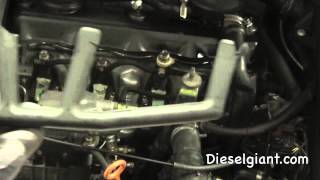
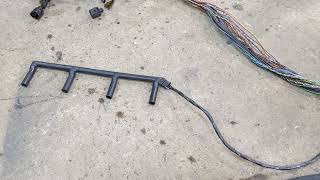
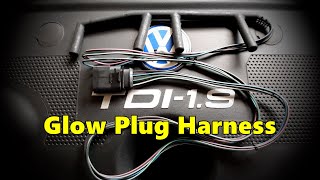
- Damaged wiring or connectors (Common) — The harness connecting the GPCM to the cylinder 5 glow plug is cracked, melted, or disconnected. Ford 6.0L harnesses frequently become brittle and snap during routine maintenance. 🎬 Watch: How to replace a 4-wire glow plug harness.
- Engine harness chafing (Common) — The main engine wiring harness rubs against sharp engine brackets, severing the glow plug wire. GM TSB 21-NA-149 specifically addresses this chafing issue on 3.0L diesels.
- Failed Glow Plug Control Module (GPCM) or Relay (Less Common) — The module distributing power to the glow plugs failed internally, or its main ground corroded. This usually triggers multiple cylinder codes simultaneously (e.g., P0671, P0672, P0675).
- Blown fuse (Less Common) — A short circuit blew the dedicated glow plug fuse. If a replacement fuse blows instantly, a dead short exists in the wiring harness.
- Software or calibration issue (Rare) — The PCM's resistance monitoring software is overly sensitive. Manufacturers occasionally release software updates to fix false P0675 codes.
- Faulty Powertrain Control Module (PCM) (Very Rare) — The main engine computer suffered an internal driver failure. Rule out all other components before replacing the PCM.
Symptoms

- Hard starting in cold weather — The engine cranks for 5+ seconds or refuses to start below 40°F (4°C).
- Rough idle and misfires when cold — The engine shakes, stumbles, or lacks power immediately after starting due to a cold cylinder 5.
- Excessive white or gray exhaust smoke — Unburned diesel fuel from the cold cylinder pushes into the exhaust, creating thick white smoke until the engine warms up.
- Decreased fuel efficiency — Incomplete cold-engine combustion wastes fuel over time.
- Check Engine Light is on (also visible on scanner) — The Malfunction Indicator Lamp (MIL) illuminates on your dashboard.
Diagnostic Flowchart

Tap your situation to follow the diagnostic path that matches what you're seeing on this code.
Common Fixes & Costs
- Replace the faulty glow plug — Parts: $20-$60 per plug, Labor: $150-$300 for a single plug replacement., ~1.5 hr book time (DIY)
- Replace all glow plugs as a set — Parts: $120-$400 for a set of 8 plugs, Labor: $300-$800, as replacing all at once is highly labor-efficient., ~4.5 hr book time (Intermediate)
- Repair or replace damaged wiring/connector — Parts: $25-$150 for a new harness pigtail., Labor: $150-$500, depending on harness accessibility., ~2.5 hr book time (Intermediate)
- Replace the Glow Plug Control Module (GPCM) — Parts: $150-$350, Labor: $75-$150 for replacement., ~1 hr book time (Intermediate)
- Replace a blown fuse or relay — Parts: $5-$30, Labor: $0-$50, ~0.2 hr book time (DIY)
DIY vs Professional
- Replace a single glow plug — Beginner:
- Replace all glow plugs — Beginner:
- Replace GPCM/Relay/Fuse — Beginner:
- Repair wiring harness — Beginner:
Used vs. New Parts: Buying Guide
When a used part is worth it: For electronic parts like a Glow Plug Control Module (GPCM), a used OEM unit from a low-mileage vehicle is a cost-effective alternative to a new OEM part. Never buy used glow plugs; they are wear items.
Donor-vehicle mileage cap: roughly under 80000 miles for the part to have meaningful remaining life.
Donor quality checklist:
- Verify the donor vehicle was not scrapped for electrical or engine-related issues.
- Match the part number exactly; modules for different engine years are rarely interchangeable.
- Inspect connectors for corrosion. Avoid parts from flood-damaged vehicles.
Decision logic:
- If The part is a glow plug → always buy new. They are inexpensive wear-and-tear items.
- If The part is a GPCM and the vehicle is over 100K miles → a tested, used OEM module with a warranty is a reasonable choice to save money.
- If New aftermarket GPCMs have a poor reputation for reliability for your specific model → favor a used OEM part or a remanufactured original unit over a new, unproven aftermarket one.
Warranty tradeoff: Used parts from salvage yards typically offer a 30-90 day warranty. Remanufactured modules often come with a 1-year to lifetime warranty. New aftermarket parts usually have a 1-3 year warranty.
Worst-case if a used part fails: $200-$400 if a used GPCM fails after the warranty period, requiring repeat labor and another replacement part.
What Happens If You Wait — Timeline
- 0-1 month: Check Engine Light is on. In warm weather, the engine starts normally. In cooler weather, cranking time increases by 1-2 seconds. A brief puff of white smoke appears at startup. (MPG impact: 0-1%% · Added cost: $0)
- 1-4 months: Hard starting becomes consistent below 40°F. The engine cranks for 3-5 seconds, stumbles, and runs rough for the first 15-30 seconds. Noticeable white smoke is produced. (MPG impact: 1-3%% · Added cost: $10-$40 in wasted fuel.)
- 4-12 months: Prolonged cranking (5+ seconds) is required for every cold start, destroying the starter motor and battery. Carbon buildup around the faulty glow plug increases, making it likely to seize. (MPG impact: 3-5%% · Added cost: $400-$800 for premature failure of the battery and starter motor.)
- 12+ months / Worst-Case Scenario: The glow plug is heavily seized with carbon. During a removal attempt, the tip snaps off and falls into the cylinder. This requires removal of the cylinder head to retrieve the broken piece. (MPG impact: N/A (vehicle is likely disabled)% · Added cost: $3000-$5000+ for cylinder head removal and extraction.)
Cost of Not Fixing It
- 0-3 months: Hard starting in cold weather, prolonged engine cranking, and excessive white smoke on startup. (Added cost: $20-$50 in wasted fuel.)
- 3-12 months: Extended cranking cycles destroy the starter motor and battery. (Added cost: $400-$1500 for a new starter and/or battery, including labor.)
- 12+ months / Worst-Case: The dead glow plug seizes in the cylinder head due to carbon buildup. The tip snaps off during removal, requiring cylinder head extraction. (Added cost: $3000-$5000+)
Diagnosis Steps
- Scan for Codes and Review Freeze Frame Data
Use an OBD-II scanner to confirm P0675. Note any other codes. Multiple glow plug codes (e.g., P0671, P0672) point to a shared cause like the GPCM or its power supply. Review freeze frame data to see engine temperatures when the code set.
Tools: OBD-II Scanner (Beginner) - Test the Glow Plug Resistance
Disconnect the electrical connector from the cylinder 5 glow plug. Set a multimeter to ohms (Ω) and measure resistance between the glow plug's terminal and the engine block. A healthy plug reads 0.5 to 2.0 ohms. An infinite reading (OL) confirms a dead glow plug.
Tools: Multimeter, Socket set (Intermediate) - Check for Voltage at the Connector
Have a helper turn the ignition to 'ON' (engine off) to activate the glow plugs. Use a multimeter set to DC volts to check for battery voltage (11-12V) at the glow plug connector's power wire. Zero voltage means the problem is upstream in the wiring, GPCM, or fuse.
Tools: Multimeter, Helper (Intermediate) - Visually Inspect the Wiring and Connector
Inspect the wiring harness and connector for cylinder #5. Look for cracks, corrosion, melted plastic, or chafing against metal brackets. Wiggle the connector to check for a loose fit.
Tools: Flashlight (Beginner) - Pro Tip: Test the Circuit Under Load
Voltage tests can mislead. Connect a 12V test light to the positive battery terminal. Touch the probe to the disconnected glow plug terminal. If the light fails to illuminate, the glow plug cannot handle an electrical load and is bad.
Tools: 12V Test Light (Intermediate) - Inspect the Glow Plug Control Module (GPCM) and Fuses
Locate the GPCM and associated fuses using a service manual. Visually inspect the fuse. Check the GPCM's main power and ground connections for tightness and corrosion.
Tools: Vehicle service manual, Flashlight, Multimeter (Advanced) - Check for a Short to Ground
If fuses keep blowing, disconnect the GPCM and the glow plug. Use a multimeter on continuity to check for a connection between the power wire at the glow plug connector and a known good ground. Continuity confirms a shorted wiring harness.
Tools: Multimeter (Advanced) - Advanced: Check Live Data PIDs
On modern trucks (e.g., 2017+ Duramax), advanced scan tools read individual glow plug resistance directly from the GPCM. A reading above 1.8 ohms typically indicates a failing plug requiring replacement.
Tools: Advanced Bi-Directional Scan Tool (Advanced) - Expert: Use an Oscilloscope for Advanced Diagnosis
For intermittent faults, connect an oscilloscope with a current clamp to the power wire for cylinder 5. A healthy circuit shows a sharp voltage rise followed by a high initial current draw (20+ amps) that tapers off. Zero current draw with good voltage confirms an open glow plug.
Tools: Oscilloscope with current clamp (Expert)
When This Code Triggers (Freeze-Frame Conditions)
- Engine Coolant Temp: < 122°F (50°C) (During a cold start or post-start warm-up phase when glow plugs actively heat the cylinders.)
- RPM: 0 (Key On) or 600-900 (Idling) (The GPCM runs a self-test at key-on and monitors the circuit continuously after startup.)
- Ambient Air Temperature: < 60°F (15°C) (The fault is detected when the PCM commands the glow plugs on, which depends on cold ambient temperatures.)
- System Voltage: 11.5V - 14.5V (The code sets when the GPCM detects an open circuit (zero current draw) while commanding the glow plug on.)
Related Codes
- P0670 — P0670 indicates a general fault in the Glow Plug Control Module (GPCM) circuit. If you have P0670 along with P0675, the GPCM is the primary suspect, not the individual glow plug.
- P0671, P0672, P0673, P0674, P0676, P0677, P0678 — These are codes for glow plug circuits in other cylinders. Seeing multiple codes from this group together strongly suggests a common problem, like a bad GPCM or a blown fuse, rather than multiple individual glow plugs failing at once.
- P0380 — P0380 is a generic code for a malfunction in the glow plug/heater circuit 'A'. P0380 indicates a general system problem, while P0675 pinpoints the fault specifically to the circuit for cylinder #5.
- P037D — P037D is for 'Glow Plug Sense Circuit'. While P0675 indicates a problem in the control circuit powering the glow plug, P037D indicates a problem in the separate 'sense' circuit the PCM uses to monitor operation. They often point to the same root cause.
Climate & Environmental Factors
- Cold Climate: Low ambient temperatures make a P0675 fault highly noticeable. A diesel engine relies heavily on glow plugs for a smooth start in the cold. A driver in a warm region may not notice a problem, whereas a driver in a cold region experiences severe hard starting.
- Humidity and Road Salt: Humid environments or regions using winter road salt accelerate corrosion on electrical connectors, wiring, and module ground points. This corrosion creates the open circuit that triggers the P0675 code.
- High Altitude: High altitude thins the air, making starting a diesel engine slightly more difficult. This exacerbates the symptoms of a failing glow plug system, making a single plug failure more noticeable.
How to Talk to a Mechanic About This Code
Say this: "I have a P0675 code for the cylinder 5 glow plug circuit. I'd like to book a diagnostic appointment. Please start by testing the resistance of the glow plug and checking for voltage at the connector before recommending any part replacements."
This prevents a shop from immediately quoting a glow plug replacement without proper testing. It directs them to prove whether the fault is the plug itself or the circuit supplying it.
Avoid saying:
- 'My truck is hard to start, can you fix it?' (Too vague, invites a broad and expensive diagnostic path)
- 'Just replace the bad glow plug.' (Assumes the plug is the problem, when it could be wiring or the control module)
- 'My check engine light is on.' (Always provide the specific code you have)
Questions to ask before authorizing the repair:
- What was the resistance reading in ohms for the cylinder 5 glow plug?
- Did you get battery voltage at the glow plug connector with the key on?
- If you're recommending replacing all the plugs, what is the labor cost difference compared to replacing just one?
- What is your shop's procedure and warranty if a glow plug breaks during removal?
Where to Take It: Dealer vs Independent vs Chain
- Dealer:
Recommended if you suspect a module or complex wiring issue, or if your vehicle is a German brand known for these failures.
Best for: Vehicles still under powertrain warranty., Complex electrical issues or manufacturer-specific problems (e.g., BMW/Mercedes GPCM failures, VW harness issues)., Repairs requiring programming a new GPCM.
Downsides: Highest labor rates., Defaults to replacing an entire harness or module assembly instead of repairing a single wire. (Typical cost: +50% vs. baseline) - Independent Shop:
Best fit for most cases, especially for common US trucks (Ford, GM, Ram). Find a shop specializing in diesels, as they are experienced with the risks of glow plug removal.
Best for: Out-of-warranty vehicles where cost is a factor., Straightforward diagnostics and part replacements (bad glow plug, bad GPCM)., Finding a diesel-specific independent shop is ideal.
Downsides: Quality and experience with diesel systems varies widely. Vet the shop's reputation for diesel repair., Lacks advanced programming tools for the newest vehicles. (Typical cost: +0% vs. baseline) - Chain Shop:
AVOID for this repair. The risk of a technician breaking a glow plug and turning a $300 job into a $3000+ job is too high.
Best for: Simple jobs like battery replacement or oil changes.
Downsides: Technicians lack specific experience for diesel glow plug systems., High risk of misdiagnosis (e.g., selling a GPCM when only wiring is bad)., Inexperienced in handling a seized/broken glow plug, which is the biggest risk of this job. (Typical cost: -10% vs. baseline)
When to Walk Away From the Repair
If the estimated repair cost exceeds 40-50% of the car's private-party value, pause and consider your options.
- Car worth $15000, fix is $800: Fix it. This is a standard repair cost and well below the threshold.
- Car worth $8000, fix is $4000: Walk away. This implies the worst-case scenario (broken glow plug) occurred. The repair cost is 50% of the vehicle's value. Consider selling it as-is.
- Car worth $4000, fix is $500: Fix it, but be aware of the risk. The initial quote is low, but ask the shop about their liability if the plug breaks before authorizing the work.
What Scan Tool You Need for This Code
Minimum: A basic OBD-II code reader to get the P0675 code and a quality multimeter. A multimeter to test resistance and voltage is more important than the scanner itself.
A $20 code reader only tells you the code. It cannot help you determine if the cause is the plug, the wiring, or the control module. A multimeter is essential for the basic electrical tests that pinpoint the failure.
Budget: BlueDriver Pro (~$90) — Reads and clears the code, provides freeze-frame data, and shows live data. You still need a separate multimeter for the essential resistance/voltage tests.
Mid-range: Autel MaxiCOM MK808 / Foxwell NT510 Elite (~$300-400) — Offers bi-directional control to command the GPCM on/off, helping to test the circuit. On newer vehicles, they display individual glow plug resistance, saving you from manual testing.
Professional: Autel MaxiSYS MS906 Pro / XTOOL D8S (~$1200-1600) — Offers full bi-directional control of the GPCM and all other modules. Provides advanced features like ECU coding necessary if a new GPCM needs programming.
Rent vs buy: Renting a scanner from an auto parts store is not enough because you need a multimeter. Buy a quality multimeter ($25-$50) and a basic code reader ($30-$60). If you own a diesel, investing in a mid-range scanner is a wise choice for future issues.
How to Clear the Code After You Fix It
- Use an OBD-II scan tool to clear the P0675 code.
- Ensure the fuel tank is between 30% and 70% full.
- Perform a complete drive cycle to allow the vehicle's readiness monitors to run.
Drive cycle (~30 minutes): Start the engine from a cold soak (rested 8+ hours). Idle for 2-3 minutes with electrical loads on (defroster, headlights). Drive for 15-20 minutes with mixed city/highway conditions, including steady-state cruising around 55 mph for at least 5 minutes and several smooth acceleration/deceleration cycles. Allow the vehicle to idle for another 30-60 seconds before shutting down.
Readiness monitors affected: Comprehensive Component Monitor, Misfire Monitor
Before emissions retest: drive at least 100 miles to fully set monitors.
Watch out for:
- Clearing the code resets all emissions readiness monitors to 'Not Ready'. You must complete a drive cycle before an emissions test.
- The code returns immediately if the underlying electrical fault (bad plug, wiring) was not properly fixed.
- Failing to let the vehicle 'cold soak' before starting the drive cycle prevents the glow plug monitor from running.
Will This Fail Emissions / State Inspection?
Yes — this code typically fails an OBD-II emissions inspection.
- California: An active Check Engine Light for P0675 is an automatic failure. All readiness monitors must be set to 'Ready'. After repair, you may need to drive 50-100 miles to complete the drive cycle before a retest.
- New York: The NYS DMV inspection includes an OBD-II scan. An illuminated MIL due to P0675 results in an automatic emissions test failure.
- Texas: In counties requiring emissions testing, an active P0675 code causes an automatic failure. If you clear the code, you can only have one monitor 'Not Ready' (for model years 2001+) to pass.
Most Commonly Affected Vehicles

- Ford F-Series with Powerstroke engine (2003-2018) — On 6.0L (2003-2007) and 6.4L (2008-2010) engines, the glow plug harness connectors are notoriously brittle and break upon removal. For the 6.7L (2011+), failures usually point to individual plugs or the control module.
- Chevrolet/GMC Silverado/Sierra with Duramax engine (2006-2017) — Early models (e.g., LBZ, LMM) have tight access to some plugs, requiring inner fender removal. On 2011-2016 LML engines, a reflash of the GPCM sometimes resolves false codes before replacing parts.
- Dodge/Ram Ram with Cummins engine (2007.5-2018) — Unlike Powerstroke and Duramax, Cummins engines use a grid heater system, but models from 2007.5 onward also incorporate in-cylinder glow plugs. Failures relate to the plugs or the control module.
- Volkswagen Jetta/Golf/Beetle with TDI engine (2009-2015) — The wiring harness sitting on top of the engine is prone to heat damage, causing brittle wires and open circuits. TSB 2032116 notes that cranking the engine before the glow plug light goes out triggers false codes.
- Mercedes-Benz Sprinter, E-Class, GL-Class with BlueTEC engines (2007-2016) — The glow plug control module is a very common failure point and often fails for all cylinders at once.
- BMW X5, 335d, and other diesel models (2009-2018) — The glow plug control module fails frequently, triggering faults for multiple cylinders simultaneously (e.g., P0672, P0675). Technicians replace the module as a first step when multiple codes are present.
- Jeep Grand Cherokee with 3.0L CRD engine (2007-2008.5, 2014-2019) — The Mercedes-derived CRD engine experiences glow plug failures. The later EcoDiesel engine sets this code due to a faulty plug or wiring harness issue.
- Audi A3, Q7 with TDI engine (2009-2016) — Similar to VW TDI models, Audi TDI models set glow plug faults related to plugs, harnesses, or control modules. The 3.0L TDI V6 is noted for control module failures.
Manufacturer-Specific Notes
- Ford: On 6.0L Powerstroke engines, the glow plug harness connectors become brittle and break upon removal; have a replacement on hand. Accessing passenger side plugs requires removing the inner fender liner.
- GM (Chevrolet/GMC): GM TSB 21-NA-149 notes that on 3.0L LM2 diesels, P0675 is caused by the engine harness chafing on brackets. A bulletin for LML engines requires using a special reamer tool in the glow plug bore to prevent soot from damaging the new plug upon installation.
- Volkswagen: Per TSB 2032116, cranking the engine while the glow plug light is still on causes a voltage drop that incorrectly flags glow plug faults. Always wait for the light to turn off before starting. The wiring harness is also a known failure point.
- BMW: The glow plug control module fails frequently, triggering faults for multiple cylinders simultaneously. Technicians replace the control module as a first step before testing individual plugs when multiple codes are present.
Real Owner Stories
2006 GMC Sierra 2500HD (Duramax) at 155K miles
Check Engine Light with P0675 came on. The truck started fine in warm weather, but as winter approached, it began to crank longer on cold mornings with a puff of white smoke.
What they tried:
- Tested the glow plug at cylinder #5 and found it had infinite resistance (open circuit).
- Replaced only the single bad glow plug.
Outcome: Replacing the one plug cleared the code and solved the hard starting. Two months later, code P0672 (Cylinder 2) appeared.
Lesson: Glow plugs fail around the same time. While replacing just one is cheaper initially, it is more labor-efficient to replace all of them at once to avoid repeated repairs, especially when access is difficult.
2012 VW Jetta TDI at 110K miles
P0675 code appeared intermittently. No noticeable symptoms, but the Check Engine Light caused an automatic emissions test failure.
What they tried:
- Replaced the #5 glow plug, but the code returned within a week.
- A mechanic replaced the Glow Plug Control Module (GPCM), but the code persisted.
- Traced the issue to the engine wiring harness sitting on top of the engine.
Outcome: The insulation on the wire for cylinder #5 became brittle from heat and cracked, creating an intermittent open circuit. Repairing the wire with a new section and heat shrink tubing permanently fixed the problem.
Lesson: Don't just replace parts. A visual inspection of the wiring harness is crucial, especially on VW TDI models where heat damage is a known issue. Testing for voltage at the connector would have pointed to the wiring issue earlier.
2004 Ford F-250 6.0L Powerstroke at 180K miles
Owner had codes for multiple glow plugs (P0672, P0675, P0678). The truck was extremely difficult to start in the cold and produced large amounts of white smoke.
What they tried:
- Replaced the Glow Plug Control Module (GPCM). This did not fix the issue.
- Tested the glow plugs and found them all to be within spec.
- Revealed the Under Valve Cover Harness (UVCH) connectors were oily and not making good contact.
Outcome: The owner removed the valve covers, cleaned the oil-soaked UVCH connectors, and re-seated them. This resolved the codes for all cylinders. The original GPCM was fine.
Lesson: On engines like the 6.0L Powerstroke, multiple glow plug codes point to a common failure point. Before replacing an expensive module, inspect common-rail components like the UVCH, which mimic a bad GPCM.
How to Prevent This Code From Triggering
- Replace glow plugs as a set at recommended intervals. (Every 80,000-100,000 miles.) — Proactively replacing glow plugs prevents hard starting and reduces the risk of them seizing in the cylinder head, which leads to catastrophic breakage upon removal.
- Use a quality diesel fuel anti-gel additive in winter. (During every fill-up in cold weather months.) — Anti-gel additives prevent diesel fuel from turning to wax in cold temperatures. This reduces strain on the starting system, which is already stressed by a faulty glow plug.
- Apply high-temperature anti-seize compound to new glow plug threads. (Whenever replacing glow plugs.) — Applying nickel or aluminum-based anti-seize to the threads prevents galvanic corrosion and carbon buildup from seizing the plug in the aluminum cylinder head.
- Periodically clean engine and GPCM ground connections. (Every 30,000-50,000 miles.) — Corrosion on the main ground points for the GPCM creates high resistance, leading to intermittent and difficult-to-diagnose glow plug system faults.
- Soak seized glow plugs with penetrating oil before attempting removal. (For several days before removal of old plugs.) — Soaking old plugs daily with penetrating oil breaks down carbon and rust, significantly reducing the torque needed for removal and lowering the risk of snapping the plug.
Frequently Asked Questions
What is the most common misdiagnosis mistake for P0675?
The most common mistake is replacing the cylinder 5 glow plug without testing it first. The actual cause is often a broken wire, a corroded connector, or a blown fuse. Always test the plug's resistance before buying parts.
What is the risk if a glow plug breaks during removal?
Carbon buildup seizes high-mileage glow plugs in the cylinder head. If the tip breaks off during removal, it falls into the engine cylinder. You must then remove the entire cylinder head to retrieve it, turning a $200 job into a $3,000+ repair.
Can I just ignore code P0675?
You shouldn't. Repeated hard starts put massive strain on your starter motor and battery, guaranteeing premature failure. Furthermore, the dead glow plug accumulates carbon, increasing the risk of it breaking when you finally replace it.
Should I replace all my glow plugs if only one is bad?
Yes, replacing them all is highly recommended. Glow plugs share the same lifespan, so if cylinder 5 fails, the others will follow shortly. Replacing the entire set saves significant labor costs, especially on V8 diesels where access is difficult.
What is the difference between a glow plug and a spark plug?
A glow plug is a small heater used in diesel engines to warm the cylinder air, helping ignite fuel under compression. A spark plug is used in gasoline engines to create a high-voltage electrical spark that ignites the air-fuel mixture.
How do I find cylinder #5 on my engine?
Cylinder #5's location depends on your specific engine layout. On V8 diesels like the Powerstroke and Duramax, it is typically the third cylinder back on the passenger side. Always check a service manual diagram for your exact engine to avoid replacing the wrong plug.
Can a bad battery cause a P0675 code?
A weak battery causes slow cranking but does not directly trigger a P0675 code. This code specifically flags an open electrical circuit for cylinder 5. However, the prolonged cranking caused by a bad glow plug will quickly destroy an older battery.
Can I clean a glow plug instead of replacing it?
No, cleaning cannot fix a P0675 code. The code indicates an internal electrical break (open circuit) inside the glow plug's heating element. You must replace the plug to restore the electrical circuit.
Key Takeaways
- P0675 indicates an open electrical circuit in the cylinder #5 glow plug, preventing it from heating the cylinder for cold starts.
- A burned-out glow plug causes 80% of P0675 codes and costs $20-$60 in parts to replace.
- Test the glow plug with a multimeter before buying parts; a healthy plug reads between 0.5 and 2.0 ohms, while an infinite reading confirms failure.
- If your scanner shows multiple glow plug codes simultaneously (like P0671 and P0675), replace the Glow Plug Control Module (GPCM) or its main fuse rather than individual plugs.
Helpful Videos

The information in this article is provided for general reference and educational purposes only. Vehicle specifications, procedures, and part compatibility can vary by production date, trim level, and region. Always consult your vehicle's factory service manual and verify part numbers before purchasing or performing repairs. Safety-critical components such as airbags, seat belts, and braking systems should be installed by a qualified professional.
- 🎬 Helpful Videos
- What Does P0675 Mean?
- Can I Drive With P0675?
- Common Causes
- Symptoms
- Diagnostic Flowchart
- Common Fixes & Costs
- DIY vs Professional
- Used vs. New Parts: Buying Guide
- What Happens If You Wait — Timeline
- Cost of Not Fixing It
- Diagnosis Steps
- When This Code Triggers (Freeze-Frame Conditions)
- Related Codes
- Climate & Environmental Factors
- How to Talk to a Mechanic About This Code
- Where to Take It: Dealer vs Independent vs Chain
- When to Walk Away From the Repair
- What Scan Tool You Need for This Code
- How to Clear the Code After You Fix It
- Will This Fail Emissions / State Inspection?
- Most Commonly Affected Vehicles
- Manufacturer-Specific Notes
- Real Owner Stories
- 2006 GMC Sierra 2500HD (Duramax) at 155K miles
- 2012 VW Jetta TDI at 110K miles
- 2004 Ford F-250 6.0L Powerstroke at 180K miles
- How to Prevent This Code From Triggering
- Frequently Asked Questions
- What is the most common misdiagnosis mistake for P0675?
- What is the risk if a glow plug breaks during removal?
- Can I just ignore code P0675?
- Should I replace all my glow plugs if only one is bad?
- What is the difference between a glow plug and a spark plug?
- How do I find cylinder #5 on my engine?
- Can a bad battery cause a P0675 code?
- Can I clean a glow plug instead of replacing it?
- Key Takeaways
- 🎟️ Get 5% Off